


Zlatan Ibrahimović
Doğum tarihi | 1981-10-03 | ||||||||
|---|---|---|---|---|---|---|---|---|---|
Place of Birth | Malmö, Sweden | ||||||||
Height(s) | 195 cm | ||||||||
Çocuk | Vincent Ibrahimovic Maximilian Ibrahimovic | ||||||||
Clubs Played for | Los Angeles Galaxy Manchester United Paris Saint-Germain Milan Barcelona Inter Juventus Ajax Malmö | ||||||||
Position(s) | Forward | ||||||||
Nationality | Sweden | ||||||||
Active Years | 1999–2023 | ||||||||
Last Club | AC Milan (Italy) | ||||||||
Notable İndividual Awards | FIFA Puskás Award (2013) 3× Serie A Player of the Year 3× Ligue 1 Player of the Year 12× Guldbollen (Sweden's Footballer of the Year) | ||||||||
Notable Achievements | 1× UEFA Europa League (Manchester United) 2× Serie A Champion (Milan) 1× La Liga Champion (Barcelona) 3× Serie A Champion (Inter) 4× Ligue 1 Champion (PSG) | ||||||||
Zlatan Ibrahimović is a professional footballer born in Malmö in 1981 who has worn the jerseys of leading football leagues across Europe and North America. His sustained high-level performances with various clubs have established him as one of the most consistent strikers in modern football history.
Zlatan Ibrahimović was born on 3 October 1981 in Malmö, southern Sweden. His father, Šefik Ibrahimović, is a Bosniak Muslim from Bijeljina, Bosnia-Herzegovina; his mother, Jurka Gravić, is a Croatian Catholic immigrant. The family migrated to Sweden due to the political and ethnic instability in the former Yugoslavia. Zlatan spent his childhood in Rosengård, a district of Malmö with a high concentration of immigrants. Growing up in socioeconomically disadvantaged conditions, Ibrahimović encountered football at an early age and embraced it as a pathway to a career. He began playing football at the age of six and quickly attracted attention from local amateur clubs due to his physical strength and talent.
Psychosocial processes such as feelings of exclusion during childhood, difficulties with authority, and the development of self-confidence significantly shaped his personality. The self-confidence and resilience mechanisms developed during this period remained decisive throughout the later stages of his career.
Zlatan faced various challenges throughout his schooling due to behavioral problems and conflicts with authority figures. He was occasionally forced to change schools and was described by teachers as a student with adjustment difficulties. It has also been documented that he was involved in various illegal activities at a young age. These behaviors are believed to stem from social alienation, feelings of neglect, and a sense of exclusion.
He began playing football at the age of six, initially joining the FBK Balkan club. He later moved to the youth academy of Malmö FF, where his talents attracted attention. Differences with coaches arose due to his individualistic playing style and occasional disciplinary issues. However, his technical skills, physical attributes, and on-field impact enabled him to overcome these obstacles.
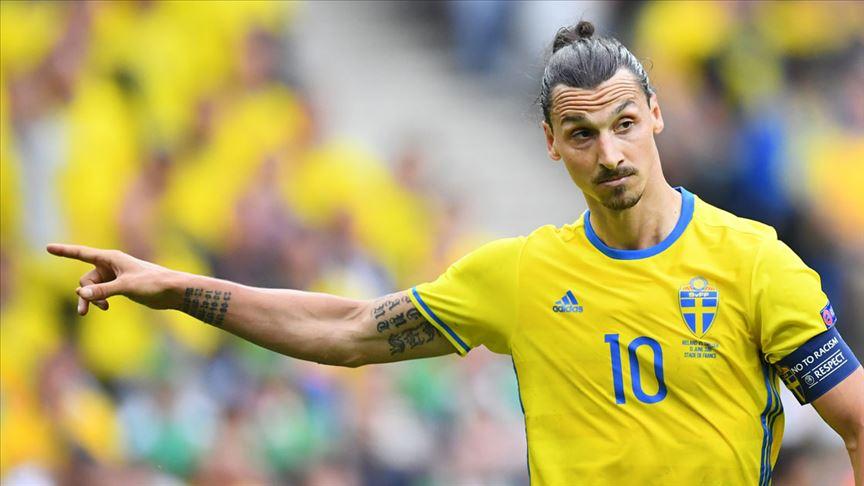
Zlatan Ibrahimović in the national team jersey (Anadolu Agency)
Ibrahimović began his professional football career with Malmö FF, the club of his hometown, and quickly became one of the team’s key players. His performances there attracted the attention of European clubs.
Known for its emphasis on youth development, the Dutch club Ajax provided Ibrahimović with an environment to further his growth. He transferred to Ajax in 2001 and adapted well to the club’s passing game, which carried the legacy of Johan Cruyff. He won two Eredivisie titles with Ajax. In 2004, he earned widespread praise for a solo goal scored against NAC Breda. Across 110 appearances for Ajax, he recorded 48 goals and 17 assists.
Ibrahimović moved to Serie A side Juventus, where he continued his physical development. However, in 2006, Juventus was stripped of its titles due to its involvement in the Calciopoli scandal and was relegated. He left the club as a result. During his time there, he scored 26 goals and provided 19 assists in 92 appearances.
During his time at Inter, Ibrahimović won three Serie A titles and received multiple Italian Footballer of the Year awards. He was granted greater tactical freedom in an attacking role. His tenure under managers Roberto Mancini and José Mourinho is regarded as one of the most productive periods of his career. He scored 66 goals and provided 29 assists in 117 appearances.
Transferred to Barcelona for a high fee, the player achieved significant success in his first season, winning La Liga, the UEFA Super Cup, and the FIFA Club World Cup. However, disagreements with manager Pep Guardiola made it difficult for him to secure a consistent place in the team. Tactical incompatibility, particularly with Lionel Messi’s role on the pitch, contributed to the brevity of his Barcelona career. He scored 22 goals and provided 13 assists in 46 appearances.
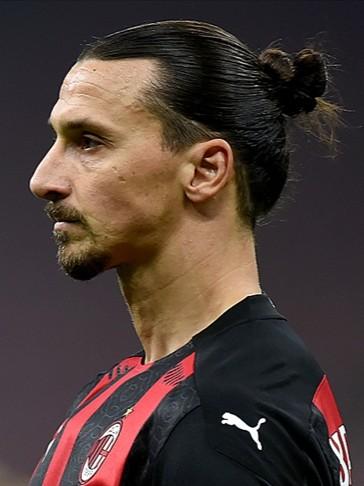
During his first stint, he won a Serie A title with Milan. He returned to Milan in 2020, serving as both team captain and a role model for younger players. He experienced another Serie A title in 2022. In 2023, he announced his retirement from professional football while wearing the AC Milan jersey. Across two separate spells, he made 163 appearances, scoring 93 goals and providing 35 assists.
Ibrahimović spent four years at PSG, during which he became the club’s all-time leading scorer for a period (later surpassed by Edinson Cavani). He won four Ligue 1 titles, three Coupe de la Ligue trophies, two Coupe de France titles, and three Trophée des Champions. He scored 156 goals in 180 appearances, producing an impressive statistical record.
At the age of 35, Ibrahimović joined the Premier League with Manchester United, winning the UEFA Europa League, the EFL Cup, and the FA Community Shield. His season was cut short due to an injury sustained in the UEFA Europa League final. After recovering from the injury, his playing time decreased. He scored 29 goals and provided 10 assists in 53 appearances.
Transferred to LA Galaxy in the United States, Ibrahimović quickly made an impact in Major League Soccer (MLS), generating headlines with his goals and outspoken comments. Despite limited team success, his brief spell in MLS attracted significant attention. He scored 53 goals and provided 15 assists in 58 appearances.

Clubs played for and performance statistics of Zlatan Ibrahimović (generated by artificial intelligence.)
Zlatan Ibrahimović made 116 appearances for the Sweden national team, scoring 62 goals to become the country’s all-time top scorer. He represented Sweden at the 2002 and 2006 FIFA World Cups and four European Championships (2004, 2008, 2012, 2016). He announced his retirement from international football in 2016 but made a brief return in 2021.

Zlatan Ibrahimović’s national team performance (generated by artificial intelligence.)
Zlatan Ibrahimović’s goal against England in 2013. He won the Puskás Award for this goal. (Goal)
Zlatan Ibrahimović stands at 1.95 meters tall. Despite his imposing physical structure, he is noted for his agility, balance, and ball control. His dominance in aerial duels, ability to shoot with both feet, effectiveness in one-on-one situations, and accuracy in long-range shots distinguish him from the traditional center-forward archetype. He practiced karate during his youth and attained a black belt. This background enabled him to perform acrobatic movements on the pitch. His leadership and technical capacity allowed him to adapt easily to different systems, enabling him to play successfully both as a target striker and as a free attacking midfielder.
Ibrahimović is also known for his media presence beyond his football career. He has consistently projected a confident demeanor in public statements. Although often labeled as “egocentric” and “unconventional” in the media, he has earned great respect from teammates. Having won championships in numerous countries, he is regarded as one of the most successful strikers in modern football. He has scored over 500 goals for clubs during his career.
In 2011, Ibrahimović published his autobiography, I Am Zlatan, which was translated into multiple languages and achieved high sales figures. Through sponsorship deals, brand campaigns, and social media activity, he has become a prominent figure beyond football. He has primarily lived between Milan and Stockholm with his family.

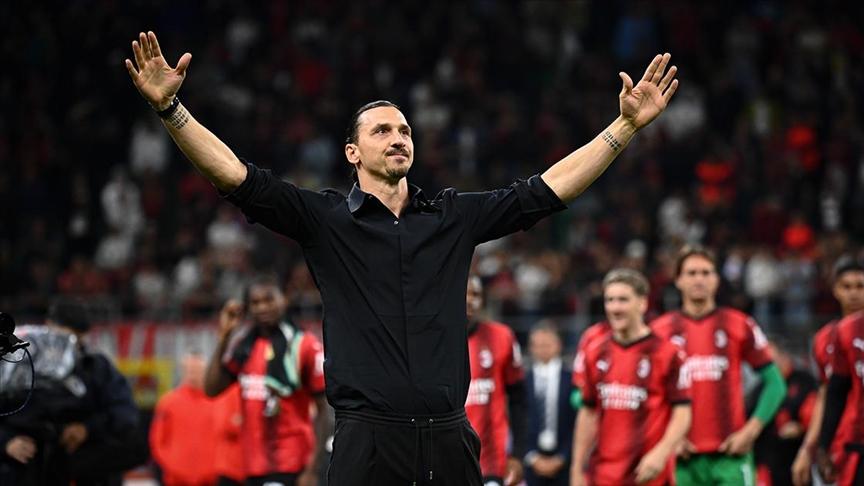
Visual related to Zlatan Ibrahimović’s retirement from football (Anadolu Agency)
In 2023, Ibrahimović ended his professional football career and immediately began serving as an advisor at AC Milan. He also remains active in football as a shareholder of the Swedish club Hammarby IF.

Zlatan Ibrahimović in the jersey of his last club, Milan (Anadolu Agency)
Throughout his career, Zlatan Ibrahimović has won numerous prestigious awards at both club and individual levels. Some of these include:
Zlatan Ibrahimović has delivered consistent performances across multiple leagues and distinguished himself as a prolific goalscorer at both club and international levels. His career, marked by playing in various countries, a multicultural identity, and strong discipline, has earned him recognition as one of the most significant players in 21st-century football history.
Biography. "Zlatan Ibrahimović." Biography.com. Accessed May 18, 2025. https://www.biography.com/athletes/zlatan-ibrahimovic.
Dutt, Sujay. “Zlatan Ibrahimović on His Malmö Upbringing.” UEFA.com. Accessed May 18, 2025. https://www.uefa.com/uefachampionsleague/news/0227-0e92860a8b53-f31153efbc0b-1000--zlatan-ibrahimovic-on-his-malmo-upbringing/.
GOAL. “Zlatan Ibrahimovic's famous 30-yard bicycle kick vs England.” YouTube. Accessed May 18, 2025. https://www.youtube.com/watch?v=RM_5tJncHww.
Karakaya, Abdulkadir and Kayhan Gül. “UEFA’dan Ibrahimović’e Yönelik Irkçı Söylem İddiasına Soruşturma.” Anadolu Ajansı. Accessed May 18, 2025. https://www.aa.com.tr/tr/dunyadan-spor/uefadan-ibrahimovice-yonelik-irkci-soylem-iddiasina-sorusturma-/2154627.
Kaymaz, Yunus. "İbrahimovic, 1 yıl daha Milan'da." Anadolu Ajansı. Accessed May 18, 2025. https://www.aa.com.tr/tr/dunyadan-spor/ibrahimovic-1-yil-daha-milanda/1957823
Mengüç, Dora. “1 Yüz 1 İnsan: Zlatan Ibrahimović.” Independent Türkçe. Accessed May 18, 2025. https://www.indyturk.com/node/419486/k%C3%BClt%C3%BCr/1-y%C3%BCz-1-i%CC%87nsan-zlatan-i%CC%87brahimovi%C3%A7.
National Football Teams. “Zlatan Ibrahimović.” National Football Teams. Accessed May 18, 2025. https://www.national-football-teams.com/player/6367/Zlatan_Ibrahimovic.html.
Seçkin, Barış. "Zlatan İbrahimovic, futbolu bıraktı." Anadolu Ajansı. Accessed May 18, 2025. https://www.aa.com.tr/tr/dunyadan-spor/zlatan-ibrahimovic-futbolu-birakti/2914374
Seçkin, Barış. “Zlatan Ibrahimović Yeniden Milan’da.” Anadolu Ajansı. Accessed May 18, 2025. https://www.aa.com.tr/tr/dunyadan-spor/zlatan-ibrahimovic-yeniden-milanda/1685861.
Transfermarkt. "Zlatan Ibrahimović." Transfermarkt. Accessed May 18, 2025. https://www.transfermarkt.com/zlatan-ibrahimovic/profil/spieler/3455
Ünlü, Mehmet Can. “Zlatan Ibrahimović’in Hikayesi: Kayıp Bir Çocukluktan Dünya Yıldızlığına.” Goal Türkiye. Accessed May 18, 2025. https://www.goal.com/tr/haber/zlatan-ibrahimovicin-hikayesi-kayip-bir-cocukluktan-duenya-yildizligina/1qe5ll8bnz6ew1de03bx4fphdv


Zlatan Ibrahimović
Doğum tarihi | 1981-10-03 | ||||||||
|---|---|---|---|---|---|---|---|---|---|
Place of Birth | Malmö, Sweden | ||||||||
Height(s) | 195 cm | ||||||||
Çocuk | Vincent Ibrahimovic Maximilian Ibrahimovic | ||||||||
Clubs Played for | Los Angeles Galaxy Manchester United Paris Saint-Germain Milan Barcelona Inter Juventus Ajax Malmö | ||||||||
Position(s) | Forward | ||||||||
Nationality | Sweden | ||||||||
Active Years | 1999–2023 | ||||||||
Last Club | AC Milan (Italy) | ||||||||
Notable İndividual Awards | FIFA Puskás Award (2013) 3× Serie A Player of the Year 3× Ligue 1 Player of the Year 12× Guldbollen (Sweden's Footballer of the Year) | ||||||||
Notable Achievements | 1× UEFA Europa League (Manchester United) 2× Serie A Champion (Milan) 1× La Liga Champion (Barcelona) 3× Serie A Champion (Inter) 4× Ligue 1 Champion (PSG) | ||||||||
Early Life and Origins
Educational Journey
Introduction to Football
Professional Career
Malmö FF (1999–2001)
Ajax (2001–2004)
Juventus (2004–2006)
Inter Milan (2006–2009)
FC Barcelona (2009–2011)
AC Milan (2010–2012, 2020–2023)
Paris Saint-Germain (2012–2016)
Manchester United (2016–2018)
LA Galaxy (2018–2019)
National Team Career
Playing Style and Personality Traits
Place in Media and Public Opinion
Retirement and Post-Football Period
Individual Awards