
Bu içerik Türkçe olarak yazılmış olup yapay zeka ile otomatik olarak İngilizceye çevrilmiştir.
2025 Central African Republic General Elections are a multi-level vote held nationwide on 28 December 2025, encompassing presidential, legislative, regional and municipal elections on the same day. The elections were organized following the 2023 constitutional referendum, which abolished term limits for the presidency and extended the presidential term from five to seven years. Incumbent President Faustin-Archange Touadéra ran for a third term as a result.
In an election with approximately 2.3 million registered voters, voting took place in over 6,700 polling stations. According to provisional results announced by the National Electoral Commission (ANE), Touadéra received 76.15% of the votes and was re-elected. The elections were generally conducted in a peaceful manner under the observation of the United Nations Peacekeeping Mission (MINUSCA) and the African Union.

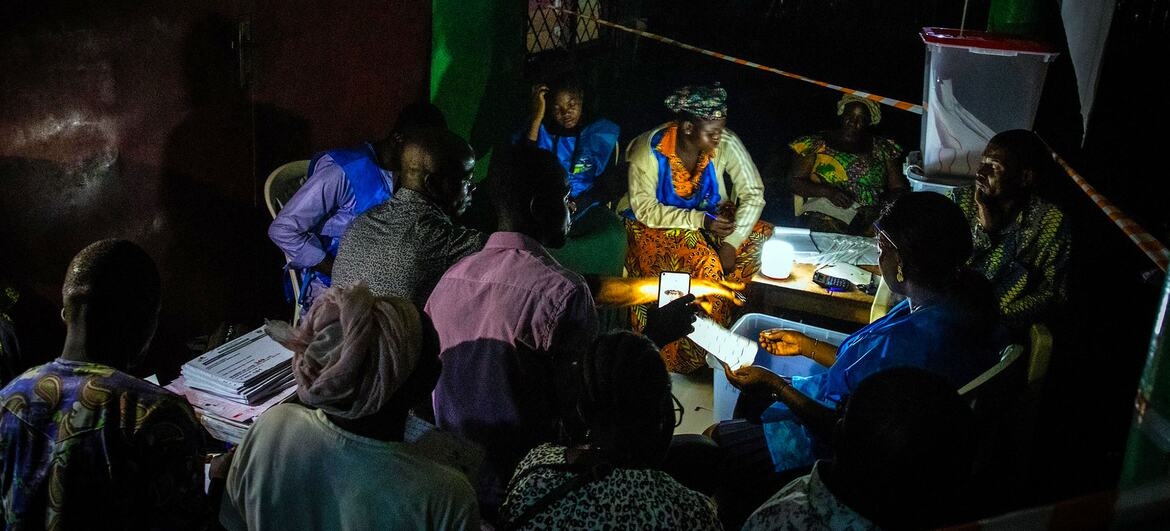
2025 Central African Republic General Elections, 28 December 2025 - (MINUSCA)
The 2023 constitutional referendum in the Central African Republic resulted in the abolition of presidential term limits and an extension of the presidential term from five to seven years. This change enabled incumbent President Faustin-Archange Touadéra to run for a third term. With the new constitution coming into effect, the longer term and unlimited re-election were applied for the first time in these elections.
The process leading to the 2023 referendum faced objections from opposition parties and civil society organizations. Following a government campaign in support of the referendum, the existing two-term limit was lifted. Opposition parties viewed this development as creating an uneven playing field ahead of the elections.
The electoral process was managed by the National Electoral Commission (ANE). With technical support from the United Nations Peacekeeping Mission (MINUSCA), electoral materials were distributed across the country’s 20 regions, and voting occurred in a total of 6,700 polling stations.
The final oversight of the elections is conducted by the Constitutional Court. The Court has the authority to review any challenges to the election results and to certify them. According to official statements, the final certification process will be completed by 20 January 2026.
The elections were monitored by observers from the African Union, the United Nations, and the United Nations Peacekeeping Mission (MINUSCA). International observation reports described the voting day as generally “largely peaceful.” However, due to security concerns, voting could not be conducted in some regions.
MINUSCA official Valentine Rugwabiza condemned an attack that occurred in the town of Bambouti in the Haut-Mbomou region of southeastern Central African Republic. Rugwabiza reported that the attack was carried out by the armed group Azandé Ani Kpi Gbe (AAKG), during which several local officials were taken hostage. According to Rugwabiza, “MINUSCA has been working non-stop since Sunday to secure the release of the hostages.”
President Faustin-Archange Touadéra, aged 68, is a mathematics professor and former prime minister. He was elected president in the 2016 and 2020 elections. Following the 2023 constitutional referendum that removed term limits, he ran for a third term.
Touadéra ran as the candidate of the Movement of United Hearts (Mouvement Cœurs Unis, MCU). His campaign prioritized security, peace, and infrastructure development. His government has signed peace agreements with armed groups in the country and maintained cooperation with Russia in the security sector.
In his campaign speeches, Touadéra emphasized Russia’s security partnerships and the support of Rwandan troops. He framed his security policy around “security gains,” and in post-election statements, he claimed these policies had “helped recover territory from rebels and facilitate peace agreements.”
During his tenure, relations with Russia have deepened, with Russian companies active in mining sectors for gold, diamonds, lithium, and uranium. Additionally, Touadéra recognized Bitcoin as legal tender in 2022 and launched the cryptocurrency project $CAR in 2025. In the same year, an agreement with Elon Musk’s Starlink company expanded internet access to rural areas.
Anicet-Georges Dologuélé, aged 68, previously served as prime minister in the 1990s. He is the leader of the URCA (Union pour le Renouveau Centrafricain) party. Dologuélé also ran for president in the 2015 and 2020 elections, finishing second in 2020.
In his 2025 campaign, Dologuélé pledged to strengthen democratic institutions and enhance international cooperation. During the campaign, a controversy arose over his citizenship status; in September 2025, he announced he had renounced French citizenship. However, in October 2025, a Central African court declared that he had lost his Central African citizenship. The matter was referred to the United Nations Office of the High Commissioner for Human Rights, and it was later confirmed that his citizenship had been restored, allowing his name to remain on the ballot. After the election results were announced, Dologuélé stated in a press conference, “There has been a systematic attempt to manipulate the results.”
Henri-Marie Dondra, aged 59, is a banker and former finance minister. He served as prime minister in Touadéra’s government from 2021 to 2022. Dondra ran as the candidate of the Republican Union (Union Républicaine, UNIR) party. His candidacy was officially confirmed on 14 November 2025. However, he had previously been accused of holding Congolese citizenship, a claim he denied.
In a statement to Human Rights Watch in November, Dondra stated that two of his siblings had been arrested and detained without charge prior to the election. His campaign emphasized economic reform, financial stability, and national unity. Following the election, he was among those who claimed the vote was “not fair.”
Leader of the Christian Democratic Party, former intelligence officer, and former minister of sports. He pledged to improve public services such as electricity, water, and infrastructure.
Former government spokesperson. He ran on a platform focused on public health and poverty reduction.
An engineer and one of the drafters of the 2023 Constitution. He promoted the idea that “political instability can be resolved through poverty reduction.”
According to the National Electoral Commission (ANE), approximately 2.3 million registered voters were eligible to vote in the 2025 general elections. Voting took place in 6,762 polling stations nationwide. Balloting began early in the morning on Sunday, 28 December 2025, local time, and polling stations closed at 17:00 GMT.
The United Nations Peacekeeping Mission (MINUSCA) provided extensive logistical support for the conduct of the elections. The mission organized 84 air flights and 8 ground convoys to transport electoral materials. A total of 230 tons of electoral supplies (ballot papers, ink, voter cards, ballot boxes, and booths) were delivered to all 20 regions of the country.
A total of 34,500 personnel (election officials, observers, and polling station staff) were trained. MINUSCA stated that “all electoral materials were delivered on time despite difficult terrain and security conditions.”
Security measures during voting were coordinated under a joint plan between national security forces and the United Nations Peacekeeping Mission (MINUSCA). The mission reported the deployment of additional national military and police forces to support the electoral process. MINUSCA stated that “election security was strengthened through the deployment of additional national units and police forces, supported by MINUSCA’s logistical assistance.”
The mission also provided vehicles and motorcycles to national security units to facilitate access to remote areas. A MINUSCA spokesperson noted that security forces had increased patrols in sensitive regions in eastern and southeastern Central African Republic.
Although the election day was largely peaceful nationwide, voting could not be conducted in the town of Bambouti in the Haut-Mbomou region due to security concerns. The attack was attributed to the armed group Azandé Ani Kpi Gbe (AAKG) and armed elements from South Sudan. During the incident, the local sub-prefect was among those taken hostage. Rugwabiza confirmed that efforts to secure the release of the hostages were ongoing, stating, “MINUSCA has been working non-stop since Sunday to secure the release of the hostages.”
The United Nations Peacekeeping Mission (MINUSCA), the African Union, and other observers reported that over 99% of polling stations opened as planned and that the voting process was technically conducted in an orderly manner.
According to provisional results announced by the National Electoral Commission (ANE) on 5 January 2026, President Faustin-Archange Touadéra received 76.15% of the votes and was re-elected for a third term. Former prime minister Anicet-Georges Dologuélé received 14.66%, and Henri-Marie Dondra received 3.19%. The voter turnout was officially reported at 52.42%.
Following the announcement of the results, Touadéra’s campaign team stated that the elections had been completed within the legal framework and in a peaceful manner.
The election results were contested, particularly by opposition parties. The Republican Bloc for the Defense of the Constitution (Bloc Républicain pour la Défense de la Constitution – BRDC) characterized the elections as “an unfair process” and had previously announced a boycott.
Shortly before the official announcement of results, candidate Anicet-Georges Dologuélé stated in a press conference, “There has been a systematic attempt to manipulate the results.” He added, “The Central African people spoke on 28 December. They expressed a clear desire for change.”
Henri-Marie Dondra also expressed doubts about the credibility of the results in his post-election statements. Dondra claimed the process was not fair due to restrictions placed on his campaign in several provinces.
The Touadéra government and the ANE rejected allegations of fraud. The National Electoral Commission and the Ministry of Justice stated that the electoral process was conducted under the supervision of international observers.
The Constitutional Court is empowered to review all challenges to the election results and to certify the final outcome. The Court is expected to complete this process by 20 January 2026.
In the post-election period, no widespread protests or violent incidents were reported. UN sources stated, “No widespread unrest has been reported following the elections.”

Henüz Tartışma Girilmemiştir
"2025 Central African Republic General Elections" maddesi için tartışma başlatın
Legal and Institutional Background
2023 Constitutional Referendum and Amendments
Impact of Constitutional Reforms on the Political Process
Legal Status and Oversight of the Elections
International Observation and Legal Safeguards
Candidates and Political Parties
Faustin-Archange Touadéra (Movement of United Hearts – MCU)
Anicet-Georges Dologuélé (Union for the Central African Renewal – URCA)
Henri-Marie Dondra (Republican Union Party – UNIR)
Other Candidates
Aristide Briand Reboas
Serge Djorie
Eddy Symphorien Kparekouti
Election Day and Voting Process
Logistical Preparations and Participation
Security Arrangements
Announcement of Results and Reactions
Unofficial Results and Voter Turnout
Opposition Reactions
Constitutional Court’s Authority and Final Certification Timeline