


Bu içerik Türkçe olarak yazılmış olup yapay zeka ile otomatik olarak İngilizceye çevrilmiştir.
Academic Dependency (academic dependency) is a field of study and conceptual framework that emerged historically alongside the global scientific system to describe structural inequalities in the production and circulation of knowledge. Drawing its foundations from critical epistemology, the sociology of science, and comparative higher education studies, this concept examines how institutional, material, and symbolic processes in academia are shaped in an asymmetric manner.【1】 In this context, academic dependency refers to a situation in which the development and expansion of social sciences in core countries have shaped and rendered dependent the social sciences of peripheral countries.【2】
Analyses of academic dependency are essentially adaptations of economic-political and dependency theory and world-systems analysis to the epistemological domain. According to dependency theory, global hierarchies are formed through the unequal exchange of surplus value and raw material resources from peripheral countries to core countries.【3】 The reflection of this economic asymmetry in the social sciences has created a sharp division of labor between core and peripheral countries in terms of knowledge production and consumption. While empirical data (raw material) is collected from peripheral countries, core countries process this data and produce theoretical frameworks and concepts (processed products) that are exported globally.【4】 This inequality is closely linked to the concept of “epistemic domination” as a legacy of colonialism and reproduces intellectual neo-colonialism within the global system.【5】
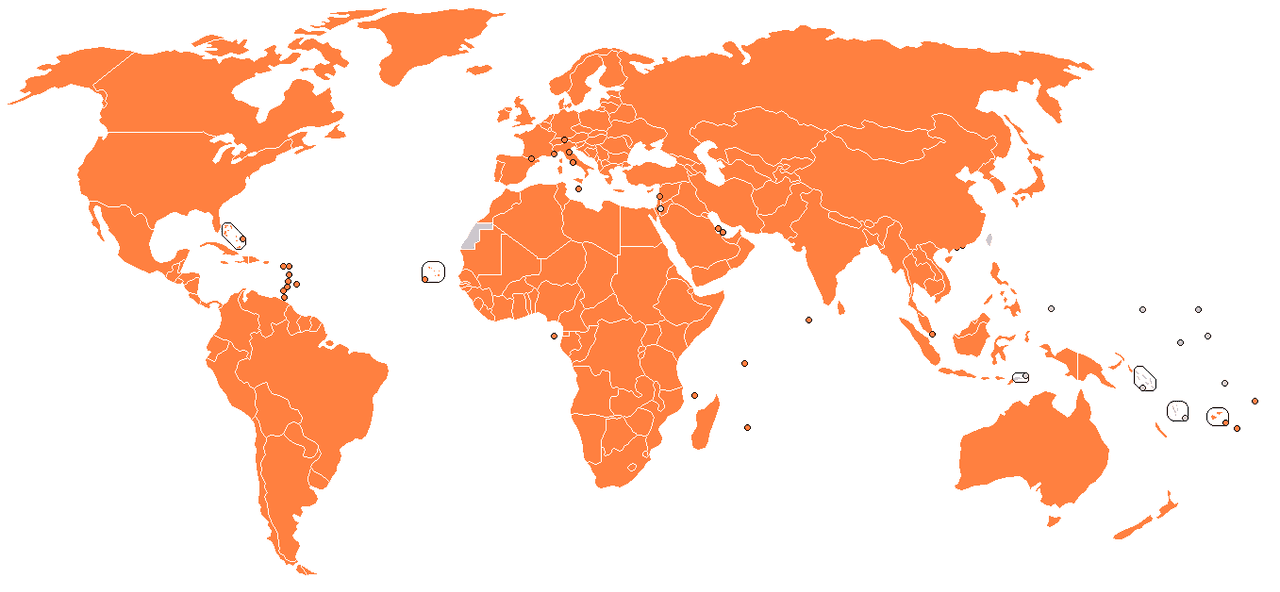
Dünya Haritası (Pixnio)
One of the most prominent indicators of academic dependency is the monopolistic structure of the international publishing industry. Universal standards in scientific production are largely determined by journals based in North America and Europe. Global ranking systems such as the Social Sciences Citation Index (SSCI) are dominated by these geographic regions and the English language.【6】 In contrast, countries in Latin America, Asia, and Africa remain marginal in terms of their share of global scientific output. Academic publications produced in peripheral countries and in local languages fail to enter global circulation, creating asymmetric barriers to access prestigious journals in core countries.【7】
At the heart of academic dependency lies epistemic domination, the phenomenon whereby certain forms of knowledge and Western-centric experiences are accepted as universal, while knowledge originating from peripheral contexts is deemed invalid or unscientific. This structure compels researchers to unconditionally adopt Western theories and paradigms, even when they are incompatible with local contexts.【8】 Academics in peripheral countries, influenced by imported scientific consumerism embedded in education and research systems, are forced to interpret local realities through borrowed languages and theoretical frameworks.【9】
The financial dimension of knowledge production is another key factor sustaining academic dependency. Limited national budget allocations for research and development in peripheral countries render researchers and institutions dependent on Western donors, international financial organizations, and foundations. This situation leads to research topics and funding priorities being determined by the agendas of funders rather than by local development needs.【10】
The scientific knowledge produced fails to directly address the needs of local populations, weakening the organic link between research and policy-making (research-policy nexus).【11】 Academic literature emphasizes that overcoming this structural inequality requires dismantling epistemic centrism, strengthening local knowledge systems, and building independent intellectual pathways focused directly on local problems.【12】
Andrews, Nathan, and Eyene Okpanachi. "Trends of Epistemic Oppression and Academic Dependency in Africa’s Development: The Need for a New Intellectual Path." *The Journal of Pan African Studies* 5, no. 8 (2012): 85-103. Accessed August 14, 2026.https://www.researchgate.net/publication/338720374_Trends_of_Epistemic_Oppression_and_Academic_Dependency_in_Africa's_Development_The_Need_for_a_New_Intellectual_Path
Beigel, Fernanda. "Academic Dependency." *Alternautas* 2, no. 1 (2015): 60-62. Accessed August 14, 2026.https://journals.warwick.ac.uk/index.php/alternautas/article/view/1005/863
Kuran, İbrahim. "Are Dependency Theory and Modern World-System Analysis Relevant Today?" *Politik Ekonomik Kuram* 8, no. 2 (2024): 332-344. Accessed August 14, 2026.https://dergipark.org.tr/en/pub/pek/article/1431514
Moja, Teboho, and Samuel Kehinde Okunade. "The Politics of Research, Knowledge Production and Policy in Perspective." In *African Science Granting Councils: Towards Sustainable Development in Africa*, 13-28. Cape Town: African Minds, 2023. Accessed August 14, 2026.
Pixnio. "Dünya Haritası Coğrafya Haritacılık Topografya Kıta." Digital image. Accessed August 14, 2026.
[1]
Fernanda Beigel, "Academic Dependency," Alternautas 2, no. 1 (2015): 60, erişim tarihi 14 Ağustos 2026, https://journals.warwick.ac.uk/index.php/alternautas/article/view/1005/863
[2]
Nathan Andrews and Eyene Okpanachi, "Trends of Epistemic Oppression and Academic Dependency in Africa’s Development: The Need for a New Intellectual Path," *The Journal of Pan African Studies* 5, no. 8 (2012): 87-88, Accessed August 14, 2026,https://www.researchgate.net/publication/338720374_Trends_of_Epistemic_Oppression_and_Academic_Dependency_in_Africa's_Development_The_Need_for_a_New_Intellectual_Path
[3]
İbrahim Kuran, "Are Dependency Theory and Modern World-System Analysis Relevant Today?" Politik Ekonomik Kuram 8, no. 2 (2024): 334, erişim tarihi 14 Ağustos 2026, https://doi.org/10.30586/pek.1431514
[4]
Andrews ve Okpanachi, "Trends of Epistemic Oppression," 88.
[5]
Andrews ve Okpanachi, "Trends of Epistemic Oppression," 87.
[6]
Beigel, "Academic Dependency," 61.
[7]
Beigel, "Academic Dependency," 62.
[8]
Andrews ve Okpanachi, "Trends of Epistemic Oppression," 89.
[9]
Andrews ve Okpanachi, "Trends of Epistemic Oppression," 90.
[10]
Teboho Moja ve Samuel Kehinde Okunade, "The Politics of Research, Knowledge Production and Policy in Perspective," African Science Granting Councils: Towards Sustainable Development in Africa içinde (Cape Town: African Minds, 2023), 27, erişim tarihi 14 Ağustos 2026 https://www.jstor.org/content/oa_chapter_monograph/jj.13359169.6?seq=1
[11]
Moja ve Okunade, "The Politics of Research," 24-25.
[12]
Andrews ve Okpanachi, "Trends of Epistemic Oppression," 97-98.

Henüz Tartışma Girilmemiştir
"Academic Dependency" maddesi için tartışma başlatın
Historical and Theoretical Background
Key Dynamics of Academic Dependency
Knowledge Production and the Global Publishing System
Epistemic Domination and Eurocentrism
Research Funding and Policy-Making Processes