

Bu içerik Türkçe olarak yazılmış olup yapay zeka ile otomatik olarak İngilizceye çevrilmiştir.
+1 Daha
Registration Number | 612 | ||||||||
|---|---|---|---|---|---|---|---|---|---|
Registration Date | 30.11.2020 | ||||||||
Application Number | C2019/129 | ||||||||
Application Date | 18.09.2019 | ||||||||
Name of the Geographical Indication | Adıyaman Tut Dutu | ||||||||
Product / Product Group(s) | Dut / Processed fruits and vegetables and mushrooms | ||||||||
Type of Geographical Indication | Trademark | ||||||||
Applicant/Registrant(s) | Tut District Directorate of Agriculture and Forestry | ||||||||
Address of the Registrant | Zübeyde Hanım Street, Reşadiye Neighborhood, Government House, Tut District Directorate of Agriculture and Forestry, Adıyaman | ||||||||
Geographical Boundary | Tut District Adıyaman Province | ||||||||
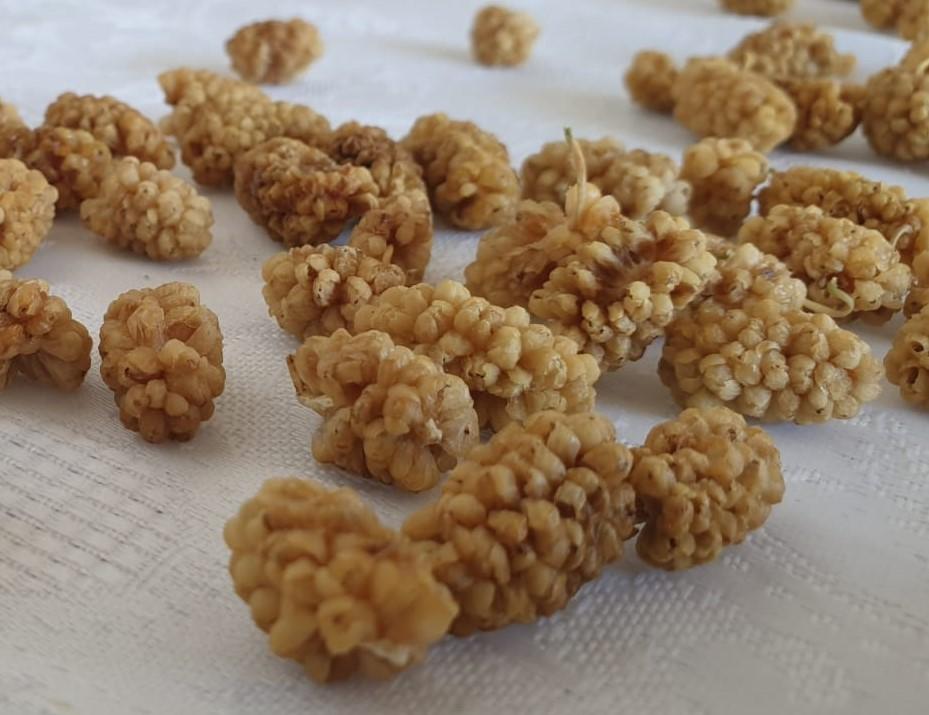
Adıyaman Tut Dutu is a geographical indication product obtained by traditionally drying the fruits of Morus species mulberry trees grown in the Tut district of Adıyaman Province, Türkiye. During the ripening period, the mulberry fruits naturally fall onto cloth sheets spread beneath the trees and are collected. In accordance with local practices, they are dried in the shade of the trees directly on the soil. This method imparts a distinctive earthy aroma to the product, while the process known as “buruşturma” preserves the fruit’s internal moisture.
Adıyaman Tut Dutu is produced exclusively within the boundaries of the Tut district in Adıyaman Province. The product’s reputation is directly linked to the local knowledge derived from the region’s climate, soil, and production methods. In particular, the traditional techniques used during the drying process confer unique characteristics to the product and establish its strong association with Tut district.
The defining feature of Adıyaman Tut Dutu is its drying on soil-covered cloths placed beneath the trees during the cool summer months. This process imparts a distinctive earthy aroma to the fruit. Additionally, the “buruşturma” method applied during drying preserves the fruit’s internal moisture, resulting in a soft-textured product with a moisture content of 15–20% and a dark yellow color.
In March and April, one-year-old cuttings taken from wild Morus species trees within the geographical boundary are planted in specially prepared beds (25% sand, 25% animal manure, 50% soil) at 5x5 cm intervals and 20–25 cm depth. Irrigation is carried out using the “arık sulama” method. After approximately 1.5 to 2 years, the cuttings reach a height of about one meter and are grafted between the first two weeks of July using scion material from local rootstocks via the “T göz aşı” or “yarma” method.
A deep plowing is performed one year prior to planting. Holes 50–80 cm deep and 80 cm in diameter are prepared six months in advance. The top and bottom soil layers are separated, and 2 kg of animal manure is added to each hole before leaving it to rest. Planting takes place in April. The plants receive “can suyu” irrigation to support root development.
The most effective irrigation method is drip irrigation, with daily irrigation lasting 4 to 12 hours depending on air temperature. Irrigation is stopped one month before harvest. The soil is lightly tilled with a hoe in spring and autumn. Weed control is achieved through hand weeding. In autumn, animal manure is spread between rows to enrich the soil. Stone removal is carried out every two years. Due to the fertile soils in the region, disease incidence is low. The “kök kireçlemesi” method is applied for pest control.
Mulberry trees begin bearing fruit when they reach five to six years of age. Trees of this age yield 4–5 kg annually, while trees aged 15–20 years can produce up to 100–120 kg per year. One week before ripening, cloth sheets known as “melefe,” measuring 4x8 m or 5x10 m, are spread beneath the trees. Ripe fruits fall naturally onto these sheets.
The drying process consists of two stages:
Once fully dried, the fruits can be stored for one month in cool, dark environments with a moisture content of 20–30% and a temperature of 15–20 °C.
All stages of Adıyaman Tut Dutu production, except for sapling production, including planting, maintenance, harvesting, drying, and processing, must be carried out within the boundaries of Tut district, Adıyaman Province. This requirement is essential to ensure the product’s protection under the geographical indication scheme and to preserve its distinctive characteristics.
Monitoring is conducted by a four-member committee composed of representatives from the Tut District Directorate of Agriculture and Forestry, Tut Municipality, Tut Chamber of Agriculture, and Mulberry Growers Union, under the coordination of the Tut District Directorate of Agriculture and Forestry. Inspections are carried out at least once annually between June and August. The following elements are verified during inspections:
In cases where necessary, inspections may also be carried out upon complaint, and expert services may be engaged. Legal procedures are managed by the registering authority.
Turk Patent and Trademark Office. "Adıyaman Tut Dutu." *Geographical Indications Detail*, Geographical Indications Information System. Accessed August 16, 2025. https://ci.turkpatent.gov.tr/cografi-isaretler/detay/922.
Turkish Patent and Trademark Office. *Adıyaman Tut Dutu*. Geographical Indication Registration Certificate, Registration No: 612, Registration Date: November 30, 2020. Accessed August 16, 2025. https://ci.turkpatent.gov.tr/Files/GeographicalSigns/72f646c0-2c4d-4c6b-bafd-b0a90d9935e5.pdf.

Registration Number | 612 | ||||||||
|---|---|---|---|---|---|---|---|---|---|
Registration Date | 30.11.2020 | ||||||||
Application Number | C2019/129 | ||||||||
Application Date | 18.09.2019 | ||||||||
Name of the Geographical Indication | Adıyaman Tut Dutu | ||||||||
Product / Product Group(s) | Dut / Processed fruits and vegetables and mushrooms | ||||||||
Type of Geographical Indication | Trademark | ||||||||
Applicant/Registrant(s) | Tut District Directorate of Agriculture and Forestry | ||||||||
Address of the Registrant | Zübeyde Hanım Street, Reşadiye Neighborhood, Government House, Tut District Directorate of Agriculture and Forestry, Adıyaman | ||||||||
Geographical Boundary | Tut District Adıyaman Province | ||||||||
Henüz Tartışma Girilmemiştir
"Adıyaman Tut Mulberry" maddesi için tartışma başlatın
Geographical Boundary and Reputation
Distinctive Characteristics of the Product
Production Process
1. Sapling Production
2. Land Preparation and Planting
3. Annual Maintenance
Harvesting, Drying, and Storage
Production Location Dependency and Restrictions
Monitoring Mechanism