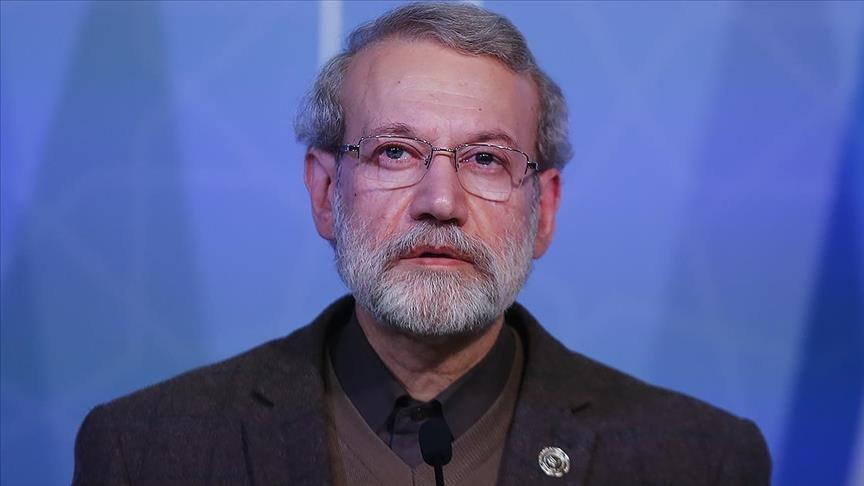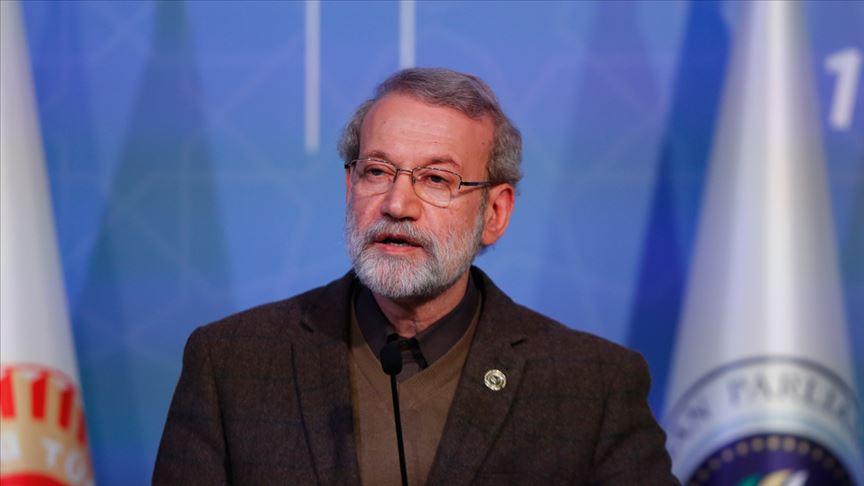

Babası | Ayatollah Mirza Hashem Amoli | ||||||||
|---|---|---|---|---|---|---|---|---|---|
Doğum tarihi | 1958-06-03 | ||||||||
Ölüm tarihi | 2026-03-17 | ||||||||
Profession(s) | Academic Security official Politician | ||||||||
Place of Birth | Iraq Najaf | ||||||||
Nationality | Iran | ||||||||
Persian Name | علی لاریجانی | ||||||||
Sibling | Sadiq Larijani | ||||||||
Ali Laricani, born on 3 June 1958 in Najaf, Iraq, is an Iranian politician, security bureaucrat and academic. He lost his life on 17 March 2026 during Israel’s attack on Tehran. He belongs to the Laricani family, one of the most influential and entrenched families in the Islamic Republic of Iran. Due to its members holding high-ranking positions in both religious and political spheres, this family is frequently described in international media as “Iran’s Kennedys”.
His father, Ayetullah Mirza Haşim Amuli, emerged as a respected religious authority in the Shia world; his brother Ayetullah Sadık Laricani held senior positions for many years within Iran’s judiciary; another brother, Muhammed Cevad Laricani, is recognized as a prominent figure in foreign policy and strategic analysis. Additionally, Laricani’s father-in-law, Murtaza Mutahhari, was among the ideological architects of the 1979 Iranian Islamic Revolution. These religious and political connections formed key elements that facilitated Laricani’s rise within Iran’s power structure.
Ali Laricani belongs to the Laricani family, one of Iran’s most influential political-religious families. Due to its weight within both the ulema class and the state bureaucracy, this family is frequently described in international media as “Iran’s Kennedys”.
His father, Ayetullah Mirza Haşim Amuli, is known as a respected religious authority in the Shia world. His brother Ayetullah Sadık Laricani served for many years in senior positions within Iran’s judicial system, while Muhammed Cevad Laricani rose to prominence as a key figure in foreign policy and strategic analysis. Other family members have held positions in critical institutional structures such as the Assembly of Experts.
Laricani’s marital ties are also directly linked to Iran’s revolutionary elite. His father-in-law, Murtaza Mutahhari, was one of the ideological architects of the 1979 Iranian Islamic Revolution and a prominent thinker within the inner circle of Ruhollah Khomeini. These connections provided structural advantages that facilitated Laricani’s ascent within the regime.
Unlike many of Iran’s top politicians, Ali Laricani embodies both religious and secular educational traditions.
He completed his undergraduate studies in mathematics and computer science at Sharif University of Technology, followed by a master’s and doctoral degree in Western philosophy at the University of Tehran. His academic work focused particularly on Immanuel Kant, producing writings that examine the relationship between modern philosophy and Islamic thought.
In this regard, Laricani has been regarded as one of the rare figures in Iranian politics who is not merely a bureaucrat but also a distinct intellectual presence.
After the 1979 Iranian Revolution, Laricani joined the Islamic Revolutionary Guard Corps (IRGC) and served actively during the Iran-Iraq War in the 1980s. This period solidified his military and ideological loyalty to the regime.
After his military career, Laricani transitioned into state administration, emerging as a key actor bridging the security bureaucracy and political decision-making mechanisms.
Laricani’s political career accelerated in the 1990s. During the presidency of Akbar Hashemi Rafsanjani, he served as Minister of Culture and subsequently was appointed head of the Islamic Republic of Iran Broadcasting (IRIB).
During his tenure as head of IRIB from 1994 to 2004, he played a decisive role in shaping state media policy, though he was criticized by reformist circles for imposing restrictive media controls.
In 2005 he ran for president but was unsuccessful. Later that year he was appointed Iran’s chief nuclear negotiator and General Secretary of the Supreme National Security Council. This position established him as a recognized diplomatic actor on the international stage.
In 2007 he left his position due to policy disagreements with President Mahmud Ahmedinejad. In 2008 he was elected as a member of parliament from Qom and was subsequently elected Speaker of the Parliament that same year.
He held this position for three terms from 2008 to 2020, influencing both domestic and foreign policy through the legislative body.
He played a critical role in securing parliamentary approval of the 2015 Joint Comprehensive Plan of Action (JCPOA) between Iran and the P5+1 countries. During this process, Laricani emerged as a pragmatic statesman capable of engaging with Western actors.
Laricani sought to run for president in 2021 and 2024 but was disqualified by the Guardian Council. Although no official reason was given, this decision has been interpreted as a sign of shifting power balances within Iranian domestic politics.
Analysts have assessed that Laricani was sidelined ahead of the 2021 elections to clear the path for the hardline candidate Ibrahim Raisi.
In 2025, President Masoud Pezeshkian reappointed Laricani as General Secretary of the Supreme National Security Council.
During this period, a marked hardening of Laricani’s political stance became evident. Key cooperation mechanisms with the International Atomic Energy Agency (IAEA) were suspended, and Iran’s nuclear program shifted toward a more opaque structure.
Laricani sought to run for president in 2021 and 2024 but was disqualified by Iran’s Guardian Council. The official justification for this decision was not disclosed, but various political analyses have linked it to internal regime power dynamics.
This episode fueled interpretations that his influence within Iranian politics was being deliberately constrained. Nevertheless, he did not lose his effectiveness within the system.
In 2025, President Masoud Pezeshkian reappointed Laricani as General Secretary of the Supreme National Security Council, placing him at the center of Iran’s security and defense policy.
According to analysts, following the death of Ayetullah Ali Hamaney, Laricani became one of Iran’s most influential decision-makers during the transition period. In this phase, he played a decisive role in nuclear negotiations, regional security strategies and military planning.
Ali Laricani is described in Iranian politics as a “pragmatist.” This approach reflects a posture that prioritizes state interests over rigid ideological positions and adapts policy to changing circumstances. Laricani has stood out as a politician who maintained limited but open diplomatic channels with international actors, particularly during nuclear negotiations and legislative activities.
Laricani’s political positioning lies on a line between Iran’s reformist and hardline blocs without fully belonging to either. This enabled him to maintain contact with diverse segments within the system.
Laricani’s ideological framework is grounded in loyalty to the founding principles of the Islamic Republic of Iran. The preservation of the regime, continuity of state structures and durability of the political system form the core elements of his political approach. In this context, he has consistently favored maintaining the system’s internal functioning over transformative, anti-system change.
Throughout his political career, Laricani has participated in diplomatic negotiations while also developing hardline statements on security policy. This duality has led to his characterization as an actor capable of deploying different policy tools within a single political framework.
Following his reappointment as General Secretary of the Supreme National Security Council after 2025, his rhetoric on security policy became notably more assertive. In statements directed at the United States and Israel, deterrence emerged as a central theme.
During the 2026 conflict, Laricani withdrew all references to the possibility of negotiations and adopted a discourse emphasizing military response and national security. In this period, he assumed an active role in Iran’s security strategy and crisis management framework.
In conclusion, Ali Laricani is defined as an actor in Iranian politics who embraces a state-centered approach, integrates diplomacy and security policy, and deploys diverse tools within a unified political framework.
Following the Israeli attacks on Iran in 2026, Laricani became central to Iran’s security strategy. In televised statements, he strongly condemned the United States and Israel and affirmed that Iran would respond forcefully.
According to analysts, during this period Laricani played a pivotal role in shaping the war strategy and managing the leadership transition.
On 17 March 2026, allegations emerged that Ali Laricani was targeted and killed during Israeli airstrikes in Tehran. Following these claims, Laricani’s office announced that he had died in the Israeli attack. Subsequently, the Iranian Supreme National Security Council officially confirmed his death and described the incident as a “targeted assassination.”
Iranian state media and semi-official agencies reported that Laricani was killed during a nighttime strike in Tehran, and published statements described him as having attained the status of “martyr after struggling for Iran and the Islamic Revolution.”
Al Jazeera. "Who Is Ali Larijani, the Iranian Official Promising a 'Lesson' to the US?" March 3, 2026. Accessed March 17, 2026. https://www.aljazeera.com/features/2026/3/3/who-is-ali-larijani-the-iranian-official-promising-a-lesson-to-the-us
CNN. "Iran War Live News: US-Israel Conflict, Trump Updates – March 17, 2026." March 17, 2026. Accessed March 17, 2026. https://edition.cnn.com/world/live-news/iran-war-us-israel-trump-03-17-26
Deutsche Welle. "Who Is Ali Larijani, the Unofficial Strongman in Iran?" Accessed March 17, 2026. https://www.dw.com/en/who-is-ali-larijani-the-unofficial-strongman-in-iran/a-76202526

Babası | Ayatollah Mirza Hashem Amoli | ||||||||
|---|---|---|---|---|---|---|---|---|---|
Doğum tarihi | 1958-06-03 | ||||||||
Ölüm tarihi | 2026-03-17 | ||||||||
Profession(s) | Academic Security official Politician | ||||||||
Place of Birth | Iraq Najaf | ||||||||
Nationality | Iran | ||||||||
Persian Name | علی لاریجانی | ||||||||
Sibling | Sadiq Larijani | ||||||||
Henüz Tartışma Girilmemiştir
"Ali Laricani" maddesi için tartışma başlatın
His Family and Socio-Political Origins
Education and Academic Identity
Military Background and Post-Revolutionary Position
Rise in State Administration
Nuclear Negotiations and Legislative Power
Political Obstacles and Power Struggles
Post-2025: Return to the Security Domain
Presidential Candidacies and Political Obstacles
Resurgence and Role in Security Policy
Political Character and Ideological Position
Role in the US-Israel Conflict
Death