

Bu içerik Türkçe olarak yazılmış olup yapay zeka ile otomatik olarak İngilizceye çevrilmiştir.
Ankara School and Orphanage
Establishment Year | 1950 | ||||||||
|---|---|---|---|---|---|---|---|---|---|
Place of Establishment | Suwon South Korea | ||||||||
Founding Union | 1st Turkish Brigade | ||||||||
Languages of Instruction | Turkish Korean English | ||||||||
Year of Closure | 1979 (Merged with a Local School) | ||||||||
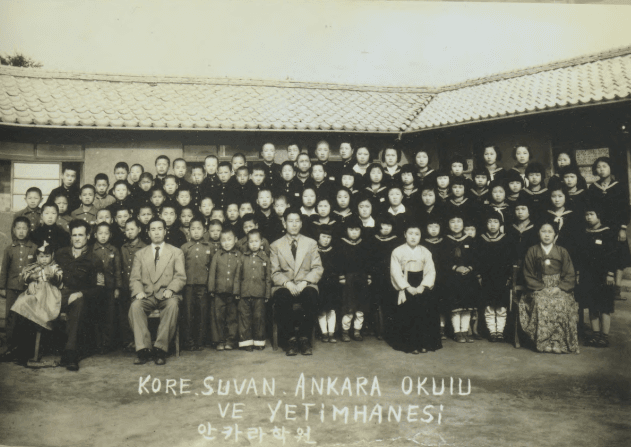
Ankara School and Orphanage
Ankara School and Orphanage is an educational institution established during the Korean War, which broke out in 1950, by the Turkish Brigade in Suwon, South Korea, with the aim of meeting the shelter and education needs of orphaned Korean children left without families. Among the twenty-one countries whose forces joined the United Nations (UN) military effort to defend South Korea, the Turkish Brigade was the only unit to construct a formal educational facility dedicated to war-affected civilians and orphaned children.【1】
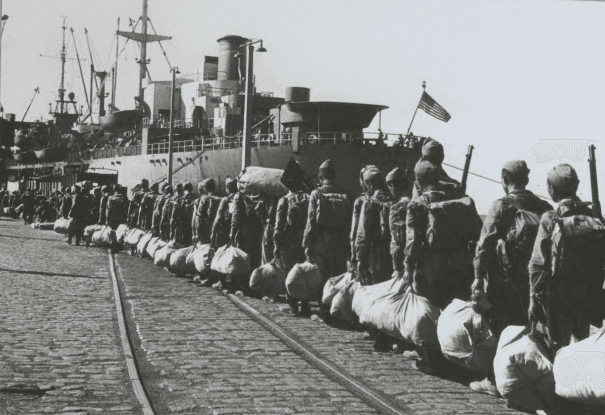
Turkish Soldiers Awaiting Deployment
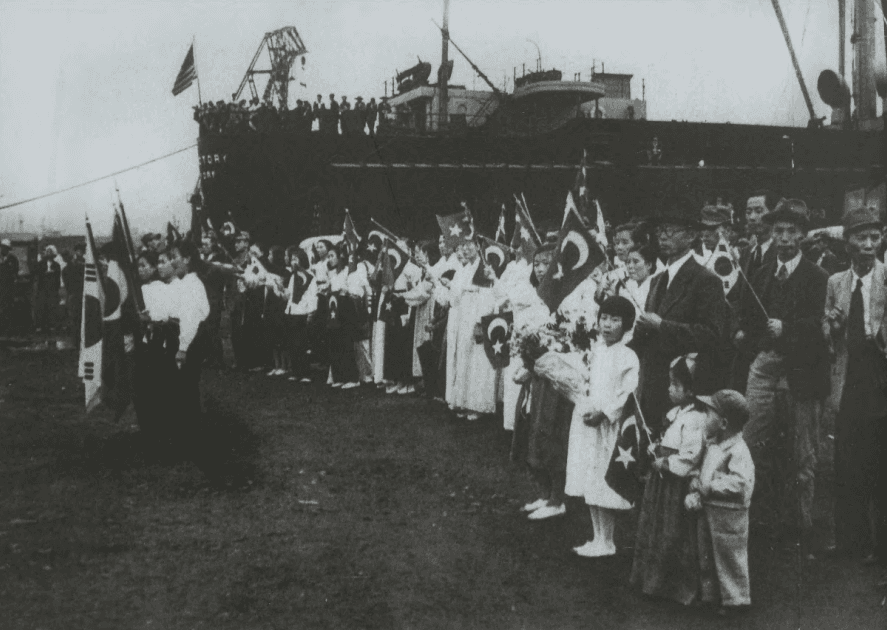
The People of South Korea Welcoming the Turkish Brigade(Askerî Müze ve Kültür Sitesi Komutanlığı)
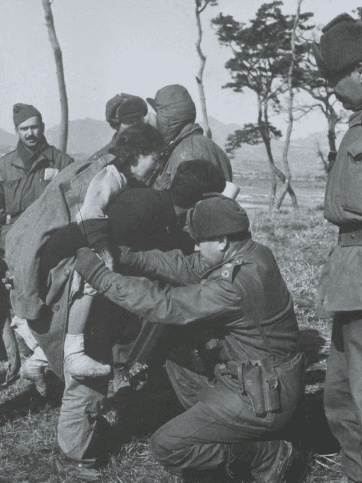
Captain Dr. Reşit Ersezer, Chief of the Tugay, Examining a Sick Korean Woman
Following World War II, the Korean Peninsula was divided along the 38th parallel by the United States and the Soviet Union. Rising tensions, caused by failed reunification efforts and the establishment of opposing regimes in the two regions, escalated into open warfare on June 25, 1950, when North Korean forces launched a surprise invasion of South Korea.【2】 In response to the United Nations Security Council's emergency appeal for assistance on June 27, 1950,【3】 Türkiye was the first country to respond positively after the United States.【4】
During the Korean War, which began with North Korea's attack on South Korea on June 25, 1950, and in which China supported North Korea while UN forces backed South Korea, the Turkish Brigade participated in intense battles such as Kunu-ri, Kumyangjang-ni and Vegas. On January 27, 1951, the brigade was stationed in reserve near Suwon, approximately seventy kilometers from the capital, Seoul.【5】
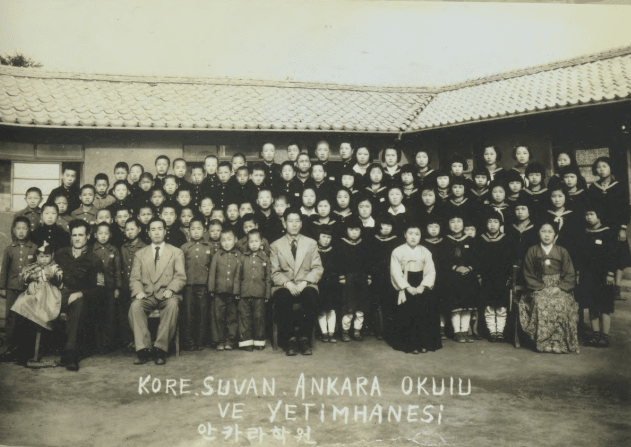
Students of the Ankara School and Orphanage
With the outbreak of the Korean War, the civilian population in and around Suwon faced severe difficulties in shelter and food due to armed conflict and harsh winter conditions. The destruction of settlements and transportation infrastructure【6】 forced a large number of civilians to flee southward, many of whom ended up living in open areas.【7】 Extremely low temperatures and insufficient winter clothing【8】 led to a rising number of deaths among refugees due to illness or freezing.【9】 As a result of this massive population displacement and civilian casualties, a large number of children became separated from their parents and were left orphaned.
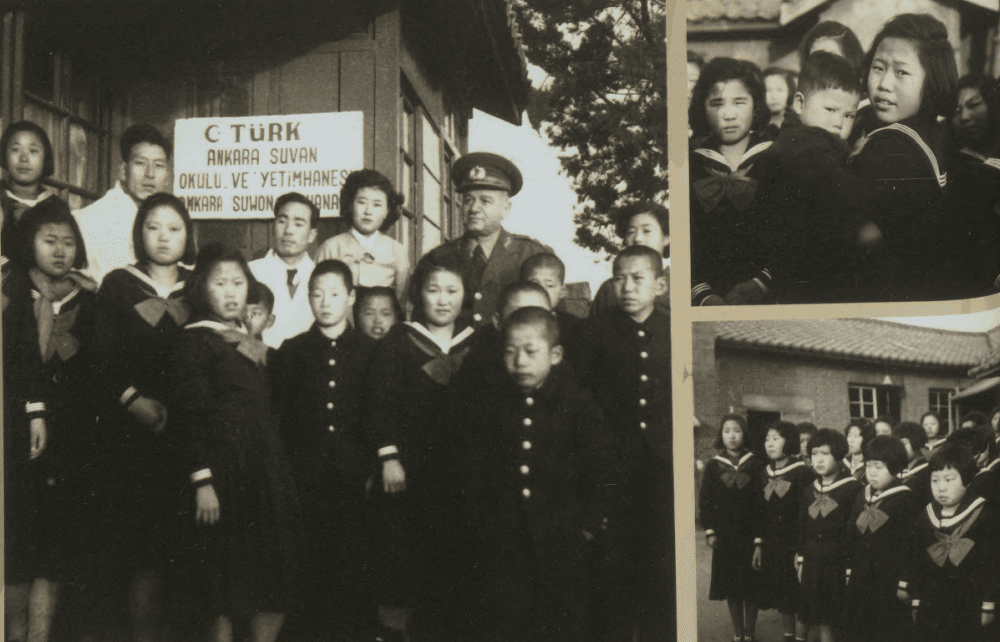
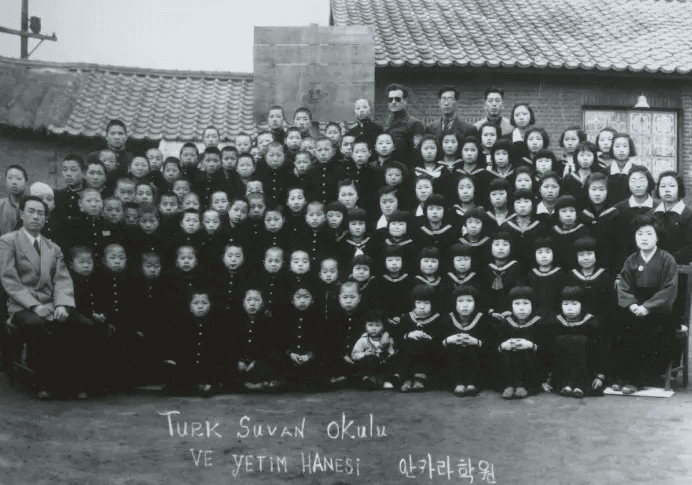
Ankara School and Orphanage Students
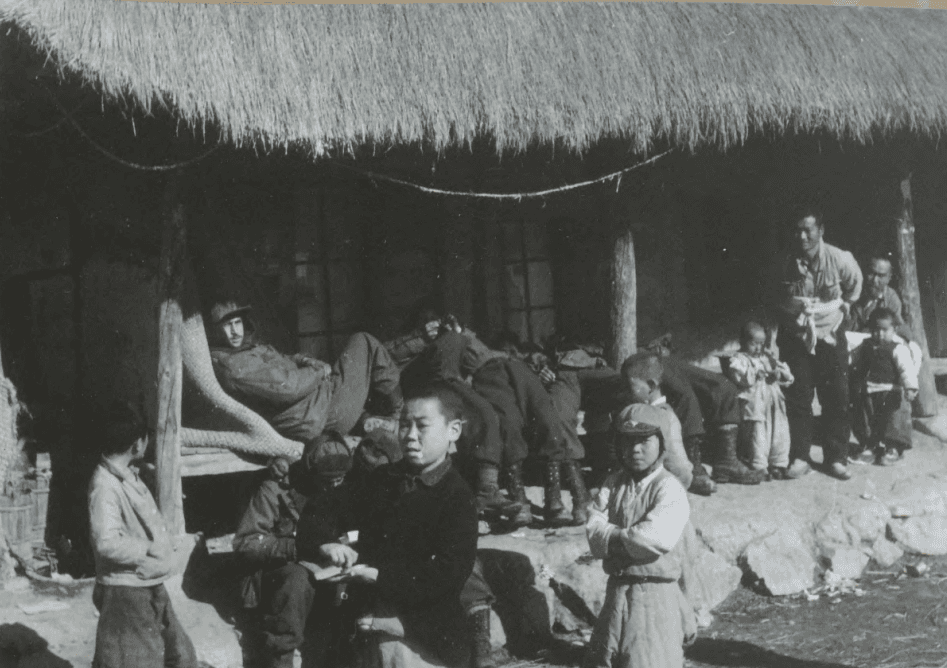
South Korean Children and Civilians with Turkish Soldiers
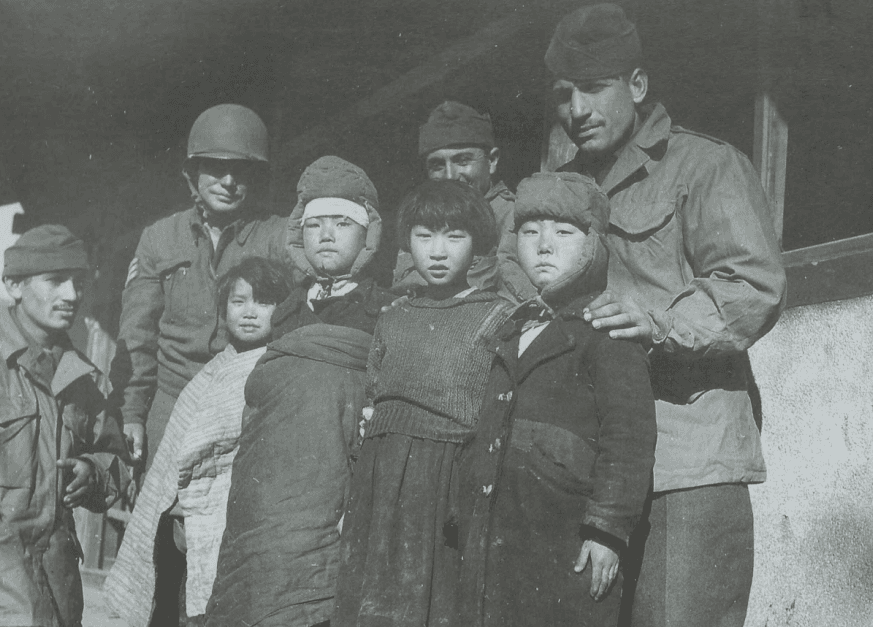
Turkish Soldiers and Orphaned Children
When the First Turkish Brigade was stationed near the city of Suwon, hungry and orphaned Korean children began gathering around the unit. Initially numbering around 70, their number quickly exceeded 100.【10】 Senior Sergeant Bahattin and Non-Commissioned Officer Hasan Hüseyin Dinçtürk from the brigade began sharing their own rations and took responsibility for caring for the children.【11】 When this situation was reported to the commander of the First Turkish Brigade, General Tahsin Yazıcı, a field tent was first set up to shelter the orphans. Subsequently, an abandoned building near the brigade's location was purchased and renovated to serve as a school and orphanage. This institution was named "Ankara School and Orphanage." Thus, orphaned and abandoned Korean children gained access to education and shelter under wartime conditions. Among the twenty-one member states of the United Nations, this was the only educational facility established specifically for civilians and children.
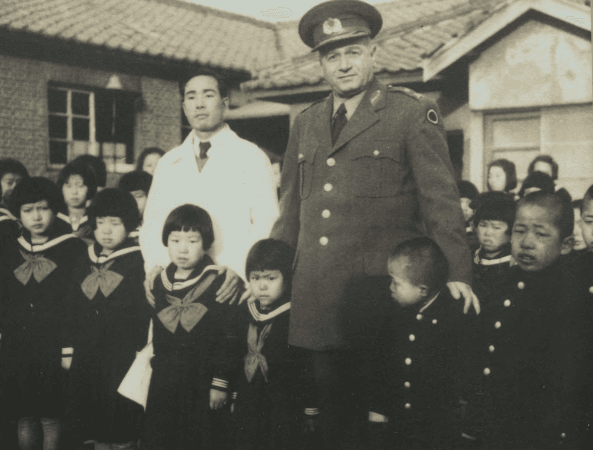
Students of the Ankara School and Orphanage
Given the difficult conditions of war, the school avoided imposing a heavy curriculum in order to ease children's psychological distress and prevent exhaustion. Alongside core academic subjects, special emphasis was placed on physical education and music instruction.【12】 The languages of instruction were Turkish, Korean and English.【13】 With the support of personnel from the Turkish Brigade Band, students were taught to play various musical instruments, and they memorized and performed in chorus İstiklal Marşı, Ankara Marşı and various Turkish folk songs. The piano and other instruments specially procured for the institution created a therapeutic environment for the children.
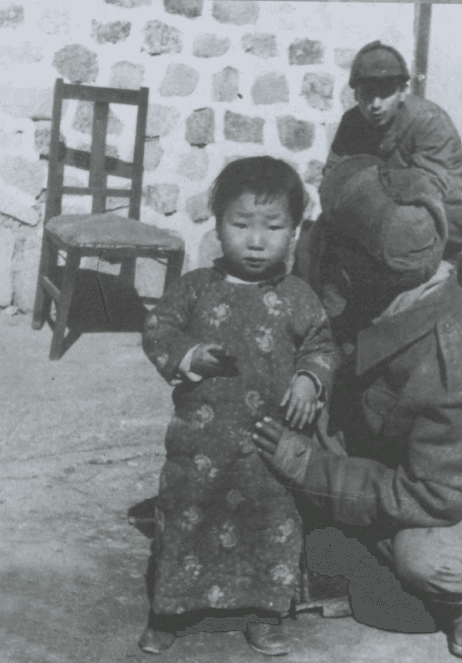
Turkish Soldier and an Orphaned Korean Child
Administrative administrative processes and the school's continuity were maintained by Turkish soldiers, while certain Turkish officers were assigned to ensure the smooth operation of educational activities. Approximately ten Korean teachers, requested from South Korean authorities, served at the institution without receiving any compensation.【14】 Kidek Nik, who assumed the role of school principal, later adopted the name Hasan upon converting to Islam.【15】 In addition, books, stationery supplies and magazines sent from Ankara Demirlibahçe Primary School contributed to the school's educational inventory.【16】
Students of the school participated in ceremonies organized by the Turkish Brigade on national holidays such as 23 April, 19 May and 29 October, presenting performances they had prepared. The Chief of the General Staff at the time, General Mehmet Nuri Yamut, personally visited this institution in the war zone and conducted inspections.【17】
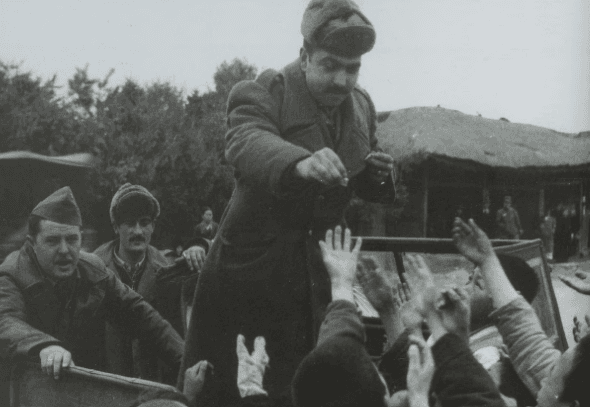
Turkish Military Distributes Candy to Korean Children
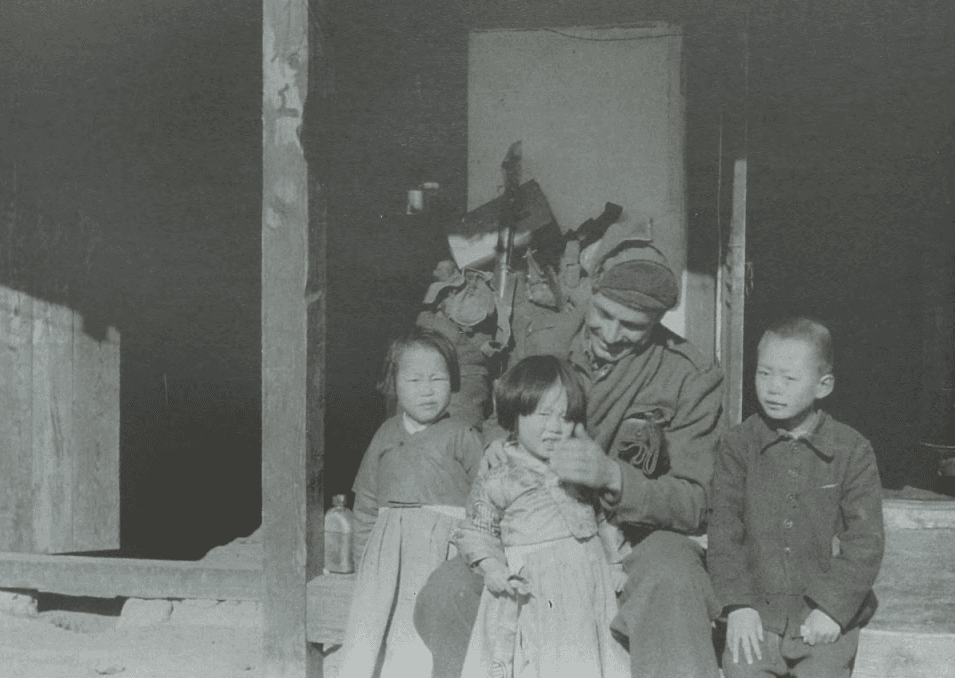
Interpreter Second Lieutenant Münci Kapani with Children
As Turkish brigades completed their tours of duty in Korea, they returned home while handing over the administration and maintenance of Ankara School to incoming brigades, thus ensuring the institution's continuity. During the tenures of the Second and Third Brigade commanders, the school's deficiencies were addressed; under the Fourth Brigade Commander, General Kemal Akkurt, the institution was further developed into a more complete and self-sufficient form.【18】 During the Fifth Brigade Commander General Mete Yurdakul's term, the institution's physical capacity was expanded with the construction of an additional dormitory building.
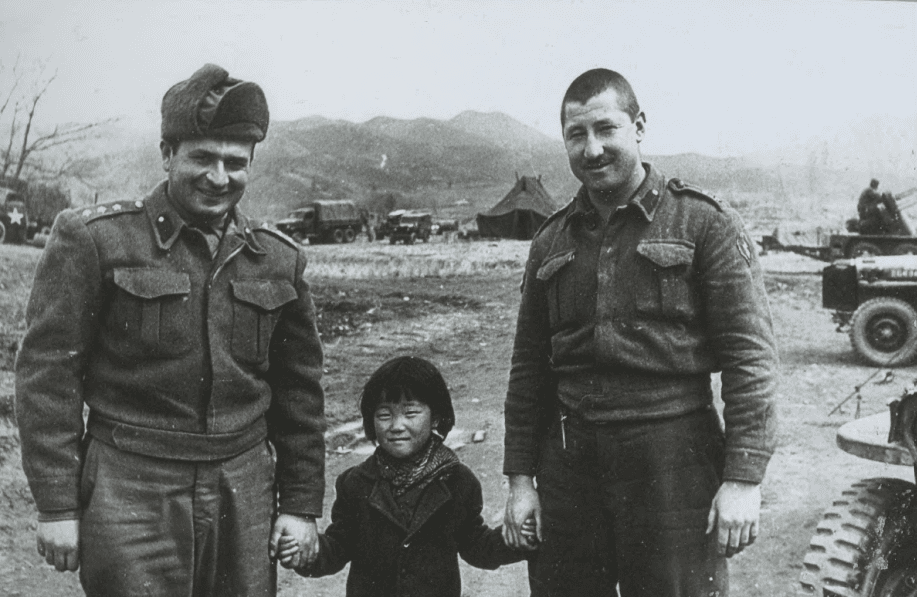
Captain Süleyman Pulat (left) and Martyr Second Lieutenant Mehmet Günenç with a Child
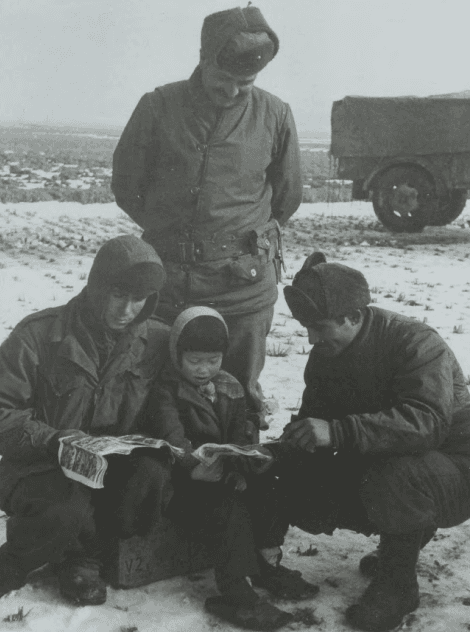
Captain of Artillery Süleyman Pulat (Standing)
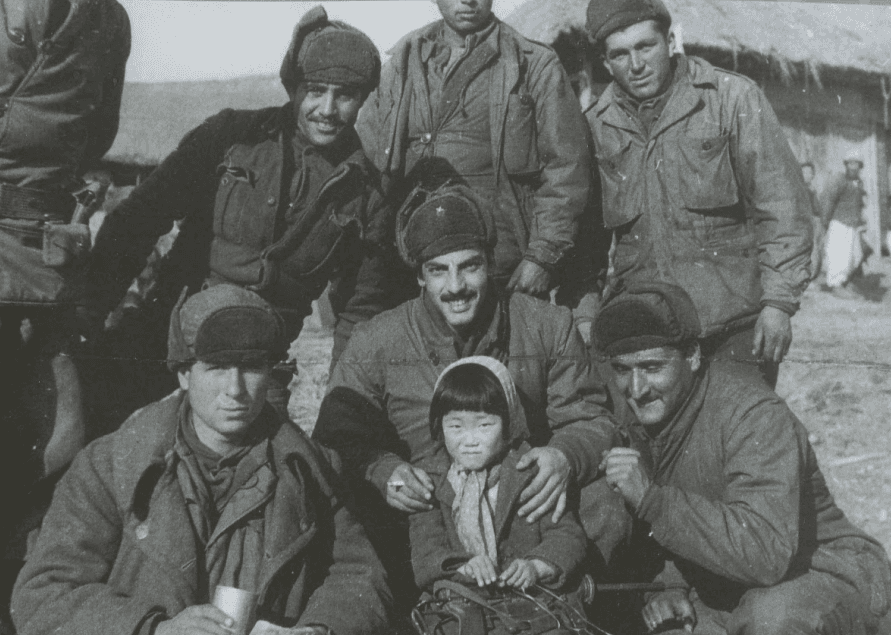
Sponsored by the Turkish Brigade Ayla
In anticipation of a possible end to the Turkish military presence in Korea, a plot of land measuring 5,000 square meters was purchased on 29 October 1954 to enable the school to meet its own needs. Agricultural infrastructure was established on this land, which was then donated to the school.【19】
Through the soup kitchen established within the school, food needs were met not only for orphaned students but also for impoverished local residents. In addition to Ankara School, Turkish units provided significant financial and in-kind aid to the sister school named "Tysan" located in Suwon.【20】
Humanitarian efforts to assist children orphaned during the Korean War are documented in the memoirs and recounted dialogues of serving officers.
Second Turkish Battalion Intelligence Officer Captain Nazım Dündar Sayılan describes finding orphaned children in forested areas and the process of bringing them to Ankara School as follows:
"I will never forget my first encounter with a nine-year-old boy, trembling with fear in a secluded corner of the forest, his eyes and mouth wide open, convinced he was about to be killed. He cowered, covering his face with both hands. When he realized I was his savior, he clung to my neck with all his strength, squeezing so tightly he nearly cut off my breath. He could not believe he was still alive and kept throwing himself into my arms again and again. He swallowed the food I gave him without chewing, and even the warmth I offered could not stop his shivering. I learned his name was Kim. This child could barely walk on two crutches. His family had migrated south. To avoid becoming a burden to them, Kim had fled his home and taken refuge in the forest. I carried him on my back to a Jeep and sent him to a doctor, replacing the makeshift bandages on his wounds with proper care. (...)
One day, at the entrance of a ruined village, I encountered a seven-year-old girl sitting on the threshold, eating boiled rice from a bowl. The child could not speak—her tongue was paralyzed. Who knows what horrors or merciless scenes she had witnessed at such a young age? I wanted to embrace her, but she pushed me away with her hand and began retreating toward the ruined house. She had lost the ability to distinguish friend from foe. All my kind words, gentle gestures, and even the candies I offered were useless. It was clear she was terrified. Despite all her resistance, I picked her up and took her immediately to the battalion doctor. (...) Two days later, she too was sent to the Ankara Primary School in Suwan."【21】
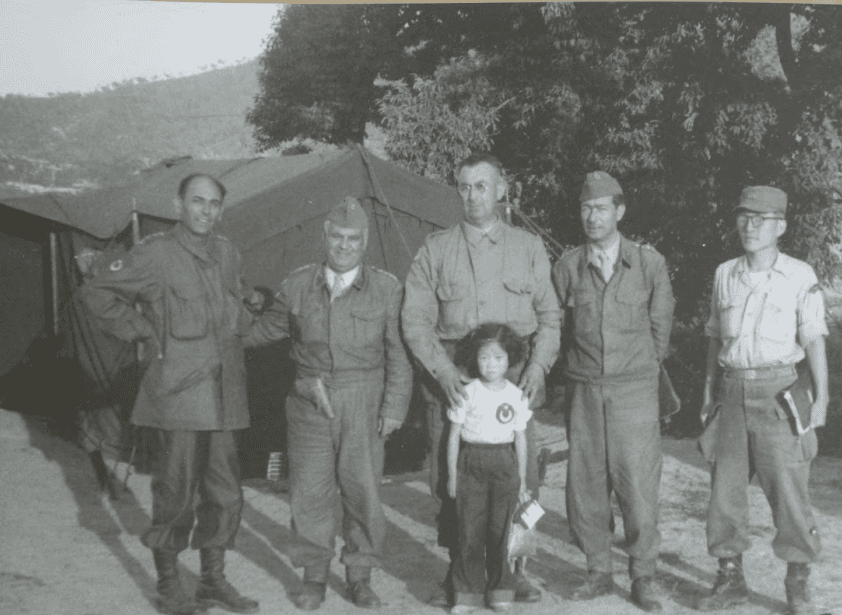
Colonel Celal Dora, Colonel Nurettin Parmir, Other Officers, and the KoreanAyla
Commander of the 10th Platoon Captain Nazmi Özoğlu details the moment he rescued a small girl left to die in freezing cold:
"On the road, a girl aged five or six approached a pile of snow with her tiny feet, gripping the snow with her blue-tinged hands, trying to climb over it. Her face was pale, tears streaming down her cheeks, and she trembled violently. Her voice, hoarse from crying, came out as a faint whimper. Her legs had lost all strength, yet she struggled desperately to cross the snowdrifts. (...) This poor child was facing her final moments, locked in death's grasp. Captain Süleyman Pulat ran toward the sobbing sound, opened his arms to the abandoned child of humanity, and gently pressed her to his chest. The little girl trembled like an electric current running through her body, cradled in Captain Pulat’s compassionate arms. She looked into his eyes with tear-filled eyes. Captain Pulat, determined to warm the frozen orphan, held her tightly against his warm chest. (...) Carrying the child against his chest, he brought her to the battalion. They wrapped her in a blanket to prevent illness and gave her a warm cup of tea. Captain Pulat resolved to adopt this child, the offspring of parents who had fled communist oppression on the mountain. The artillery battalion now had a daughter. The child needed a name. Eventually, she was named after Seoul, the capital of the Republic of Korea. This little girl became so devoted to the Turkish officers that even after traveling thousands of kilometers under fire, she refused to leave the warmth of Turkish compassion."【22】
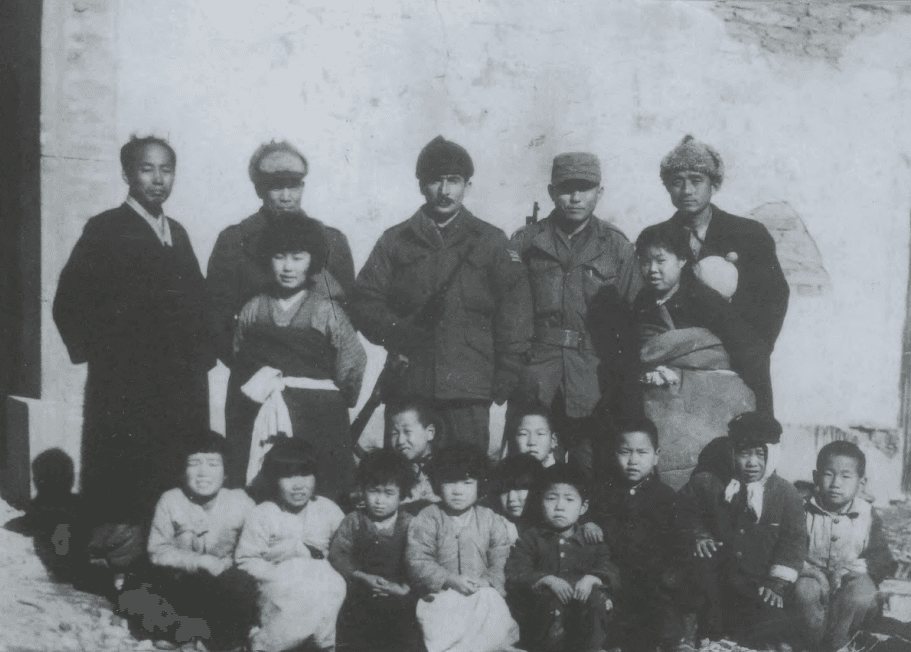
Children Under Protection
First Battalion Operations Officer Captain Sacit Gürünlü recounts the dialogue surrounding the girl found by Captain Süleyman Pulat, who refused to be separated from him when her parents were located:
"We opened an Ankara school and took in children abandoned along the roadside, assigning teachers, educating them, giving them rations and food. Captain Süleyman, commander of the artillery headquarters platoon, found a girl by a stream, dressed her in a small soldier’s uniform, and carried her with him—of course, the artillery unit was mostly in the rear, far from danger. After we reached the current armistice line, we located the girl’s mother and father in Seoul. The dentist and doctor confirmed they had abandoned her by the stream and fled. We called them to take her back. The girl said, 'My father is Captain Süleyman; I am not going anywhere!' We managed, with great difficulty, to hand her over. She left, but remained deeply attached."【23】
Beyond Captain Süleyman Pulat, the fate of Ayla, a Korean girl rescued and protected by Senior Non-Commissioned Officer Süleyman Dilbirliği on the battlefield, is also recorded in memoirs. Regarding this matter, Commander of the Engineering Platoon of the Third Turkish Battalion Captain Şinasi Sükan relates the following:
"Ayla, who appeared to be around 8 or 9 years old, caught my attention with her beauty, grace, intelligence, and the Turkish she spoke—Turkish I could not imagine how she had learned. Approaching her, I said, 'My child, where did you learn such beautiful Turkish?' The sweet girl replied, 'During the early wars, when people migrated from north to south, I lost my mother, father, and siblings. Even now, I do not know where they are or whether they are alive. I was crying when passing Turkish soldiers took my hand, took me along wherever they went. I ate and drank with them, slept in their tents. They cared for me as if I were their own child and called me Ayla.' Thus, two years passed. During that time, I learned Turkish. Later, they sent me to Ankara School to study.' ...I hope that children like Ayla, orphaned and left helpless by the cruelty of war, may find a happy home, and that humanity may learn a lesson from such events."【24】
On October 29, 1952, during the Republic Day celebrations in Korea, Turkish officer Ahmet Eren wrote the following in his diary:
"The Republic Day ceremony was truly wonderful. The commanders and their deputies from the 20th and 40th Divisions attended. The children of Ankara School, under the care and supervision of our brigade, came with their teachers. The ceremony began with a formal military parade. Rifle gymnastics were performed. The students gave a concert and danced. They sang the Ankara March so beautifully that for a moment I imagined myself in my homeland, among elementary school students; my eyes filled with tears..."【25】
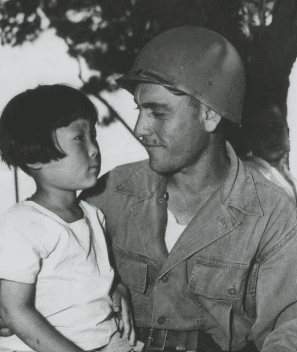
A Korean Child and a Turkish Soldier
Among the graduates of Ankara Elementary School, Yoon Yeo Yeon recalls those days, stating that she will carry the love of Turkish soldiers in her heart until her last breath:
"The Turkish soldiers, besides providing us with education, acted as both mother and father. We lived on the food and drink of Turkish soldiers who fought for our freedom. Hüseyin Dinçtürk and his soldiers made us forget that we were motherless and fatherless."【26】
Another graduate, Lee Young, expresses her feelings in these words:
"At that time, everyone who could hold a weapon—from age 14 to 70—was in the war. Turkish soldiers took care of us, children who had lost our parents and were left helpless. Hüseyin Dinçtürk and his soldiers were our family. There were about 640 of us. For four years, they never left us alone. They became a permanent part of our lives. Even today, living in the same neighborhoods with friends, it is impossible to forget them and what they did for us."【27】
When Ca Yang Ca was five years old, she sought refuge at the school. Speaking with deep gratitude for the Turkish soldiers who took her in, she said:
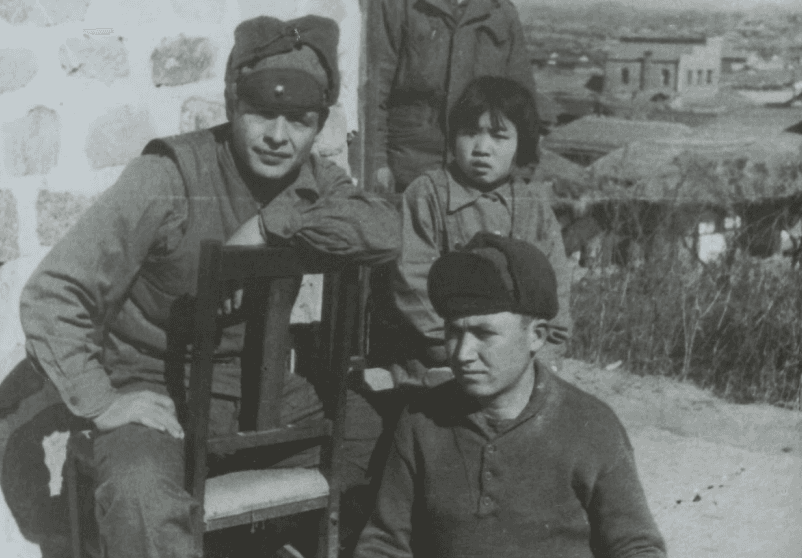
A Korean Child Beside a Turkish Soldier
"We were very small. I was five. The Turkish soldiers who came to Korea to fight took care of us. They were both our mother and our father. The name Türkiye brings peace to my heart."【28】
Another student of the school, Lee Hak Cang, emphasized that the soldiers were not merely warriors, but also deeply compassionate human beings:
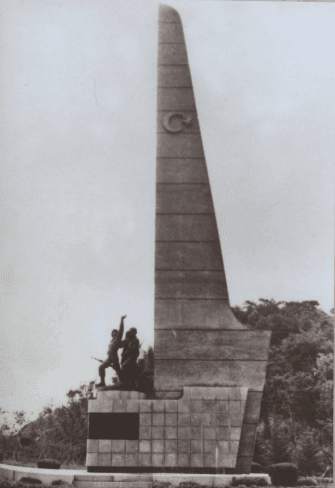
Memorial to the Victory of Kumyangjang-ni, Erected in Memory of the Turkish Soldier’s Struggle in the Korean War
"They were not only good teachers, but also excellent soldiers. When I hear the word Türkiye, two things come to mind. First, the Turkish soldier who took care of us. The Turkish soldier is number one in the world and, beyond being a soldier, is a truly good person. Second, the presence of a distant relative. The Turks are like my family. When I close my eyes, I often see the Turkish soldier. We lived our childhood with the Turkish soldier. When I think of Türkiye, I remember a country that fed us, embraced us, and gave us education."【29】
Over 640 orphaned children【30】 were provided with education and shelter by the Ankara School, which continued its operations for some time after the armistice was signed. After Türkiye's complete military withdrawal from Korea in 1971, the institution was left without patronage and faced closure, eventually merging in 1979 with a local educational institution, thereby ending its legal and physical existence.【31】
In memory of this historic event, the site where the school once stood was developed into a park named "Ankara Park," and the road in front of the park was named "Ankara Road." On June 25, 2013, the official inauguration of Ankara Park was held with the participation of surviving alumni of the school and officials from Suwon City. A monument inscribed in Turkish, Korean and English, titled "Ankara Orphanage Founding Monument," was installed on the site to commemorate the contributions of the Turkish soldiers.【32】
Askerî Müze ve Kültür Sitesi Komutanlığı. Fotoğraflarla Kore Savaşı’nda Türk Askeri. Milli Savunma Bakanlığı. İstanbul, 2016. Accessed October 17, 2026.https://askerimuze.msb.gov.tr/uploads/tinymce/files/be6bc3d6d3a34eceaa63be742ce87942.pdf
Tekin, Cemile, and Nihat Erdem. "Kore Savaşı’nda Türklerin Açtığı Bir Eğitim Kurumu: Ankara Okulu ve Yetimhanesi." Karatay Sosyal Araştırmalar Dergisi, no. 10 (2023): 35-62. Accessed October 17, 2026.https://dergipark.org.tr/tr/download/article-file/2962584
Tekin, Cemile. "Ankara Okulu." Türk Maarif Ansiklopedisi. Accessed October 17, 2026.https://turkmaarifansiklopedisi.org.tr/ankara-okulu/#yazar-1
Zeren, Bahar. "Kore Savaşı 'Ankara Okulu'." Bachelor's thesis, Kırklareli Üniversitesi, 2018. Accessed October 17, 2026.https://inpursuitofthenorthstar.anadolu.edu.tr/belge/kore-savasi-ve-ankara-okulu-lisans-bitir
Denizli, Ali. Kore Savaşında Türk Askerinin Kore Halkına Yardımları ve Ankara Okulunun Açılması. Ankara, 2014. Accessed October 17, 2026.https://www.academia.edu/32602239/KOREAN_WAR_ORPHANS_SCHOOL_OPENED_BY_TURK%C4%B0SH_SOLD%C4%B0ERS_TOOK_CARE_OF_KOREAN_WAR_CH%C4%B0LDRENS_CALLED_ANKARA_SCHOOL_pdf
[1]
Cemile Tekin and Nihat Erdem, "Kore Savaşı’nda Türklerin Açtığı Bir Eğitim Kurumu: Ankara Okulu ve Yetimhanesi," Karatay Sosyal Araştırmalar Dergisi, no. 10 (2023): 35, Accessed October 17, 2026https://dergipark.org.tr/tr/download/article-file/2962584
[2]
Tekin and Erdem, "Kore Savaşı’nda Türklerin Açtığı Bir Eğitim Kurumu," 38-39.
[3]
Bahar Zeren, "Kore Savaşı 'Ankara Okulu'" (Master's thesis, Kırklareli Üniversitesi, 2018), 48. Accessed October 17, 2026https://inpursuitofthenorthstar.anadolu.edu.tr/belge/kore-savasi-ve-ankara-okulu-lisans-bitir
[4]
Tekin and Erdem, "Kore Savaşı’nda Türklerin Açtığı Bir Eğitim Kurumu," 40.
[5]
Tekin and Erdem, "Kore Savaşı’nda Türklerin Açtığı Bir Eğitim Kurumu," 42.
[6]
Ali Denizli, Kore Savaşında Türk Askerinin Kore Halkına Yardımları ve Ankara Okulunun Açılması (Ankara, 2014), 37, Accessed October 17, 2026https://www.academia.edu/32602239/KOREAN_WAR_ORPHANS_SCHOOL_OPENED_BY_TURK%C4%B0SH_SOLD%C4%B0ERS_TOOK_CARE_OF_KOREAN_WAR_CH%C4%B0LDRENS_CALLED_ANKARA_SCHOOL_pdf; Tekin and Erdem, "Kore Savaşı’nda Türklerin Açtığı Bir Eğitim Kurumu," 42.
[7]
Denizli, Contributions of Turkish Soldiers to the Korean People During the Korean War and the Opening of the Ankara School, 37–38; Tekin and Erdem, "Kore Savaşı’nda Türklerin Açtığı Bir Eğitim Kurumu," 42.
[8]
Denizli, Assistance by Turkish Soldiers to the Korean People During the Korean War and the Opening of the Ankara School, 40.
[9]
Tekin and Erdem, "Kore Savaşı’nda Türklerin Açtığı Bir Eğitim Kurumu," 42.
[10]
Tekin and Erdem, "Kore Savaşı’nda Türklerin Açtığı Bir Eğitim Kurumu," 42.
[11]
Tekin and Erdem, "Kore Savaşı’nda Türklerin Açtığı Bir Eğitim Kurumu," 43, 48.
[12]
Tekin and Erdem, "Kore Savaşı’nda Türklerin Açtığı Bir Eğitim Kurumu," 44.
[13]
Tekin and Erdem, "Kore Savaşı’nda Türklerin Açtığı Bir Eğitim Kurumu," 44.
[14]
Tekin and Erdem, "Kore Savaşı’nda Türklerin Açtığı Bir Eğitim Kurumu," 44.
[15]
Zeren, "Kore Savaşı 'Ankara Okulu,'" 67.
[16]
Zeren, "Kore Savaşı 'Ankara Okulu,'" 70.
[17]
Bahar Zeren, "Kore Savaşı 'Ankara Okulu'", 72
[18]
Tekin and Erdem, "Kore Savaşı’nda Türklerin Açtığı Bir Eğitim Kurumu," 45.
[19]
Tekin and Erdem, "Kore Savaşı’nda Türklerin Açtığı Bir Eğitim Kurumu," 45.
[20]
Tekin and Erdem, "Kore Savaşı’nda Türklerin Açtığı Bir Eğitim Kurumu," 46.
[21]
Denizli, Kore Savaşında Türk Askerinin Kore Halkına Yardımları ve Ankara Okulunun Açılması, 118-125.
[22]
Denizli, Kore Savaşında Türk Askerinin Kore Halkına Yardımları ve Ankara Okulunun Açılması, 131-135.
[23]
Denizli, Kore Savaşında Türk Askerinin Kore Halkına Yardımları ve Ankara Okulunun Açılması, 128.
[24]
Denizli, Contributions of Turkish Soldiers in the Korean War to the Korean People and the Opening of the Ankara School, 139-149.
[25]
Zeren, "Kore Savaşı 'Ankara Okulu,'" 71.
[26]
Zeren, "Kore Savaşı 'Ankara Okulu,'" 70.
[27]
Zeren, "Kore Savaşı 'Ankara Okulu,'" 70.
[28]
Zeren, "Kore Savaşı 'Ankara Okulu,'" 72.
[29]
Zeren, "Kore Savaşı 'Ankara Okulu,'" 72.
[30]
Tekin and Erdem, "Kore Savaşı’nda Türklerin Açtığı Bir Eğitim Kurumu," 52.
[31]
Tekin and Erdem, "Kore Savaşı’nda Türklerin Açtığı Bir Eğitim Kurumu," 51.
[32]
Tekin and Erdem, "Kore Savaşı’nda Türklerin Açtığı Bir Eğitim Kurumu," 51.

Ankara School and Orphanage
Establishment Year | 1950 | ||||||||
|---|---|---|---|---|---|---|---|---|---|
Place of Establishment | Suwon South Korea | ||||||||
Founding Union | 1st Turkish Brigade | ||||||||
Languages of Instruction | Turkish Korean English | ||||||||
Year of Closure | 1979 (Merged with a Local School) | ||||||||
Henüz Tartışma Girilmemiştir
"Ankara School and Orphanage" maddesi için tartışma başlatın
Pre-War Context
Wartime Conditions
Establishment of the School
Education, Instruction and Daily Life
Brigade Rotations and Institutional Continuity
Memories of Turkish Officers
Memories of Korean Children
Closure and Legacy