
+1 Daha

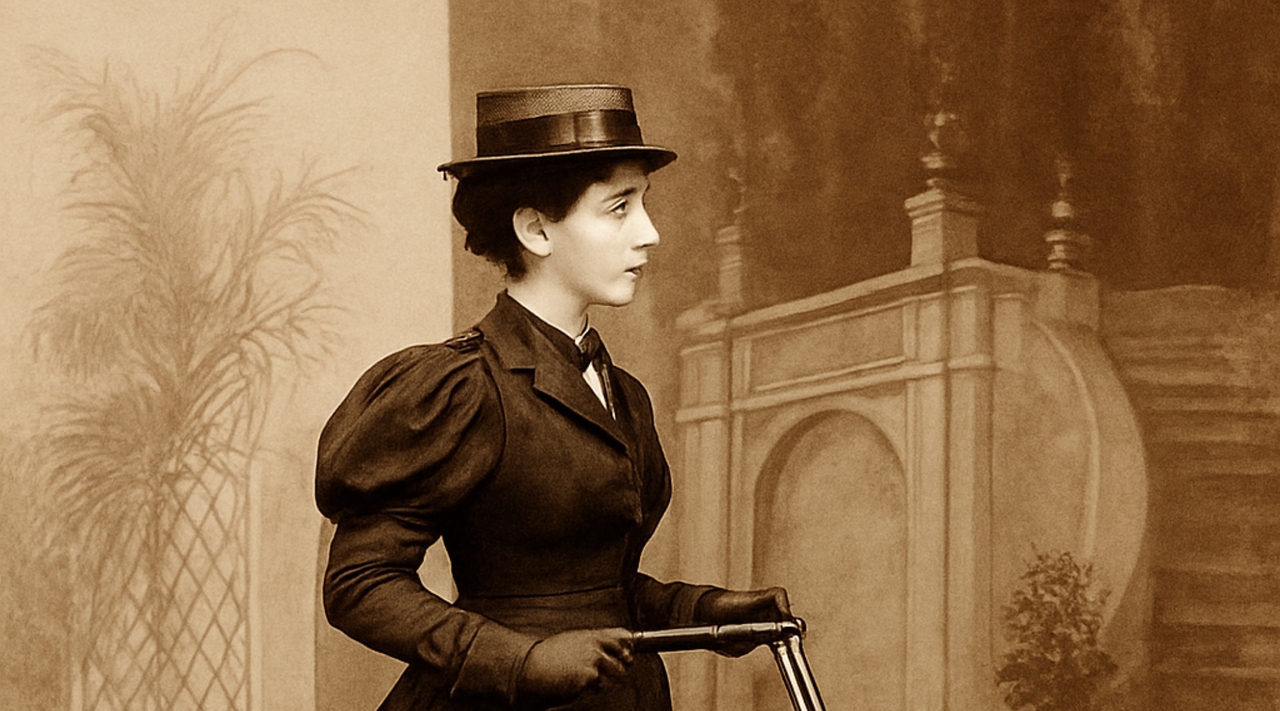
Annie Londonderry, a Jewish immigrant born in 1870, is known for undertaking a long-distance bicycle journey around the world in the late 19th century. Born Annie Cohen Kopchovsky, she lived in Boston as a member of a family that had migrated from Eastern Europe to the United States. Her journey between 1894 and 1895 received extensive coverage in the press of the time and established her public identity as the “first woman to circumnavigate the globe by bicycle.” During her journey, she did not merely complete a physical travel; she also transformed it into a public narrative through sponsorship agreements, advertising campaigns, and media engagement. Annie Londonderry’s story is regarded as a historical example that illuminates women’s mobility, visibility in the public sphere, and strategies for constructing personal identity within the social structure of the late 19th century.
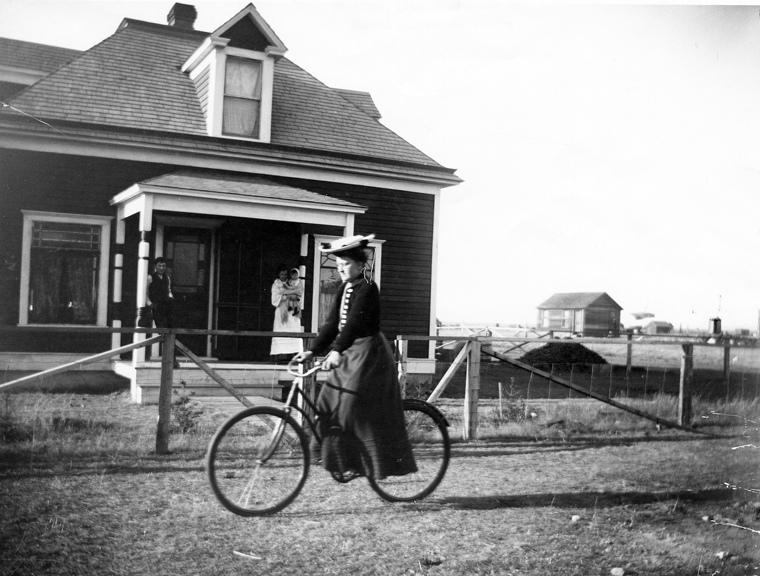
Photograph of Annie Londonderry cycling (picryl)
Annie Londonderry, born Annie Cohen Kopchovsky, was a member of a Jewish family from Eastern Europe and emigrated to the United States with her family after childhood. After migration, Kopchovsky lived in Boston and grew up within the immigrant neighborhood culture common in late 19th-century American cities. At the time, she was married and a mother of three children, managing her daily life with her family while also striving to assert her presence as an immigrant woman within the social and economic conditions of the era.
In the early 1890s, Annie Kopchovsky, living in Boston, held an unremarkable identity as an ordinary immigrant woman with no public recognition. However, her decision to embark on a long-distance bicycle journey transformed this invisibility. Before her journey, she began using the name “Londonderry,” a choice linked to sponsorship and advertising practices of the time; the name was adopted following an agreement with a mineral water brand. Thus, Kopchovsky acquired a new public identity and established a financial foundation to sustain her journey.
Annie Londonderry’s life story unfolds at the intersection of migration, family responsibilities, and efforts to achieve public visibility. Her immigrant background, life in Boston, and familial status prior to the journey elevate her bicycle trip beyond a personal endeavor, transforming it into a historical example that reveals the boundaries and possibilities of women’s mobility within the social structure of the late 19th century.
Annie Londonderry’s bicycle journey began in 1894 with her departure from Boston. This undertaking was announced to the public through media narratives centered on a “wager.” According to these accounts, Londonderry pledged to complete her journey around the world by bicycle within a specified timeframe and to support herself financially along the way. Within this framework, the journey emerged not merely as physical movement but as a carefully constructed public spectacle designed to capture public interest.
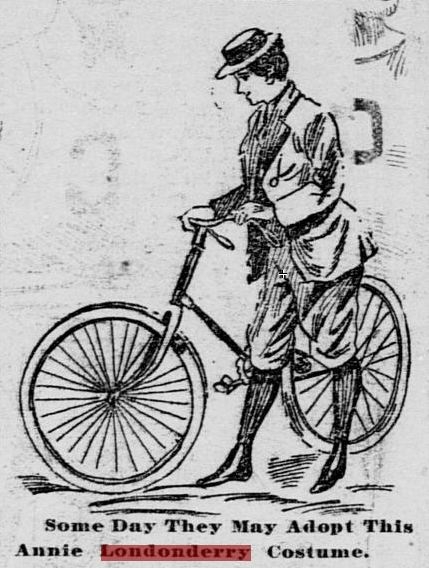
Before embarking, Londonderry gained experience in cycling and prepared for the conditions she might encounter. She initially abandoned women’s conventional clothing of the time and adopted attire considered more practical for travel. This choice stood out both for its practical benefits and as a media-savvy gesture designed to attract attention. From the outset, Londonderry positioned herself not only as a traveler but also as the narrator and public face of her journey.
At the start of her bicycle journey, Londonderry’s relationship with the press proved decisive. By reporting her experiences to newspapers and audiences, she increased her visibility and secured financial support through sponsorships and advertising. Adding advertising space to her bicycle and referencing these sponsors during her journey became key elements in sustaining the trip. In this sense, the beginning of her journey represented not just a personal decision but a process deeply intertwined with the media and commercial networks of the era.
Annie Londonderry’s global journey took shape as an extended period of mobility following her departure from the United States in 1894, encompassing Europe, the Middle East, Asia, and North Africa. The journey lasted approximately fifteen months and traversed numerous countries, port cities, and cultural environments. Although Londonderry used her bicycle as the symbolic centerpiece of her journey, she did not travel exclusively by bicycle throughout; she also relied on ships and trains for certain segments. Nevertheless, the journey was publicly framed and embraced by the press as a “bicycle tour of the world.”
During her travels, Londonderry maintained contact with the press in each location, sharing her experiences with the public. In interviews with newspapers, she emphasized the geographical challenges, the hardships of the journey, and her own mobility. These narratives ensured that the journey became not merely a personal experience but a publicly observed and reported event. The advertisements placed on her bicycle and clothing played a crucial role in financing the trip and enabled Londonderry to position herself simultaneously as both traveler and public figure.
The global journey was a process of continuous self-reinvention. As she progressed, the narratives she used to introduce herself in different countries varied; some emphasized the difficulties encountered, while others highlighted success and resilience. This demonstrates that the journey was not merely physical movement but a performative public narrative shaped through storytelling. Annie Londonderry’s global journey is regarded as a significant historical example of how women traveled, achieved public visibility, and expanded their spheres of action in the late 19th century.
Annie Londonderry’s journey began in 1894 on the eastern coast of the United States and crossed the Atlantic Ocean to reach Europe. In Europe, particularly in Great Britain and other countries, she cycled extensively while maintaining contact with the press. After her European leg, she turned toward the Mediterranean basin, visiting port cities in the Middle East and North Africa to continue her journey.
During the Asian segment of her journey, she traveled extensively across South and Southeast Asia, encountering diverse geographical and climatic conditions. Sea voyages were decisive in covering long distances, while the bicycle remained the primary mode of land transport. In the final phase of her journey, she crossed the Pacific Ocean and returned to the United States, completing the journey in Boston.
There is no evidence that the entire route was covered exclusively by bicycle; the journey unfolded as a prolonged movement combining multiple modes of transportation. Nevertheless, the route, when viewed in light of the transportation and communication infrastructure of the time, remains remarkable for its transcontinental scope. Annie Londonderry’s route is considered a concrete example of how individual travel became globally feasible in the late 19th century.
Throughout her journey, Annie Londonderry acted not merely as a traveler moving from place to place but as an active agent who sustained her journey publicly and economically. She met with the press in the cities she visited, gave interviews to newspapers, and delivered public talks about her journey. These engagements increased the visibility of her journey and successfully generated public interest. Media coverage kept her travels continuously current and closely followed.
During her journey, Londonderry earned income through sponsorships and advertising. She placed advertisements on her bicycle, clothing, and accessories, securing commercial agreements that played a vital role in financing the trip. Her use of the name “Londonderry” is also understood in this context as one of the key factors ensuring the financial sustainability of her journey. These activities demonstrate that the journey was not merely a physical undertaking but a planned public and economic enterprise.
Londonderry’s activities during the journey are also notable in terms of narrative production. She conveyed the challenges, experiences, and observations she encountered at various stops in multiple forms, and these narratives often changed over time. Her ability to reshape her own story kept the journey appealing to the press and public. In this way, Annie Londonderry’s activities during her journey serve as an example of how personal experience, media, and commercial interests became intertwined within late 19th-century travel culture.
Annie Londonderry’s journey attracted intense media attention in the late 19th century. Newspapers of the era portrayed her as an extraordinary figure, with the fact that a woman was cycling long distances forming the core of their sensational appeal. News reports and interviews conveyed the progress of her journey and elevated Londonderry’s fame beyond the United States to an international scale.
In media narratives, Londonderry’s journey was sometimes framed as a challenge or a record-breaking feat, and at other times as an expression of personal courage and endurance. These portrayals reveal how the journey was perceived and presented to the public rather than how it was experienced in reality. Londonderry’s own accounts and the information she provided to the press were decisive in shaping this perception. Thus, the press became not merely a conduit for reporting events but a medium that constructed the meaning and scope of the journey.
Public reception contributed to the redefinition of Annie Londonderry’s identity during and after her journey. Through media coverage, she gained a level of visibility she had never experienced as an immigrant woman in daily life; her name became inseparable from the journey itself. This allowed her story to transcend a simple travel narrative and enter the broader social and cultural debates of the era.
Annie Londonderry’s journey was a process in which questions of identity and representation became prominent. Born Annie Cohen Kopchovsky, she appeared in the public eye under various names before and during her journey. Adopting the name “Annie Londonderry” was tied to sponsorship arrangements, and this name eventually became an inseparable part of the journey and its public narrative. This illustrates that identity is not a fixed trait but a construct shaped and presented under specific conditions.
Throughout her journey, Londonderry varied her self-representations and identity emphases in her public narratives. Different versions of her life story and journey details appeared in press reports, shaped according to the expectations of the media and public interest. Thus, her public identity was based not only on biographical facts but also on a narrative construct.
This issue of representation enables the simultaneous consideration of Londonderry’s identities as an immigrant, a woman, and a traveler. Her journey narratives led to her being perceived both as a woman pursuing a personal endeavor and as a figure who challenged the social norms of her time. In this context, her name and identity are as significant as the journey itself for understanding how women were represented in the public sphere of the late 19th century.
Annie Londonderry’s journey occurred within a historical context shaped by industrialization, urbanization, and expanding transportation options in the late 19th century. This period saw the bicycle emerge as a new tool that enhanced individual mobility and made travel accessible to broader segments of society. Simultaneously, the growing influence of newspapers and magazines enabled individual initiatives to reach mass audiences rapidly. Londonderry’s journey gained meaning within this communication environment.
Socially, Londonderry’s journey coincided with a period of intensified debate about women’s presence in the public sphere. The late 19th century was a time when women’s participation in work, education, and public life remained limited, yet these boundaries were increasingly questioned. In this context, the bicycle was not merely a mode of transport but also a symbol of freedom of movement and bodily autonomy for women. Londonderry’s journey is viewed as one of the tangible examples of this symbolic meaning.
The phenomenon of migration also holds a significant place in the historical context of Annie Londonderry’s story. As a Jewish immigrant from Eastern Europe living in the United States, Londonderry embarked on her journey within an environment where immigrants struggled with limited economic and social opportunities. This situates her endeavor not merely as a personal choice but as a reflection of the immigrant experience and the pursuit of public visibility. Thus, Annie Londonderry’s journey is regarded as a historical example that illuminates the relationships between gender, migration, and mobility in late 19th-century society.
After her bicycle journey, Annie Londonderry largely lost her public visibility and resumed a private life. The intense media attention she received during the journey diminished afterward, and Londonderry returned to a quieter life with her family. She died in 1947. Although her journey made her famous, information about her later years remains limited. It is known that she died in 1947.
After her death, Annie Londonderry’s name appeared only sporadically in historical accounts and popular memory. Although her bicycle journey around the world was documented in newspapers of the time, the story was largely forgotten by subsequent generations. However, beginning in the late 20th century, increasing scholarly interest in women’s travel history, bicycle culture, and immigrant experiences brought Londonderry back into public awareness.
In later periods, Annie Londonderry became recognized as a historical figure primarily within the contexts of women travelers and early bicycle culture. Her life and journey have been interpreted as an example that challenges assumptions about women’s public mobility, their methods of constructing personal narratives, and the social boundaries of the era. This posthumous interest has contributed to viewing her story not merely as a personal adventure but as a historically and socially meaningful experience.

Henüz Tartışma Girilmemiştir
"Annie Londonderry" maddesi için tartışma başlatın
Life and Origins
Beginning of the Bicycle Journey
Global Journey
Route of the Journey
Activities During the Journey
Media and Public Reception
Identity, Name, and Representation
Historical and Social Context
Death and Legacy