
Bu içerik Türkçe olarak yazılmış olup yapay zeka ile otomatik olarak İngilizceye çevrilmiştir.
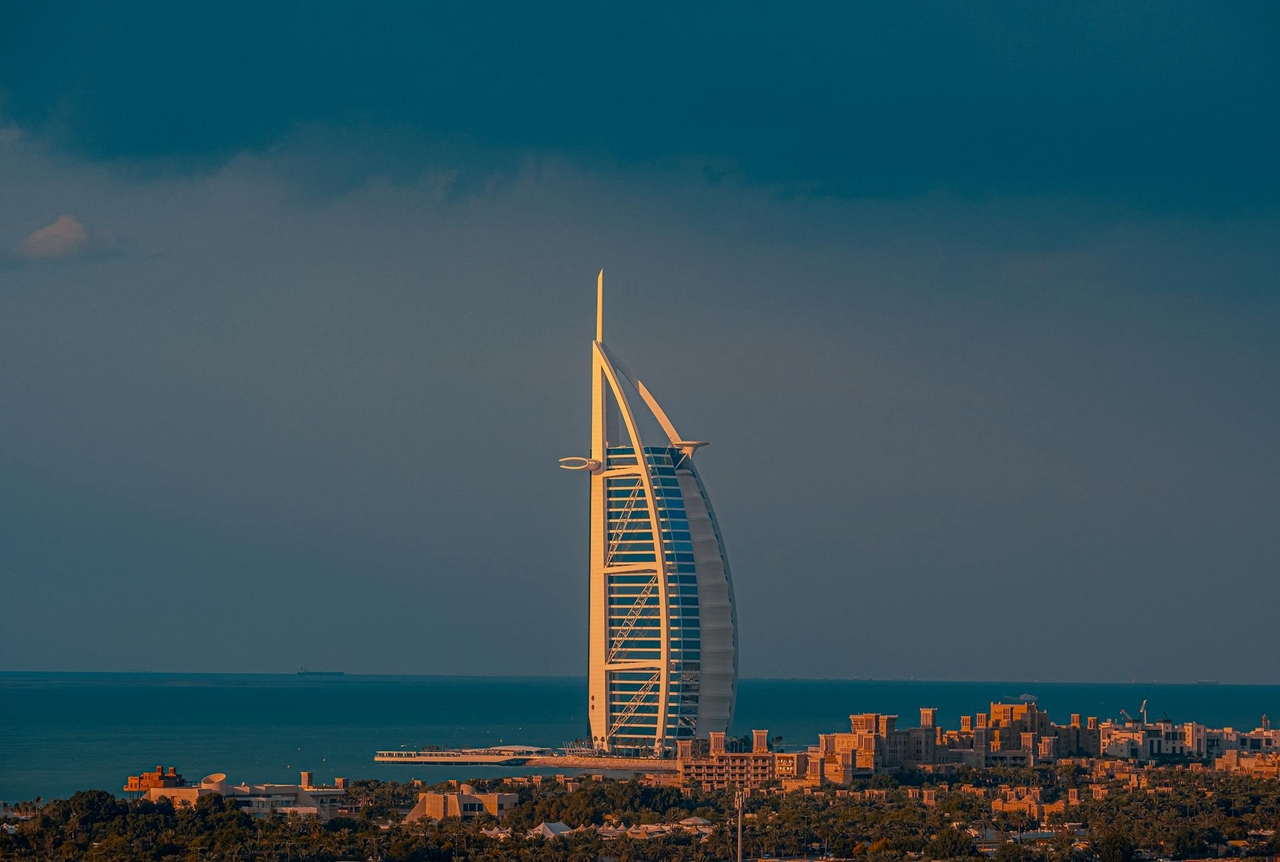
Burj Al Arab Jumeirah is a hotel located in the city of Dubai, United Arab Emirates. Completed in 1999, the structure stands on an artificial island approximately 280 metres offshore from Dubai’s Jumeirah beach. It is situated about 15 kilometres from the city centre and is in close proximity to urban areas such as Jumeirah Beach and Palm Jumeirah. Due to its entirely suite-based accommodation and remarkable height, it is regarded as a significant example in tourism literature. Although it is not publicly accessible and lacks an official rating system, the hotel has occasionally been referred to as a “seven-star hotel,” a designation primarily used in marketing contexts.

Burj Al Arab (Pixabay)
The construction of Burj Al Arab took place between 1994 and 1999. The structure is built on an artificial island created in the seabed approximately 300 metres from the coast and at a depth of six metres. The design was inspired by the traditional Arab dhow sailboat and consists of two V-shaped wings flanking a central atrium. Due to its height, weight transfer requirements, and environmental factors, the project is considered a major engineering undertaking that extensively employed advanced engineering techniques.
The first phase of the project involved creating the island on which the building would rest. The island was shaped over nearly three years of reclamation activities, using specially designed concrete wave-dissipating blocks to mitigate environmental impacts. These blocks, a first-time application in the region, were installed up to seven metres in height to protect the island’s surface.
The island was anchored to the seabed using 20 concrete piles, each 45 metres long and 1.5 metres in diameter. Temporary steel tubular piles were used to position boundary rocks, followed by the construction of a circular wall system made of interlocked steel sheet piles. The interior of the wall was filled with sand and supported externally by rock fill. A working platform was constructed atop the fill to install the building’s load-bearing piles, after which the sand fill was removed and a 2-metre-thick waterproof concrete base was poured beneath the structure. The top level of this base lies seven metres below sea level.
The structure is a mega-structure designed with an external skeleton to resist both wind and seismic loads. Three steel mega-truss systems located outside the V-shaped wings integrate with the central core to resist horizontal forces. The double-layer PTFE-coated fiberglass membrane enclosing the atrium reduces wind impact through its aerodynamic profile, distributing positive and negative wind pressures between steel truss beams to support structural performance.
Vertical load transfer is achieved through a central concrete core and a steel framework. The curved ends of the wings and the external skeleton play a complementary role in balancing both vertical and horizontal loads. Cross-braced steel members and large-scale central mega-beams were used across various levels to enhance the building’s rigidity. The upper mast section is supported by additional structural elements to balance the upper mass.
Load analyses calculated the total dead load at 2,850,000,000 lb, the live load at 86,160,000 lb, and the total load on the foundation at 150,000 lb/ft². The maximum horizontal wind load under storm conditions is 2,366,000 lb.
Advanced automated climbing formwork technologies were employed in the reinforced concrete applications of the project. For the central core, the Cantilever Top Climbing Jump Form system was selected; this 300-ton system, raised by electrically synchronized jacks, shortened cycle times. The wing walls and staircase cores were constructed using the Doka SKE automated climbing formwork system. Each wall was raised in increments of approximately 3.57 metres.
For the main floor slabs, “flying form tables” weighing 18 tonnes and measuring 18.3 m × 8.1 m were used. Once the concrete achieved sufficient strength, these tables were lowered by jacks and transported by tower cranes to the next level. Post-tensioning technology was applied to the slabs to achieve material and time savings.
As the reinforced concrete core rose, the steel elements of the external skeleton were installed progressively. In the lower sections, cross-braced steel brackets and diagonal mega-truss elements were installed early to enhance rigidity and counteract the increasing load from the building’s own weight during construction.
The lightweight structural solutions used for the wing tips facilitated load distribution and simplified assembly at higher elevations. The curved suite walls within the atrium were integrated into the primary load-bearing system to define the interior spatial geometry.
The double-layer membrane wall of the atrium is made of PTFE-coated fiberglass. Panels are tensioned between two layers with a 500 mm air gap and fixed to steel truss beams. The membrane is designed to span up to 50 metres and transfers loads in the direction of the beams under positive pressure and horizontally under negative pressure.
The upper support system connects to the core via cross-braced steel rods at the 18th and 26th floors, pre-tensioned using the post-tensioning method. A full-height expansion joint was left along the membrane to allow the structure to “breathe” controllably under high wind conditions.
Burj Al Arab was designed by architect Tom Wright, with engineering led by Atkins. The structure is situated on an artificial island, with its foundation reinforced by concrete piles extending to the seabed—a method employed to ensure durability under marine conditions.
The exterior façade features white aluminum and specialized glass surfaces. The sail-like external form is one of the building’s defining characteristics and also contributes functionally to ventilation and light control.
The interior design was carried out by KCA International under the leadership of Khuan Chew, utilizing a broad color palette alongside materials such as marble, wood, and metal. The total area covered by Statuario marble within the interiors is approximately 24,000 square metres.
With a height of approximately 180 metres, the building houses one of the tallest interior atriums among hotels. The large-scale columns and vertical voids within the atrium emphasize interior circulation and spatial perception.

Burj Al Arab Night View (Pexels)
Burj Al Arab comprises 200 suites. Interior design elements combine modern and regional decorative motifs. Each suite features multiple bathrooms, expansive living areas, and windows offering varied views.
The hotel includes various restaurants and leisure areas. Among these are Al Mahara, a restaurant featuring an artificial aquarium, and the Skyview Bar located at the upper levels of the building. Additional services include a helipad, diverse service and transportation facilities, and personal assistant services.

Suite Room (Jumeirah)
Burj Al Arab is among the structures that have enhanced Dubai’s global visibility. It has become a symbolic element of the city’s modernization policies within the context of tourism investments that accelerated in the late 1990s. The hotel is regarded as one of the most significant projects in Dubai’s tourism, architecture, and urban branding strategies.
Henüz Tartışma Girilmemiştir
"Burj Al Arab" maddesi için tartışma başlatın
Construction Process
Island Formation and Foundation Systems
Structural Design and Load Transfer
Formwork, Climbing Systems, and Reinforced Concrete Applications
Construction of the Tower Core and Exoskeleton System
Atrium Fabric Wall and Upper Construction
Architectural and Structural Features
Hotel Features and Services
Cultural and Economic Significance