


Bu içerik Türkçe olarak yazılmış olup yapay zeka ile otomatik olarak İngilizceye çevrilmiştir.
+2 Daha
Cerium
Symbol | Ce | ||||||||
|---|---|---|---|---|---|---|---|---|---|
Periodic Table | 6 | ||||||||
Atomic Number | 58 | ||||||||
Group | Lanthanides | ||||||||
Atomic Weight | (140.116) g/mol | ||||||||
Electron Configuration | [Xe] 4f¹5d¹6s² | ||||||||
Appearance | Silvery-gray metal | ||||||||
Density | 6.77 g/cm³ | ||||||||
Melting Point | 799 °C | ||||||||
Boiling Point | 3443 °C | ||||||||
Atomic Radius | ~242 pm | ||||||||
Electronegativity | 1.12 | ||||||||
Electron Affinity | 62.72 kJ/mol | ||||||||
Important Isotopes | ¹³⁶Ce, ¹³⁸Ce, ¹⁴⁰Ce (%88.45), ¹⁴²Ce (natural) | ||||||||
Year of Discovery(ies) | 1803 | ||||||||
Discoverer(s) | M.H. Klaproth (independently) W. Hisinger J.J. Berzelius | ||||||||
Etymology(s) | Ceres dwarf planet | ||||||||
Cerium is a silvery-gray metal with atomic number 58 and is the first and most abundant member of the lanthanide series. It was discovered in 1803 and named after the dwarf planet Ceres. It has a wide range of applications, from flint stones to high-tech catalysts and polishes.
Cerium (Ce) is an element located in the 6th period of the periodic table within the lanthanide group. Its electron configuration is [Xe] 4f¹5d¹6s². It exhibits typical metallic properties of lanthanides and exists as a solid at room temperature. It is as soft as iron, malleable and ductile. Its density is approximately 6.77 g/cm³. It is a highly reactive metal.
Cerium was discovered independently in 1803 by two separate groups. In Sweden, Jöns Jacob Berzelius and Wilhelm Hisinger isolated a new element oxide ("ceria") from a mineral found near the town of Bastnäs, which was then known as "Bastnäs tungsten." Around the same time, Martin Heinrich Klaproth in Germany also discovered this new element from the same mineral. The pure metallic form of cerium was first obtained only in 1875 by William Francis Hillebrand and Thomas Norton through the electrolysis of cerium chloride.

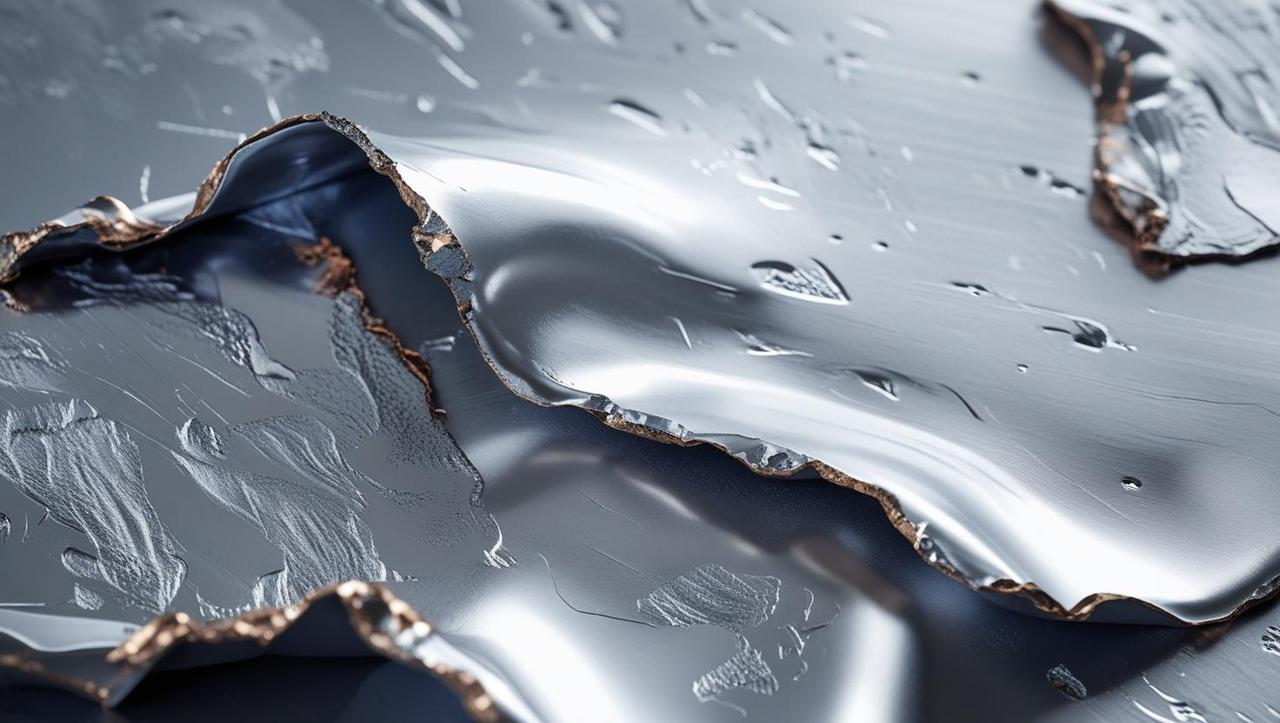
Cerium (Generated by Artificial Intelligence)
The element's name was given by its discoverers Berzelius and Hisinger in honor of Ceres, the dwarf planet newly discovered at the time and named after the Roman goddess of agriculture.
Cerium is the most abundant lanthanide and the most abundant rare earth element in the Earth's crust; its abundance is approximately equal to that of copper. It does not occur in its free state but is found in various minerals together with other lanthanides. The most important sources of cerium are the rare earth minerals monazite ((Ce,La,Th,Nd,Y)PO₄) and bastnäsite ((Ce,La,Y,Ce)CO₃F), both of which are rich in cerium. Major producing countries include China, the United States, Brazil, India, Sri Lanka and Australia.
Cerium is a bright, silvery-gray metal. It rapidly tarnishes upon exposure to air, forming a dark oxide layer. It reacts slowly with cold water and rapidly with hot water. It dissolves easily in acids. Its melting point is 799 °C and its boiling point is 3443 °C. Its atomic radius is approximately 242 pm and its electronegativity is 1.12. Its electron affinity is reported as 62.72 kJ/mol. Cerium in powder form can spontaneously ignite at temperatures of about 65–80 °C and produces sparks when rubbed against iron. It is one of the few elements among the lanthanides that exhibits a stable +4 oxidation state in addition to the common +3 state (the other being terbium). This property makes cerium's chemistry particularly diverse.
Cerium has four naturally occurring stable or very long-lived isotopes: ¹³⁶Ce, ¹³⁸Ce, ¹⁴⁰Ce and ¹⁴²Ce. ¹⁴⁰Ce is the most abundant isotope of natural cerium (approximately 88.45%). Its important isotope is listed as ¹⁴⁰Ce. Isotopes ¹³⁶Ce and ¹⁴²Ce are known to be radioactive with very long half-lives. In addition, many artificial radioactive isotopes have been synthesized.
Due to its abundance and low cost, cerium has a wide and varied range of applications:
Cerium has no known biological role. It is generally considered to have low to moderate toxicity. Ingestion or inhalation of soluble cerium salts can produce toxic effects. When working with cerium and its compounds, especially in powder form, standard safety precautions such as adequate ventilation, gloves and eye protection are essential.
National Center for Biotechnology Information. “Cerium.” PubChem Database CID 23974. Accessed July 2, 2025. https://pubchem.ncbi.nlm.nih.gov/compound/23974
TÜBİTAK Bilim Genç. "Seryum." *Bilim Genç*. Accessed July 2, 2025. https://bilimgenc.tubitak.gov.tr/periyodik-tablo/seryum

Cerium
Symbol | Ce | ||||||||
|---|---|---|---|---|---|---|---|---|---|
Periodic Table | 6 | ||||||||
Atomic Number | 58 | ||||||||
Group | Lanthanides | ||||||||
Atomic Weight | (140.116) g/mol | ||||||||
Electron Configuration | [Xe] 4f¹5d¹6s² | ||||||||
Appearance | Silvery-gray metal | ||||||||
Density | 6.77 g/cm³ | ||||||||
Melting Point | 799 °C | ||||||||
Boiling Point | 3443 °C | ||||||||
Atomic Radius | ~242 pm | ||||||||
Electronegativity | 1.12 | ||||||||
Electron Affinity | 62.72 kJ/mol | ||||||||
Important Isotopes | ¹³⁶Ce, ¹³⁸Ce, ¹⁴⁰Ce (%88.45), ¹⁴²Ce (natural) | ||||||||
Year of Discovery(ies) | 1803 | ||||||||
Discoverer(s) | M.H. Klaproth (independently) W. Hisinger J.J. Berzelius | ||||||||
Etymology(s) | Ceres dwarf planet | ||||||||
Henüz Tartışma Girilmemiştir
"Cerium (Ce)" maddesi için tartışma başlatın
Classification and Basic Properties
Discovery
Etimology
Natural Occurrence
Physical and Chemical Properties
Isotopes
Applications
Biological Role and Precautions