


Bu içerik Türkçe olarak yazılmış olup yapay zeka ile otomatik olarak İngilizceye çevrilmiştir.
+1 Daha
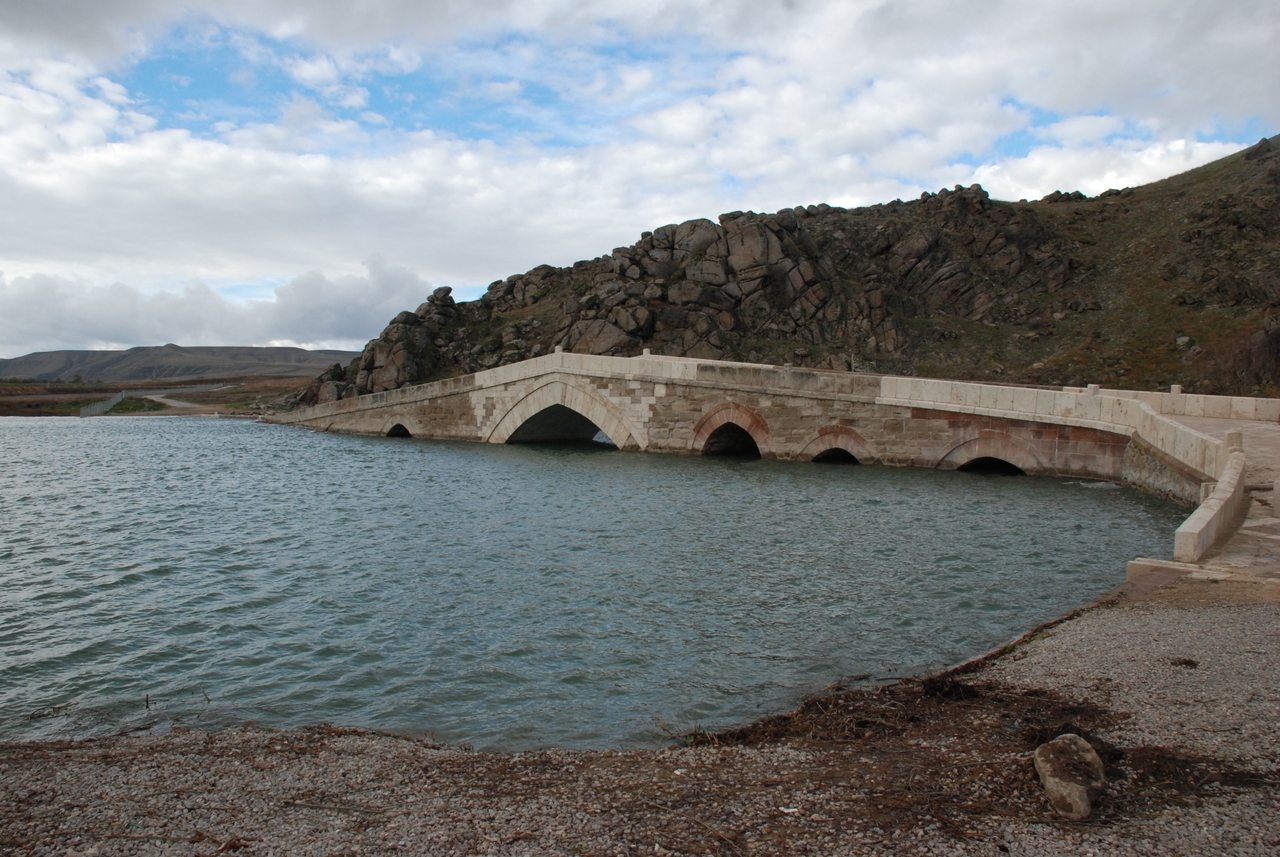
Çeşnigir Bridge is located in the Köprüköy locality of the Keskin district in Kırıkkale province, within Türkiye’s Central Anatolia Region, spanning the Kızılırmak River.

Çeşnigir Bridge (Ministry of Culture and Tourism of Türkiye)
The exact construction date of Çeşnigir Bridge is unknown. However, based on its architectural features and available sources, it is believed to have been built during the 13th century in the Seljuk period. It is noted that a Seljuk caravanserai once stood near the bridge, but no physical remains of it have survived to the present day.
Historical records indicate that Timur’s army used this bridge during the Battle of Ankara in 1402. During Sultan Selim I’s campaign to Egypt, it is stated that the bridge was reconstructed by Mimar Sinan.
Çeşnigir Bridge is 110 metres long and 6 metres wide. The structure was built on solid foundations adapted to the rocky terrain of the region. To ensure stable placement on the riverbed of the Kızılırmak River, the central section of the bridge exhibits a pronounced incline.
The bridge has a central span of 18.60 metres. A total of 12 arches are present on the structure. Three of these are located in the upper section and serve to facilitate water flow and reduce structural load during periods of high water levels. The remaining nine arches are situated in the lower section.

Çeşnigir Bridge. (Ministry of Culture and Tourism of Türkiye)
The term “Çeşnigir” is an Ottoman-era title with two distinct meanings. The first refers to an official employed at the Darphane-i Âmire responsible for verifying the purity of gold and silver coins. The second derives from the combination of “çaşni” (taste, flavour) and “gir” (one who takes or receives), denoting the person in the Ottoman imperial kitchen tasked with tasting dishes to ensure their safety for the sultan. The reason the bridge bears this name remains uncertain.
Historically, Çeşnigir Bridge was part of an important transportation route and once formed part of the Ankara–Bala–Kaman–Kırşehir road corridor. However, with the commissioning of the Kapulukaya Dam, several of the bridge’s piers became submerged under reservoir waters.
Çeşnigir Bridge remained unused for an extended period. However, restoration efforts initiated by the Fourth Regional Directorate of Highways saved the structure from collapse. As a result of comprehensive projects led by the Kırıkkale Governorship, the bridge and its surroundings have been transformed into a recreational area while preserving its historical integrity.
The area where the bridge is located is known as Çeşnigir Canyon. Between 2019 and 2020, initiatives led by the Kırıkkale Governorship developed the site for tourism. The area now offers various tourist and recreational facilities including walking trails, observation terraces, boat tours, camping areas, and cycling paths. Access by vehicle is possible to the canyon, and visitors can also reach the observation terrace via walking trails that begin at Çeşnigir Bridge.
The area is accessible from Ankara via Bala district over a distance of 113 kilometres. From Kırıkkale city centre, two alternative routes provide access: one via Karakeçili covering 34 kilometres and another via Keskin covering 59 kilometres.

Henüz Tartışma Girilmemiştir
"Çeşnigir Bridge" maddesi için tartışma başlatın
History
Architectural Features
Origin of the Name
Route and Modifications
Restoration and Current Status
Çeşnigir Canyon and Tourism
Access