


Bu içerik Türkçe olarak yazılmış olup yapay zeka ile otomatik olarak İngilizceye çevrilmiştir.
+1 Daha
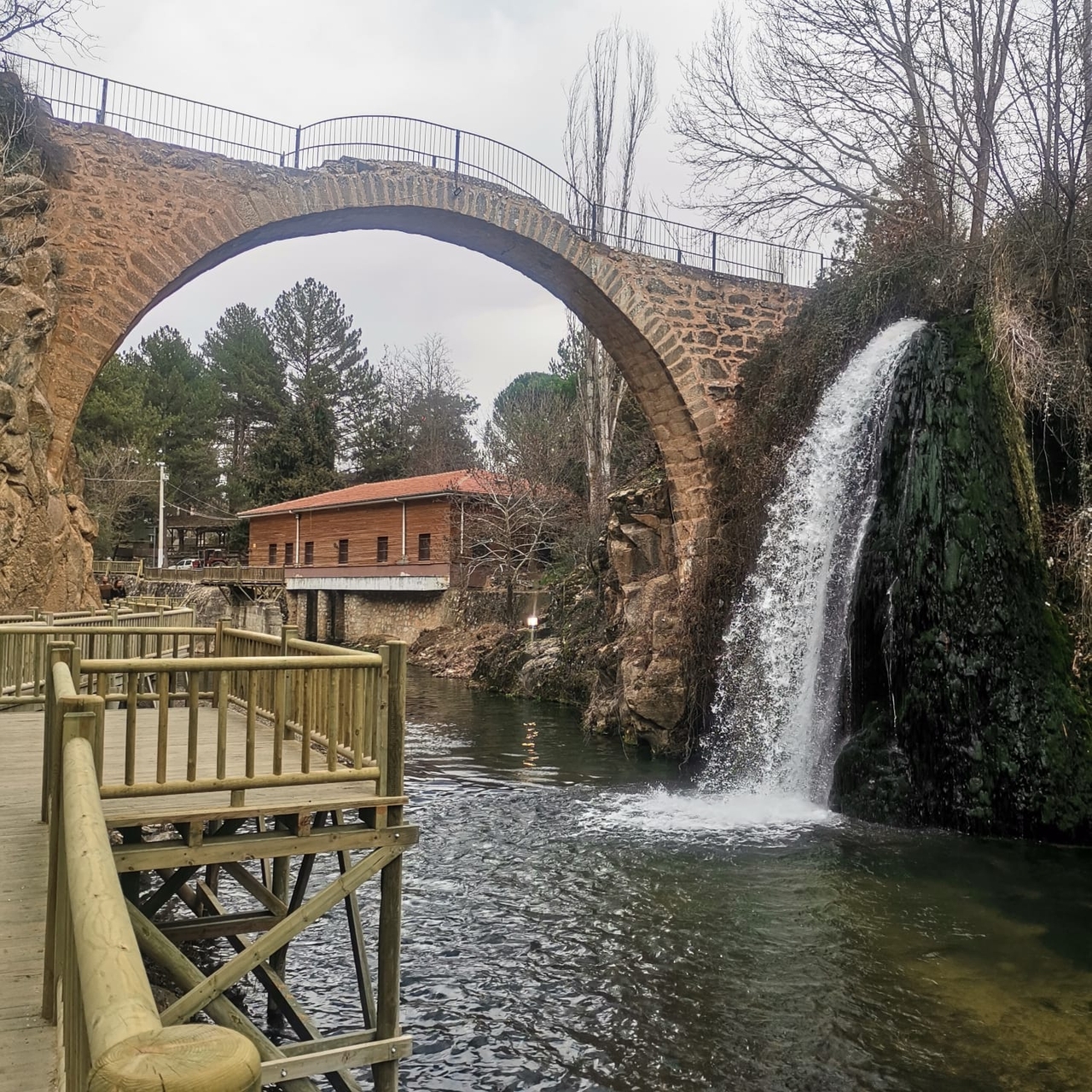
Clandras Aqueduct, located within the boundaries of the Karahallı district of Uşak">Uşak, is a historical structure built over the Banaz Creek. It is estimated to date back to the Phrygian period, approximately 2,500 years ago. The structure draws attention for its architectural features and its harmonious integration with the natural surroundings.

Clandras Aqueduct (Culture Portal">Culture Portal)
Although the Clandras Aqueduct is believed to have been constructed during the Phrygian period, it exhibits traces of Roman architectural influence. It lies along the 2,700-kilometer ancient road known as the “King’s Road,” which originally extended from Sardis in Lydia to Mesopotamia and was later expanded under the Persians as far as Persepolis. This highlights the region’s significance as a major transit route throughout history.
The aqueduct is situated within Ulubey Canyon">Ulubey Canyon, immediately beside the Karahallı Hydroelectric Power Plant. The water discharged from the plant, falling from a height of 17 meters, adds a visual element to the site. The structure measures 24 meters in length, 17 meters in height, and 1.75 meters in width. Its two ends rest on the mid-levels of rocky mountain slopes and were constructed using the corbeling technique atop two main pillars known as “elephant feet.”
Clandras Aqueduct is a narrow, single-arch structure. The stone surfaces were finely worked with a chisel, and the large arch stones were tightly fitted using a mortise-and-tenon system. The arch is shaped like a pulley. Although the arch largely retains its original form, recent repairs using concrete were carried out due to the displacement of one of the keystone blocks.

Clandras Aqueduct (Culture Portal">Culture Portal)
The Clandras Aqueduct was constructed to channel spring water from the east to the ancient city of Pepouza, located approximately 2.5 kilometers away. It is believed that Pepouza was an important settlement and that the aqueduct formed part of the infrastructure system supplying water to it.
Today, the Clandras Aqueduct is part of the Clandras–Pepouza Ancient City Ecotourism Area and lies along a nature walking trail. The trail is 7,863 meters long. The region is also notable for its biological diversity. On the northern slopes, black pine grows alongside red pine and juniper in the southern areas, mixed with oak groves. The fauna is equally rich, hosting mammals such as wild rabbit, badger, hedgehog, squirrel, and wild boar, as well as various bird and reptile species.
Today, the Clandras Aqueduct and its surroundings have become an important recreational area and ecotourism destination, valued for both its historical heritage and natural beauty. It is located 39 kilometers from the center of Uşak">Uşak and 121 kilometers from the city center of Denizli. It is only 370 meters from the nearby village road connecting Kavaklı–Karayakuplu.

Henüz Tartışma Girilmemiştir
"Clandras Aqueduct" maddesi için tartışma başlatın
Historical Background
Location and Structural Features
Architectural and Technical Features
Relationship with the Ancient City of Pepouza
Natural Environment and Ecotourism