


Bu içerik Türkçe olarak yazılmış olup yapay zeka ile otomatik olarak İngilizceye çevrilmiştir.
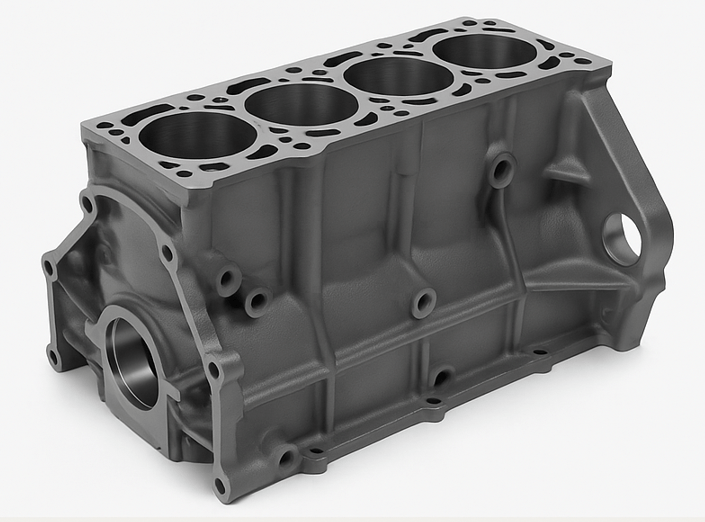
The cylinder block serves as the foundational component of internal combustion engines. This piece, which provides the engine’s structural integrity, houses the cylinders and many essential components required for engine operation. Generally manufactured from cast iron or aluminum alloys, it is designed to withstand high temperatures and pressures. The cylinder block fulfills the role of a body that supports the pistons, crankshaft, valves, and various auxiliary systems. This building plays a critical role in maintaining both the mechanical stability and the thermal and lubrication balance of the engine.
The cylinder block comprises components such as cylinders, cylinder head, oil galleries, coolant passages, oil pan (sump), and crankshaft bearing such as. In inline engines, the cylinder block is typically produced as a single piece integrated with the oil pan. This production approach has reduced manufacturing costs while enhancing the overall durability of the engine.
The arrangement of cylinders varies depending on the engine type. The most common configurations include inline, V-type, and opposed (boxer) layouts. In inline engines, the cylinders are positioned along a straight hat, whereas in V-type engines, the cylinders are arranged in two row at an angle to each other.

【1】
The primary functions of the cylinder block are as follows:
Cylinder blocks can be manufactured from different materials depending on their intended use. Cast iron is particularly preferred in diesel engines due to its high strength, wear resistance, and resistance to corrosion. In gasoline engines, aluminum alloys are more common. Aluminum is lighter than steel and has a higher thermal conductivity. However, aluminum blocks are typically reinforced with steel or cast iron liners.
Cylinder liners are categorized as either “wet” or “dry.” Wet liners are in direct contact with the coolant and form the entire cylinder wall. Dry liners are surrounded by the block material and do not come into direct contact with the coolant. In both systems, the replaceability of the liners facilitates the revision process of the engine.
In the early stages of internal combustion engines, cylinders were typically cast as separate components and then assembled. Over time, cylinder blocks were developed to cast two or three cylinders together. This monobloc design reduced production costs and improved engine reliability.
Over time, certain failures may occur in cylinder blocks. These include:
The cylinder block is central to the performance, efficiency, and durability of an internal combustion engine. Material selection, manufacturing techniques, design features, and the components it contains directly influence the engine’s overall operation. The structural robustness and functionality of the cylinder block ensure the engine operates reliably and with a long long life. Therefore, high precision must be maintained in both the design and maintenance processes of the cylinder block.
[1]
Counterman. “Engine Blocks Support Bottom End – and Bottom Line.” Counterman. Accessed 31 March 2025. https://www.counterman.com/engine-blocks-support-bottom-end-and-bottom-line/

Henüz Tartışma Girilmemiştir
"Cylinder Block (Engine Block)" maddesi için tartışma başlatın
Structural Features
Functions
Materials and Manufacturing Characteristics
Historical Development
Common Problems