

Bu içerik Türkçe olarak yazılmış olup yapay zeka ile otomatik olarak İngilizceye çevrilmiştir.
Climate | Winters are mild and somewhat cooler Generally, a hot desert (arid) climate prevails A more moderate and partially rainy climate is observed along the Mediterranean coast Extreme arid desert climate dominates the south and interior regions Annual precipitation is very low Summers are very hot and dry | ||||||||
|---|---|---|---|---|---|---|---|---|---|
Currency | Egyptian Pound (EGP) | ||||||||
Form of Government | Unitary semi-presidential system | ||||||||
Official Language | Arabic | ||||||||
Geographical Location | Intersection of North Africa and the Middle East Coastlines on the Mediterranean and Red Seas | ||||||||
Country Code (ISO) | EG | ||||||||
Internet Domain Code | .eg | ||||||||
Telephone Code | +20 | ||||||||
Geographical Features | Agricultural areas: Nile Valley and Delta Coasts: Mediterranean and Red Sea Majority: Sahara Desert Most important water source: Nile River | ||||||||
GDP per Capita | 3,000–4,000 US dollars | ||||||||
Total Population | Approximately 110–115 million | ||||||||
Area | 1,010,000 km² | ||||||||
Capital | Cairo | ||||||||
GDP | ≈ $1.8 trillion USD | ||||||||
Head of State | Abdel Fattah el-Sisi | ||||||||
Official Name | Arab Republic of Egypt | ||||||||
Independence Date | 28 Şubat 1922 | ||||||||
Arab Republic of Egypt is a country located in the northeastern part of the African continent and connected to the Asian continent via the Sinai Peninsula. To the north lies the Mediterranean Sea, to the east the Red Sea, to the northeast Israel and the Gaza Strip, to the west Libya, and to the south Sudan.
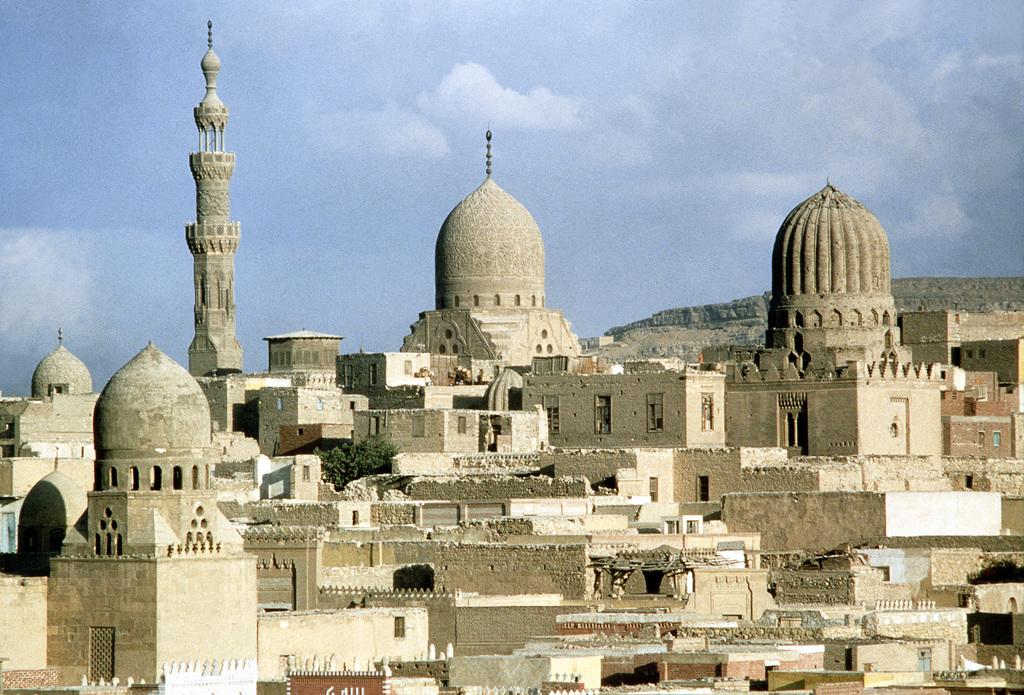
Cityscape showing the minarets and temples of Cairo, Egypt(Picryl)
The Nile River has provided fertile agricultural land for thousands of years around which Egypt developed and which has hosted some of the oldest civilizations in human history. Since most of its territory consists of deserts, a significant portion of the population lives in the Nile Valley, the Nile Delta and the vicinity of Cairo. The Suez Canal, which connects the Mediterranean Sea to the Red Sea and holds strategic importance for global maritime transport, also lies within the country’s borders.
Egypt’s current political system was shaped after the military coup carried out by the Free Officers Movement in 1952, which led to the abolition of the monarchy and the proclamation of the republic in 1953. The president serves as head of the executive branch. A constitutional amendment in 2019 extended the presidential term to six years.
With a population exceeding 114 million, Egypt is the most populous country in the Arab world and one of the most populous in Africa. It is also a member of international organizations such as the United Nations, the Arab League, the African Union and the Organization of Islamic Cooperation.
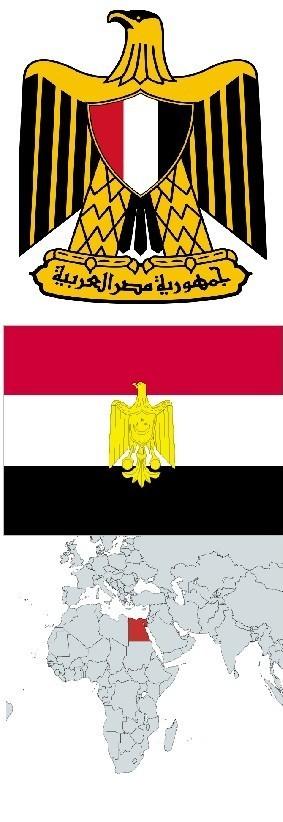
The state symbols of the Arab Republic of Egypt, reflecting its long history, struggle for independence and cultural heritage, consist of the flag, the coat of arms and the national anthem.
The national flag currently used by Egypt consists of three horizontal stripes of equal width. The top stripe is red, the middle stripe is white and the bottom stripe is black; centered on the white stripe is a golden Eagle of Saladin. The flag’s length to width ratio is 3:2 and it was adopted in 1984.【1】
Flags used in Egyptian history (Al Jazeera Türk)
The red, white and black colors used in Egypt’s flag are among the Pan-Arab colors widely used across the Arab world. The red color represents the struggles and revolutionary process for independence before the 1952 Revolution; the white color symbolizes the political transformation following the revolution; and the black color signifies the end of monarchical rule. The Eagle of Saladin at the center of the flag is also used as the official state coat of arms of the Arab Republic of Egypt.【2】
Different flags have been used in Egypt during the modern era. From 1923 to 1958, the flag featured a green field with three white stars and a crescent. In 1958, with the establishment of the United Arab Republic, a new flag consisting of red, white and black stripes was adopted. During the period of the Federation of Arab Republics in 1972, the Hawk of Qureish was used at the center of the flag, and in 1984 the Eagle of Saladin was once again adopted as the state symbol.【3】
The current national anthem of Egypt is titled “Bilady, Bilady, Bilady” (My Country, My Country, My Country). The lyrics were inspired by a phrase from the speeches of Mustafa Kamil Pasha, a leading figure in Egypt’s nationalist movement: “Bilady, Bilady, Laki Hubbi wa Fuadi” (My Country, to you I dedicate my love and heart). The music was composed by Egyptian composer Sayed Darwish. The anthem was officially adopted in 1979 and became the official national anthem of the Arab Republic of Egypt.【4】
Millî marş (JR videos)
The anthem “Bilady, Bilady, Bilady” consists of lyrics centered on the concept of homeland. Its text explores themes of loyalty to Egypt, the country’s historical past, and national unity. In the anthem, Egypt is defined as the land where people live and feel a sense of belonging, and the connection between the nation’s past and future is emphasized.
The tradition of a national anthem in Egypt dates back to the 19th century. Before “Bilady, Bilady, Bilady,” various official anthems were used in different periods. The most recent of these was “Eslami Ya Misr” (Greetings to You, O Egypt), which was adopted as the national anthem in 1923 and remained in use until 1979. With the adoption of “Bilady, Bilady, Bilady,” Egypt’s official national anthem was changed, and the current anthem came into effect.【5】
Egyptian history begins around 3150 BCE, when King Menes united Upper and Lower Egypt and founded the first dynasty. From this period onward, Egypt experienced the Old Kingdom (the era of pyramid construction), Middle Kingdom, and New Kingdom (the height of the empire).
Egypt came successively under the rule of the Assyrians, Persians, Alexander the Great (332 BCE), and his general Ptolemy’s dynasty. In 30 BCE, the Roman Empire made Egypt a province, and the region later passed under Byzantine control.
In the 7th century, Egypt was conquered between 639 and 642 CE during the caliphate of Caliph Umar by an army led by Amr ibn al-As. The region was administered as a province under the Umayyads and Abbasids, followed by the Tulunids (868–905), Ikhshidids (935–969), Fatimids (969–1171), Ayyubids (1171–1250), Mamluk Sultanate (1250–1517), and from 1517 onward under the Ottoman Empire. The country was occupied by Britain in 1882 and gained independence in 1922.
The 1952 coup transformed Egypt into a republic. It passed through the periods of Gamal Abdel Nasser, Anwar Sadat, Hosni Mubarak, and Mohamed Morsi, and is currently governed under Abdel Fattah el-Sisi.【7】
The period preceding written history in Ancient Egypt and the first dynastic pharaonic lineages is generally referred to as the Predynastic Period (c. 6000–3150 BCE). Since this era lacks written records, its history relies largely on archaeological findings and the accounts of the 3rd century BCE historian Manetho. This lengthy phase represents a critical transition during which humans moved from nomadic hunter-gatherer lifestyles to settled agricultural communities and ultimately to powerful city-states.【8】
Ancient Egyptian civilization took shape around successive and increasingly developed cultures in the north (Lower Egypt) and the south (Upper Egypt).
In this region near the Mediterranean lived the Faiyum A, Merimde, and Ma'adi cultures. Over time, simple reed huts evolved into oval houses with plastered mud-brick walls and underground storage pits. Pottery production and tool-making advanced, and the custom of burying the dead in separate cemeteries rather than within homes began to emerge.
This region developed somewhat later but laid the foundations for Egypt’s religious and artistic systems:
The final phase of the Predynastic Period, known as Naqada III (c. 3200–3150 BCE), is also referred to as the Zeroth Dynasty. During this time, intensive trade with Mesopotamia and Canaan introduced external influences into Egyptian architecture and art. Between 3400 and 3200 BCE, hieroglyphic writing was first used systematically for record-keeping.
With growing populations and trade, large city-states such as Thinis, Naqada, and Nekhen emerged. Following conflicts over control of resources, King Narmer (also known as Menes in Manetho’s records) unified Lower and Upper Egypt under a single rule. This pivotal event marked the end of the Predynastic Period and initiated the enduring Early Dynastic or Pharaonic Period, which would define Egyptian civilization for the next 3,000 years.
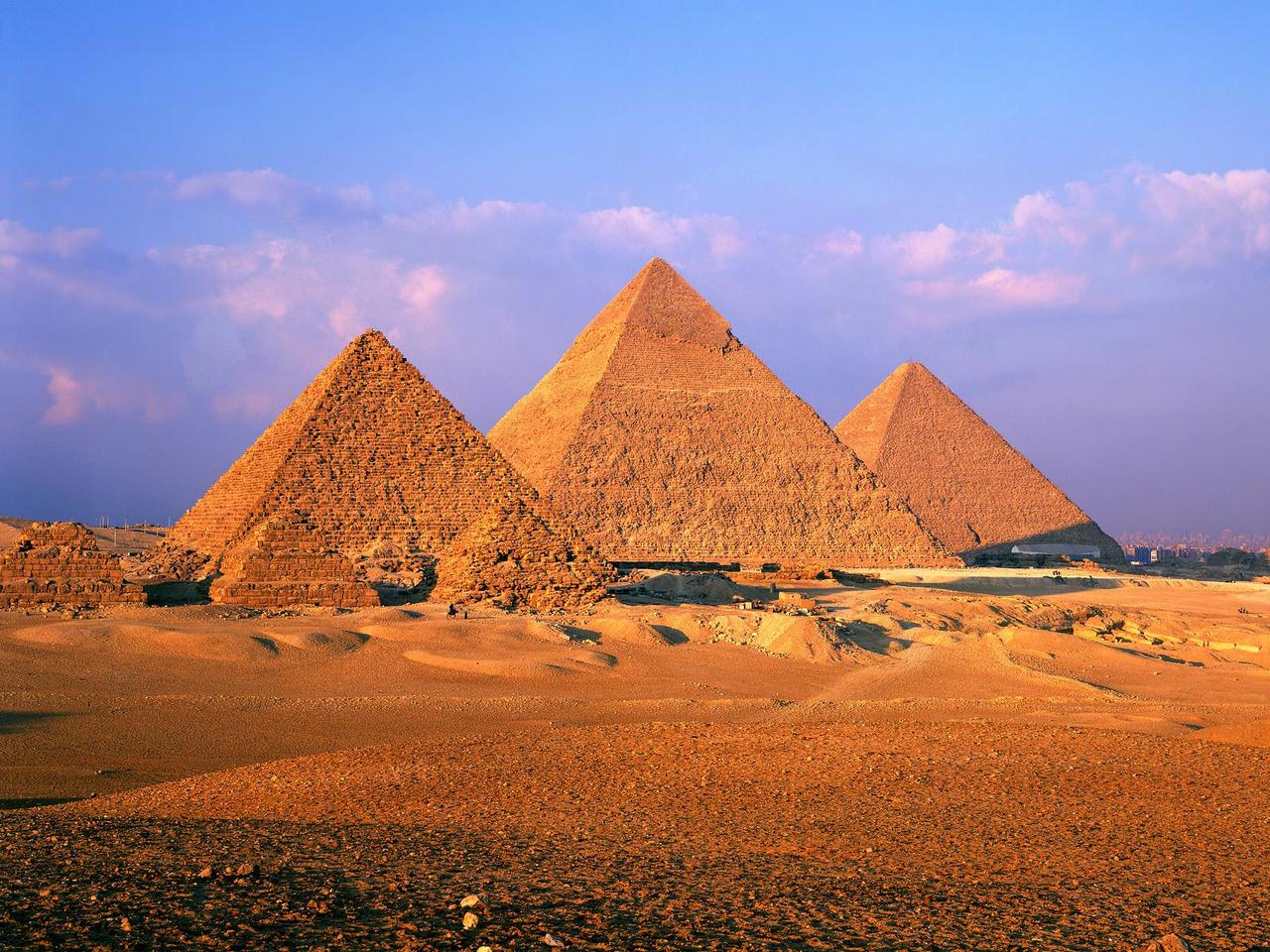
The Pyramids of Giza, one of the Seven Wonders of the Ancient World, are one of Egypt's most important symbols(World History)
Pharaohs Era or Dynastic Period encompasses the historical process between 3000 BCE and 323 BCE. This period is divided into major phases such as the Old Kingdom, the Middle Kingdom and the New Kingdom.【9】
The approximately 332 pharaohs were both political and religious leaders of the empire. Governance was conducted through a system of "dynasties", in which power was transferred within the same family from father to son or to designated heirs. The pharaohs, whose authority was absolute, placed defense and the military at the center of governance, not only safeguarding their borders but also launching military campaigns into neighboring regions in pursuit of Egypt's interests and natural resource needs.【10】
In 3200 BCE, Menes united Lower and Upper Egypt and founded the first dynasty. Menes established Memphis near the Nile Delta as the administrative capital.【11】
The Pharaohs Era, one of the longest-lasting empires in world history, entered a period of decline beginning in the 1100s BCE. Power struggles and internal unrest that began during the 20th Dynasty laid the groundwork for the country's weakening. During this period, Egypt came under the domination of the Assyrians and the Persians, and the Pharaohs Era ended after the 30th Dynasty.
The Hellenistic Period encompasses the historical process that began with the conquest of Egypt by Alexander the Great and continued under the rule of the Ptolemaic dynasty. In 332 BCE, Alexander the Great seized Egypt and was proclaimed pharaoh in accordance with Egyptian tradition. He founded the city of Alexandria, named after himself.【13】
Following Alexander the Great’s death in 323 BCE, control of Egypt passed to one of his generals, Ptolemy. Ptolemy established his own dynasty and ruled Egypt from 323 BCE to 30 BCE. The Ptolemaic rule ended in 30 BCE when Rome assumed dominance over Egypt.【14】
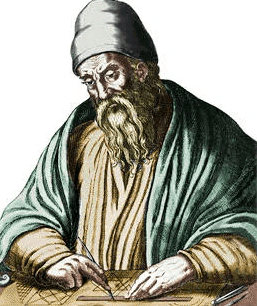
The Alexandrian mathematician Euclid (World History)
During the Ptolemaic period, Alexandria became the administrative center of Egypt. Palaces and gardens were constructed in the city, and Alexandria developed into a hub for artistic, scientific, industrial, and commercial activities. The lighthouse of Alexandria was among the most significant structures of the era.
The University of Alexandria was founded during the Ptolemaic period. Research in medicine, anatomy, and surgery was conducted at this institution. Euclid, Ptolemy, and historian Manetho were among the leading scholars of this period.
A great library was established in Alexandria during the Ptolemaic period. It is reported that the library housed more than 500,000 papyrus scrolls, and later the number of works exceeded 700,000. The Ptolemies also continued Egyptian religious practices and commissioned the construction of temples in Edfu, Dendera, and Philae. They wore pharaonic attire during official ceremonies.【15】
The Roman Period began when Egypt came under Roman rule in 30 BCE. During this time, Egypt became a province of the Roman Empire.【16】
Economic activities in Egypt continued during the Roman administration. Production persisted in agriculture, industry, and trade. Glass manufacturing, paper production, perfume, cosmetics, and fine linen textile production were among the key economic activities of the period.
During the Roman Period, Alexandria remained one of the major centers of trade and industry. It was recognized as one of the largest cities in the Roman Empire and continued to function as a hub where scholars from various regions conducted research.
The Byzantine Period refers to the era when Egypt was governed as part of the eastern division of the Roman Empire. After the division of the Roman Empire, Egypt remained under the administration of the Eastern Roman Empire. This period is regarded as a continuation of Roman rule in Egypt.
The Muslim conquest of Egypt was carried out during the caliphate of Caliph Umar under the command of Amr ibn al-As. This historic event ended Byzantine (Eastern Roman) dominance in the region and laid the foundations for a new political and social order in Egypt.
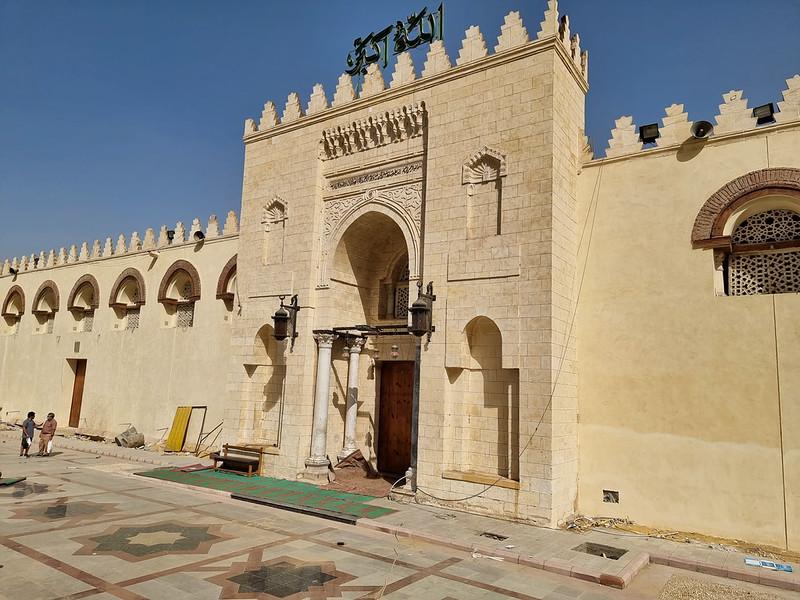
Amr Ibn al-As Camii (Flickr)
Having completed the conquest of Syria and Palestine, the army under Amr ibn al-As, with the support of the indigenous Coptic population who were oppressed under heavy Byzantine religious and social pressure, conquered Egypt. The Copts, weary of Byzantine religious coercion and tyranny, viewed the Muslims as liberators and provided logistical support and guidance to the Islamic armies. After the conquest, the city of Fustat was established as the administrative center and the region was organized within the Islamic state’s provincial system.
Amr ibn al-As, appointed governor of the region after the conquest, ended ethnic discrimination and considered Egypt as “conquered by peace”, leaving its lands in the hands of the local population. Complete religious freedom was established; no pressure was exerted on anyone to change their faith, the exiled Coptic leader Patriarch Benjamin was restored to his former position, and the repair of existing churches and construction of new ones were permitted. A just tax system, agricultural investments, military exemptions, and the employment of Copts in the state bureaucracy ensured a lasting atmosphere of peace and stability in Egypt.【17】
During the Umayyad (661–750) and Abbasid (750–969) periods, Egypt was administered as one of the important provinces of the Islamic state. During this time, the administrative structure remained subordinate to central authority but was occasionally shaped by local governance influences.
In 868 CE, the Tulunids established an independent administrative structure in Egypt. Subsequently, in 935 CE, the Ikhshidids took control of the region. During these periods, Egypt exhibited a degree of autonomy from the central Abbasid authority.
In 969 CE, the Fatimids seized Egypt and founded Cairo, making it the capital of the state. During this period, Egypt became the center of a vast political and administrative system.
In 1171 CE, Saladin al-Ayyubi seized power and initiated the Ayyubid period. During this time, the administrative structure was reorganized and the military system was strengthened.
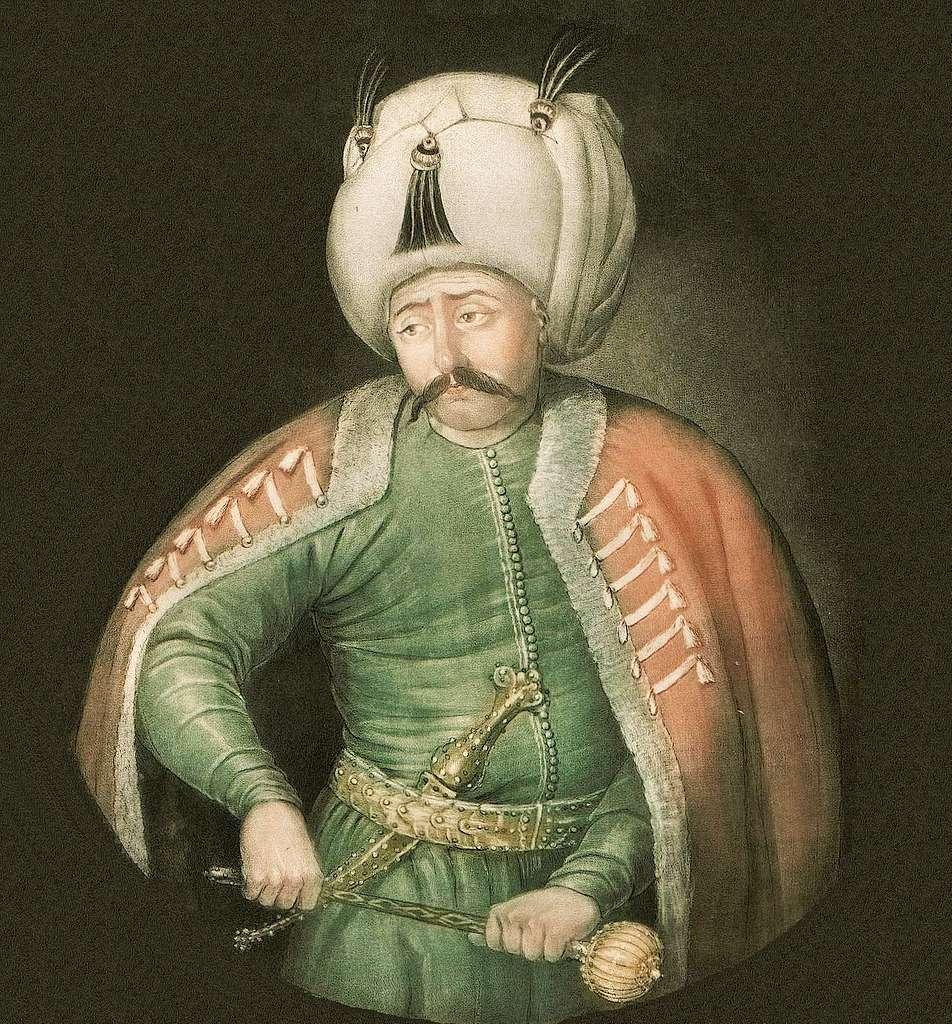
The ninth Ottoman Sultan, Yavuz Sultan Selim (1512–1520)(World History)
In 1250 CE, the Mamluk State was established and a long-lasting administrative structure was created in Egypt. Cairo became one of the most important political and economic centers of the Islamic world.【18】
The Ottoman period encompasses the historical process beginning with Egypt’s incorporation into Ottoman rule in 1517. Sultan Selim I’s entry into Egypt brought an end to Mamluk rule and Egypt became a province of the Ottoman Empire.【19】
During Ottoman rule, Egypt’s administration was managed by a governor, a divan, and a local administrative structure composed of Mamluks. The governor served as the Ottoman sultan’s representative in Egypt with a term of office fixed at three years.
The divan was an administrative body composed of senior Ottoman military officers, state officials, scholars, and landowners. The divan played a significant role in Egypt’s administrative affairs, while the Mamluks continued to serve in local governance under Ottoman authority.
Throughout the Ottoman period, changes occurred in Egypt’s administrative structure. During the rule of Ali Bey al-Kabir, an attempt was made to achieve independence from Ottoman authority, but after this initiative, Egypt was once again brought under Ottoman control.
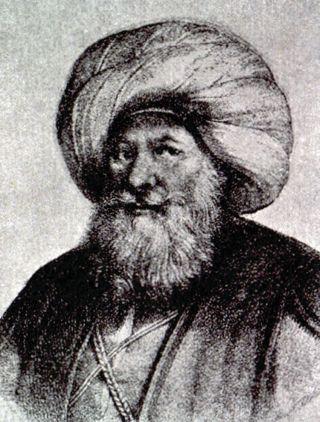
Kavalalı Mehmet Ali Pasha (1769–1849)(TDV İslam Ansiklopedisi)
The Modern Period encompasses the process that began with Kavalalı Mehmet Ali Paşa assuming power in Egypt in 1805. Mehmet Ali Paşa implemented military and administrative reforms to establish a new governing system in Egypt.【20】
Mehmet Ali Paşa, who had served in the Ottoman army, became part of the Ottoman forces that arrived in Egypt after the French withdrawal in 1801. Between 1801 and 1805, a struggle for power unfolded between the Mamluks and Mehmet Ali. In 1805, Mehmet Ali became the governor of Egypt.【21】
On 1 March 1811, Mamluk leaders were invited to a ceremony at Kahire Kalesi and were killed there. Through this action, Mamluk power and authority in Egypt were completely eliminated. During his rule, administrative reforms were carried out, economic policies were initiated, certain elements of Western technology were introduced into the country, and a new army was established.【22】
The Mehmet Ali Dynasty ruled Egypt from 1805 to 1952. During this period, governance was exercised by governors, khedives, sultans, and kings. The khedivate lasted from 1867 to 1914, the sultanate from 1914 to 1922, and the kingdom from 1922 to 1952.【23】
The British occupation of Egypt in 1882 emerged from the convergence of the declining central authority of the Ottoman Empire in the late 19th century, the rise of European imperialism, and Egypt’s economic collapse. Due to the construction of the Suez Canal and costly modernization projects, during the reign of Khedive Ismail Paşa, Egypt’s economy was driven to bankruptcy, leading in 1875 to the sale of Egypt’s shares in the Suez Canal to Britain. As Egypt’s foreign debts became unpayable, the Caisse de la Dette, established by European powers in 1876, placed Egypt’s finances directly under the control of British and French commissioners.
In response to this foreign domination of Egypt’s politics and economy and the weakness of the government, a nationalist uprising began under the leadership of Colonel Ahmed Urabi Paşa, guided by the principle of "Egypt for the Egyptians". Concerned about the security of the Suez Canal, the vital link to India, Britain used violent incidents against Europeans in Alexandria as justification to bombard the city from the sea in July 1882 and effectively launch military intervention. The British army under the command of Sir Garnet Wolseley, advancing from land, inflicted a decisive defeat on Urabi Paşa’s nationalist forces at the Battle of Tel el-Kebir in September 1882, entered Cairo shortly thereafter, crushed the resistance, and occupied Egypt.
After the occupation, the British did not legally sever Egypt from the Ottoman Empire immediately. Although Egypt remained nominally an Ottoman province under the authority of its local ruler, the Khedive, real power for many years remained in the hands of the British Consul-General Lord Cromer through a system of "veiled protectorate." When World War I broke out, Britain formally converted this veiled arrangement into an official protectorate in 1914. Despite granting Egypt nominal independence in 1922, Britain maintained its military presence and control over the Suez Canal until the 1950s.【24】
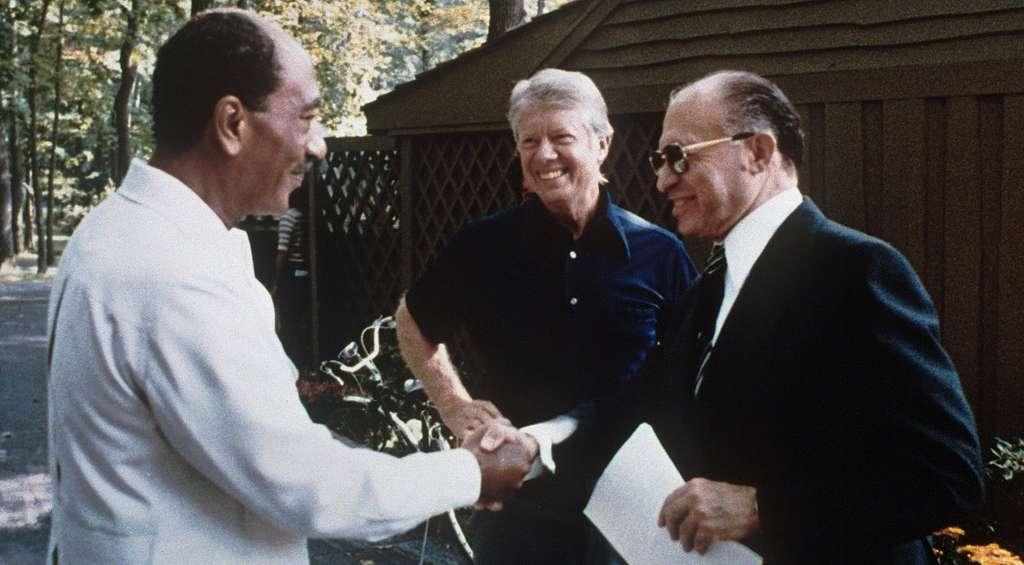
Egyptian President Anwar Sadat, Israeli Prime Minister Menachem Begin, and U.S. President Jimmy Carter met at Camp David in September 1978.(Picryl)
The monarchy was abolished following a military coup carried out by the Free Officers Movement on 23 July 1952. In 1953 the Egyptian Republic was proclaimed and Muhammad Naguib became the country’s first president.【25】
Gamal Abdel Nasser’s period began in 1952 and lasted until 1970. During this time the Suez Canal was nationalized and the Sinai Peninsula was occupied by Israel during the 1967 War.【26】
Hosni Mubarak’s period began in 1981 and lasted until 2011. Following the protests that began on 25 January 2011 Mubarak stepped down from office on 11 February 2011.【27】
In 1970 Anwar Sadat became president. In 1973 Egypt and Syria launched a military operation against Israel. On 26 March 1979 a peace treaty was signed between Egypt and Israel. Egyptian sovereignty over the Sinai Peninsula was restored in 1982.【28】
In Egypt’s first democratic elections held in 2012 Mohamed Morsi was elected president. He became the first civilian head of state to be removed from office by a military coup, which took place on 3 July 2013 approximately one year after his election.【29】 Following the military coup Abdelfattah el-Sisi the Commander-in-Chief of the Egyptian Armed Forces, effectively assumed leadership of the country.【30】
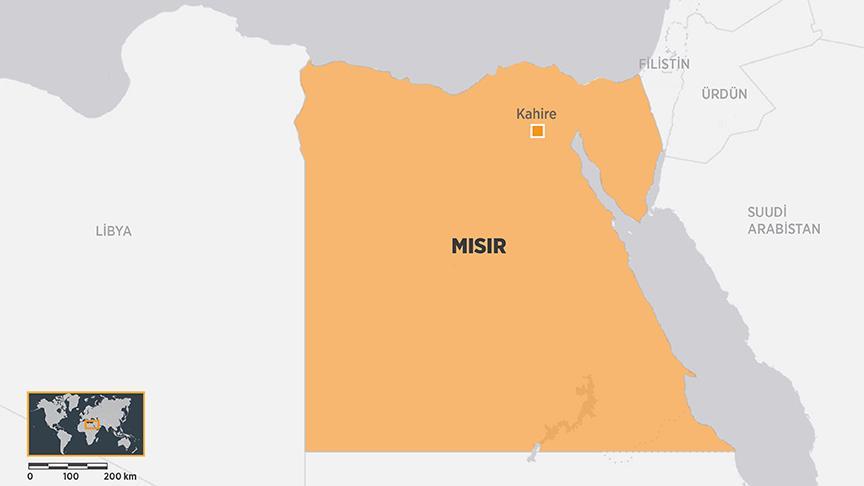
Representation on a Map of Egypt (Anadolu Ajansı)
The Arab Republic of Egypt is a state located in the northeastern part of the African continent. Through the Sinai Peninsula the country also extends into Asia and is therefore classified as one of the transcontinental states situated between Africa and Asia.
Egypt is bordered by the Mediterranean Sea to the north the Red Sea to the east Libya to the west and Sudan to the south. To the east of the Sinai Peninsula lie Israel and the Gaza Strip. Egypt’s northern coast faces the Mediterranean Sea and its eastern coast borders the Red Sea. This position places Egypt within both the Mediterranean and Red Sea basins.
With an area of approximately 1,001,450 km² Egypt is among the largest countries in Africa by land area.【31】The country’s territory extends roughly between latitudes 22° and 32° N and longitudes 24° and 37° E.
One of the most significant geographical features of Egypt is the Suez Canal. This canal connects the Mediterranean Sea with the Red Sea and is located in the northeastern part of the country within the region that serves as the transition zone between Africa and Asia. The Sinai Peninsula also lies in this region and constitutes Egypt’s Asian territory.
Egypt’s settlement patterns and population distribution are closely linked to its geographical features. The majority of the population is concentrated along the Nile Valley and the Nile Delta while a significant portion of the country’s territory consists of the Western Desert Eastern Desert and Sinai Peninsula.
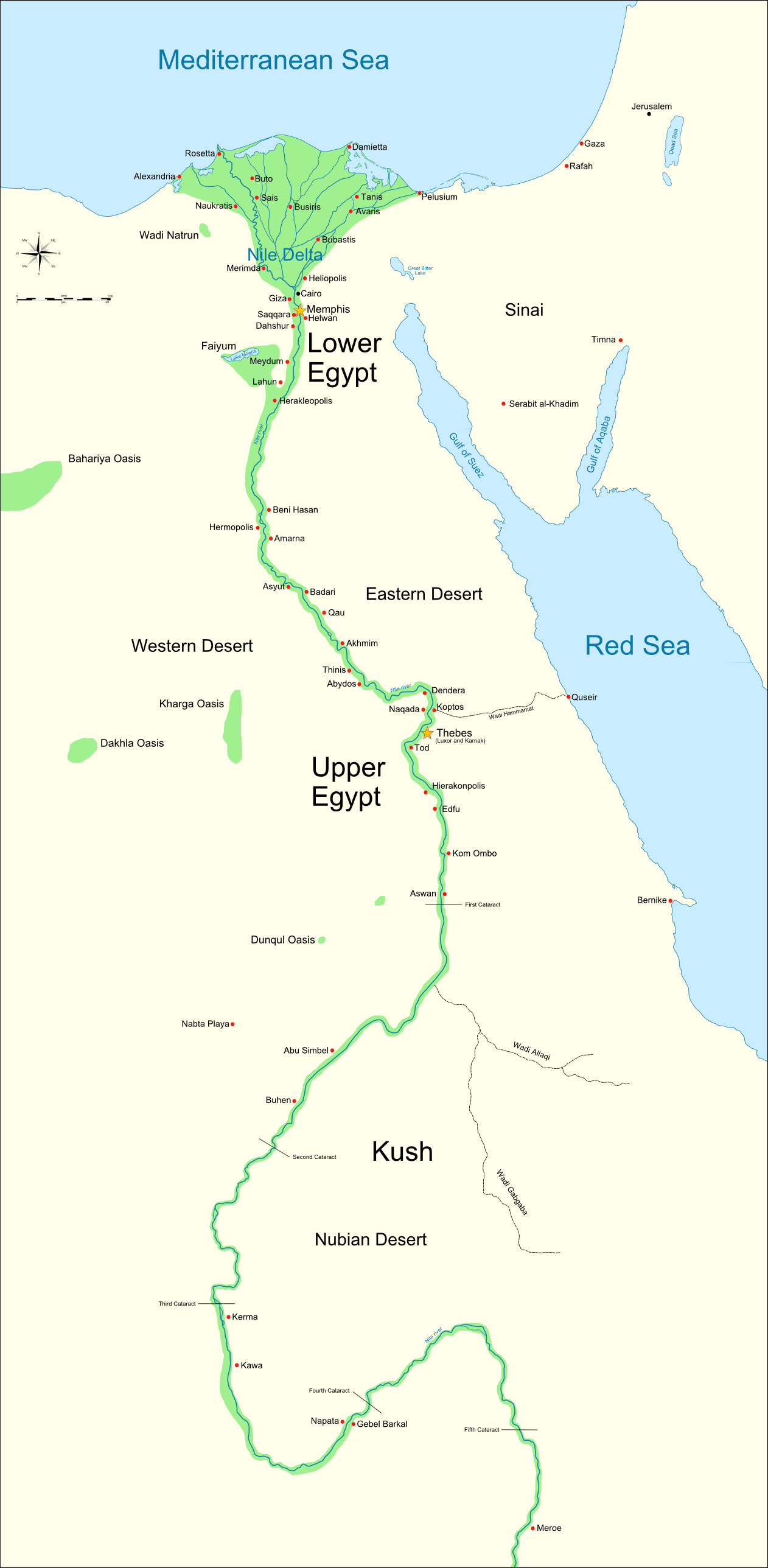
Nil Nehri (World History)
Egypt’s physical geography consists broadly of four main regions: the Nile Valley and Nile Delta, the Western Desert, the Eastern Desert, and the Sinai Peninsula. The majority of the country’s territory is covered by deserts, with settlement, agriculture, and economic activity concentrated primarily around the Nile River. The Nile Valley and Nile Delta constitute the most densely populated areas of the country, while the Western Desert and Eastern Desert cover vast expanses.
The Western Desert is an extension of the Sahara Desert and occupies a significant portion of Egyptian territory. The region generally consists of extensive desert plains, plateaus, and oases. The Eastern Desert lies between the Nile Valley and the Red Sea and has a more rugged topography. The Sinai Peninsula is the geographical region located in the northeast of the country, forming its Asian portion.
Mountainous areas in Egypt are primarily found in the Sinai Peninsula and the Eastern Desert. The highest point in the country is Mount Catherine (Jabal Katrina), located in the Sinai Peninsula, with an elevation of approximately 2,642 metres, and it is recognized as Egypt’s highest peak.【32】
Other significant elevations in the Sinai Peninsula include Mount Moses (Mount Sinai) and Mount Umm Shumar. The region’s topography is characterized by mountain masses composed of granite and other hard rock formations.
In the Eastern Desert, mountain ranges run parallel to the Red Sea coast. These mountainous areas form a natural transition zone between the Nile Valley and the Red Sea.
The Western Desert generally lacks prominent mountainous features but contains various plateaus and rock formations. One notable natural geological formation in this region is the Crystal Mountain, known for its crystalline rock structures.
The Nile Valley is one of Egypt’s most important physical geographic units. This narrow valley, extending along the Nile River, contains fertile soils due to the alluvial deposits carried by the river. A large portion of the country’s population and agricultural activity is concentrated in this area.
The Nile Delta is a broad alluvial plain formed where the Nile River empties into the Mediterranean Sea. The delta region is one of Egypt’s primary centers of agricultural production. Here, the Nile branches into multiple distributaries before reaching the Mediterranean.
Within the Western Desert lie oases such as Bahariya, Farafra, Dakhla, and Kharga. These areas have formed due to underground water sources and are among the few regions in the desert where human settlement and agricultural activity occur.
The Nile River is Egypt’s most important watercourse. Flowing from south to north, it traverses the length of the country before emptying into the Mediterranean Sea. The Nile forms the foundation of Egypt’s water resources and plays a vital role in the country’s historical, economic, and social development.
The alluvial sediments carried by the Nile have been instrumental in shaping the Nile Valley and Nile Delta. Agricultural production largely depends on irrigation systems fueled by the river’s waters.
Aswan High Dam’s construction led to the formation of Lake Nasser, Egypt’s largest artificial lake. The lake lies along the Nile River and is used for water storage and irrigation.【33】
Egypt also has various lagoon lakes along its Mediterranean coast. These lakes are natural geographic features of the coastal regions.
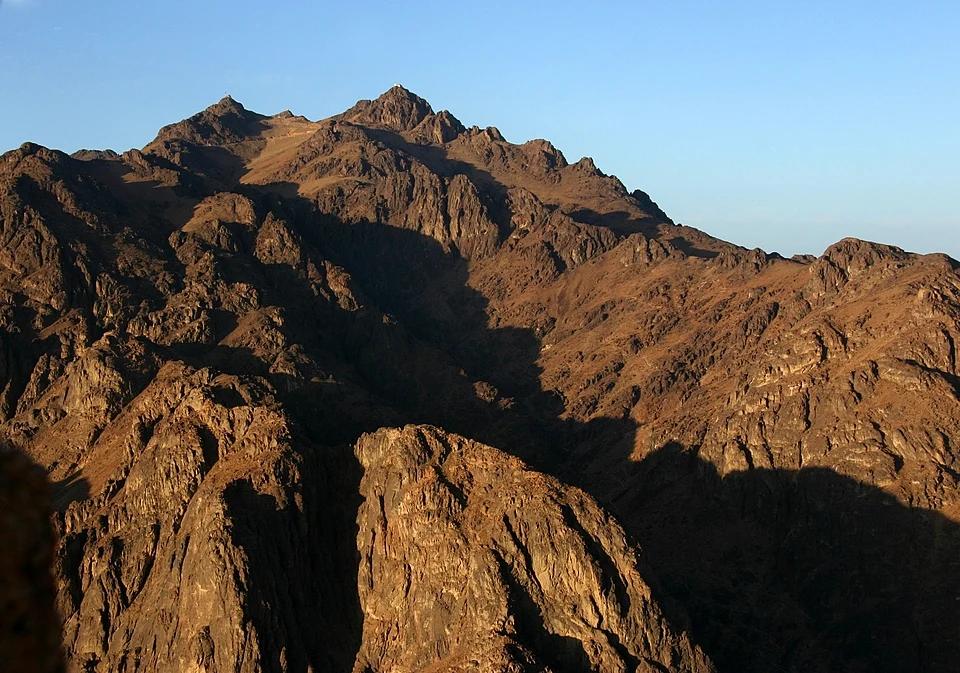
Catherina Dağı (mapcarta)
Egypt is predominantly characterized by an arid desert climate. The majority of the country’s territory consists of arid and semi-arid regions. Geographic location, extensive desert areas, and coastlines along the Mediterranean and Red Seas significantly influence climatic conditions.
Precipitation is unevenly distributed across the country. Although rainfall amounts are higher along the Mediterranean coast compared to other regions, they remain limited over most of the country. Rainfall decreases progressively toward the southern regions.
Temperature conditions vary by region and season. During summer months, temperatures rise sharply especially in inland and desert areas, while winter months bring significantly lower values. The Mediterranean coast exhibits milder climatic conditions compared to inland areas.
Egypt’s natural vegetation is largely composed of plant species adapted to arid climatic conditions. Sparse vegetation is found in desert areas, whereas the Nile Valley and Nile Delta regions support denser vegetation and intensive agricultural activity due to the availability of water resources.
The Nile River plays a decisive role in shaping Egypt’s vegetation and agricultural production. Agricultural activities are concentrated largely along the Nile Valley and Nile Delta, with irrigation systems forming one of the fundamental elements of these activities.
Egypt is a country endowed with a variety of mineral and energy resources. Its natural resources include petroleum, natural gas, phosphate, iron ore, manganese, gold, and other mineral deposits. These resources are distributed across different regions of the country and are utilized in economic activities.【34】
Among Egypt’s mineral resources, phosphate holds a significant position. Phosphate deposits are found in various parts of the country and constitute one of the main components of mining activities. In addition, iron ore and manganese are among the principal minerals extracted.
Gold is one of Egypt’s valuable mineral resources. Gold deposits located primarily in the Eastern Desert are actively exploited through mining operations. In addition to gold, various industrial minerals are also extracted in the country.
In terms of energy resources, petroleum and natural gas hold a prominent position. These resources are used both for energy production and in broader economic activities. Natural gas is one of the primary sources of energy in Egypt’s energy sector.
Egypt’s natural resources are not limited to mineral and energy sources. The Nile River and its fertile alluvial soils are also among the country’s fundamental natural resources. Agricultural activities depend largely on water resources and productive soils in the Nile Basin. Irrigation systems play a vital role in the utilization of these resources.
When assessed in terms of agricultural production, the Nile Valley and Nile Delta constitute the country’s primary production zones. The soils and water resources in these regions form the foundation of Egypt’s agricultural activities.
Egypt’s energy resources include petroleum, natural gas, and renewable energy sources. The energy sector is regarded as one of the country’s key economic sectors. Energy production and the use of energy resources play a crucial role in sustaining Egypt’s economic activities.
Petroleum and natural gas are major sources in Egypt’s energy sector. These resources are utilized for energy generation, while other energy sources are also employed in electricity production.
Hydroelectric power is also used for electricity generation in Egypt. The Aswan High Dam on the Nile River is one of the key facilities in the country’s energy infrastructure. In addition, efforts to develop renewable energy sources are an integral part of the energy sector.【35】
Egypt’s transportation infrastructure comprises road, rail, maritime, air, and inland waterway networks. The transportation sector is one of the infrastructure areas developed to ensure internal connectivity and support economic activities.
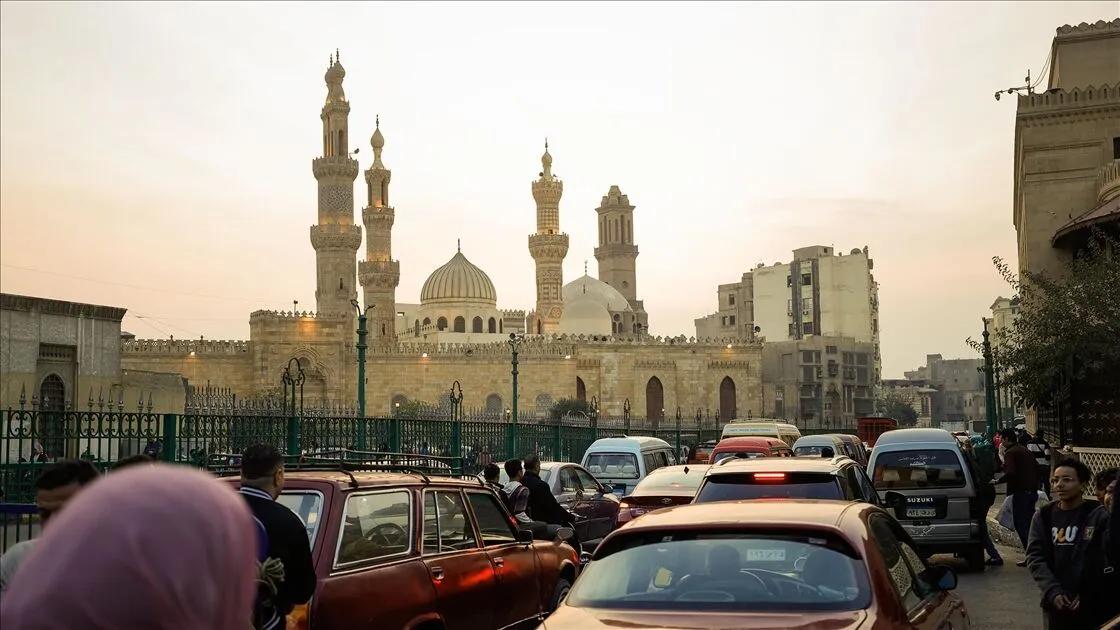
A visual from the capital Cairo (AA)
Road transport constitutes one of the fundamental components of Egypt’s transportation system. Transportation projects aimed at expanding and improving the road network are being implemented across the country.
Rail transport is one of the country’s major transportation modes. Efforts to upgrade the rail infrastructure and improve transportation services are included in national transportation policies.
In terms of maritime transport, Egypt is a country with coastlines on both the Mediterranean Sea and the Red Sea. The Suez Canal is one of the most important transport routes connecting the Mediterranean and the Red Sea.
The Nile River is one of the inland waterways used in Egypt. As a natural component of the transportation infrastructure, the river holds a significant place within the country’s geographic structure.
Environmental issues in Egypt are addressed in relation to climate change, water resources, coastal areas, and the protection of the natural environment. The impacts of climate change and efforts to manage these impacts hold a significant place in the country’s environmental policies.【36】
Climate change is among the key environmental challenges facing Egypt. In particular, its effects on water resources, agricultural lands, and coastal regions are evaluated within the framework of environmental policies.
The Nile Delta and coastal regions are among the areas where the impacts of climate change are examined. Changes in sea level and variations in climatic conditions are considered in environmental assessments related to these regions.
Natural disasters in Egypt include sand and dust storms in desert areas and flooding in certain regions. These natural events can occur across different geographical areas of the country.
In Egypt, where desert areas cover a large portion of the land, sandstorms and similar atmospheric phenomena are linked to the characteristics of the natural environment. These events are regarded as part of the natural processes predominantly active in desert regions.
Egypt’s economy is a multi-sectoral structure encompassing agriculture, industry, energy, tourism, transportation, and services. Foreign trade, energy resources, Suez Canal revenues, and various production activities are key economic components. The main indicators used to assess Egypt’s economic structure include gross domestic product, per capita income, and values of exports and imports.【37】
Egypt’s key economic indicators are assessed through gross domestic product (GDP), per capita income, economic growth rate, inflation, unemployment, foreign trade, and investment metrics. According to primary data on the country’s economic size, Egypt’s GDP reached approximately $383.1 billion in 2024. The per capita GDP during the same period was approximately $3,338.【38】
Growth rates, price movements, and public finance indicators are among the primary measures used to evaluate Egypt’s economic structure. In 2024, the economic growth rate was recorded at 2.4 percent, while inflation reached 28.3 percent. The unemployment rate for the same period was 6.8 percent.【39】
Egypt’s foreign trade indicators are assessed through export and import trends. Key export items include energy products, chemical products, agricultural goods, and various industrial products. Major import categories include machinery and equipment, vehicles, energy products, and intermediate goods.【40】
Investment and foreign exchange resources are important components of Egypt’s economic indicators. Foreign direct investment, tourism revenues, Suez Canal revenues, and worker remittances constitute the country’s main sources of external income. Improving the investment climate, supporting the private sector, and increasing investment activities are central elements of Egypt’s economic policies.
The country’s key economic indicators are as follows:
Egypt's economy is a multi-sectoral structure in which agriculture, industry and services operate concurrently. Key sectors within the country's economic activities include agricultural production, industrial operations, information and communication technologies, tourism, transportation and various service fields. The development of different sectors, their production capacity and employment opportunities are assessed within the economic framework.
Agriculture is one of the significant areas of Egypt's economic activities. The share of agricultural land in the country's total area is limited. According to 2023 data, arable land accounts for approximately 3.12% of the total land area, while agricultural land covers approximately 4.08%. During the same period, total agricultural land was estimated at approximately 40,580 square kilometers.【43】
Efforts are underway to expand cultivated areas in agriculture. In 2024, Egypt's agricultural land reached approximately 10 million feddans, with an increase in agricultural exports. Various agricultural products are exported to international markets under the agricultural export program.【44】
The structure of Egypt's agricultural production includes cereals, vegetables, fruits and other agricultural products. However, detailed information regarding staple food consumption and dietary habits of the population is not available in the sources used.
The industrial sector in Egypt is regarded as one of the fundamental production areas of the economy. Industrial activities hold a significant position in the country's economic production capacity and encompass manufacturing, mining, energy-based production and various industrial branches. The industrial sector is considered a key component of economic policies aimed at supporting economic growth and enhancing production capacity.【45】
Key factors influencing the development of Egypt's industry include labor force, investment climate, transportation infrastructure and raw material resources. Agricultural products, animal resources and minerals constitute the main inputs for industrial production. Among agricultural raw materials are vegetables, fruits, cotton, flax, sesame, sugarcane and sugar beet; among animal-based raw materials are milk and leather used in industrial production. Additionally, mineral resources such as iron, phosphate, coal, manganese, copper, zinc, lead, aluminum, limestone and quartz are utilized in various industrial activities.【46】
Industrial activities in Egypt include textiles, food processing, chemicals, metallurgy, automotive, energy and engineering sectors. The presence of diverse production areas contributes to the diversity of Egypt's industrial structure. Government regulations aim to increase industrial output, promote domestic production and support industrial investments.【47】
In line with efforts to develop the industrial sector, the Industrial Licensing Law was enacted in 2017 to simplify licensing procedures. This regulation aims to accelerate the licensing process for industrial establishments and enhance the efficiency of industrial operations. Additionally, measures have been introduced to support the use of locally produced goods in public procurement.【48】
The promotion of export-oriented production and the development of high-value-added sectors are integral components of Egypt's economic policies. In the industrial sector, particular emphasis is placed on enhancing manufacturing activities, expanding technology-intensive production areas and strengthening the role of the private sector in industrial operations.
In Egypt’s economy, the services sector is a key economic component encompassing diverse activities such as tourism, transportation, communications, and information technology. Within the services sector, tourism and the fields of communications and information technology are central to policies aimed at enhancing economic activity.【49】
The tourism sector is regarded as one of the major sources of foreign exchange earnings in Egypt’s economy. Efforts are underway to develop the sector through personnel training, improvement of tourism services, promotion of domestic tourism, and increased investment in tourism infrastructure. Policies in the tourism field aim to strengthen the sector’s role in economic activity.
The communications and information technology sector is one of the rapidly developing areas within Egypt’s services sector. The government is implementing initiatives to expand telecommunications infrastructure, support digital transformation, and increase activities in information technology. Under the framework of Egypt’s Digital Strategy, the goals include developing digital services, strengthening technological infrastructure, and increasing the share of the information technology sector in economic activity.【50】
Within Egypt’s financial system, the Central Bank and the banking sector hold a prominent position. The Central Bank of Egypt operates to regulate the monetary and banking system, ensure financial stability, and maintain price stability. Its responsibilities include currency issuance, implementation of monetary policy, and regulation of the banking system.【51】
In the area of financial instruments, various regulations are applied to support economic activity. Policies are being pursued to develop the financial system, promote economic stability, and facilitate investment by enhancing the use of financial instruments.
In Egypt’s economy, the energy sector is a vital component of economic activity and infrastructure development. The country’s energy policies are shaped around the development of energy resources, strengthening of energy infrastructure, and utilization of diverse energy sources. Within the energy sector, electricity, renewable energy, oil, and natural gas are primary areas of activity.【52】
The electricity sector is one of the fundamental components of Egypt’s energy infrastructure. Efforts are being made to increase electricity generation capacity, upgrade power grids, and improve distribution networks. Over the past decade, investments exceeding 60.6 billion Egyptian pounds have been made to enhance the electricity infrastructure. As a result of these efforts, the electricity production-consumption deficit, which stood at 6,000 megawatts per day in 2014, has been transformed into a surplus exceeding 13,000 megawatts per day.【53】
Egypt is pursuing initiatives to diversify its energy sources through the development of renewable energy. Policies are in place to promote various energy sources including hydropower, solar, wind, biomass, nuclear energy, and green hydrogen. Under Egypt’s energy policy, the goal is to increase the share of renewable energy sources in electricity production, with a target of raising this share above 42 percent by 2030.【54】
Egypt’s natural resources include a variety of mineral deposits. The country possesses mineral resources such as iron, phosphate, coal, manganese, copper, zinc, lead, aluminum, limestone, and quartz. These resources are considered important elements of Egypt’s natural resource potential.【55】
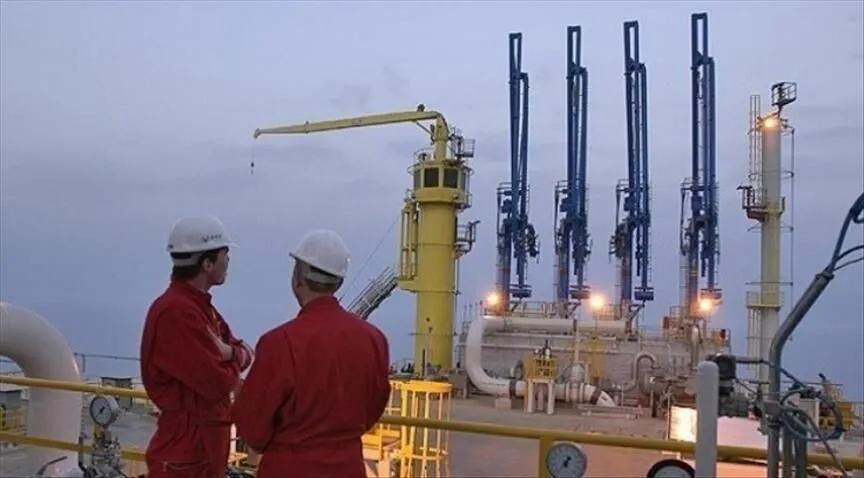
Development work continues at the Zohr natural gas field in the Eastern Mediterranean, belonging to Egypt(AA)
Under policies targeting energy and natural resources, the objectives include sectoral development, support for investment, and more efficient utilization of existing resources. The development of energy sources and the exploitation of natural resources are regarded as key priorities in Egypt’s economic planning.
The Suez Canal is regarded as a key economic and strategic element within Egypt’s transportation sector. It is one of the primary shipping routes used in international maritime transport and serves as a major source of revenue for the Egyptian economy. As a waterway connecting the Mediterranean Sea with the Red Sea, the canal holds significant importance for economic activity and international trade.【56】
Efforts to develop the Suez Canal include projects aimed at upgrading its infrastructure and increasing its transit capacity. The development of the canal is pursued with the objectives of strengthening its role in maritime transport and enhancing its economic contribution.【57】
The transportation sector is one of the fundamental service areas of the Egyptian economy. Efforts are underway to develop infrastructure in road, rail, maritime, and air transport. Various projects are implemented to improve transportation infrastructure with the aim of supporting economic activities and strengthening connectivity between different regions.【58】
Road transport is a key component of Egypt’s transportation system. Work is being carried out to expand the road network, construct new roads, and upgrade existing transportation infrastructure. These initiatives are considered essential for improving transportation services and supporting economic activities.
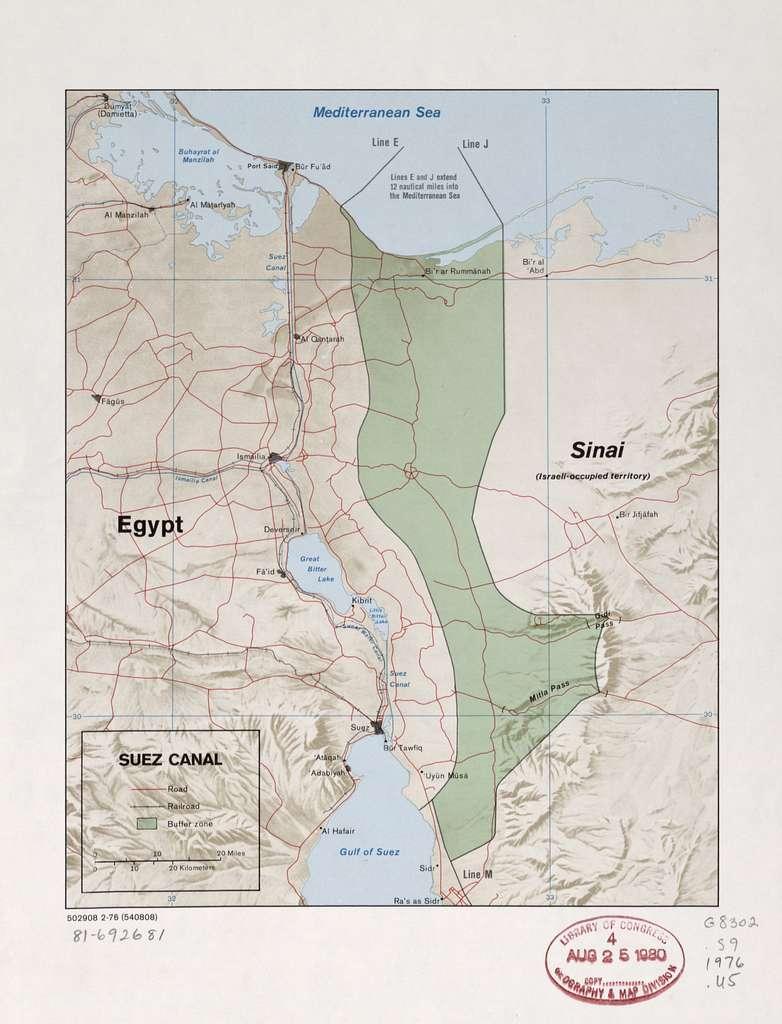
Suez Canal on a map (Picrly)
Infrastructure development efforts are also ongoing in rail, maritime, and air transport. Modernization of the railway system, expansion of ports, and improvement of air transport infrastructure are integral components of transportation sector policies.
Egypt’s foreign trade structure is a vital component of its economy, shaped by export and import activities. Foreign trade policies are implemented to enhance commercial relations, increase export capacity, and strengthen international trade linkages. Egypt pursues policies to expand its foreign trade through various regional and international trade agreements.【59】
Energy products, agricultural goods, industrial products, and various manufactured goods play a significant role in Egypt’s export structure. The country exports products based on natural resources as well as goods from diverse industrial sectors. Import activities include a range of product groups necessary for sustaining economic production.【60】
Regional and international trade agreements hold an important place in Egypt’s foreign trade. The country enhances its trade relations through membership in the World Trade Organization, trade arrangements with Arab nations, African continental trade agreements, and other economic partnerships. These agreements include provisions designed to facilitate Egypt’s access to diverse markets.【61】
To promote foreign trade, Egypt implements various economic measures aimed at supporting exports, facilitating commercial transactions, and improving the investment climate. Trade agreements and economic partnerships are key elements of the country’s participation in the international trade system.
Investment activities in Egypt are carried out within a legal framework designed to regulate the investment climate, provide investment incentives, establish free zones, and promote investment opportunities. Investment policies in the country are shaped by legislation and institutional structures governing investment activities.【62】
One of the key legal frameworks governing investment in Egypt is the Investment Law No. 72 of 2017. This law establishes regulations for investment activities and defines provisions governing the implementation of investment projects. It includes incentives for investment projects and provisions safeguarding investors’ rights.【63】
Under the Investment Law, various incentives are provided for investment projects. These include special arrangements for investment initiatives and advantages applied in accordance with conditions specified in the law. Amendments have been made to investment legislation to regulate investment activities and improve the investment environment.【64】
Free zones in Egypt are special economic areas designated for investment activities. These zones have been established to facilitate the implementation of investment projects, and regulations governing them are integrated into Egypt’s investment system.
The Egypt Investment Map is one of the tools developed to promote investment opportunities in the country. It presents information on investment opportunities and projects across various sectors.
Under policies aimed at supporting the private sector, measures are implemented to enhance the private sector’s role in economic activities and to promote investment. Practices encouraging private sector participation are integrated into Egypt’s economic policies.
Egypt’s legal system is structured within a constitutional framework, with the fundamental organization of the state defined by the constitution. The constitution serves as the primary legal text that regulates the structure of the state, fundamental rights and freedoms, and the limits of public authority. The legal system is based on written legal rules, and norms operate within a hierarchical order established by the constitutional framework.
Judicial independence is a fundamental principle within the constitutional system. The judiciary is organized as a distinct structure separate from the executive and legislative branches and is empowered to enforce the law and resolve disputes. This structure operates through various judicial institutions that encompass constitutional review and the application of legal norms.
Constitutional judicial review is conducted by the Constitutional Court, which has the authority to examine the conformity of laws with the constitution. In addition, the Council of State functions as a judicial body in the administrative judiciary, reviewing the legality of administrative actions.
Public prosecutions and investigations are carried out by the relevant prosecutorial and public litigation bodies within the judicial system. This structure plays a role in the administration of judicial proceedings and legal processes concerning public order.
The constitutional system also defines the distribution of powers among the state’s fundamental organs and is based on the separation of legislative, executive, and judicial authority. Within this framework, the functions and powers of state organs are limited by the constitution.
Egypt’s administrative system is based on the republican principle within the constitutional framework. Executive authority is shared between the president, as head of state, and the government. The administrative structure is grounded in a framework that includes the presidency and the cabinet as the executive organ.
The president, as the highest executive authority, is empowered to determine and implement the general policy of the state. The president plays a role in the formation of the government and exercises authority over the appointment of the cabinet. The president also represents the state domestically and internationally.
The government operates as an executive body composed of the prime minister and ministers. The Council of Ministers is responsible for implementing public policies and ensuring the continued administrative functioning of the state. Ministries carry out public services within their respective areas of competence.
The executive branch coordinates the state’s administrative activities and organizes the delivery of public services. Within this structure, central administration functions as the primary administrative mechanism for implementing public policies.
The relationship between the president and the government is based on the distribution of powers and responsibilities defined by the constitution. This structure is organized according to the principle of sharing executive functions among different organs.
In Egypt, legislative, executive and judicial powers are structured as separate entities within the constitutional framework. The institutional structure of the state operates through a system that defines the allocation of authority among specific organs. Legislative power is exercised by a bicameral parliament consisting of the House of Representatives and the Senate. The House of Representatives occupies the center of the legislative process and performs core functions such as debating and adopting legislation and approving the state budget. The Senate serves an advisory role in the legislative process and provides opinions on specific policy areas. Members of the House of Representatives are elected, and legislative activities are conducted within the bounds of constitutional provisions.
Executive power is shared between the president and the government. The president, as the highest executive authority, is empowered to determine and implement the country’s general policy. The president also fulfills the state’s domestic and international representation functions. The government, composed of the prime minister and ministers, is responsible for implementing public policies and maintaining the administrative functioning of the state. Ministries deliver public services within their respective areas of competence. The executive branch functions as the core component of the state’s administrative mechanism within the central administration structure.
Judicial power is exercised by independent courts. The judicial system comprises a multi-layered structure that includes the Constitutional Court with authority for constitutional review, the Council of State which operates in the field of administrative justice, and other judicial bodies handling public cases. The Constitutional Court reviews the conformity of laws with the constitution. The Council of State examines the legality of administrative actions and adjudicates administrative disputes. Judicial organs fulfill the functions of enforcing the law and ensuring judicial oversight.
In Egypt, political parties operate within a multi-party system. The establishment and activities of political parties are subject to conditions defined by constitutional and legal frameworks. The political system functions through the participation of registered parties in electoral processes.
The system of political parties includes parties with diverse ideological and programmatic orientations. These parties are able to nominate representatives to the House of Representatives and the Senate and participate in the legislative process. The structure of the party system is shaped through the political actors represented in parliament via elections.
The current political structure operates within the framework of relations between the executive and legislative branches. The President occupies the center of executive power and plays a decisive role in determining state policies. The government, as the executive body, is responsible for implementing public policies. The legislative branch conducts legislative activities through the House of Representatives and the Senate.
The electoral system functions as the fundamental mechanism for determining the composition of the legislative branch. Members of the House of Representatives are elected, and this process serves as the primary factor in determining the level of political representation of parties.
Egypt’s political structure is shaped through the interaction between constitutional institutions and political parties, and the functioning of the executive and legislative branches is regulated within this framework.
Egypt’s population exceeded 114 million as of 2024. According to United Nations data, the country’s population growth rate has shown a declining trend in recent years but continues to remain positive. The age structure of the population is predominantly composed of working-age groups. The population aged 15 to 64 constitutes approximately two-thirds of the total population, while the population aged 0 to 14 exceeds one-quarter of the total. In contrast, the proportion of the population aged 65 and over remains relatively low.【65】
As of 2024 data, the birth rate is around 21 per thousand and the death rate is approximately 6 per thousand. The higher birth rate compared to the death rate ensures continued natural population growth. Life expectancy exceeds 70 years.【66】
The geographical distribution of Egypt’s population is highly uneven. Although desert areas make up the majority of the country’s land area, a significant portion of the population is concentrated along the Nile Valley and the Nile Delta. Settlements, agricultural activities, and economic centers are largely concentrated in these regions.
The rate of urbanization has increased in recent years. Approximately 43 percent of the population lives in urban areas. Cairo, Giza, and Alexandria are the country’s largest population centers and serve as the main cities for industry, trade, education, and public services. Internal migration, particularly from rural areas to major cities, continues to support the urbanization process.【67】
The majority of Egypt’s population consists of Arabs. Other major ethnic groups include Nubians, Beja, Berbers, and various Bedouin communities living in the Sinai Peninsula.
Nubians primarily reside in Aswan and its surroundings, the Beja inhabit the Red Sea coast, and Berber communities live mainly around the Siwa Oasis. The Bedouin communities of the Sinai Peninsula are also among the region’s historic population elements. Detailed population statistics by ethnic group are not officially published, so the exact proportions of these groups within the population are not precisely determined.
Approximately 94% of Egypt’s population is Muslim. The majority of the Muslim population adheres to the Sunni branch of Islam.【68】
Approximately 6% of the population are Coptic Christians. The largest Christian community is composed of members of the Coptic Orthodox Church. In addition, there are Catholic, Protestant, and other Eastern Christian communities.【69】
Religious institutions play a significant role in the country’s social life. Mosques and churches serve not only as places of worship but also as centers for various social and cultural activities.
Egypt is both a major source country and a destination country for migration in the Middle East and North Africa. International migration from Egypt is largely driven by economic factors. Labor migration, in particular, is one of the main elements shaping Egypt’s international population movements.
A significant portion of Egyptian migrants live in the countries of the Arabian Gulf. European countries are also key destinations for Egyptian migration. Migration to Europe is motivated by labor demand, educational opportunities, and family reunification. In particular, Italy and Greece are prominent countries in migration flows across the Mediterranean.
In addition to being a country of emigration, Egypt is also a country of immigration. It hosts migrants from Sudan, Syria, Yemen, and various African countries, as well as individuals seeking international protection. This reflects Egypt’s role within regional migration systems as a source, transit, and destination country.
Internal population movements are also a key component of the demographic structure. Internal migration from rural areas to major urban centers such as Cairo, Giza, and Alexandria supports the urbanization process. Access to education, public services, and employment opportunities are among the primary drivers of internal migration.
International migration has a significant impact on Egypt’s economic and social structure. Economic, social, and cultural ties between Egyptians living abroad and the country continue to persist, and migration remains a key factor influencing the country’s population structure.
Egypt’s education system comprises preschool, basic, secondary, and higher education levels. The Ministry of Education and Technical Education and the Ministry of Higher Education and Scientific Research are primarily responsible for formulating and implementing education policies. Basic education is compulsory and covers primary and preparatory stages. In addition, there are two distinct pathways at the secondary level: general secondary education and technical secondary education.
In recent years, various initiatives have been undertaken to improve the education infrastructure, strengthen technical education, expand digital learning applications, and increase the capacity of higher education institutions. Education reforms aim to expand educational services in line with rising student numbers.
Literacy is one of the fundamental indicators used to assess a country’s level of education. In recent years, literacy rates in Egypt have increased due to the expansion of educational services and the extension of compulsory education. According to recent data, the literacy rate among the population aged 15 and above is 75.2%.【70】
Literacy rates vary by gender. The literacy rate among men is recorded at 80.8%, while among women it is 69.8%. These figures indicate that a gap in literacy between the male and female populations persists. However, with expanded access to educational services, the educational level of women has also improved.【71】
Literacy rates among the younger population are higher compared to the general population. This trend is linked to increased enrollment in the education system and the broader dissemination of basic education. In particular, initiatives implemented in recent years to improve children’s access to schooling have contributed to higher literacy levels among younger generations.
Education indicators show that in Egypt, a child is expected to receive a total of 13 years of education throughout their academic life. This duration represents the total estimated time spent by students in primary, secondary, and higher education stages.【72】
To raise literacy rates, adult education programs, digital learning initiatives, and projects aimed at improving access to education in disadvantaged areas are being implemented. These efforts in the education sector aim to increase literacy levels across the entire country.
Egypt’s education system comprises preschool education, basic education, secondary education, and higher education. Educational services are largely provided by the state, but private educational institutions, religious educational institutions, and international schools are also part of the system. The Ministry of Education and Technical Education is responsible for managing levels from preschool through secondary education, while higher education institutions are coordinated by the Ministry of Higher Education and Scientific Research.
The basic education stage includes primary and preparatory (middle school) levels. This stage is compulsory and aims to provide students with foundational education in reading, writing, mathematics, and social sciences. After completing basic education, students proceed to either general secondary schools or technical secondary institutions.
The secondary education system consists of general secondary schools and technical and vocational institutions. Technical secondary institutions offer training programs oriented toward industry, commerce, agriculture, and service sectors. A significant proportion of students at the secondary level in Egypt receive their education in technical and vocational institutions. These institutions play a vital role in developing a skilled workforce that meets the needs of the labor market.
Various reform programs are being implemented to enhance vocational and technical education. These programs aim to update curricula, promote practical education, strengthen school-industry collaboration, and increase employment opportunities for graduates of technical education.
In addition to public schools, private educational institutions also operate in Egypt. Furthermore, international schools that implement foreign educational programs and institutions affiliated with specific foreign education systems are present. These institutions are concentrated primarily in major cities.
Efforts in digital education have led to significant changes in the structure of educational institutions. In this context, the Egyptian Knowledge Bank functions as a national digital information platform providing students, teachers, researchers, and academics with access to scientific publications, databases, and educational materials.【73】
In recent years, initiatives have been undertaken to improve the educational infrastructure, including the construction of new school buildings, the expansion of existing educational institutions’ capacity, and the wider adoption of educational technologies. These efforts aim to ensure continued access to educational services for the growing student population.
Egypt’s higher education system consists of public universities private universities technological universities foreign university campuses and higher institutes. The overall coordination and supervision of higher education institutions are carried out by the Ministry of Higher Education and Scientific Research. Academic coordination among universities is provided by the Supreme Council of Universities.
Higher education institutions in Egypt offer programs at the bachelor’s master’s and doctoral levels. Universities operate in various fields including medicine engineering natural sciences social sciences law education and humanities. The higher education system also constitutes the primary institutional framework for conducting scientific research activities.
Public universities constitute the largest segment of the higher education system. In recent years the number of private universities has increased. Additionally due to regulations permitting specific foreign universities to operate in Egypt international partnership higher education institutions have also become part of the system.
New types of institutions focused on applied education have also been established within the higher education system. Technological universities launched under this framework aim to train specialized workforce in industry and technology. In addition to theoretical instruction applied education and industry collaboration are key components of the educational process at technological universities.
Enhancing scientific research is one of the core objectives of higher education policy. Accordingly efforts are underway to increase university research capacity support scientific publications and strengthen research infrastructure. The Academy of Scientific Research and Technology and the Egyptian Academy of Sciences are the main institutions responsible for supporting research activities.
Institutional structures supporting innovation and intellectual property initiatives also exist within the higher education system. The Egyptian Patent Office manages procedures related to the registration of inventions and the protection of intellectual property rights. This institution contributes to establishing links between research activities and technological production processes.
In line with internationalization policies collaborations have been developed with foreign universities and the presence of various international higher education institutions in the country has been encouraged. As a result universities and institutes affiliated with the education systems of different countries have become part of Egypt’s higher education structure.
Egypt’s cultural structure has been shaped by the convergence of historical legacies from Ancient Egypt Coptic Islamic and modern periods. Cultural institutions in the country play vital roles in literature art architecture preservation of cultural heritage and the continuation of social life. The Constitution’s provisions on culture define the state’s responsibility to protect cultural heritage and support cultural activities.
Egyptian literature is one of the key components of the country’s historical cultural heritage. Written culture dating back to Ancient Egypt has persisted through subsequent periods alongside Coptic Islamic and modern cultural traditions.
Ancient Egyptian culture laid the foundations of the nation’s literary heritage through its use of writing and text production. Coptic culture became an integral part of Egypt’s cultural accumulation through religious texts and written traditions. Islamic culture significantly influenced the development of literary activities with the spread of the Arabic language. In the modern era the proliferation of cultural institutions led to the institutionalization of publishing and literary activities.
The General Egyptian Book Organization plays a major role in publishing activities in Egypt. The organization is responsible not only for book publishing but also for preparing cultural publications and organizing book fairs.【74】
The Academy of the Arabic Language operates to preserve develop and study Arabic using scientific methods. The Academy produces dictionaries conducts linguistic research and publishes various scientific works.【75】
The National Center for Translation supports the translation of world literature and scholarly works from various academic fields into Arabic. The institution also undertakes projects to translate Arabic works into foreign languages.【76】
Libraries and information centers in Egypt play essential roles in preserving written cultural heritage. The Bibliotheca Alexandrina functions as an information institution housing research centers and specialized libraries. The Dar el-Kutub National Library preserves collections of manuscripts rare books and historical documents.
Al-Azhar Library is one of the institutions notable for its collection of manuscripts in Islamic sciences and the Arabic language. The Egyptian Public Libraries network and the Scientific Institutes Library are also among the institutions supporting research and reading activities.
The Supreme Council for Culture organizes conferences publication projects and cultural events to support cultural and literary activities. The Cultural Development Fund contributes to the support of cultural projects and publishing initiatives.
Efforts to protect intellectual property rights in Egypt are carried out by the Egyptian Intellectual Property Organization. Additionally the National Intellectual Property Strategy forms part of the institutional framework aimed at safeguarding cultural and literary production.
In Egypt, performing arts have developed within an institutional framework encompassing theater, opera, ballet, music, and various performance disciplines. The management and support of this field are carried out through various institutions under the Ministry of Culture.
The Theater Sector is responsible for organizing and developing theatrical activities. The institution operates to promote theater art across the country, support theater companies, and organize events related to performing arts. Within the Theater Sector, theater companies with expertise in different specialties are active.
One of the most important institutions for performing arts in Egypt is the Cairo Opera House. The opera house hosts opera, ballet, symphonic music, chamber music, and various stage performances. It also functions as a cultural center for organizing local and international artistic events.
The Academy of Arts is one of the main higher education institutions providing education in performing arts. Within the academy, educational and research activities are conducted in fields such as theater, cinema, ballet, music, folk arts, and art criticism. The institution undertakes efforts to train specialized human resources in the arts.
The City of Arts and Culture, established in the New Administrative Capital, is one of the modern cultural complexes designed for performing arts. The campus includes an opera house, theater halls, concert venues, and various cultural event spaces. This facility, designed to support cultural and artistic activities, forms part of Egypt’s cultural infrastructure.
The Cultural Development Fund conducts activities aimed at supporting projects in culture and the arts. Events organized by the fund include concerts, theater performances, and various artistic activities.
The Supreme Council of Culture also contributes to supporting cultural activities in the field of performing arts. The institution undertakes initiatives to enhance cultural production through cultural events, conferences, and artistic programs.
Activities in Egypt’s performing arts sector are not limited to the capital. The General Authority for Cultural Palaces ensures the organization of cultural and artistic events in different regions of the country. Through this institution, theater performances, music events, and various cultural programs are implemented at the local level.
In Egypt, visual arts have evolved within a cultural and historical context shaped by the aesthetic traditions of Ancient Egypt, Coptic, Islamic, and modern periods. This field has developed within an institutional framework encompassing painting, sculpture, graphic arts, art production, and museum activities.
The Sector of Fine Arts oversees the institutional support of visual arts. This institution is responsible for promoting art production, developing support mechanisms for artists, and organizing exhibitions of artistic works.
The Cultural Development Fund plays a significant role in supporting cultural production in Egypt. The fund operates to finance projects in visual arts, support artistic events, and promote cultural production more widely.
The Supreme Council of Culture implements various programs aimed at developing cultural policies for visual arts, planning artistic events, and supporting cultural research.
The visual arts environment in Egypt is also supported through museums and exhibition institutions. Art and culture units within the Bibliotheca Alexandrina, along with national-level exhibition activities, contribute to the preservation and display of artistic works.
In Egyptian art, ancient Egyptian wall reliefs, sculpture, and iconographic modes of expression form a vital historical foundation. This tradition merged with aesthetic elements from Coptic and Islamic art in subsequent periods, paving the way for diverse artistic approaches. In the modern era, contemporary art practices have continued to develop through state-supported institutions and art academies.
Art education and production are supported through programs conducted by the Academy of Arts. The academy encourages specialization in visual arts through its educational units and research centers.
Egyptian architecture exhibits a historical development shaped by different cultural phases from Ancient Egypt to the present day. Ancient Egyptian architecture is characterized by monumental construction, the use of stone as a primary material, and a religiously centered spatial organization. During this period, temples, tombs, and pyramids formed the fundamental elements of architectural production.
Coptic architecture was shaped by church buildings and religious architectural elements from the early Christian period. Architectural production during this era revolved around structures emphasizing religious function. During the Islamic period, a distinct architectural tradition emerged through the construction of mosques, madrasas, and caravanserais. Geometric decoration, calligraphy, and courtyard layouts became prominent features in these buildings.
In the modern era, Egyptian architecture features a synthesis of historical heritage and contemporary design principles. Urban planning and public buildings exemplify the combined use of traditional architectural elements and modern construction techniques.
The National Organization for Urban Harmony operates to preserve historic structures, regulate the urban fabric, and document architectural heritage. This institution undertakes projects aimed at safeguarding the aesthetic character of the city.
The City of Arts and Culture located in the New Administrative Capital has been planned as an example of contemporary architectural design. This complex functions as a multifunctional cultural facility featuring opera houses, cultural centers, and event spaces.
Egyptian culinary culture has a historical foundation rooted in agricultural production along the Nile Valley. Since Ancient Egypt, bread and beer have been staple food items and form a significant part of daily nutrition.
The dietary patterns of Ancient Egyptian society were closely linked to an economic system based on cereal cultivation. During this period, wheat and barley served as primary ingredients in bread production. Vegetables and fruits were also integral components of daily dietary habits.
Agricultural activities around the Nile River, combined with fishing and water resource utilization, enhanced dietary diversity. This contributed to the provision of protein sources through fish and other aquatic products.
In Ancient Egypt, culinary culture was not limited to meeting nutritional needs but was regarded as an integral part of social life. Food production and consumption reflected structures tied to economic activities and social organization.
Traditions and social life in Egypt have been shaped by the interaction of Coptic, Islamic, and folk cultural elements within a historical continuity stretching from Ancient Egypt to the present. This cultural structure manifests through daily life practices, religious rituals, social organizations, and cultural events.
Coptic culture continues as part of social life through religious ceremonies, holidays, and social rituals associated with Christianity. These traditions are integrated into the social fabric primarily through worship and celebration practices aligned with the religious calendar.
Islamic culture plays a defining role in the religious and social life of a significant portion of Egyptian society. Religious holidays, practices of social solidarity, and cultural rituals form key components of this structure.
Within folk culture, music, dance, oral storytelling traditions, handicrafts, and local festivals are regarded as vital elements of social life. These elements exhibit regional variations and contribute to cultural diversity across different areas.
In the modern era, cultural activities are supported through festivals, artistic events, and cultural programs organized by state institutions. These events are conducted openly to encourage participation from diverse social groups across the country.
The history of sports in Egypt extends back to the Ancient Egyptian period. Reliefs and wall paintings found in temples, tombs, and other archaeological structures demonstrate that sporting activities were practiced in Ancient Egyptian society. These depictions include scenes of various sports and athletic competitions.【77】
In Ancient Egypt, wrestling, weightlifting, long jump, running, swimming, rowing, archery, boxing, fishing, and various ball games were practiced. It is noted that sporting events were conducted under specific rules, with referees overseeing competitions and successful athletes being rewarded. Running races were among the events held during royal coronation ceremonies, while swimming, rowing, and archery were also among the practiced sports.【78】
Today, football is the most widespread and most popular sport in Egypt. In addition, squash, handball, basketball, volleyball, wrestling, and weightlifting are also practiced in the country. The establishment of modern sports clubs dates back to the late 19th century, and the Egyptian Football Association was founded in 1921. Egypt is one of the founding members of the Confederation of African Football.【79】
Egypt participates in the Olympic Games, the Mediterranean Games, the African Games, and other international sporting events. The Egyptian Olympic Committee was established in 1910, and the country began participating in the Olympic Games from 1912 onwards. Additionally, March 3 is celebrated as Egypt Sports Day.【80】
Sports policies are implemented under the National Youth and Sports Strategy 2025–2032. The strategy consists of four main pillars: empowering youth, promoting sports participation, enhancing international sporting competitiveness, and supporting sports governance.【81】
Egypt hosts a vast number of historical, archaeological, and cultural heritage sites due to its role as a crossroads of civilizations throughout history. The country’s tourist attractions include heritage sites listed on the UNESCO World Heritage List, historic cities, monumental structures, archaeological sites, museums, and destinations oriented toward natural and coastal tourism. These areas are assessed under national conservation practices and international protection mechanisms.【82】
Egypt has seven sites inscribed on the UNESCO World Heritage List. These are: Ancient Thebes and its Necropolis, Historic Cairo, Memphis and its Necropolis – the Pyramid Fields from Giza to Dahshur, Abu Mena, Nubian Monuments from Abu Simbel to Philae, Saint Catherine Area, and Wadi al-Hitan (Whale Valley). These sites are listed under both cultural and natural heritage categories and reflect distinct aspects of Ancient Egyptian civilization, early Christianity, Islamic architecture, and geological heritage.【83】
Ancient Thebes and its Necropolis encompasses present-day Luxor and its surroundings, including historical structures on the eastern and western banks of the Nile River. The area contains monumental structures from the Ancient Egyptian period such as the Karnak Temple, the Luxor Temple, the Valley of the Kings, and the Valley of the Queens. Memphis and its Necropolis includes the ancient capital of Memphis along with the pyramid fields of Giza, Saqqara, Abusir, Dahshur, and Abu Rawash. The Giza Pyramids and the Great Sphinx are key components of this heritage site.【84】
Historic Cairo consists of the urban fabric containing mosques, madrasas, city walls, caravanserais, and examples of civil architecture from the Fatimid, Ayyubid, Mamluk, and Ottoman periods. Abu Mena encompasses archaeological remains from the early Christian period, while the Nubian Monuments include the historically significant structures of Abu Simbel and Philae, preserved through international conservation efforts undertaken during the construction of the Aswan High Dam.【85】
The Saint Catherine Area includes the Saint Catherine Monastery and its surrounding cultural landscape on the Sinai Peninsula. Wadi al-Hitan is a natural heritage site located in the Fayoum region that contains fossil remains of prehistoric whales. This site, inscribed by UNESCO as a natural heritage site, is protected due to its fossil evidence illustrating the evolutionary development of whales.【86】
The UNESCO World Heritage Tentative List includes numerous cultural and natural heritage sites in Egypt. These sites include historic settlements, monasteries, archaeological areas, nature reserves, desert regions, and cultural landscapes related to the Nile Basin. These areas constitute the heritage properties under consideration for potential inscription on the World Heritage List by UNESCO.【87】
Among Egypt’s historical cities, Cairo, Giza, Luxor, Aswan and Alexandria stand out. These cities contain numerous architectural works and archaeological sites from the Ancient Egyptian, Hellenistic, Roman, Coptic and Islamic periods. Cairo is recognized as one of the country’s key cultural heritage centers due to its historic urban fabric and religious structures, while Giza is renowned for its pyramids and the Great Sphinx.【88】
Luxor developed on the site of the ancient city of Thebes and houses monumental structures such as the Karnak Temple, the Luxor Temple, the Valley of the Kings and the Valley of the Queens. The Philae Temple and the Nubian Monuments are located in Aswan, while the Abu Simbel Temples are among the rock-cut temples built during the reign of Ramses II. These structures serve as prominent examples of Ancient Egypt’s religious architecture and monumental building tradition.【89】
Alexandria is one of the major cities established during the Hellenistic period and is distinguished by its Greco-Roman archaeological remains, historic buildings and cultural institutions. The Monastery of Saint Catherine, located on the Sinai Peninsula, is not only one of the historic structures still functioning for religious purposes but is also designated as a UNESCO World Heritage Site.【90】
Sharm El Sheikh, Hurghada and Marsa Alam, situated along the Red Sea coast, are among the primary tourist centers for marine tourism and diving activities. River tourism along the Nile and nature-based tourism initiatives in the Fayoum and desert regions also constitute important elements of the country’s tourist appeal.【91】
Museums in Egypt engage in activities aimed at preserving, documenting, researching and exhibiting the country’s historical and cultural heritage. Museums under the Ministry of Tourism and Antiquities provide services across various cities and house collections in the fields of archaeology, art history, civilization history and ethnography.【92】
Major museums in the country include the Grand Egyptian Museum, the Egyptian Museum in Cairo, the National Museum of Egyptian Civilization, the Museum of Islamic Art, the Coptic Museum, the Alexandria National Museum, the Luxor Museum, the Nubia Museum, the Royal Jewels Museum and the Sharm El Sheikh Museum. In addition, regional archaeological museums and specialized museums operating in different parts of the country form an integral part of the national museum network.【93】
The Grand Egyptian Museum, constructed near the Giza Pyramids, is one of the key museum projects developed for the preservation and exhibition of Ancient Egyptian artifacts. Collection organization, exhibition hall preparation and visitor services initiatives were carried out throughout 2025.【94】
Egypt’s tourism policy encompasses measures aimed at developing the tourism sector, increasing tourism revenues, encouraging tourism investments and strengthening the country’s position in the international tourism market. The program implemented by the Ministry of Tourism and Antiquities identifies sustainable tourism, diversification of tourism products, development of digital transformation initiatives, improvement of the investment climate, enhancement of human resource quality and strengthening of international promotion activities as core policy areas.【95】
The ministry’s program also includes initiatives to promote different tourism types such as cultural tourism, coastal tourism, yachting tourism, desert tourism, eco-tourism and religious tourism, alongside efforts to support private sector investments and improve the quality of tourism services.【96】
International visitors to Egypt undertake trips focused on cultural heritage sites, coastal tourism, diving tourism, religious centers, and natural areas. The country’s tourism promotion activities are conducted targeting various international markets with the aim of increasing visitor diversity.【97】
According to data published by the State Information Service, Egypt hosted approximately 19 million international tourists in 2025. The same statement indicates that this figure represents an increase of approximately 21 percent compared to 2024.【98】
Tourism is one of the service sectors generating foreign exchange revenue in Egypt’s economy. Information published by the State Information Service highlights the sector’s role in economic activity, noting ongoing efforts to support tourism investments, improve transportation infrastructure, expand electronic visa systems, and integrate cultural heritage sites into tourism activities.【99】
The increase in visitor numbers recorded in 2025 demonstrates continued growth in the tourism sector. Furthermore, data released for the first four months of 2026 confirms that international tourist arrivals continue to rise.【100】
Egypt’s current foreign policy is shaped by its relations with the Arab world, the African continent, the Mediterranean basin, and Asia. The country engages in regional crisis management, counterterrorism, economic cooperation, energy security, and multilateral diplomacy. In recent years, developments in Gaza, the Nile Basin issue, strengthening ties with Africa, and strategic partnerships with the European Union have emerged as key elements of its foreign policy.
Relations between Egypt and Russia are developing within the framework of political dialogue, economic cooperation, energy, defense, and interactions on international platforms. The foundation of bilateral relations lies in enhancing cooperation within the multilateral system and maintaining coordination in areas of mutual interest. Egypt evaluates its relations with Russia within the context of a balanced foreign policy approach at both regional and global levels.
In recent years, economic and commercial cooperation between Egypt and Russia has become prominent. Energy, industry, agriculture, and infrastructure projects constitute the main areas of economic relations between the two countries. Mutual engagement also exists in sectors such as tourism and transportation. Both countries continue diplomatic contacts through various international organizations and platforms.
Egypt also assesses its relations with Russia within the framework of a multipolar international system and diversifies its ties through cooperation mechanisms developed in platforms such as BRICS and the Shanghai Cooperation Organization. This demonstrates that relations between the two countries are sustained not only at the bilateral level but also within global governance structures.
Türkiye and Egypt established diplomatic relations in 1925. Over the historical course, relations between the two countries have passed through different phases depending on political developments, experiencing periods of rapprochement as well as tension. After the end of the Cold War, bilateral relations saw progress, with economic and commercial ties expanding alongside political contacts.【101】
Although diplomatic relations experienced a decline due to political developments in the 2010s, a normalization process began at the start of the 2020s. Within this framework, diplomatic contacts were reinvigorated, mutual consultations were conducted, and ambassadorial representation was restored.【102】
Today, relations between Türkiye and Egypt are maintained within the framework of political dialogue, trade, energy, transportation, and regional issues. The Palestinian issue, developments in Libya, and matters concerning the Eastern Mediterranean are among the primary agenda items in discussions between the two countries.
Libya holds a strategically important position in terms of foreign policy and security due to its location along Egypt’s western border. The two countries share a common land border of approximately 1,200 kilometers. Consequently, political and security developments in Libya are viewed as directly linked to Egypt’s national security. Egypt’s policy toward Libya is grounded on key principles including the preservation of Libya’s sovereignty and territorial integrity, strengthening state institutions, limiting foreign interference, and supporting political resolution processes.【103】
Egypt has supported diplomatic initiatives and political dialogue mechanisms during Libya’s crisis process. In this context, Egypt hosted meetings between representatives of the Libyan House of Representatives and the High State Council and contributed to constitutional consensus efforts. Additionally, Egypt hosted the meetings of the Libyan Joint Military Committee (5+5) in Cairo on 30 October 2021, supporting discussions aimed at unifying military institutions and implementing a ceasefire. Egypt has declared its support for political processes led by the United Nations and has encouraged efforts to hold elections in Libya.【104】
Relations with Libya are not limited to political and security dimensions. The two countries maintain contacts in areas such as economic cooperation, reconstruction activities, energy, transportation, and labor mobility. Egypt emphasizes the importance of achieving stability in Libya for the development of economic relations and is working to enhance institutional cooperation between the two nations.
Sudan occupies a significant place in Egypt’s foreign policy due to its status as Egypt’s southern neighbor and the historical, geographical, and economic ties between the two countries. Bilateral relations are shaped around issues of border security, utilization of the Nile River waters, economic cooperation, and regional stability. Egypt supports the preservation of Sudan’s sovereignty, territorial integrity, and state institutions and advocates for the peaceful resolution of political and security challenges in Sudan through dialogue.
Following the outbreak of conflict in Sudan in 2023, Egypt has supported ceasefire and political resolution initiatives and maintained diplomatic engagement. Egypt has also paid close attention to the humanitarian dimension of developments in Sudan and implemented various measures to assist Sudanese refugees. According to Egyptian authorities, more than 1.2 million Sudanese citizens are currently residing in Egypt.【105】
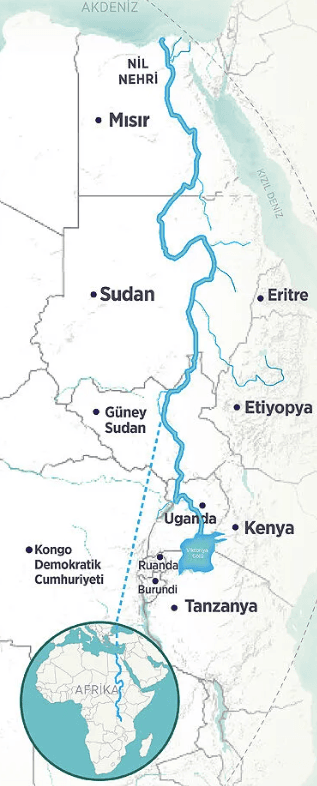
Nil Nehri (AA)
Relations with Nile Basin countries constitute one of the fundamental elements of Egypt’s foreign policy. The Nile River provides the majority of Egypt’s water resources, making relations with basin countries of strategic importance. Egypt pursues policies aimed at enhancing cooperation within the Nile Basin, supporting joint development projects, and strengthening mechanisms for the sustainable use of water resources. Within this framework, various cooperation initiatives are undertaken with basin countries in political, economic, technical, and security domains.
The Nile Basin comprises Egypt, Sudan, South Sudan, Ethiopia, Uganda, Kenya, Tanzania, Rwanda, Burundi, the Democratic Republic of the Congo, and Eritrea. The total area of the basin countries is approximately 8.9 million square kilometers, covering about 30 percent of the African continent. The region’s population corresponds to approximately 7 percent of the world’s population. Egypt places importance on economic integration, infrastructure investment, trade development, and strengthening regional security in its relations with basin countries. In this context, defense, security, and technical cooperation agreements have been signed with various countries, and joint development projects have been supported.【106】
The European Union (EU) holds a significant place in Egypt’s foreign policy and economic relations. Relations between the parties encompass political dialogue, economic cooperation, trade, investment, energy, migration, and security. Due to its location in the Mediterranean basin, Egypt is regarded as one of the EU’s key regional partners, serving as a bridge between Europe, the Middle East, and Africa. Within this framework, regular diplomatic contacts are maintained and various cooperation mechanisms are implemented.
In recent years, relations between Egypt and the European Union have moved toward a more comprehensive framework. Following the Egypt-EU Summit held in Cairo in March 2024, the parties declared a “Strategic and Comprehensive Partnership”. This partnership covers areas such as political relations, economic stability, investment, trade, energy security, management of irregular migration, education, and technology.【107】
In 2025, the economic and investment dimension became prominent in Egypt-EU relations. Cooperation between the parties focused particularly on developing energy resources, renewable energy projects, infrastructure investments, and regional stability. In addition, developments in Gaza, irregular migration flows, and security issues in the Eastern Mediterranean have also featured prominently on the agenda of their relations. 【108】
Egypt’s security policy is built on the principles of preserving internal state stability, ensuring border security, and strengthening counterterrorism capabilities. In this context, operations conducted against armed groups active in the Sinai Peninsula constitute a key component of its security strategy. The state regards terrorism as one of the primary threats to national security and employs military, intelligence, and legal mechanisms in tandem to address it.
The counterterrorism approach is not limited to security operations but also encompasses ideological and social dimensions. Within this framework, efforts aim to reinterpret religious discourse to counter radicalization and to support intellectual initiatives that challenge the legitimization of violence. The “Al-Azhar Declaration Against Violence”, prepared by Al-Azhar, is regarded as a prime example of religious and intellectual efforts in this regard.【109】
Egypt also places importance on international cooperation in counterterrorism. It participates in various regional and global platforms to facilitate information sharing, security coordination, and engagement in transnational counterterrorism mechanisms. At the same time, defense cooperation with different countries is pursued to modernize armed forces and enhance security capacity.
Palestine remains one of the fundamental and enduring agenda items in Egypt’s foreign policy. Egypt supports the two-state solution and advocates for the establishment of an independent Palestinian state with East Jerusalem as its capital, based on the 1967 borders. In this context, Egypt has played a role in facilitating reconciliation efforts among Palestinian factions and in diplomatic engagements aimed at resolving the Israeli-Palestinian conflict. Egypt’s policy on Palestine is grounded in the principles of preserving regional stability, containing conflicts, and supporting political resolution processes.【110】
In response to developments in the Gaza Strip following October 7, 2023, Egypt has played an active role in ceasefire initiatives, humanitarian aid operations, and diplomatic negotiations. According to Egyptian authorities, a total of 6,406 aid trucks have been delivered to Gaza, with the total weight of dispatched aid reaching 105,951 tons. Of these, 3,965 trucks carried food supplies, 871 carried medical equipment, and 1,570 carried other humanitarian aid items. During the same period, it was reported that 6,500 injured Palestinians received medical treatment in Egyptian hospitals.【111】
Egypt is a state that shapes its foreign policy on the basis of multilateral diplomacy and is a member of numerous international organizations at both global and regional levels. Within the United Nations (UN) system, Egypt is among the founding members and regularly participates in the organization’s efforts to preserve peace, ensure international security, and advance development goals. Egypt has also held periodic seats on the UN Security Council and played an active role in multilateral diplomatic processes.
In the economic and financial domain, Egypt is a member of institutions such as the International Monetary Fund (IMF), the World Bank Group and the World Trade Organization (WTO). These memberships support the country’s integration into the global economic system and enable international cooperation in areas such as financial stability, development financing, trade policies and structural reforms. Egypt is also a member of technical and sectoral organizations including the International Labour Organization (ILO), the International Civil Aviation Organization (ICAO) and the World Intellectual Property Organization (WIPO)
At the regional level, Egypt is one of the founding members of the Arab League and hosts the organization’s headquarters in Cairo. Within the framework of the Arab League, Egypt engages in political coordination, economic integration and regional security initiatives with other Arab states. Additionally, Egypt participates in platforms such as the Organization of Islamic Cooperation (OIC), the Non-Aligned Movement (NAM) and the Group of 77 to maintain cooperation especially with Global South countries.
On the African continent, Egypt is an active member of the African Union and contributes to the continental peace and security architecture. In this context, Egypt participates in initiatives linked to mechanisms such as the African Peace and Security Council and supports intracontinental economic integration and development efforts.
In addition, Egypt participates in cooperation mechanisms with the European Union under the Mediterranean framework and is a member of the Union for the Mediterranean platform. Regional structures centered on energy, such as the Eastern Mediterranean Gas Forum, are also areas of active Egyptian engagement. In recent years, Egypt’s membership in multilateral system structures such as BRICS and the Shanghai Cooperation Organization has strengthened the country’s foreign policy trend toward geographic diversification and multifaceted diplomacy.
Egypt’s military organization consists of institutional structures responsible for implementing the state’s defense and security policies. The Egyptian Armed Forces operate under a unified command structure encompassing land, naval and air forces along with their supporting elements. The armed forces’ mandate includes safeguarding the country’s sovereignty and territorial integrity as well as conducting defense operations against threats to national security.
The Egyptian Armed Forces comprise regular military units organized under a unified command structure, including land, naval, air and air defense forces, as well as various support organizations. The organizational structure includes not only combat units but also divisions responsible for logistics, training, technical support, engineering, healthcare and administrative services.
The personnel structure consists of professional military personnel and conscripts serving under the mandatory military service system. Military service in Egypt is implemented as a mandatory obligation for male citizens within a specified age group. In addition to active-duty personnel, the reserve force system is an integral part of the armed forces’ human resource structure.
The personnel organization of the modern Egyptian military was shaped by military reforms initiated in the 19th century and restructured throughout the 20th century in response to wars and regional security developments. During this process, personnel organization, training activities and inter-service coordination mechanisms were developed.【112】
Egypt’s defense expenditures constitute one of the budget items evaluated within the structure of general public finance. Resources allocated to defense are shaped in accordance with the state’s fiscal policies and economic indicators and have varied over the years.
Financial resources directed toward defense are utilized in various areas including personnel needs of the armed forces procurement of military equipment maintenance and modernization activities and the implementation of defense industry projects. In addition defense-related spending encompasses projects linked to the development of domestic production capacity and international cooperation initiatives.
Data on Egypt’s military expenditures are regularly monitored by international economic data platforms and annual changes are published within the framework of economic indicators. These data enable the tracking of the defense budget’s evolution over time.
Egypt’s defense industry consists of institutional structures engaged in the supply production and modernization of weapons ammunition military equipment and various support systems required by the armed forces. Within this structure the Ministry of Military Production and its affiliated entities hold a significant position.
Activities in the defense industry encompass not only the fulfillment of armed forces requirements but also the development of technological capacity and the modernization of production infrastructure. While a portion of the systems in the Egyptian Armed Forces inventory is procured through foreign sources local production and assembly activities are among the core components of the defense industry.
Efforts in the defense industry are supported through international cooperation mechanisms. In this context Egypt is developing partnerships with various foreign companies in defense production and technology fields and undertaking initiatives for the exchange of knowledge and technical capacity.
Within the framework of activities carried out by the Ministry of Military Production opportunities for cooperation with Greek-based companies in the defense industry have been examined. Discussions have focused on technical and industrial collaboration regarding ammunition production and joint manufacturing of military products.
Cooperations in the defense industry are not limited to military production alone but also include initiatives aimed at technology transfer development of production infrastructure and expansion of industrial capacity. In this context Egypt undertakes activities to enhance technical knowledge sharing and production capabilities in the defense industry through international partnerships.
Modernization of systems in the armed forces inventory procurement of new weapon systems and acquisition of equipment tailored to the needs of different force commands are among the operational areas of the defense industry. Modernization and procurement processes conducted in accordance with the requirements of the land air and naval forces are among the key factors influencing the development of the defense industry.
The Egyptian Armed Forces consist of land naval air and air defense forces operating under a unified command structure. The force structure is organized within a joint framework that includes not only combat units but also technical logistical and support elements. The organizational structure of the armed forces is based on the division of responsibilities among different force commands in accordance with the country’s defense needs.
The Egyptian Ground Forces constitute one of the principal combat components of the Egyptian Armed Forces. The ground forces are organized to defend the country’s land borders, conduct military operations, and carry out joint operations in coordination with other force commands.
The structure of the ground forces comprises armored units mechanized units artillery units engineering units and various support elements. In addition to combat units units responsible for logistics transportation maintenance communications and technical support also form part of the ground forces organizational structure.
The inventory of the ground forces consists of weapon systems and armored vehicles acquired from various countries over different periods. The inventory includes main battle tanks armored personnel carriers infantry fighting vehicles artillery systems anti-tank systems and a variety of small arms. This structure encompasses multiple platforms enabling ground units to perform missions across different types of operations.
Modernization efforts encompass processes aimed at enhancing the equipment structure and renewing existing systems. Within this framework activities are underway to integrate new platforms into the armed forces inventory modernize existing systems and improve technical capabilities.
The activities of the ground forces are not limited to conventional military duties but also include counterterrorism and security operations. In this context the Egyptian Armed Forces’ Operation Sinai 2018 was conducted with coordination between ground units and other force elements. During the operation ground units operated in accordance with a joint operational approach alongside air and naval forces.
The organizational structure and equipment system of the Egyptian ground forces are being developed within the broader modernization policies of the armed forces and operate within a joint military framework based on coordination among different force commands.
The Egyptian Air Forces form one of the principal components of the Egyptian Armed Forces and are tasked with protecting the national airspace conducting air operations and providing support to other force commands. Air forces operate in coordination with ground and naval forces within the framework of a joint operational concept.
The air forces inventory comprises combat aircraft trainer aircraft transport aircraft helicopters and support platforms acquired from various countries over different periods. This structure encompasses a range of capabilities addressing diverse operational needs including air superiority close air support reconnaissance transportation and logistics missions.
Within the Egyptian Armed Forces air defense forces are organized as an independent command. Air defense units are responsible for detecting threats to the national airspace and conducting defensive operations against them. In this regard radar systems missile systems and various air defense platforms constitute the core components of the air defense organization.
Scientific and technical activities hold a significant place within the institutional structure of the air defense forces. In this context the First Air Defense Forces Scientific Forum serves as a platform for evaluating technological advancements scientific research and expert studies in the field of air defense. During the forum technical and scientific issues related to air defense systems were discussed with emphasis on research and development initiatives.
Air forces play a critical role in the joint operations conducted by the Egyptian Armed Forces. During Operation Sinai 2018 the air forces operated in coordination with ground and naval forces carrying out reconnaissance surveillance and air support missions. The operation exemplified a joint operational approach characterized by synchronized efforts among different force elements.【113】
The equipment structure and operational capabilities of the air forces are being developed in line with the general modernization policies of the armed forces. This process includes activities aimed at renewing existing platforms integrating new systems into the inventory and enhancing the technical infrastructure.
The Egyptian Navy constitutes one of the principal components of the Egyptian Armed Forces and is responsible for safeguarding the nation’s maritime territories, ensuring the security of sea transport routes, and conducting naval operations. The navy operates in coordination with land and air forces within the framework of joint operations.
The maritime elements are organized into a structure comprising combat vessels and support and auxiliary platforms. The inventory includes warships, submarines, patrol vessels, and auxiliary naval assets acquired from various countries at different times. This structure encompasses capabilities for maritime surveillance, coastal defense, maritime security, logistical support, and the execution of diverse naval operations.
Under the modernization policies of the Egyptian Armed Forces, efforts are underway to enhance the equipment structure of the navy. This process aims to upgrade existing platforms, introduce new systems, and integrate additional support assets into the inventory.
Within the navy, specialized platforms are dedicated to search and rescue operations. In this context, SAR-1700 class rescue boats have been incorporated into the Egyptian Navy’s inventory. These platforms have been commissioned for use in maritime search and rescue missions and emergency response operations.
The navy conducts operations in coordination with other force commands in accordance with the joint operations doctrine. During the Sinai 2018 Comprehensive Operation, maritime elements operated in coordination with land and air forces, carrying out tasks related to control of maritime areas, support for coastal security, and execution of joint operational activities.【114】
The organizational structure and inventory of the Egyptian Navy are being developed in line with the broader modernization programs of the armed forces, with ongoing efforts to enhance technical and operational capabilities for naval operations.
The operational history of the Egyptian Armed Forces took shape with the emergence of the modern Egyptian army and has evolved through military reforms implemented since the 19th century. In the modern era, the institutional structure of the army has been reorganized under the influence of regional conflicts, wars, and changing security environments; its organizational framework, education system, and force structure have undergone successive phases of transformation.【115】
Throughout the 20th century, the Egyptian Armed Forces operated under the influence of political and military developments in the Middle East. During this period, the army’s personnel structure, education system, and equipment were enhanced through various modernization programs, and coordination mechanisms among different force commands were strengthened.【116】 Within its historical development, the concept of joint operations based on cooperation among land, air, naval, and air defense forces has become one of the fundamental elements of its operational structure.
The operational activities of the Egyptian Armed Forces rely on the synchronized employment of different force components. Within this framework, land forces, air forces, naval forces, and air defense forces operate under a joint command doctrine to conduct coordinated operations against various security threats.
One of the detailed operations documented in available sources is the Sinai 2018 Comprehensive Operation, launched in 2018. This operation is a joint effort involving the Egyptian Armed Forces and security institutions.
Participating in the operation were land forces, air forces, naval forces, air defense forces, border guard units, and security forces.【117】 During the operation, coordination was established among different force commands: air elements conducted reconnaissance and support missions, naval forces carried out activities to secure maritime areas, and land units executed ground operations.
The Sinai 2018 Comprehensive Operation is defined as one of the operations demonstrating the Egyptian Armed Forces’ capability in joint operations. Within the operation, synchronization was achieved between military units and security institutions, establishing a structure in which different force elements operated within the same operational framework.【118】
Operational experience has influenced processes aimed at improving the organizational structure and the technical and logistical capacity of the armed forces. In this context, modernization initiatives focused on strengthening inter-force coordination and developing joint operational capabilities are key components of the Egyptian Armed Forces’ operational structure.
Osmanoğlu, Ahmet Emin. "Modern Mısır Eğitim Sisteminin Temelleri." History Studies International Journal of History 6, no. 1 (January 2014): 123-137.
Arab Republic of Egypt: The Presidency. "Basic Information." Accessed June 24, 2026.https://www.presidency.eg/en/%D9%85%D8%B5%D8%B1/%D9%85%D8%B9%D9%84%D9%88%D9%85%D8%A7%D8%AA-%D8%A3%D8%B3%D8%A7%D8%B3%D9%8A%D8%A9/
Embassy of Egypt, Washington DC. "Tourism." About Egypt. Accessed June 24, 2026.https://www.egyptembassy.org/about-egypt/tourism
UNESCO World Heritage Centre. "Beni Hasan Tombs (Ref. 189)." Tentative Lists. Accessed June 24, 2026.https://whc.unesco.org/en/tentativelists/189/
Visit Egypt. "Major Cities in Ancient Egypt." News & Blog. Accessed June 24, 2026.https://visitegypt.com/news-blog/major-cities-in-ancient-egypt/
Al-Shahawi, Ghada, and Youssef Al-Shahawi. "An Overview of the Egyptian Legal System." GlobaLex. New York University School of Law, May/June 2022. Accessed June 24, 2026.https://www.nyulawglobal.org/globalex/Egypt1.html#iii
Anadolu Ajansı. "Mısır." Ülke Profilleri. Updated September 7, 2017. Accessed June 24, 2026.https://www.aa.com.tr/tr/ulke-profilleri/misir/903470
Arab Republic of Egypt: The Presidency. "Basic Information." Accessed June 24, 2026.https://www.presidency.eg/en/%D9%85%D8%B5%D8%B1/%D9%85%D8%B9%D9%84%D9%88%D9%85%D8%A7%D8%AA-%D8%A3%D8%B3%D8%A7%D8%B3%D9%8A%D8%A9/
Arab Republic of Egypt: The Presidency. "Egypt's Flag Now." Accessed June 24, 2026.https://www.presidency.eg/en/%D9%85%D8%B5%D8%B1/%D9%85%D8%B9%D9%84%D9%88%D9%85%D8%A7%D8%AA-%D8%A3%D8%B3%D8%A7%D8%B3%D9%8A%D8%A9/%D8%A7%D9%84%D8%B9%D9%84%D9%85-%D8%A7%D9%84%D9%88%D8%B7%D9%86%D9%89/%D8%A7%D9%84%D8%B9%D9%84%D9%85-%D8%A7%D9%84%D9%85%D8%B5%D8%B1%D9%8A-%D8%A7%D9%84%D8%AD%D8%A7%D9%84%D9%8A/
Arab Republic of Egypt: The Presidency. "National Anthem: Eslamy Ya Misr." Accessed June 24, 2026.https://www.presidency.eg/en/%D9%85%D8%B5%D8%B1/%D9%85%D8%B9%D9%84%D9%88%D9%85%D8%A7%D8%AA-%D8%A3%D8%B3%D8%A7%D8%B3%D9%8A%D8%A9/%D8%A7%D9%84%D9%86%D8%B4%D9%8A%D8%AF-%D8%A7%D9%84%D9%88%D8%B7%D9%86%D9%89/%D9%86%D8%B4%D9%8A%D8%AF-%D8%A3%D8%B3%D9%84%D9%85%D9%8A-%D9%8A%D8%A7-%D9%85%D8%B5%D8%B1/
Arab Republic of Egypt: The Presidency. "The First National Anthem." Accessed June 24, 2026.https://www.presidency.eg/en/%D9%85%D8%B5%D8%B1/%D9%85%D8%B9%D9%84%D9%88%D9%85%D8%A7%D8%AA-%D8%A3%D8%B3%D8%A7%D8%B3%D9%8A%D8%A9/%D8%A7%D9%84%D9%86%D8%B4%D9%8A%D8%AF-%D8%A7%D9%84%D9%88%D8%B7%D9%86%D9%89/%D8%A3%D9%88%D9%84-%D8%B3%D9%84%D8%A7%D9%85-%D9%88%D8%B7%D9%86%D9%8A/
Arab Republic of Egypt: The Presidency. "Tourism in Egypt." Accessed June 24, 2026.https://www.presidency.eg/en/%D9%85%D8%B5%D8%B1/%D8%A3%D9%84%D8%B3%D9%8A%D8%A7%D8%AD%D8%A9-%D9%81%D9%8A-%D9%85%D8%B5%D8%B1/
Carnegie Museum of Natural History. "Egypt and the Nile." Life in Ancient Egypt. Accessed June 24, 2026.https://carnegiemnh.org/egypt-and-the-nile/
CountryReports. "Egypt: People and Culture." Accessed June 24, 2026.https://www.countryreports.org/country/Egypt/people
Darnell, John Coleman. "Egyptian Military History." Research Starters. EBSCO. Accessed June 24, 2026.https://www.ebsco.com/research-starters/history/egyptian-military-history
Doğaner, Suna. "Mısır (I. Fizikî ve Beşerî Coğrafya)." TDV İslâm Ansiklopedisi, Volume 29. Ankara: Türkiye Diyanet Vakfı, 2004, pp. 553-555. Accessed June 21, 2026.https://islamansiklopedisi.org.tr/misir#1
Egypt State Information Service (SIS). "Egypt, Turkey Praise Rapid Developments in Bilateral Relations." Accessed June 21, 2026.https://sis.gov.eg/en/media-center/news/egypt-turkey-praise-rapid-developments-in-bilateral-relations/
Food and Agriculture Organization (FAO). "Chapter 2: Egypt." Irrigation in the Near East Region in Figures. Accessed June 24, 2026.https://www.fao.org/4/ab580e/AB580E02.htm
Hathcock, Barrett. "Egypt." Research Starters: Geography and Cartography. EBSCO, 2023. Accessed June 24, 2026.https://www.ebsco.com/research-starters/geography-and-cartography/egypt
Hathcock, Barrett. "Egypt." Research Starters: Geography and Cartography. EBSCO, 2023. Accessed June 24, 2026.https://www.ebsco.com/research-starters/geography-and-cartography/egypt
International Institute for Capacity Building in Africa (IICBA). "Monitoring Equity Through Verified Data: How Egypt's 2025 Education Reforms Are Reframing Progress." UNESCO. Accessed June 24, 2026.https://www.iicba.unesco.org/en/monitoring-equity-through-verified-data-how-egypts-2025-education-reforms-are-reframing-progress-and
International Trade Administration. "Egypt - Education and Training." Country Commercial Guides. Updated December 19, 2023. Accessed June 24, 2026.https://www.trade.gov/country-commercial-guides/egypt-education-and-training-0
JR videos. "National Anthem of Egypt (Arabic/English) - بلادي، لك حبي و فؤادي." YouTube, 1:29. March 6, 2017. Accessed June 24, 2026.http://www.youtube.com/watch?v=zGXuR4ikNyc
Janas, Michał. "Migrants from a Migrant State: On Migration from Egypt to the EU." Institute of New Europe (INE). Accessed June 24, 2026.https://ine.org.pl/en/migrants-from-a-migrant-state-on-migration-from-egypt-to-the-eu/
King, Arienne. "Food & Drink in Ancient Egypt." World History Encyclopedia. Updated April 3, 2025. Accessed June 24, 2026.https://www.worldhistory.org/article/2494/food--drink-in-ancient-egypt/
Manna4u. "Suez Canal." Flickr, March 24, 2014. Digital image.https://www.flickr.com/photos/manna4u/13415338295
Mark, Joshua J. "Daily Life in Ancient Egypt." World History Encyclopedia. Last updated May 1, 2017. Accessed June 24, 2026.https://www.worldhistory.org/article/933/daily-life-in-ancient-egypt/
Middle East Institute. "Return of the Pharaohs: The Rise of Egypt's Civilization-State." Accessed June 24, 2026.https://mei.edu/publication/return-pharaohs-rise-egypts-civilization-state/
Migration Policy Institute (MPI). "Egypt." Country Resources. Accessed June 24, 2026.https://www.migrationpolicy.org/country-resource/egypt
Ministry of Tourism and Antiquities. "Museums." Egymonuments. Accessed June 24, 2026.https://egymonuments.gov.eg/en/museums/
Minority Rights Group International. "Egypt." Countries and Peoples. Accessed June 24, 2026.https://minorityrights.org/country/egypt/
Naguib, S. "The Highest Mountains in Egypt." WorldAtlas. Accessed June 24, 2026.https://www.worldatlas.com/articles/highest-mountains-in-egpyt.html
OEC (The Observatory of Economic Complexity). "Egypt (EGY) Country Profile." Accessed June 24, 2026.https://oec.world/en/profile/country/egy
Our World in Data. "Population and Demography: Egypt." Accessed June 24, 2026.https://ourworldindata.org/profile/population-demography/egypt
PICRYL. “Suez Canal. Historic Map, Library of Congress.” Accessed June 24, 2026.https://picryl.com/media/suez-canal-2
Peakery. "Egypt Mountains." Accessed June 24, 2026.https://peakery.com/region/egypt-mountains/
SJP Tours. "The Majestic Mountains of Egypt: A Comprehensive Guide." Accessed June 24, 2026.https://sjptours.com/the-majestic-mountains-of-egypt-a-comprehensive-guide/
Sawe, Benjamin Elisha. "What Are the Major Natural Resources of Egypt?" WorldAtlas. Accessed June 24, 2026.https://www.worldatlas.com/articles/what-are-the-major-natural-resources-of-egypt.html
StatBase. "Egypt (EG) Statistical Profile." Accessed June 24, 2026.https://statbase.org/countries/eg/
State Information Service. "2024 Russian Presidential Election." Files. Accessed June 24, 2026.https://sis.gov.eg/en/media-center/files/2024-russian-presidential-election/
State Information Service. "2025 Year in Review." Files. Accessed June 24, 2026.https://sis.gov.eg/en/media-center/files/2025-year-in-review/
State Information Service. "2025 Yearender: The Year of the GEM." Files. Accessed June 24, 2026.https://sis.gov.eg/en/media-center/files/2025-yearender-the-year-of-the-gem/
State Information Service. "3-Year Government Plan 2024-2027." Pillars of the Economic Program. Accessed June 24, 2026.https://sis.gov.eg/en/economy-investment/economy/pillars-of-the-economic-program/3-year-government-plan-20242027/
State Information Service. "9 Years Achievements." Education. Accessed June 24, 2026.https://sis.gov.eg/en/egypt/society/education/9-years-achievements/
State Information Service. "Academy of Arts." Cultural Institutions. Accessed June 24, 2026.https://sis.gov.eg/en/egypt/culture/cultural-institutions/academy-of-arts/
State Information Service. "Academy of Scientific Research and Technology." Education. Accessed June 24, 2026.https://sis.gov.eg/en/egypt/society/education/academy-of-scientific-research-and-technology/
State Information Service. "Academy of the Arabic Language." Cultural Institutions. Accessed June 24, 2026.https://sis.gov.eg/en/egypt/culture/cultural-institutions/academy-of-the-arabic-language/
State Information Service. "Accountability State Authority." Regulatory Authorities. Accessed June 24, 2026.https://sis.gov.eg/en/egypt/system-of-government/regulatory-authorities/accountability-state-authority/
State Information Service. "Administrative Control Authority." Regulatory Authorities. Accessed June 24, 2026.https://sis.gov.eg/en/egypt/system-of-government/regulatory-authorities/administrative-control-authority/
State Information Service. "Africa 50: Investing in Infrastructure for Africa's Growth." Egypt & International Organizations. Accessed June 24, 2026.https://sis.gov.eg/en/international-relations/egypt-intl-organizations/africa-50-investing-in-infrastructure-for-africa-s-growth/
State Information Service. "African Games." Sport. Accessed June 24, 2026.https://sis.gov.eg/en/egypt/sport/african-games/
State Information Service. "African Telecommunication Union." Egypt & International Organizations. Accessed January 24, 2026.https://sis.gov.eg/en/international-relations/egypt-intl-organizations/african-telecommunication-union/
State Information Service. "Agriculture." Egyptian Economy Sectors. Accessed June 24, 2026.https://sis.gov.eg/en/economy-investment/economy/egyptian-economy-sectors/agriculture/
State Information Service. "Agriculture." Egyptian Economy Sectors. Accessed June 24, 2026.https://sis.gov.eg/en/economy-investment/economy/egyptian-economy-sectors/agriculture/
State Information Service. "Al-Azhar Library." Cultural Institutions. Accessed June 24, 2026.https://sis.gov.eg/en/egypt/culture/cultural-institutions/al-azhar-library/
State Information Service. "An Exceptional Year of International Electoral Successes for Egyptian Diplomacy." Files. Accessed June 24, 2026.https://sis.gov.eg/en/media-center/files/an-exceptional-year-of-international-electoral-successes-for-egyptian-diplomacy/
State Information Service. "Ancient Egyptian Culture." Egypt's Cultural Diversity. Accessed June 24, 2026.https://sis.gov.eg/en/egypt/culture/egypt-s-cultural-diversity/ancient-egyptian-culture/
State Information Service. "Ancient Egyptian Sport." Sport. Accessed June 24, 2026.https://sis.gov.eg/en/egypt/sport/ancient-egyptian-sport/
State Information Service. "Arab Labor Organization." Egypt & International Organizations. Accessed June 24, 2026.https://sis.gov.eg/en/international-relations/egypt-intl-organizations/arab-labor-organization/
State Information Service. "Armed Forces." Military Institution. Accessed June 24, 2026.https://sis.gov.eg/en/egypt/military-institution/armed-forces/
State Information Service. "Arming the Egyptian Army During the Era of President Sisi." Files. Accessed June 24, 2026.https://sis.gov.eg/en/media-center/files/arming-the-egyptian-army-during-the-era-of-president-sisi/
State Information Service. "Azhar Document Against Violence." Files. Accessed June 24, 2026.https://sis.gov.eg/en/media-center/files/azhar-document-against-violence/
State Information Service. "Basic Information." Accessed June 24, 2026.https://sis.gov.eg/en/egypt/basic-information/
State Information Service. "Bibliotheca Alexandria." Cultural Institutions. Accessed June 24, 2026.https://sis.gov.eg/en/egypt/culture/cultural-institutions/bibliotheca-alexandria/
State Information Service. "Cairo Opera House." Cultural Institutions. Accessed June 24, 2026.https://sis.gov.eg/en/egypt/culture/cultural-institutions/cairo-opera-house/
State Information Service. "Central Bank of Egypt." Regulatory Authorities. Accessed June 24, 2026.https://sis.gov.eg/en/egypt/system-of-government/regulatory-authorities/central-bank-of-egypt/
State Information Service. "Communication and Information Technology." Egyptian Economy Sectors. Accessed June 24, 2026.https://sis.gov.eg/en/economy-investment/economy/egyptian-economy-sectors/communication-and-information-technology/
State Information Service. "Comprehensive Operation Sinai 2018." Military Institution. Accessed June 24, 2026.https://sis.gov.eg/en/egypt/military-institution/comprehensive-operation-sinai-2018/
State Information Service. "Coptic Culture." Egypt's Cultural Diversity. Accessed June 24, 2026.https://sis.gov.eg/en/egypt/culture/egypt-s-cultural-diversity/coptic-culture/
State Information Service. "Coptic Era." Egypt's History. Accessed June 24, 2026.https://sis.gov.eg/en/egypt/history/egypts-history/coptic-era/
State Information Service. "Crystal Mountain." Environmental Tourism. Accessed June 24, 2026.https://sis.gov.eg/en/egypt/tourism/environmental-tourism/crystal-mountain/
State Information Service. "Cultural Achievements." Culture. Accessed June 24, 2026.https://sis.gov.eg/en/egypt/culture/cultural-achievements/cultural-achievements/
State Information Service. "Cultural Components in 2014 Constitution." Culture. Accessed June 24, 2026.https://sis.gov.eg/en/egypt/culture/cultural-components-in-2014-constitution/
State Information Service. "Cultural Development Fund." Cultural Institutions. Accessed June 24, 2026.https://sis.gov.eg/en/egypt/culture/cultural-institutions/cultural-development-fund/
State Information Service. "Cultural Events and Activities." Culture. Accessed June 24, 2026.https://sis.gov.eg/en/egypt/culture/cultural-events/cultural-events-and-activities/
State Information Service. "D-8 Organization for Economic Cooperation." Egypt & International Organizations. Accessed June 24, 2026.https://sis.gov.eg/en/international-relations/egypt-intl-organizations/d-8-organization-for-economic-cooperation/
State Information Service. "East Mediterranean Gas Forum." Egypt & International Organizations. Accessed June 24, 2026.https://sis.gov.eg/en/international-relations/egypt-intl-organizations/east-mediterranean-gas-forum/
State Information Service. "Economic Community of West African States (ECOWAS)." Egypt & International Organizations. Accessed June 24, 2026.https://sis.gov.eg/en/international-relations/egypt-intl-organizations/economic-community-of-west-african-states-ecowas/
State Information Service. "Economic Components in 2014 Constitution." Accessed June 24, 2026.https://sis.gov.eg/en/economy-investment/economy/economic-components-in-2014-constitution/
State Information Service. "Economic Indicators." Accessed June 24, 2026.https://sis.gov.eg/en/economy-investment/economy/economic-indicators/
State Information Service. "Education in Egypt." Society. Accessed June 24, 2026.https://sis.gov.eg/en/egypt/society/education/education-in-egypt/
State Information Service. "Egypt Records 7% Rise in Tourist Arrivals in First Four Months of 2026." News. Accessed June 24, 2026.https://sis.gov.eg/en/media-center/news/egypt-records-7-rise-in-tourist-arrivals-in-first-four-months-of-2026/
State Information Service. "Egypt Tourism Records Historic Growth in 2025, Receiving 19 Million Tourists." News. Accessed June 24, 2026.https://sis.gov.eg/en/media-center/news/egypt-tourism-records-historic-growth-in-2025-receiving-19-million-tourists/
State Information Service. "Egypt and African Dossier." Files. Accessed June 24, 2026.https://sis.gov.eg/en/media-center/files/egypt-and-african-dossier/
State Information Service. "Egypt and Nile Basin Countries." Files. Accessed June 24, 2026.https://sis.gov.eg/en/media-center/files/egypt-and-nile-basin-countries/
State Information Service. "Egypt and the Asian Arena." Files. Accessed June 24, 2026.https://sis.gov.eg/en/media-center/files/egypt-and-the-asian-arena/
State Information Service. "Egypt and the Fight Against Terrorism." Files. Accessed June 24, 2026.https://sis.gov.eg/en/media-center/files/egypt-and-the-fight-against-terrorism/
State Information Service. "Egypt in International Reports." Accessed June 24, 2026.https://sis.gov.eg/en/economy-investment/economy/egy-in-international-reports/
State Information Service. "Egypt's Foreign Policy in its Arab Arena." Files. Accessed June 24, 2026.https://sis.gov.eg/en/media-center/files/egypts-foreign-policy-in-its-arab-arena/
State Information Service. "Egypt's Investment Map." Investment. Accessed June 24, 2026.https://sis.gov.eg/en/economy-investment/economy/investment/egypts-investment-map/
State Information Service. "Egypt's Return to its African Leadership." Files. Accessed June 24, 2026.https://sis.gov.eg/en/media-center/files/egypts-return-to-its-african-leadership/
State Information Service. "Egypt's Sustainable Development Strategy: Egypt's Vision 2030." Accessed June 24, 2026.https://sis.gov.eg/en/economy-investment/economy/egypts-sustainable-development-strategy-egypts-vision-2030/
State Information Service. "Egypt's Transport Sector Development Strategy." Strategies. Accessed June 24, 2026.https://sis.gov.eg/en/media-center/strategies/egypts-transport-sector-development-strategy/
State Information Service. "Egypt-European Relations Witness a Strategic Transformation in 2025." Files. Accessed June 24, 2026.https://sis.gov.eg/en/media-center/files/egypt-european-relations-witness-a-strategic-transformation-in-2025/
State Information Service. "Egypt-Visegrad Group Summit." Egypt & International Organizations. Accessed June 24, 2026.https://sis.gov.eg/en/international-relations/egypt-intl-organizations/egypt-visegrad-group-summit/
State Information Service. "Egyptian Armed Forces Armament." Military Institution. Accessed June 24, 2026.https://sis.gov.eg/en/egypt/military-institution/egyptian-armed-forces-armament/
State Information Service. "Egyptian Authority for Intellectual Property." Cultural Institutions. Accessed June 24, 2026.https://sis.gov.eg/en/egypt/culture/cultural-institutions/egyptian-authority-for-intellectual-property/
State Information Service. "Egyptian Efforts to De-escalate Regional Tensions." Files. Accessed June 24, 2026.https://sis.gov.eg/en/media-center/files/egyptian-efforts-to-de-escalate-regional-tensions/
State Information Service. "Egyptian Efforts to De-escalate the Situation in Gaza." Files. Accessed June 24, 2026.https://sis.gov.eg/en/media-center/files/egyptian-efforts-to-de-escalate-the-situation-in-gaza/
State Information Service. "Egyptian Japanese University for Sciences and Technology." Education. Accessed June 24, 2026.https://sis.gov.eg/en/egypt/society/education/egyptian-japanese-university-for-sciences-and-technology/
State Information Service. "Egyptian Knowledge Bank." Education. Accessed June 24, 2026.https://sis.gov.eg/en/egypt/society/education/egyptian-knowledge-bank/
State Information Service. "Egyptian Navy Receives SAR 1700 Class Rescue Boats." Military Institution. Accessed June 24, 2026.https://sis.gov.eg/en/egypt/military-institution/egyptian-navy-receives-sar-1700-class-rescue-boats/
State Information Service. "Egyptian Patent Office." Education. Accessed June 24, 2026.https://sis.gov.eg/en/egypt/society/education/egyptian-patent-office/
State Information Service. "Egyptian Science Academy." Education. Accessed June 24, 2026.https://sis.gov.eg/en/egypt/society/education/egyptian-science-academy/
State Information Service. "Egypt’s 2025/26 Budget Aims to Serve Citizens, Not Just Numbers." News. Accessed June 24, 2026.https://sis.gov.eg/en/media-center/news/egypt-s-2025-26-budget-aims-to-serve-citizens-not-just-numbers/
State Information Service. "Encouraging Private Sector." Accessed June 24, 2026.https://sis.gov.eg/en/economy-investment/economy/encouraging-private-sector/
State Information Service. "Energy." Egyptian Economy Sectors. Accessed June 24, 2026.https://sis.gov.eg/en/economy-investment/economy/egyptian-economy-sectors/energy/
State Information Service. "Energy." Egyptian Economy Sectors. Accessed June 24, 2026.https://sis.gov.eg/en/economy-investment/economy/egyptian-economy-sectors/energy/
State Information Service. "Financial Instruments." Accessed June 24, 2026.https://sis.gov.eg/en/economy-investment/economy/financial-instruments/
State Information Service. "Financial Regulatory Authority." Regulatory Authorities. Accessed June 24, 2026.https://sis.gov.eg/en/egypt/system-of-government/regulatory-authorities/financial-regulatory-authority/
State Information Service. "First Scientific Forum of Air Defense Forces." Military Institution. Accessed June 24, 2026.https://sis.gov.eg/en/egypt/military-institution/first-scientific-forum-of-air-defense-forces/
State Information Service. "Fitch: Egypt to Welcome 17.76m Tourists by End of 2025, 18.56m in 2026." News. Accessed June 24, 2026.https://sis.gov.eg/en/media-center/news/fitch-egypt-to-welcome-1776m-tourists-by-end-of-2025-1856m-in-2026/
State Information Service. "Food and Agriculture Organization of the United Nations (FAO)." Egypt & International Organizations. Accessed June 24, 2026.https://sis.gov.eg/en/international-relations/egypt-intl-organizations/food-and-agriculture-organization-of-the-united-nations-fao/
State Information Service. "Free Zones." Investment. Accessed June 24, 2026.https://sis.gov.eg/en/economy-investment/economy/investment/free-zones/
State Information Service. "From Neighborhood to Strategic Partnership: Egypt's Policy Toward the European Continent." Files. Accessed June 24, 2026.https://sis.gov.eg/en/media-center/files/from-neighborhood-to-strategic-partnership-egypt-s-policy-toward-the-european-continent/
State Information Service. "General Egyptian Book Organization." Cultural Institutions. Accessed June 24, 2026.https://sis.gov.eg/en/egypt/culture/cultural-institutions/general-egyptian-book-organization/
State Information Service. "Government." Executive Authority. Accessed June 24, 2026.https://sis.gov.eg/en/egypt/system-of-government/executive-authority/government/
State Information Service. "Greek Era." Egypt's History. Accessed June 24, 2026.https://sis.gov.eg/en/egypt/history/egypts-history/greek-era/
State Information Service. "Group of Twenty (G20)." Egypt & International Organizations. Accessed June 24, 2026.https://sis.gov.eg/en/international-relations/egypt-intl-organizations/group-of-twenty-g20/
State Information Service. "House of Representatives." Legislative Authority. Accessed June 24, 2026.https://sis.gov.eg/en/egypt/system-of-government/legislative-authority/house-of-representatives/
State Information Service. "IGAD." Egypt & International Organizations. Accessed June 24, 2026.https://sis.gov.eg/en/international-relations/egypt-intl-organizations/igad/
State Information Service. "INTOSAI: International Organization of Supreme Audit Institutions." Egypt & International Organizations. Accessed June 24, 2026.https://sis.gov.eg/en/international-relations/egypt-intl-organizations/intosai-international-organization-of-supreme-audit-institutions-sais/
State Information Service. "Industry." Egyptian Economy Sectors. Accessed June 24, 2026.https://sis.gov.eg/en/economy-investment/economy/egyptian-economy-sectors/industry/
State Information Service. "International Atomic Energy Agency (IAEA)." Egypt & International Organizations. Accessed June 24, 2026.https://sis.gov.eg/en/international-relations/egypt-intl-organizations/international-atomic-energy-agency-iaea/
State Information Service. "International Civil Aviation Organization." Egypt & International Organizations. Accessed June 24, 2026.https://sis.gov.eg/en/international-relations/egypt-intl-organizations/international-civil-aviation-organization/
State Information Service. "International Consumer Protection and Enforcement Network (ICPEN)." Egypt & International Organizations. Accessed June 24, 2026.https://sis.gov.eg/en/international-relations/egypt-intl-organizations/international-consumer-protection-and-enforcement-network-icpen/
State Information Service. "International Finance Corporation." Egypt & International Organizations. Accessed June 24, 2026.https://sis.gov.eg/en/international-relations/egypt-intl-organizations/international-finance-corporation/
State Information Service. "International Sports Tournaments in Egypt." Sport. Accessed June 24, 2026.https://sis.gov.eg/en/egypt/sport/international-sports-tournaments-in-egypt/
State Information Service. "Interpol: The World's Police to Counter Crimes." Egypt & International Organizations. Accessed June 24, 2026.https://sis.gov.eg/en/international-relations/egypt-intl-organizations/interpol-the-worlds-police-to-counter-crimes/
State Information Service. "Introduction." Regulatory Authorities. Accessed June 24, 2026.https://sis.gov.eg/en/egypt/system-of-government/regulatory-authorities/introduction/
State Information Service. "Investment Law & Its Amendments." Investment. Accessed June 24, 2026.https://sis.gov.eg/en/economy-investment/economy/investment/investment-law-its-amendments/
State Information Service. "Islamic Culture." Egypt's Cultural Diversity. Accessed June 24, 2026.https://sis.gov.eg/en/egypt/culture/egypt-s-cultural-diversity/islamic-culture/
State Information Service. "Islamic Era." Egypt's History. Accessed June 24, 2026.https://sis.gov.eg/en/egypt/history/egypts-history/islamic-era/
State Information Service. "Judiciary in Egypt." Judicial Authority. Accessed January 24, 2026.https://sis.gov.eg/en/egypt/system-of-government/judicial-authority/judiciary-in-egypt/
State Information Service. "Key Icons of Egyptian Culture." Key Figures. Accessed June 24, 2026.https://sis.gov.eg/en/egypt/culture/key-figures/key-icons-of-egyptian-culture/
State Information Service. "La Francophonie." Egypt & International Organizations. Accessed June 24, 2026.https://sis.gov.eg/en/international-relations/egypt-intl-organizations/la-francophonie/
State Information Service. "Landmines in Egypt." Files. Accessed June 24, 2026.https://sis.gov.eg/en/media-center/files/landmines-in-egypt/
State Information Service. "Legislation Governing the Investment Climate." Investment. Accessed June 24, 2026.https://sis.gov.eg/en/economy-investment/economy/investment/legislation-governing-the-investment-climate/
State Information Service. "Library of Egypt's Scientific Institute." Cultural Institutions. Accessed June 24, 2026.https://sis.gov.eg/en/egypt/culture/cultural-institutions/library-of-egypts-scientific-institute/
State Information Service. "List of Currently Active Parties." Political Parties. Accessed June 24, 2026.https://sis.gov.eg/en/egypt/system-of-government/political-parties/list-of-currently-active-parties/
State Information Service. "List of Government, Foreign Universities and Institutes Accredited in Egypt." Education. Accessed June 24, 2026.https://sis.gov.eg/en/egypt/society/education/list-of-government-foreign-universities-and-institutes-accredited-in-egypt/
State Information Service. "List of Government, Foreign Universities and Institutes Accredited in Egypt." Education. Accessed June 24, 2026.https://sis.gov.eg/en/egypt/society/education/list-of-government-foreign-universities-and-institutes-accredited-in-egypt/
State Information Service. "Livestock Development Strategy." Strategies. Accessed June 24, 2026.https://sis.gov.eg/en/media-center/strategies/livestock-development-strategy/
State Information Service. "Manpower." Egyptian Economy Sectors. Accessed June 24, 2026.https://sis.gov.eg/en/economy-investment/economy/egyptian-economy-sectors/manpower/
State Information Service. "Mediterranean Games." Sport. Accessed June 24, 2026.https://sis.gov.eg/en/egypt/sport/mediterranean-games/
State Information Service. "Military Production State Minister, Greek Company Discuss Defense Industry Cooperation." News. Accessed June 24, 2026.https://sis.gov.eg/en/media-center/news/military-production-state-minister-greek-company-discuss-defense-industry-cooperation/
State Information Service. "Mineral Resources." Egyptian Economy Sectors. Accessed June 24, 2026.https://sis.gov.eg/en/economy-investment/economy/egyptian-economy-sectors/mineral-resources/
State Information Service. "Mineral Resources." Egyptian Economy Sectors. Accessed June 24, 2026.https://sis.gov.eg/en/economy-investment/economy/egyptian-economy-sectors/mineral-resources/
State Information Service. "Ministry of Higher Education and Scientific Research." Education. Accessed June 24, 2026.https://sis.gov.eg/en/egypt/society/education/ministry-of-higher-education-for-scientific-research/
State Information Service. "Misr Public Library." Cultural Institutions. Accessed June 24, 2026.https://sis.gov.eg/en/egypt/culture/cultural-institutions/misr-public-library-1/
State Information Service. "Modern Culture." Egypt's Cultural Diversity. Accessed June 24, 2026.https://sis.gov.eg/en/egypt/culture/egypt-s-cultural-diversity/modern-culture/
State Information Service. "Modern Era." Egypt's History. Accessed June 24, 2026.https://sis.gov.eg/en/egypt/history/egypts-history/modern-era/
State Information Service. "National Narrative for Economic Development Policies Supporting Growth and Employment." Accessed June 24, 2026.https://sis.gov.eg/en/economy-investment/economy/national-narrative-for-economic-development-policies-supporting-growth-and-employment/
State Information Service. "National Strategy for Intellectual Property." Culture. Accessed June 24, 2026.https://sis.gov.eg/en/egypt/culture/national-strategy-for-intellectual-property/
State Information Service. "National Strategy for Youth and Sports 2025-2032." Sport. Accessed June 24, 2026.https://sis.gov.eg/en/egypt/sport/national-strategy-for-youth-and-sports-2025-2032/
State Information Service. "New Cairo University of Technology." Education. Accessed June 24, 2026.https://sis.gov.eg/en/egypt/society/education/new-cairo-university-of-technology/
State Information Service. "Non-Aligned Movement (NAM)." Egypt & International Organizations. Accessed June 24, 2026.https://sis.gov.eg/en/international-relations/egypt-intl-organizations/non-aligned-movement-nam/
State Information Service. "Olympic Games." Sport. Accessed June 24, 2026.https://sis.gov.eg/en/egypt/sport/olympic-games/
State Information Service. "Pan-African Postal Union." Egypt & International Organizations. Accessed June 24, 2026.https://sis.gov.eg/en/international-relations/egypt-intl-organizations/pan-african-postal-union/
State Information Service. "Pharaonic Era." Egypt's History. Accessed June 24, 2026.https://sis.gov.eg/en/egypt/history/egypts-history/pharaonic-era/
State Information Service. "Political Parties in Egypt." Political Parties. Accessed June 24, 2026.https://sis.gov.eg/en/egypt/system-of-government/political-parties/political-parties-in-egypt/
State Information Service. "Popular Culture." Egypt's Cultural Diversity. Accessed June 24, 2026.https://sis.gov.eg/en/egypt/culture/egypt-s-cultural-diversity/popular-culture/
State Information Service. "President of the Republic." Executive Authority. Accessed June 24, 2026.https://sis.gov.eg/en/egypt/system-of-government/executive-authority/president-of-the-republic/
State Information Service. "Qualified Industrial Zones (QIZ)." Egypt & International Organizations. Accessed June 24, 2026.https://sis.gov.eg/en/international-relations/egypt-intl-organizations/qualified-industrial-zones-qiz/
State Information Service. "Reasons to Invest in Egypt." Investment. Accessed June 24, 2026.https://sis.gov.eg/en/economy-investment/economy/investment/reasons-to-invest-in-egypt/
State Information Service. "Roman Era." Egypt's History. Accessed June 24, 2026.https://sis.gov.eg/en/egypt/history/egypts-history/roman-era/
State Information Service. "Sector of Fine Arts." Cultural Institutions. Accessed June 24, 2026.https://sis.gov.eg/en/egypt/culture/cultural-institutions/sector-of-fine-arts/
State Information Service. "Sport Achievements." Sport. Accessed June 24, 2026.https://sis.gov.eg/en/egypt/sport/sport-achievements/
State Information Service. "Sport in Egypt." Sport. Accessed June 24, 2026.https://sis.gov.eg/en/egypt/sport/sport-in-egypt/
State Information Service. "Sports Law." Sport. Accessed June 24, 2026.https://sis.gov.eg/en/egypt/sport/sports-law/
State Information Service. "State Ownership Policy Document." Accessed June 24, 2026.https://sis.gov.eg/en/economy-investment/economy/state-ownership-policy-document/
State Information Service. "Suez Canal." Egyptian Economy Sectors. Accessed June 24, 2026.https://sis.gov.eg/en/economy-investment/economy/egyptian-economy-sectors/suez-canal/
State Information Service. "Supreme Council of Culture." Cultural Institutions. Accessed June 24, 2026.https://sis.gov.eg/en/egypt/culture/cultural-institutions/supreme-council-of-culture/
State Information Service. "Supreme Council of Universities." Education. Accessed June 24, 2026.https://sis.gov.eg/en/egypt/society/education/supreme-council-of-universities/
State Information Service. "TICAD." Egypt & International Organizations. Accessed June 24, 2026.https://sis.gov.eg/en/international-relations/egypt-intl-organizations/ticad/
State Information Service. "Technical Education and Vocational Training Support and Development Program." Education. Accessed June 24, 2026.https://sis.gov.eg/en/egypt/society/education/technical-education-and-vocational-training-support-and-development-program/
State Information Service. "The Administrative Prosecution Authority." Judicial Authority. Accessed June 24, 2026.https://sis.gov.eg/en/egypt/system-of-government/judicial-authority/the-administrative-prosecution-authority/
State Information Service. "The African Peace & Security Council." Egypt & International Organizations. Accessed June 24, 2026.https://sis.gov.eg/en/international-relations/egypt-intl-organizations/the-african-peace-security-council/
State Information Service. "The African Peer Review Mechanism." Egypt & International Organizations. Accessed June 24, 2026.https://sis.gov.eg/en/international-relations/egypt-intl-organizations/the-african-peer-review-mechanism/
State Information Service. "The African Union." Egypt & International Organizations. Accessed June 24, 2026.https://sis.gov.eg/en/international-relations/egypt-intl-organizations/the-african-union/
State Information Service. "The Arab League Educational, Cultural and Scientific Organization (ALECSO)." Egypt & International Organizations. Accessed June 24, 2026.https://sis.gov.eg/en/international-relations/egypt-intl-organizations/the-arab-league-educational-cultural-and-scientific-organization-alecso/
State Information Service. "The Arab League." Egypt & International Organizations. Accessed June 24, 2026.https://sis.gov.eg/en/international-relations/egypt-intl-organizations/the-arab-league/
State Information Service. "The BRICS." Egypt & International Organizations. Accessed June 24, 2026.https://sis.gov.eg/en/international-relations/egypt-intl-organizations/the-brics/
State Information Service. "The COMESA." Egypt & International Organizations. Accessed June 24, 2026.https://sis.gov.eg/en/international-relations/egypt-intl-organizations/the-comesa/
State Information Service. "The City of Arts and Culture in the New Administrative Capital." Cultural Institutions. Accessed June 24, 2026.https://sis.gov.eg/en/egypt/culture/cultural-institutions/the-city-of-arts-and-culture-in-the-new-administrative-capital/
State Information Service. "The Climate Issue." International Relations. Accessed June 24, 2026.https://sis.gov.eg/en/international-relations/issues/the-climate-issue/
State Information Service. "The European Free Trade Association (EFTA)." Egypt & International Organizations. Accessed June 24, 2026.https://sis.gov.eg/en/international-relations/egypt-intl-organizations/the-european-free-trade-association-efta/
State Information Service. "The European Investment Bank (EIB)." Egypt & International Organizations. Accessed June 24, 2026.https://sis.gov.eg/en/international-relations/egypt-intl-organizations/the-european-investment-bank-eib/
State Information Service. "The European Union (EU)." Egypt & International Organizations. Accessed June 24, 2026.https://sis.gov.eg/en/international-relations/egypt-intl-organizations/the-european-union-eu/
State Information Service. "The First European-Egyptian Summit: A Multi-Dimensional Strategic Partnership." Files. Accessed June 24, 2026.https://sis.gov.eg/en/media-center/files/the-first-european-egyptian-summit-a-multi-dimensional-strategic-partnership/
State Information Service. "The G77 and China." Egypt & International Organizations. Accessed June 24, 2026.https://sis.gov.eg/en/international-relations/egypt-intl-organizations/the-g77-and-china/
State Information Service. "The General Authority for Cultural Palaces." Cultural Institutions. Accessed June 24, 2026.https://sis.gov.eg/en/egypt/culture/cultural-institutions/the-general-authority-for-cultural-palaces/
State Information Service. "The ISESCO." Egypt & International Organizations. Accessed June 24, 2026.https://sis.gov.eg/en/international-relations/egypt-intl-organizations/the-isesco/
State Information Service. "The International Labor Organization." Egypt & International Organizations. Accessed June 24, 2026.https://sis.gov.eg/en/international-relations/egypt-intl-organizations/the-international-labor-organization/
State Information Service. "The International Monetary Fund." Egypt & International Organizations. Accessed June 24, 2026.https://sis.gov.eg/en/international-relations/egypt-intl-organizations/the-international-monetary-fund/
State Information Service. "The International Renewable Energy Agency." Egypt & International Organizations. Accessed June 24, 2026.https://sis.gov.eg/en/international-relations/egypt-intl-organizations/the-international-renewable-energy-agency/
State Information Service. "The Judiciary and Public Prosecution." Judicial Authority. Accessed June 24, 2026.https://sis.gov.eg/en/egypt/system-of-government/judicial-authority/the-judiciary-and-public-prosecution/
State Information Service. "The Library of the Egyptian Cabinets Information and Decision Support Center (IDSC)." Cultural Institutions. Accessed June 24, 2026.https://sis.gov.eg/en/egypt/culture/cultural-institutions/the-library-of-the-egyptian-cabinets-information-and-decision-support-center-idsc/
State Information Service. "The MERCOSUR." Egypt & International Organizations. Accessed June 24, 2026.https://sis.gov.eg/en/international-relations/egypt-intl-organizations/the-mercosur/
State Information Service. "The NEPAD." Egypt & International Organizations. Accessed June 24, 2026.https://sis.gov.eg/en/international-relations/egypt-intl-organizations/the-nepad/
State Information Service. "The National Center for Translation." Cultural Institutions. Accessed June 24, 2026.https://sis.gov.eg/en/egypt/culture/cultural-institutions/the-national-center-for-translation/
State Information Service. "The National Library of Egypt (Dar Al-Kotub) at Bab Al-Khalq." Cultural Institutions. Accessed June 24, 2026.https://sis.gov.eg/en/egypt/culture/cultural-institutions/the-national-library-of-egypt-dar-al-kotub-at-bab-al-khalq/
State Information Service. "The National Organization for Urban Harmony (NOUH)." Cultural Institutions. Accessed June 24, 2026.https://sis.gov.eg/en/egypt/culture/cultural-institutions/the-national-organization-for-urban-harmony-nouh/
State Information Service. "The Organization of Economic Cooperation and Development." Egypt & International Organizations. Accessed June 24, 2026.https://sis.gov.eg/en/international-relations/egypt-intl-organizations/the-organization-of-economic-cooperation-and-development/
State Information Service. "The Organization of Islamic Cooperation." Egypt & International Organizations. Accessed June 24, 2026.https://sis.gov.eg/en/international-relations/egypt-intl-organizations/the-organization-of-islamic-cooperation/
State Information Service. "The River Nile." Tourism Landmarks. Accessed June 24, 2026.https://sis.gov.eg/en/egypt/tourism/landmarks/the-river-nile/
State Information Service. "The Senate." Legislative Authority. Accessed June 24, 2026.https://sis.gov.eg/en/egypt/system-of-government/legislative-authority/the-senate/
State Information Service. "The Shanghai Cooperation Organization." Egypt & International Organizations. Accessed June 24, 2026.https://sis.gov.eg/en/international-relations/egypt-intl-organizations/the-shanghai-cooperation-organization/
State Information Service. "The Sovereign Fund of Egypt." Investment. Accessed June 24, 2026.https://sis.gov.eg/en/economy-investment/economy/investment/the-sovereign-fund-of-egypt/
State Information Service. "The State Council." Judicial Authority. Accessed June 24, 2026.https://sis.gov.eg/en/egypt/system-of-government/judicial-authority/the-state-council/
State Information Service. "The State Lawsuits Authority." Judicial Authority. Accessed June 24, 2026.https://sis.gov.eg/en/egypt/system-of-government/judicial-authority/the-state-lawsuits-authority/
State Information Service. "The State's Efforts to Upgrade the Higher Education System." Education. Accessed June 24, 2026.https://sis.gov.eg/en/egypt/society/education/the-states-efforts-to-upgrade-the-higher-education-system/
State Information Service. "The Supreme Constitutional Court." Judicial Authority. Accessed June 24, 2026.https://sis.gov.eg/en/egypt/system-of-government/judicial-authority/the-supreme-constitutional-court/
State Information Service. "The UN Economic and Social Commission for Western Asia." Egypt & International Organizations. Accessed June 24, 2026.https://sis.gov.eg/en/international-relations/egypt-intl-organizations/the-un-economic-and-social-commission-for-western-asia/
State Information Service. "The Union for the Mediterranean." Egypt & International Organizations. Accessed June 24, 2026.https://sis.gov.eg/en/international-relations/egypt-intl-organizations/the-union-for-the-mediterranean/
State Information Service. "The United Nations Security Council." Egypt & International Organizations. Accessed June 24, 2026.https://sis.gov.eg/en/international-relations/egypt-intl-organizations/the-united-nations-security-council/
State Information Service. "The United Nations." Egypt & International Organizations. Accessed June 24, 2026.https://sis.gov.eg/en/international-relations/egypt-intl-organizations/the-united-nations/
State Information Service. "The West African Economic and Monetary Union (UEMOA)." Egypt & International Organizations. Accessed June 24, 2026.https://sis.gov.eg/en/international-relations/egypt-intl-organizations/the-west-african-economic-and-monetary-union-uemoa/
State Information Service. "The World Intellectual Property Organization." Egypt & International Organizations. Accessed June 24, 2026.https://sis.gov.eg/en/international-relations/egypt-intl-organizations/the-world-intellectual-property-organization/
State Information Service. "The World Trade Organization." Egypt & International Organizations. Accessed June 24, 2026.https://sis.gov.eg/en/international-relations/egypt-intl-organizations/the-world-trade-organization/
State Information Service. "Theater Sector." Cultural Institutions. Accessed June 24, 2026.https://sis.gov.eg/en/egypt/culture/cultural-institutions/theater-sector/
State Information Service. "Tourism Min Outlines Ministry's Program." Accessed June 24, 2026.https://sis.gov.eg/en/media-center/news/tourism-min-outlines-ministrys-program/
State Information Service. "Tourism." Egyptian Economy Sectors. Accessed June 24, 2026.https://sis.gov.eg/en/economy-investment/economy/egyptian-economy-sectors/tourism/
State Information Service. "Tourism." Egyptian Economy Sectors. Accessed June 24, 2026.https://sis.gov.eg/en/economy-investment/economy/egyptian-economy-sectors/tourism/
State Information Service. "Trade Agreements." Investment. Accessed June 24, 2026.https://sis.gov.eg/en/economy-investment/economy/investment/trade-agreements/
State Information Service. "Transportations." Egyptian Economy Sectors. Accessed June 24, 2026.https://sis.gov.eg/en/economy-investment/economy/egyptian-economy-sectors/transportations/
State Information Service. "UNESCO." Egypt & International Organizations. Accessed June 24, 2026.https://sis.gov.eg/en/international-relations/egypt-intl-organizations/unesco/
State Information Service. "Unprecedented Support for the Scientific Research File." Education. Accessed June 24, 2026.https://sis.gov.eg/en/egypt/society/education/unprecedented-support-for-the-scientific-research-file/
TeachMideast. "Egypt Country Profile." Middle East Policy Council. Accessed June 24, 2026.https://teachmideast.org/country-profiles/egypt/
Trading Economics. "Egypt - Arable Land (% Of Land Area)." World Bank Data. Accessed June 24, 2026.https://tradingeconomics.com/egypt/arable-land-percent-of-land-area-wb-data
Trading Economics. "Egypt Economic Indicators." Accessed June 24, 2026.https://tradingeconomics.com/egypt/indicators
Trading Economics. "Egypt Military Expenditure." Accessed June 24, 2026.https://tradingeconomics.com/egypt/military-expenditure
Tür, Özlem. "Mısır'da Ekonomik Kalkınma Çabaları." Orta Doğu Teknik Üniversitesi Gelişme Dergisi 29, no. 1-2 (2002): 183-211. DergiPark.https://dergipark.org.tr/tr/download/article-file/5291
Türkiye Cumhuriyeti Dışişleri Bakanlığı. "Mısır Ekonomisi." Accessed June 24, 2026.https://www.mfa.gov.tr/-misir-ekonomisi.tr.mfa
Türkiye Cumhuriyeti Dışişleri Bakanlığı. "Mısır Künyesi." Accessed June 24, 2026.https://www.mfa.gov.tr/misir-kunyesi.tr.mfa
Türkiye Cumhuriyeti Dışişleri Bakanlığı. "Mısır'ın Siyasi Görünümü." Accessed June 24, 2026.https://www.mfa.gov.tr/misir-siyasi-gorunumu.tr.mfa
Türkiye Cumhuriyeti Dışişleri Bakanlığı. "Türkiye - Mısır Siyasi İlişkileri." Accessed June 24, 2026.https://www.mfa.gov.tr/turkiye-misir_siyasi-iliskileri-.tr.mfa
Türkiye Cumhuriyeti İskenderiye Başkonsolosluğu. "Mısır Bilgi Notu." Dışişleri Bakanlığı Bilgi Notları. Accessed June 24, 2026.https://iskenderiye-bk.mfa.gov.tr/Mission/ShowInfoNote/339653
U.S. Department of State. "Background Note: Egypt." 2009-2017 Archive. Accessed June 24, 2026.https://2009-2017.state.gov/outofdate/bgn/egypt/47448.htm
U.S. Department of State. "Background Note: Egypt." 2009-2017 Archive. Accessed June 24, 2026.https://2009-2017.state.gov/outofdate/bgn/egypt/47448.htm
UNESCO World Heritage Centre. "Abu Mena (No. 90)." Liste du patrimoine mondial. Accessed June 24, 2026.https://whc.unesco.org/fr/list/90
UNESCO World Heritage Centre. "Al-Ghouri Palace in Cairo (Ref. 197)." Tentative Lists. Accessed June 24, 2026.https://whc.unesco.org/en/tentativelists/197/
UNESCO World Heritage Centre. "Alexandria, Ancient Ruins and the Qaitbey Fort (Ref. 1823)." Tentative Lists. Accessed June 24, 2026.https://whc.unesco.org/en/tentativelists/1823/
UNESCO World Heritage Centre. "Ancient Thebes with its Necropolis (No. 87)." Liste du patrimoine mondial. Accessed June 24, 2026.https://whc.unesco.org/fr/list/87
UNESCO World Heritage Centre. "Anopolis / Antinoopolis (Ref. 1827)." Tentative Lists. Accessed June 24, 2026.https://whc.unesco.org/en/tentativelists/1827/
UNESCO World Heritage Centre. "Asyut Cemeteries and Tombs (Ref. 191)." Tentative Lists. Accessed June 24, 2026.https://whc.unesco.org/en/tentativelists/191/
UNESCO World Heritage Centre. "Bird Migration Routes (Ref. 5574)." Tentative Lists. Accessed June 24, 2026.https://whc.unesco.org/en/tentativelists/5574/
UNESCO World Heritage Centre. "Cairo Crossroads of Cultures and Civilizations (Ref. 6067)." Tentative Lists. Accessed June 24, 2026.https://whc.unesco.org/en/tentativelists/6067/
UNESCO World Heritage Centre. "Dahshour Archaeological Area (Ref. 1822)." Tentative Lists. Accessed June 24, 2026.https://whc.unesco.org/en/tentativelists/1822/
UNESCO World Heritage Centre. "Dair al-Muharraq (Ref. 1829)." Tentative Lists. Accessed June 24, 2026.https://whc.unesco.org/en/tentativelists/1829/
UNESCO World Heritage Centre. "Desert Wadis (Ref. 5389)." Tentative Lists. Accessed June 24, 2026.https://whc.unesco.org/en/tentativelists/5389/
UNESCO World Heritage Centre. "Egypte." États parties. Accessed June 24, 2026.https://whc.unesco.org/fr/etatsparties/eg
UNESCO World Heritage Centre. "El-Balyana / Abydos (Ref. 1831)." Tentative Lists. Accessed June 24, 2026.https://whc.unesco.org/en/tentativelists/1831/
UNESCO World Heritage Centre. "Historic Cairo (No. 89)." Liste du patrimoine mondial. Accessed June 24, 2026.https://whc.unesco.org/fr/list/89
UNESCO World Heritage Centre. "Historic Quarters and Monuments of Rosetta / Rashid (Ref. 1825)." Tentative Lists. Accessed June 24, 2026.https://whc.unesco.org/en/tentativelists/1825/
UNESCO World Heritage Centre. "Historic Sights of Alexandria (Ref. 199)." Tentative Lists. Accessed June 24, 2026.https://whc.unesco.org/en/tentativelists/199/
UNESCO World Heritage Centre. "Historical Mosques of Cairo (Ref. 195)." Tentative Lists. Accessed June 24, 2026.https://whc.unesco.org/en/tentativelists/195/
UNESCO World Heritage Centre. "Historical Palaces of Cairo (Ref. 196)." Tentative Lists. Accessed June 24, 2026.https://whc.unesco.org/en/tentativelists/196/
UNESCO World Heritage Centre. "Islamic Monuments of Rosetta (Ref. 198)." Tentative Lists. Accessed June 24, 2026.https://whc.unesco.org/en/tentativelists/198/
UNESCO World Heritage Centre. "Mallawi / Hermopolis Magna (Ref. 1826)." Tentative Lists. Accessed June 24, 2026.https://whc.unesco.org/en/tentativelists/1826/
UNESCO World Heritage Centre. "Memphis and its Necropolis – the Pyramid Fields from Giza to Dahshur (No. 86)." Liste du patrimoine mondial. Accessed June 24, 2026.https://whc.unesco.org/fr/list/86
UNESCO World Heritage Centre. "Minia / Tell al-Amarna (Ref. 1828)." Tentative Lists. Accessed June 24, 2026.https://whc.unesco.org/en/tentativelists/1828/
UNESCO World Heritage Centre. "Monastery of Saint Catherine (No. 954)." Liste du patrimoine mondial. Accessed June 24, 2026.https://whc.unesco.org/fr/list/954
UNESCO World Heritage Centre. "Necropolis of Bagawat (Ref. 1824)." Tentative Lists. Accessed June 24, 2026.https://whc.unesco.org/en/tentativelists/1824/
UNESCO World Heritage Centre. "New Gurna Village (Ref. 1636)." Tentative Lists. Accessed June 24, 2026.https://whc.unesco.org/en/tentativelists/1636/
UNESCO World Heritage Centre. "Nile Meter in Cairo (Ref. 193)." Tentative Lists. Accessed June 24, 2026.https://whc.unesco.org/en/tentativelists/193/
UNESCO World Heritage Centre. "Nubian Monuments from Abu Simbel to Philae (No. 88)." Liste du patrimoine mondial. Accessed June 24, 2026.https://whc.unesco.org/fr/list/88
UNESCO World Heritage Centre. "Pharaonic Temples in Upper Egypt (Ref. 192)." Tentative Lists. Accessed June 24, 2026.https://whc.unesco.org/en/tentativelists/192/
UNESCO World Heritage Centre. "Philae Temple Complex (Ref. 194)." Tentative Lists. Accessed June 24, 2026.https://whc.unesco.org/en/tentativelists/194/
UNESCO World Heritage Centre. "Sadd el-Kafara Dam (Ref. 1797)." Tentative Lists. Accessed June 24, 2026.https://whc.unesco.org/en/tentativelists/1797/
UNESCO World Heritage Centre. "Saint Antony Monastery (Ref. 1810)." Tentative Lists. Accessed June 24, 2026.https://whc.unesco.org/en/tentativelists/1810/
UNESCO World Heritage Centre. "Saint Catherine Area Monuments (Ref. 1808)." Tentative Lists. Accessed June 24, 2026.https://whc.unesco.org/en/tentativelists/1808/
UNESCO World Heritage Centre. "Saint Paul Monastery (Ref. 1811)." Tentative Lists. Accessed June 24, 2026.https://whc.unesco.org/en/tentativelists/1811/
UNESCO World Heritage Centre. "Sohag Temples and Coptic Monasteries (Ref. 1830)." Tentative Lists. Accessed June 24, 2026.https://whc.unesco.org/en/tentativelists/1830/
UNESCO World Heritage Centre. "Southern Sinai Monasteries (Ref. 1812)." Tentative Lists. Accessed June 24, 2026.https://whc.unesco.org/en/tentativelists/1812/
UNESCO World Heritage Centre. "The Ancient City of Dendera (Ref. 187)." Tentative Lists. Accessed June 24, 2026.https://whc.unesco.org/en/tentativelists/187/
UNESCO World Heritage Centre. "The Ancient City of Fayoum (Ref. 186)." Tentative Lists. Accessed June 24, 2026.https://whc.unesco.org/en/tentativelists/186/
UNESCO World Heritage Centre. "Wadi El Hitan (Whale Valley) (No. 1186)." Liste du patrimoine mondial. Accessed June 24, 2026.https://whc.unesco.org/fr/list/1186
UNESCO World Heritage Centre. "Wadi Feiran Monastery (Ref. 1809)." Tentative Lists. Accessed June 24, 2026.https://whc.unesco.org/en/tentativelists/1809/
United Nations Economic and Social Commission for Western Asia (ESCWA). "Demography: Egypt." Data Portal. Accessed June 24, 2026.https://data.unescwa.org/country/egy/data/social?section=demography
WorldAtlas. "Flags, Symbols & Currency of Egypt." Accessed June 24, 2026.https://www.worldatlas.com/flags/egypt
[1]
ETP Team, "Discover the Full Meaning and Symbolism behind Egypt Flag Across the Ages," Egypt Tours Portal, December 1, 2024,https://www.egypttoursportal.com/blog/ancient-egyptian-civilization/egypt-flag/
[2]
WorldAtlas, "Flag of Egypt," Accessed June 17, 2026,https://www.worldatlas.com/flags/egypt
[3]
WorldAtlas. "Flags, Symbols & Currency of Egypt."
[4]
Arab Republic of Egypt Presidency, “Bilady, Bilady, Bilady,” Accessed June 17, 2026,https://www.presidency.eg/en/%D9%85%D8%B5%D8%B1/%D9%85%D8%B9%D9%84%D9%88%D9%85%D8%A7%D8%AA-%D8%A3%D8%B3%D8%A7%D8%B3%D9%8A%D8%A9/%D8%A7%D9%84%D9%86%D8%B4%D9%8A%D8%AF-%D8%A7%D9%84%D9%88%D8%B7%D9%86%D9%89/
[5]
Arab Republic of Egypt Presidency, “The National Anthem Now.”
[7]
BBC News, "Egypt country profile," BBC News, Accessed July 14, 2026,https://www.bbc.com/news/world-africa-13313370
[8]
Joshua J. Mark, "Predynastic Period in Egypt: The Time Before History Began," World History Encyclopedia, July 3, 2026,https://www.worldhistory.org/Predynastic_Period_in_Egypt/
[9]
State Information Service (Egypt). Pharaonic Era.https://sis.gov.eg/en/egypt/history/egypts-history/pharaonic-era/
[10]
Students of History, "The Pharaohs of Ancient Egypt," Students of History, Accessed July 21, 2026,https://www.studentsofhistory.com/egypt-s-pharaohs-government
[11]
Students of History, "The Pharaohs of Ancient Egypt," Students of History, Accessed July 21, 2026,https://www.studentsofhistory.com/egypt-s-pharaohs-government
[12]
Harry Atkins, "10 Famous Ancient Egyptian Pharaohs," History Hit, September 1, 2021,https://www.historyhit.com/famous-ancient-egyptian-pharaohs/
[13]
State Information Service (Egypt). Greek Era.https://sis.gov.eg/en/egypt/history/egypts-history/greek-era/
[14]
State Information Service (Egypt), Greek Era.
[15]
State Information Service (Egypt), Greek Era.
[16]
State Information Service (Egypt). Roman Era.https://sis.gov.eg/en/egypt/history/egypts-history/roman-era/
[17]
Adem Apak, "Mısır'ın Müslümanlar Tarafından Fethi," Uludağ Üniversitesi İlahiyat Fakültesi Dergisi 10, no. 2 (2001): pp. 154-159https://dergipark.org.tr/tr/pub/uluifd/article/163108
[18]
State Information Service Egypt, “Islamic Era,” Accessed June 17, 2026.https://sis.gov.eg/en/egypt/history/egypts-history/islamic-era/
[19]
State Information Service (Egypt), Islamic Era.
[20]
State Information Service (Egypt). Modern Era.https://sis.gov.eg/en/egypt/history/egypts-history/modern-era/
[21]
State Information Service (Egypt), Modern Era.
[22]
State Information Service (Egypt), Modern Era.
[23]
State Information Service (Egypt), Modern Era.
[24]
State Information Service (Egypt), Modern Era.
[25]
State Information Service (Egypt), Modern Era.
[26]
State Information Service (Egypt), Modern Era.
[27]
State Information Service (Egypt), Modern Era.
[28]
State Information Service (Egypt), Modern Era.
[29]
Umur Koçak Semiz, "Mursi'nin 1 yıl 4 gün süren cumhurbaşkanlığı," Anadolu Ajansı, July 4, 2013,https://www.aa.com.tr/tr/dunya/mursinin-1-yil-4-gun-suren-cumhurbaskanligi/234544
[30]
State Information Service (Egypt), Modern Era.
[31]
Republic of Türkiye Ministry of Foreign Affairs, “Mısır Künyesi,” Accessed July 16, 2026,https://www.mfa.gov.tr/misir-kunyesi.tr.mfa
[32]
Benjamin Elisha Sawe, “Highest Mountains in Egypt,” WorldAtlas, Accessed July 16, 2026,https://www.worldatlas.com/articles/highest-mountains-in-egpyt.html
[33]
Food and Agriculture Organization (FAO), Irrigation in Africa in Figures: Egypt, Accessed July 16, 2026,https://www.fao.org/4/ab580e/AB580E02.htm
[34]
Hathcock, “Egypt.”
[35]
State Information Service, “Energy,” Accessed July 16, 2026,https://sis.gov.eg/en/economy-investment/economy/egyptian-economy-sectors/energy/
[36]
State Information Service, “The Climate Issue,” Accessed July 16, 2026,https://sis.gov.eg/en/international-relations/issues/the-climate-issue/
[37]
Ministry of Foreign Affairs of the Republic of Türkiye, “Egyptian Economy,” Accessed July 20, 2026,https://www.mfa.gov.tr/-misir-ekonomisi.tr.mfa
[38]
Trading Economics, “Egypt Indicators,” Accessed July 20, 2026,https://tradingeconomics.com/egypt/indicators
[39]
Trading Economics, “Egypt Indicators.”
[40]
Observatory of Economic Complexity (OEC), "Egypt Profile," Accessed July 20, 2026,https://oec.world/en/profile/country/egy
[41]
Trading Economics, “Egypt Indicators.”
[42]
OEC, “Egypt (EGY),” Accessed June 21, 2026,https://oec.world/en/profile/country/egy
[43]
Trading Economics, “Egypt - Arable Land (% Of Land Area) - World Bank Data,” Accessed July 20, 2026.https://tradingeconomics.com/egypt/arable-land-percent-of-land-area-wb-data
[44]
State Information Service, “Agriculture,” Accessed July 20, 2026.https://sis.gov.eg/en/economy-investment/economy/egyptian-economy-sectors/agriculture/
[45]
State Information Service, “Industry,” Accessed July 20, 2026.https://sis.gov.eg/en/economy-investment/economy/egyptian-economy-sectors/industry/
[46]
State Information Service, “Industry,” Accessed July 20, 2026.
[47]
State Information Service, “Industry,” Accessed July 20, 2026.
[48]
State Information Service, “Industry,” Accessed July 20, 2026.
[49]
State Information Service, “Egyptian Economy Sectors,” Accessed July 20, 2026.https://sis.gov.eg/en/economy-investment/economy/egyptian-economy-sectors/
[50]
State Information Service, “Communication and Information Technology,” Accessed July 20, 2026.https://sis.gov.eg/en/economy-investment/economy/egyptian-economy-sectors/communication-and-information-technology/
[51]
State Information Service, “Financial Instruments,” Accessed July 20, 2026.https://sis.gov.eg/en/economy-investment/economy/financial-instruments/
[52]
State Information Service, “Energy,” Accessed July 20, 2026.https://sis.gov.eg/en/economy-investment/economy/egyptian-economy-sectors/energy/
[53]
State Information Service, “Energy,” Accessed July 20, 2026.
[54]
State Information Service, “Energy,” Accessed July 20, 2026.
[55]
State Information Service, “Mineral Resources,” Accessed July 20, 2026.https://sis.gov.eg/en/economy-investment/economy/egyptian-economy-sectors/mineral-resources/
[56]
State Information Service, “Suez Canal,” Accessed July 20, 2026,https://sis.gov.eg/en/economy-investment/economy/egyptian-economy-sectors/suez-canal/
[57]
State Information Service, “Suez Canal,” Accessed July 20, 2026.
[58]
State Information Service, "Transportation," Accessed July 20, 2026.https://sis.gov.eg/en/economy-investment/economy/egyptian-economy-sectors/transportations/
[59]
Ministry of Foreign Affairs of the Republic of Türkiye, “Egyptian Economy.”
[60]
Observatory of Economic Complexity, “Egypt Profile,” Accessed July 20, 2026,https://oec.world/en/profile/country/egy
[61]
State Information Service, “Trade Agreements,” Accessed July 20, 2026.https://sis.gov.eg/en/economy-investment/economy/investment/trade-agreements/
[62]
State Information Service, “Investment,” Accessed July 20, 2026,https://sis.gov.eg/en/economy-investment/economy/investment/
[63]
State Information Service, “Investment Law & Its Amendments,” Accessed July 20, 2026.https://sis.gov.eg/en/economy-investment/economy/investment/investment-law-its-amendments/
[64]
State Information Service, “Investment Law & Its Amendments,” Accessed July 20, 2026.
[65]
Our World in Data, “Egypt: Population and Demography,” Accessed June 22, 2026,https://ourworldindata.org/profile/population-demography/egypt
[66]
United Nations Economic and Social Commission for Western Asia (ESCWA), “Demography Indicators – Egypt,” Accessed June 22, 2026.https://data.unescwa.org/country/egy/data/social?section=demography
[67]
Anadolu Ajansı, “Mısır Ülke Profili,” Accessed June 22, 2026,https://www.aa.com.tr/tr/ulke-profilleri/misir/903470
[68]
Country Reports, “Egypt – People,” Accessed June 22, 2026.https://www.countryreports.org/country/Egypt/people
[69]
Country Reports, “Egypt – People.”
[70]
Statbase, “Egypt,” Accessed June 22, 2026,https://statbase.org/countries/eg/
[71]
Statbase, “Egypt.”
[72]
Statbase, “Egypt.”
[73]
State Information Service (SIS), “List of Government, Foreign Universities and Institutes Accredited in Egypt,” Accessed June 22, 2026,https://sis.gov.eg/en/egypt/society/education/list-of-government-foreign-universities-and-institutes-accredited-in-egypt/
[74]
State Information Service (SIS), “General Egyptian Book Organization,” Accessed June 23, 2026,https://sis.gov.eg/en/egypt/culture/cultural-institutions/general-egyptian-book-organization/
[75]
State Information Service (SIS), “Academy of the Arabic Language,” Accessed June 23, 2026,https://sis.gov.eg/en/egypt/culture/cultural-institutions/academy-of-the-arabic-language/
[76]
State Information Service (SIS), “The National Center for Translation,” Accessed June 23, 2026,https://sis.gov.eg/en/egypt/culture/cultural-institutions/the-national-center-for-translation/
[77]
State Information Service, Ancient Egyptian Sport,https://sis.gov.eg/en/egypt/sport/ancient-egyptian-sport/
[78]
SIS, Ancient Egyptian Sport.
[79]
State Information Service, Sport in Egypt,https://sis.gov.eg/en/egypt/sport/sport-in-egypt/
[80]
State Information Service, Olympic Games,https://sis.gov.eg/en/egypt/sport/olympic-games/
[81]
State Information Service, National Strategy for Youth and Sports 2025–2032,https://sis.gov.eg/en/egypt/sport/national-strategy-for-youth-and-sports-2025-2032/
[82]
Presidency of the Arab Republic of Egypt. “Tourism in Egypt.” Accessed July 20, 2026.https://www.presidency.eg/en/%D9%85%D8%B5%D8%B1/%D8%A7%D9%84%D8%B3%D9%8A%D8%A7%D8%AD%D8%A9-%D9%81%D9%8A-%D9%85%D8%B5%D8%B1/
[83]
UNESCO World Heritage Centre. “Egypt.” Accessed July 20, 2026.https://whc.unesco.org/fr/etatsparties/eg
[84]
UNESCO World Heritage Centre. “Memphis and its Necropolis – the Pyramid Fields from Giza to Dahshur.” Accessed July 20, 2026.https://whc.unesco.org/fr/list/86/
[85]
UNESCO World Heritage Centre. “Historic Cairo.” Accessed July 20, 2026.https://whc.unesco.org/fr/list/89/
[86]
UNESCO World Heritage Centre. “Wadi Al-Hitan (Whale Valley).” Accessed July 20, 2026.https://whc.unesco.org/fr/list/1186/
[87]
UNESCO World Heritage Centre. “Tentative Lists – Egypt.” Accessed July 20, 2026.https://whc.unesco.org/en/tentativelists/
[88]
Visit Egypt. “Major Cities in Ancient Egypt.” Accessed July 20, 2026.https://visitegypt.com/news-blog/major-cities-in-ancient-egypt
[89]
UNESCO World Heritage Centre. “Ancient Thebes with its Necropolis.” Accessed July 20, 2026.https://whc.unesco.org/fr/list/87/
[90]
UNESCO World Heritage Centre. “Saint Catherine Area.” Accessed July 20, 2026.https://whc.unesco.org/fr/list/954/
[91]
Embassy of Egypt. “Tourism.” Accessed July 20, 2026.https://www.egyptembassy.org/about-egypt/tourism
[92]
Egyptian Monuments. “Museums.” Accessed July 20, 2026.https://egymonuments.gov.eg/en/museums/
[93]
Egyptian Monuments, “Museums.”
[94]
State Information Service. 2025 Yearender: The Year of the GEM. Accessed July 20, 2026.https://sis.gov.eg/en/media-center/files/2025-yearender-the-year-of-the-gem/
[95]
State Information Service. “Tourism Minister Outlines Ministry's Program.” Accessed July 20, 2026.https://sis.gov.eg/en/media-center/news/tourism-min-outlines-ministrys-program/
[96]
State Information Service, Ancient Egyptian Sport.
[97]
Presidency of the Arab Republic of Egypt. “Tourism in Egypt.” Accessed July 20, 2026.https://www.presidency.eg/en/%D9%85%D8%B5%D8%B1/%D8%A7%D9%84%D8%B3%D9%8A%D8%A7%D8%AD%D8%A9-%D9%81%D9%8A-%D9%85%D8%B5%D8%B1/
[98]
State Information Service. “Egypt Tourism Records Historic Growth in 2025 Receiving 19 Million Tourists.” Accessed July 20, 2026.https://sis.gov.eg/en/media-center/news/egypt-tourism-records-historic-growth-in-2025-receiving-19-million-tourists/
[99]
State Information Service. “Tourism.” Accessed July 20, 2026.https://sis.gov.eg/en/economy-investment/economy/egyptian-economy-sectors/tourism/
[100]
State Information Service. “Egypt Records 7% Rise in Tourist Arrivals in First Four Months of 2026.” Accessed July 20, 2026.https://sis.gov.eg/en/media-center/news/egypt-records-7-rise-in-tourist-arrivals-in-first-four-months-of-2026/
[101]
Ministry of Foreign Affairs of the Republic of Turkey, “Turkey-Egypt Political Relations,” Accessed June 24, 2026,https://www.mfa.gov.tr/turkiye-misir_siyasi-iliskileri-.tr.mfa
[102]
U.S. Department of State, “Turkey-Egypt Political Relations.”
[103]
State Information Service, “Egypt’s Foreign Policy in its Arab Arena,” Accessed June 24, 2026,https://sis.gov.eg/en/media-center/files/egypts-foreign-policy-in-its-arab-arena/
[104]
State Information Service, “Egypt’s Foreign Policy in Its Arab Arena.”
[105]
State Information Service, “Egypt’s Foreign Policy in Its Arab Arena.”
[106]
State Information Service, “Egypt and Nile Basin Countries,” Accessed June 24, 2026.https://sis.gov.eg/en/media-center/files/egypt-and-nile-basin-countries/
[107]
State Information Service, “The First European-Egyptian Summit: A Multi-Dimensional Strategic Partnership,” Accessed June 24, 2026,https://sis.gov.eg/en/media-center/files/the-first-european-egyptian-summit-a-multi-dimensional-strategic-partnership/
[108]
State Information Service, “Egypt-European Relations Witness a Strategic Transformation in 2025,” Accessed June 24, 2026.https://sis.gov.eg/en/media-center/files/egypt-european-relations-witness-a-strategic-transformation-in-2025/
[109]
State Information Service, "Azhar document against violence," State Information Service, January 31, 2013,https://sis.gov.eg/en/media-center/files/azhar-document-against-violence/
[110]
State Information Service, “Egypt’s Foreign Policy in Its Arab Arena.”
[111]
State Information Service, “Egyptian Efforts to De-escalate the Situation in Gaza,” Accessed June 24, 2026,https://sis.gov.eg/en/media-center/files/egyptian-efforts-to-de-escalate-the-situation-in-gaza/
[112]
John Coleman Darnell, “Egyptian Military History,” EBSCO Research Starters, Accessed June 24, 2026,https://www.ebsco.com/research-starters/history/egyptian-military-history
[113]
State Information Service, “Comprehensive Operation Sinai 2018,” Accessed June 24, 2026,https://sis.gov.eg/en/egypt/military-institution/comprehensive-operation-sinai-2018/
[114]
State Information Service, “Comprehensive Operation Sinai 2018.”
[115]
John Coleman Darnell, “Egyptian Military History.”
[116]
John Coleman Darnell, “Egyptian Military History.”
[117]
State Information Service, “Comprehensive Operation Sinai 2018.”
[118]
State Information Service, “Comprehensive Operation Sinai 2018.”

Climate | Winters are mild and somewhat cooler Generally, a hot desert (arid) climate prevails A more moderate and partially rainy climate is observed along the Mediterranean coast Extreme arid desert climate dominates the south and interior regions Annual precipitation is very low Summers are very hot and dry | ||||||||
|---|---|---|---|---|---|---|---|---|---|
Currency | Egyptian Pound (EGP) | ||||||||
Form of Government | Unitary semi-presidential system | ||||||||
Official Language | Arabic | ||||||||
Geographical Location | Intersection of North Africa and the Middle East Coastlines on the Mediterranean and Red Seas | ||||||||
Country Code (ISO) | EG | ||||||||
Internet Domain Code | .eg | ||||||||
Telephone Code | +20 | ||||||||
Geographical Features | Agricultural areas: Nile Valley and Delta Coasts: Mediterranean and Red Sea Majority: Sahara Desert Most important water source: Nile River | ||||||||
GDP per Capita | 3,000–4,000 US dollars | ||||||||
Total Population | Approximately 110–115 million | ||||||||
Area | 1,010,000 km² | ||||||||
Capital | Cairo | ||||||||
GDP | ≈ $1.8 trillion USD | ||||||||
Head of State | Abdel Fattah el-Sisi | ||||||||
Official Name | Arab Republic of Egypt | ||||||||
Independence Date | 28 Şubat 1922 | ||||||||
State Symbols
Flag
National Anthem
History
The Ancient Period
The Development of Egyptian Culture
Lower Egypt (North)
Upper Egypt (South)
The Pharaohs Era
Important Pharaohs:
Hellenistic Period
Roman and Byzantine Periods
Islamic Period
Ottoman Period
Modern Period
British Occupation and the Independence Process
Contemporary Era
Geography
Landforms
Mountains
Plains and Valleys
Rivers and Lakes
Climate and Vegetation
Natural Resources
Energy and Transportation Infrastructure
Environmental Issues and Natural Disasters
Economy
Key Economic Indicators
Sectoral Distribution
Agriculture and Livestock
Industry
Services Sector and Financial System
Energy and Natural Resources
Suez Canal and Transportation
Foreign Trade
Foreign Investment and Business Environment
Political and Administrative Structure
Legal System / Constitutional System
Administrative System
Legislative, Executive and Judicial Powers
Political Parties and Current Political Structure
Demography, Society and Education
Key Demographic Indicators
Population Distribution and Urbanization
Ethnic Structure
Religious Distribution
Migration and Population Movements
Education
Literacy Rate
Educational Institutions
Higher Education Structure
Culture
Literature
Performing Arts
Visual Arts
Architecture
Culinary Culture
Traditions and Social Life
Sports Culture
Touristic Regions and Shooting Locations
UNESCO World Heritage Sites
Historical Cities, Structures and Archaeological Sites
Museums and Cultural Institutions
Tourism Policy
Tourist Profile Arriving in the Country
Share of Tourism in the Economy
Foreign Policy and Security Issues
Russia
Türkiye
Libya
Sudan
Relations with Nile Basin Countries
Relations with the European Union
Security Policy and Counterterrorism
Position on the Palestinian Issue
International Organizations Affiliated With
Military and Military Capacity
Personnel Status
Defense Budget
Defense Industry
Armed Forces
Ground Forces
Air Forces
Maritime Elements
Operational History