


Bu madde henüz onaylanmamıştır.
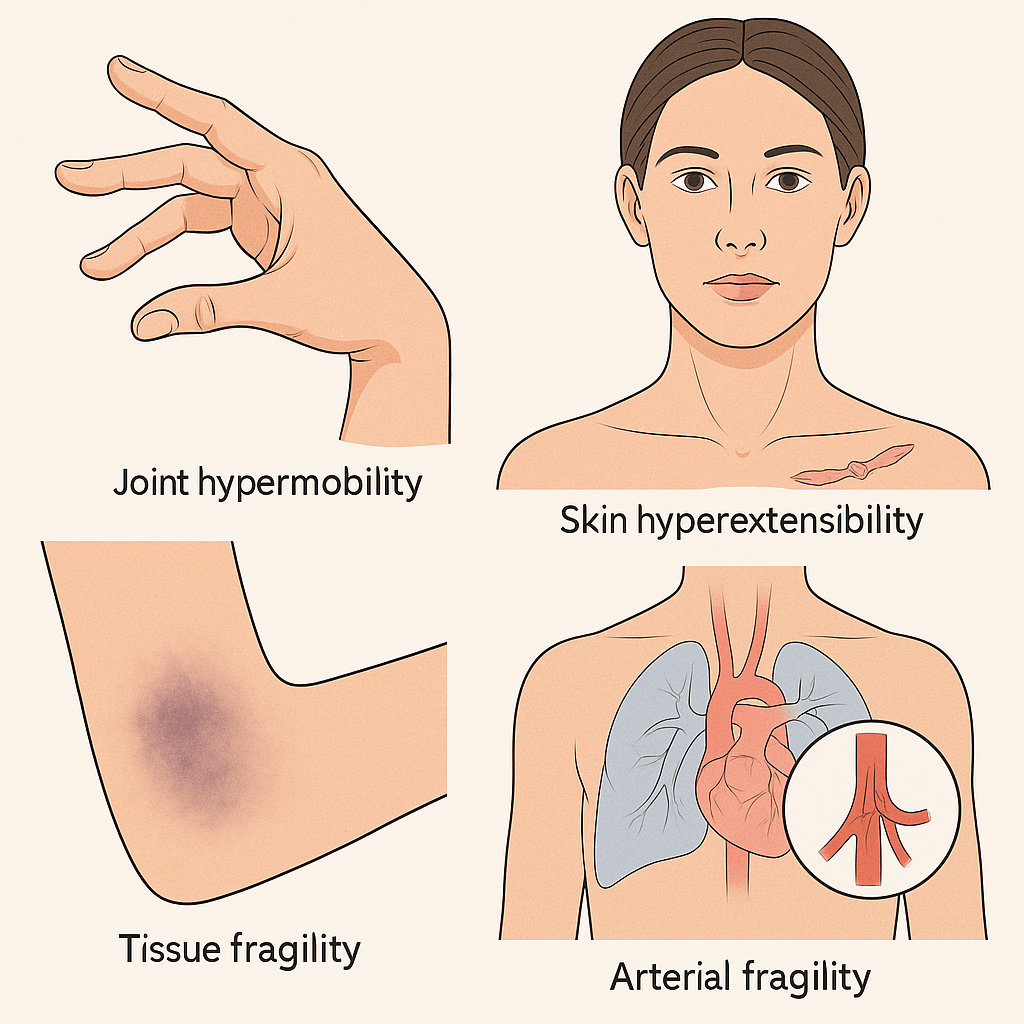
Generated by Artificial İntelligence
Ehlers–Danlos syndrome (EDS) is a group of inherited disorders that affect connective tissue. Connective tissue provides strength and elasticity to structures such as the skin, joints, blood vessels, and internal organs. In individuals with EDS, these tissues tend to be more elastic, fragile, or weak than normal. To date, 13 different subtypes of EDS have been identified, each with its own specific symptoms and genetic characteristics.
Although symptoms vary by subtype, the most common features of EDS include:
Joint hypermobility: Joints can move far beyond the normal range. This can lead to frequent sprains, dislocations, and joint pain.
Skin abnormalities: The skin is typically soft, velvety, and overly elastic. It may tear easily, and wound healing is often delayed. Healed wounds may leave wide, thin, and fragile scars.
Vascular and organ fragility: In some subtypes, particularly vascular EDS, large blood vessels and internal organs are at risk of spontaneous rupture, which can be life-threatening.
Oral and dental issues: Gums may be fragile and prone to bleeding. Tooth fractures, enamel-dentin defects, and temporomandibular joint (TMJ) dislocations are also common.

Signs and Symptoms of Ehlers-Danlos Syndrome (Generated by Artificial İntelligence)
Each EDS subtype has distinct genetic causes. For example:
Diagnosis is primarily based on clinical findings and family history. Physical examination evaluates joint and skin elasticity, scar appearance, and body structure. In some subtypes, genetic testing can confirm the diagnosis. Dentists may play a key role, especially in recognizing oral and maxillofacial signs.
There is currently no known cure for EDS. Treatment focuses on symptom relief and prevention of complications. Common approaches include:
With appropriate care and lifestyle adjustments, individuals with EDS can maintain a good quality of life. Avoiding high-impact exercise, minimizing injury risk, and attending regular medical and dental check-ups are important. Additionally, comorbid conditions such as dysautonomia (e.g., POTS) and mast cell activation syndrome (MCAS) should be considered in management plans.

Generated by Artificial İntelligence
Henüz Tartışma Girilmemiştir
"Ehlers-Danlos Syndrome" maddesi için tartışma başlatın
Signs and Symptoms
Subtypes
Diagnosis
Treatment and Management
Daily Life and Follow-Up
Bu madde yapay zeka desteği ile üretilmiştir.