


This article was automatically translated from the original Turkish version.
+3 More
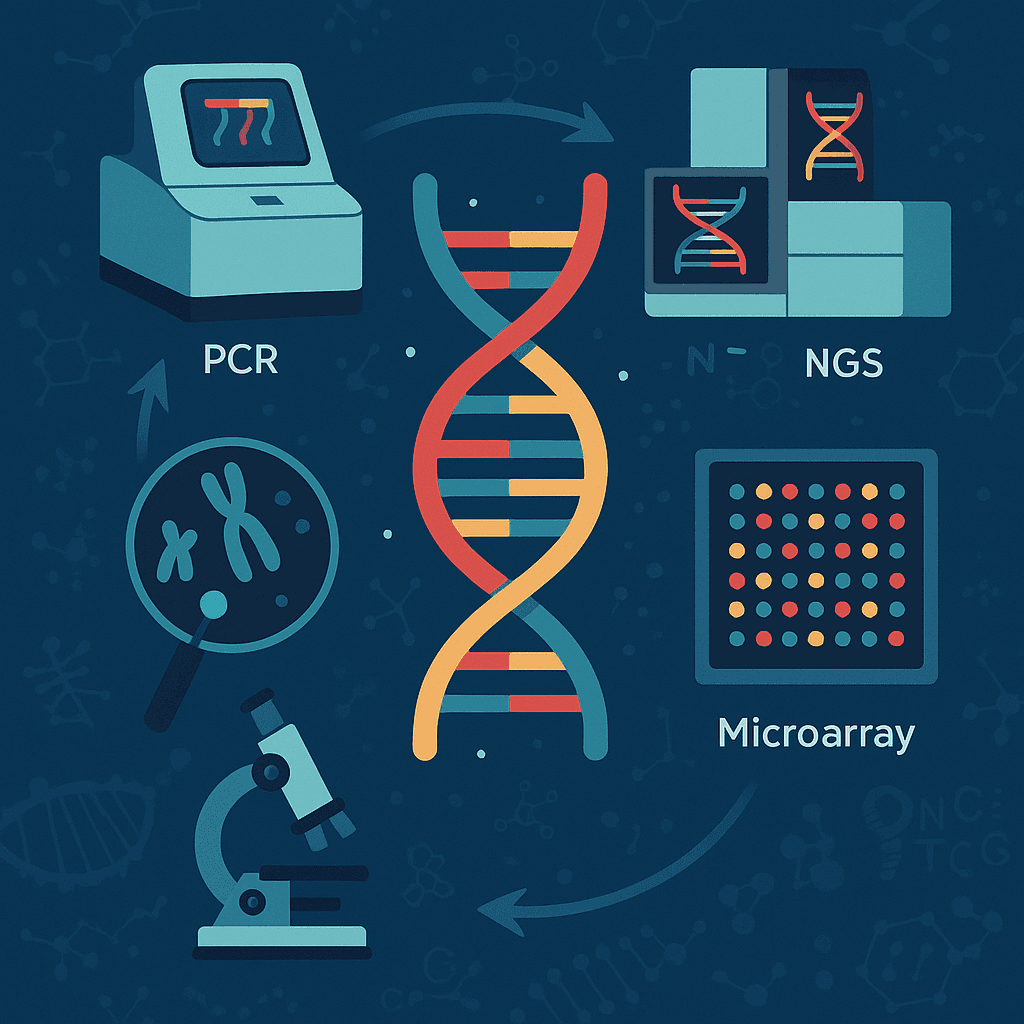
Genetic-Based Diagnostic System (Generated with Artificial Intelligence)
Definition(s) | Systems that analyze an individual's genetic material (DNA/RNA) to diagnose diseases and guide treatment. determine risks | ||||||||
|---|---|---|---|---|---|---|---|---|---|
Core Technologies | Next-Generation Sequencing (NGS), Polymerase Chain Reaction (PCR), Microarray | ||||||||
Main Applications | Hereditary Diseases, Cancer, Pharmacogenomics, Prenatal Diagnosis, Infectious Diseases, Genetic Check-Up | ||||||||
Related Field(s) | Molecular Biology Artificial Intelligence Medical Genetics Bioinformatics | ||||||||
Purpose(s) | Personalized Medicine Treatment Optimization Preventive Medicine Early Diagnosis | ||||||||
Genetic-based diagnostic systems are a collection of technologies and methods used to analyze DNA and RNA—the genetic material of individuals—for the purposes of diagnosing diseases, identifying genetic predispositions, guiding treatment processes, and developing personalized medicine. Thanks to advances in molecular biology, bioinformatics, and medicine, these systems have triggered a fundamental transformation in healthcare. For example, the cost of sequencing a human genome using Next-Generation Sequencing (NGS) technology was approximately $10,000 in 2008; by 2025, this cost had decreased by over 90 percent to under $1,000. Additionally, non-invasive prenatal testing (NIPT) enables the early and risk-free detection of genetic abnormalities such as Down syndrome with accuracy rates approaching 99 percent. These developments are transforming healthcare practices across a broad spectrum, from early diagnosis to preventive medicine.
The historical evolution of genetic diagnostic systems has paralleled progress in molecular biology and genomic technologies. One of the most significant milestones in this process was the development of the Polymerase Chain Reaction (PCR) method by Kary Mullis in 1985. PCR opened the door to molecular-level diagnosis by rapidly and precisely amplifying DNA into billions of copies. With the Human Genome Project in the 1990s, access to genomic data expanded significantly, and after the project’s completion in 2003, the clinical use of individual genetic information accelerated rapidly. The commercialization of Next-Generation Sequencing (NGS) technologies in 2005 marked a major advancement in genetic diagnostics, enabling the simultaneous analysis of numerous genes. Subsequently, starting in the 2010s, personalized medicine approaches gained momentum, leading to widespread adoption of genetic predisposition tests, cancer genetic panels, and prenatal genetic screening. Today, these systems play a critical role not only in diagnosis but also in guiding treatment decisions.
Thanks to fundamental technologies such as Polymerase Chain Reaction (PCR), Next-Generation Sequencing (NGS), and microarrays, it has become possible to detect genetic disorders, understand complex diseases like cancer, and rapidly identify infectious agents. These systems not only diagnose existing conditions but also enable preventive medicine by predicting potential future health risks.
Genetic-based diagnostic systems employ various molecular biology techniques tailored to specific objectives. These technologies are selected based on the nature of the genetic material being analyzed and the information sought.
Polymerase Chain Reaction (PCR) is a molecular biology technique that generates millions to billions of copies of a specific region of DNA. This method allows target DNA sequences to be detected even when only minute quantities of genetic material are available. The sensitivity of PCR enables detection of genetic material down to levels of 1–10 copies per milliliter. A typical PCR protocol consists of 30 to 40 cycles, with the amount of DNA approximately doubling in each cycle, resulting in exponential amplification. PCR is widely used in the diagnosis of infectious diseases. For instance, nucleic acids of pathogens such as SARS-CoV-2 (COVID-19), human papillomavirus (HPV), and hepatitis C virus (HCV) can be rapidly and specifically detected using this method, enabling early diagnosis and isolation measures.
Real-Time PCR enables quantitative (numerical) data acquisition by monitoring the DNA amplification process in real time using fluorescent markers. This technology is not only used for diagnosis but also extensively applied in monitoring treatment response in diseases such as cancer, tracking viral load, and analyzing gene expression.
Next-Generation Sequencing (NGS) is a genomic analysis technology that rapidly, efficiently, and in parallel determines the nucleotide sequence of DNA or RNA molecules. Compared to traditional Sanger sequencing, NGS can sequence millions of DNA fragments simultaneously, enabling whole genome sequencing (WGS) or exome sequencing (WES) to be performed quickly and at lower cost. As of 2025, the cost of sequencing an individual’s entire genome has dropped to approximately $1,000 USD. The typical error rate of NGS technologies ranges between 0.1 percent and 1 percent. NGS is used in a wide variety of clinical and research fields, including the diagnosis of inherited diseases, detection of somatic mutations in cancer cells, non-invasive prenatal testing (NIPT), and metagenomic analyses. Leading platforms in this field, such as Illumina, offer high accuracy (>99 percent) and short read lengths (50–300 base pairs). While this can be limiting for analyzing repetitive regions, it enables sensitive and high-depth analysis of large numbers of samples. In contrast, Oxford Nanopore Technologies provides longer read lengths (10,000 base pairs and above, theoretically up to megabase levels), allowing more accurate detection of structural variants, repeat sequences, and epigenetic modifications. However, its error rate is generally higher than that of Illumina (between 1 percent and 5 percent), although it is continuously improving.
Microarray technology is a high-throughput platform that allows the simultaneous analysis of thousands of different genetic materials (DNA, RNA, or proteins). This technology is widely used in applications such as genotyping (particularly detection of single nucleotide polymorphisms, or SNPs), gene expression analysis (measuring the activity levels of genes), and molecular karyotyping (detecting microdeletions and duplications on chromosomes). Microarray-based molecular karyotyping provides high resolution at the 1 kilobase (kb) level, enabling the detection of small chromosomal abnormalities that cannot be identified by classical cytogenetic methods. As such, it serves as an effective diagnostic tool for identifying microdeletion/duplication syndromes, congenital malformations, and neurodevelopmental disorders. It is also used in preventive health applications such as carrier screening for common inherited diseases. However, microarray technology has certain limitations. Most importantly, it can only detect pre-defined sequences and cannot identify novel or rare variants. Additionally, chromosomal rearrangements that do not involve copy number changes, such as inversions or translocations, are typically not detectable by microarrays. Therefore, these methods may need to be supplemented by more comprehensive approaches such as whole genome sequencing.
In addition to these core technologies, cytogenetic methods such as Fluorescence In Situ Hybridization (FISH) allow targeted examination of specific chromosomal regions for numerical (e.g., trisomy) or structural (e.g., translocation, deletion) abnormalities. FISH visualizes specific DNA sequences under a microscope using fluorescent probes and provides diagnostic support, particularly in leukemias and solid tumors. Array Comparative Genomic Hybridization (aCGH) is used to detect copy number variations (CNVs) across the genome with high resolution, identifying small deletions and duplications in the range of approximately 25–100 kilobases (kb). It is widely used in clinical genetics to investigate genetic causes of developmental delay, autism spectrum disorders, and congenital anomalies. Minisequencing is a targeted technique developed for the sensitive screening of known mutations. For example, specific mutations in the BRCA1 and BRCA2 genes, which are important for breast and ovarian cancer risk, can be rapidly and cost-effectively detected using minisequencing. This method simplifies the diagnostic process in situations where broad genomic screening is unnecessary. Recently developed CRISPR-based diagnostic systems are adapted versions of genome editing technologies for diagnostic purposes. Systems such as SHERLOCK (Specific High-sensitivity Enzymatic Reporter unlocking) and DETECTR (DNA Endonuclease-Targeted CRISPR Trans Reporter) generate fluorescent or color-change signals by specifically recognizing target DNA or RNA sequences. These systems have begun to be used for rapid and portable detection of infectious diseases such as COVID-19 and are emerging as low-cost, field-applicable alternatives for nucleic acid-based diagnostic tests in the future.

Genetic-Based Diagnostic Systems (Generated by Artificial Intelligence.)
Genetic-based diagnostic systems have fundamentally transformed diagnosis, treatment, and prevention across many areas of modern medicine.
The diagnosis of monogenic disorders such as cystic fibrosis, thalassemia, Fabry disease, and Familial Mediterranean Fever (FMF) is confirmed by identifying specific mutations in the responsible genes. For instance, FMF is associated with mutations in the MEFV (Mediterranean Fever) gene, and one of the most common pathogenic variants is the M694V mutation, which is linked to earlier disease onset and more severe progression. Similarly, in cystic fibrosis cases, the ΔF508 (F508del) mutation in the CFTR gene is the most prevalent variant in populations of European descent. In thalassemia, point mutations or deletions in the HBB gene play a decisive role in diagnosis. In Fabry disease, mutations in the GLA gene are associated with alpha-galactosidase A enzyme deficiency. In addition, complex diseases such as diabetes, hypertension, and hypercholesterolemia have multifactorial structures involving both genetic and environmental factors. Genetic predisposition analyses for these conditions help determine individual risk levels and develop early prevention strategies. For example, certain polymorphisms in the TCF7L2 gene may increase the risk of type 2 diabetes, while the APOE ε4 allele is identified as a genetic risk factor for both hypercholesterolemia and Alzheimer’s disease.
Genetic testing plays a critical role in cancer diagnosis and treatment by identifying both inherited and acquired genetic alterations. In hereditary cancer syndromes, mutations in BRCA1 and BRCA2 genes are among the primary genetic factors increasing the risk of breast and ovarian cancer. The prevalence of these mutations in the general population is approximately 1–2 percent; however, in individuals of Ashkenazi Jewish descent, this rate can exceed 10 percent. Identifying at-risk individuals through genetic testing is of great importance for early screening and preventive measures. On the other hand, analysis of somatic mutations targets only genetic changes specific to tumor cells, enabling personalized treatment approaches. For example, in tumors with BRCA1/2 mutations, targeted drugs such as PARP inhibitors (e.g., olaparib, niraparib, rucaparib) selectively induce tumor cell death by inhibiting DNA damage repair pathways. Similarly, targeted therapies against mutations in genes such as EGFR, ALK, KRAS, and BRAF are used in cancers such as lung, colon, and melanoma. This allows treatment to be tailored to the patient’s tumor genetic profile, enhancing efficacy while reducing unnecessary toxicity risks.
Pharmacogenomics is the scientific discipline that studies how an individual’s genetic makeup influences their response to medications. Tests in this field help predict which individuals will benefit from a drug, who is at risk of severe side effects, and what dosage is optimal. This enables treatment to be personalized according to the patient’s genetic profile, making it safer and more effective.
A key example of pharmacogenomic application is the genetic determination of individual sensitivity to warfarin, an anticoagulant drug. Warfarin metabolism and effect are influenced by specific genetic variants, primarily in the CYP2C9 and VKORC1 genes. The CYP2C9 gene encodes the cytochrome P450 enzyme responsible for warfarin metabolism in the liver. Certain variants in this gene (e.g., CYP2C9 *2 and *3 alleles) can lead to slower drug metabolism, increasing the risk of toxicity at standard doses. The VKORC1 gene encodes the vitamin K epoxide reductase enzyme, which is the target of warfarin; polymorphisms in its promoter region determine sensitivity to the drug’s effect. By testing for these genetic differences, the optimal initial dose can be calculated for each individual, minimizing potential bleeding risks. Pharmacogenomic tests are now used clinically as decision-support tools across numerous fields, from cancer therapies to psychiatric medications.
Molecular methods are used to detect and typify viruses, bacteria, and other microorganisms. Genotyping of viruses such as HPV, influenza, and HCV is essential for determining treatment strategies and monitoring outbreaks. Additionally, genetic mutations responsible for drug resistance in diseases such as tuberculosis are identified to guide appropriate treatment plans.
Various genetic diagnostic methods are used during pregnancy or before conception to assess the genetic health of the fetus or embryo. These tests provide families with early information and support prenatal decision-making by identifying congenital disorders in advance. Non-invasive prenatal testing (NIPT) enables highly accurate screening for chromosomal abnormalities such as trisomy 21 (Down syndrome), trisomy 18 (Edwards syndrome), and trisomy 13 (Patau syndrome) by analyzing cell-free fetal DNA (cffDNA) circulating in maternal blood. The sensitivity of NIPT tests can reach up to 99 percent, with false-positive rates as low as 0.1–0.3 percent. Because NIPT is non-invasive and does not require invasive procedures such as amniocentesis, it is preferred for both patient comfort and safety.
Preimplantation genetic testing (PGT) enables genetic analysis of embryos created during in vitro fertilization (IVF) before they are transferred to the uterus. This technology is applied in two main categories: PGT-A for screening embryos for aneuploidy (chromosomal number abnormalities); and PGT-M for determining whether embryos carry known single-gene disorders (e.g., cystic fibrosis, thalassemia, or FMF). By transferring only genetically healthy embryos, PGT increases pregnancy success rates and prevents the intergenerational transmission of genetic diseases. In Türkiye, these applications are becoming increasingly widespread. Locally developed diagnostic kits by Turkish biotechnology companies play a significant role in screening for country-specific genetic disorders such as Familial Mediterranean Fever (FMF). For example, the MEFV gene panel developed by Multigen enables rapid and reliable detection of FMF-causing mutations (M694V, V726A, M680I, etc.). Such kits are used both in carrier screening and in embryo analysis within the PGT-M framework.
These tests determine whether healthy individuals are carriers of recessive genetic disorders that they could pass on to their children. Particularly among couples planning pregnancy, if both partners are carriers of the same disease, genetic counseling is provided regarding options for having a healthy child.
DNA profiling is the most reliable method for confirming individual identity. It is used not only in forensic applications but also in high-security facilities and paternity testing. In recent years, rapidly developed individual identification kits have reduced processing times from hours to minutes.
Comprehensive tests that analyze an individual’s genetic structure to determine future health risks, nutritional needs, drug sensitivities, and other personal characteristics. These tests help develop personalized preventive health and lifestyle plans by identifying predispositions to complex diseases such as diabetes and heart disease or neurological disorders such as Alzheimer’s.
Companies operating in the field of genetics and biotechnology in Türkiye have made significant progress in developing local alternatives to imported genetic diagnostic kits and laboratory equipment. This advancement is strategically important for enhancing national healthcare capacity and reducing dependence on imports. Companies such as Multigen, Done Genetik, and Loopgen Biotechnology are actively engaged in research and development (R&D) in this area.
The primary goals of local production include reducing access costs for genetic diagnostic kits, shortening test durations, and developing more sensitive and specific tests tailored to the genetic variant profile of the Turkish population. Targeted mutation panels for diagnosing common inherited diseases in Türkiye—such as Familial Mediterranean Fever (FMF), thalassemia, and cystic fibrosis—as well as cancer genetic panels, pharmacogenetic tests, and Real-Time PCR devices, are now produced domestically.
One innovative product developed within this framework is Multigen FAST-ID, a system capable of completing identity verification and genetic profile analysis in just 35 minutes. Compared to traditional methods that take hours, this time reduction offers a significant advantage in time-critical fields such as forensic medicine and disaster management. The integration of sample preparation, automated DNA extraction, and Real-Time PCR modules in the FAST-ID system minimizes processing time while reducing error rates.
In recent years, the market share of locally produced diagnostic kits used in Turkish healthcare institutions has reached approximately 20 percent. Due to the high proportion of imported genetic test kits, Türkiye spends approximately $100 million annually on imports; the goal is to significantly reduce this figure through local production. In the long term, these initiatives are expected to contribute to public savings, technological independence, and the establishment of a national genetic data infrastructure.
Interpreting the massive volumes of genetic data generated by high-throughput technologies such as Next-Generation Sequencing (NGS) is only possible through bioinformatics analysis tools. In post-NGS analyses, thousands of variants can be identified in a single individual’s genome; filtering, prioritizing, and scoring these variants to identify those potentially linked to disease is the core objective of bioinformatics processes.
Projects such as VARSKOR, developed in this context, are decision-support systems that automatically calculate the pathogenicity probability of variants. VARSKOR combines specific variant scoring algorithms and knowledge bases to prioritize clinically meaningful variants with high accuracy (85–90 percent). This system accelerates the diagnostic process and reduces the decision-making burden on clinicians.
In recent years, artificial intelligence (AI) has been integrated into genetic diagnostic systems to further enhance analytical power. Deep learning algorithms, in particular, have demonstrated significant success in handling large and multidimensional biomedical data. Convolutional neural networks (CNNs) are commonly used for analyzing medical imaging data (MRI, CT, PET, X-ray), while recurrent neural networks (RNNs) and transformer-based models excel in processing sequential clinical data such as time series and patient histories. These algorithms are beginning to be integrated into clinical applications for early diagnosis and risk stratification of conditions such as cancer, heart disease, and rare genetic disorders. However, the use of these technologies also brings important ethical and legal challenges. Because genetic data is personal and highly sensitive, issues such as data privacy, informed consent, decision transparency, and mitigation of algorithmic bias are of critical importance. The European Union’s General Data Protection Regulation (GDPR) guarantees individuals control over their genetic data, while in Türkiye, the Personal Data Protection Law (KVKK, Law No. 6698) classifies genetic data as a special category of personal data requiring stringent security measures. Furthermore, the explainability of AI decision-making processes and the provision of justifications for machine-generated decisions are required by both ethical and legal standards.
ATC Genomics. "Array." Accessed July 9, 2025. https://atc.com.tr/cozumler/molekuler-tani/genetik-hastaliklar/yeni-nesil-dizileme-hizmetleri/array
Brown, T. A. Gene Cloning and DNA Analysis: An Introduction. 7th ed. Oxford: Wiley-Blackwell, 2016.
CleanroomNews. "Moleküler Genetik Tanı Kitleri." Accessed July 9, 2025. https://cleanroomnews.org/molekuler-genetik-tani-kitleri
Glick, B. R., and J. J. Pasternak. Molecular Biotechnology: Principles and Applications of Recombinant DNA. Washington, D.C.: ASM Press, 2010.
Kromogen Biyoteknoloji. "Klinik Genetik." Accessed July 9, 2025. https://kromogen.com/urunlerimiz/klinik-genetik
Mackay, Ian M., Katherine E. Arden, and Andreas Nitsche. “Real-time PCR in Virology.” *Nucleic Acids Research* 30, no. 6 (2002): 1292–1305. Accessed July 9, 2025. https://doi.org/10.1093/nar/30.6.1292
Mardis, Elaine R. “Next-Generation Sequencing Platforms.” *Annual Review of Analytical Chemistry* 6 (2013): 287–303. Accessed July 9, 2025. https://doi.org/10.1146/annurev-anchem-062012-092628
New Century University Gaziosmanpaşa Hospital. "Genetik Hastalıklar Değerlendirme Merkezi." Accessed July 9, 2025. https://www.gophastanesi.com.tr/tibbi-birimlerimiz/genetik-hastaliklar-degerlendirme-merkezi
Relling, Mary V., and William E. Evans. “Pharmacogenomics in the Clinic.” *Nature* 526, no. 7573 (2015): 343–350. Accessed July 9, 2025. https://doi.org/10.1038/nature15817
Strachan, Tom, and Andrew P. Read. Human Molecular Genetics. 5th ed. New York: Garland Science, 2018.
TUBITAK. “Türkiye'de Genetik Tanı Teknolojileri ve Yerli Üretim Potansiyeli Raporu.” TUBITAK BİLGEM, 2022.
Topol, Eric J. Deep Medicine: How Artificial Intelligence Can Make Healthcare Human Again. New York: Basic Books, 2019.
Türkiye MaternalFetal Tıp and Perinatology Association. "Gebelerde Genetik Hastalık Taşıyıcılığı Tarama Testleri." Accessed July 9, 2025. https://tmftp.org/uploads/1-gebelerde-genetik-hastalik-tasiyiciligi-tarama-testleri.pdf
Yıldırım, Göksel. “Yerli Genetik Tanı ve Laboratuvar Cihazları Göreve Hazır.” Anadolu Ajansı, July 8, 2022. Accessed July 9, 2025. https://www.aa.com.tr/tr/bilim-teknoloji/yerli-genetik-tani-ve-laboratuvar-cihazlari-goreve-hazir/2632958

Genetic-Based Diagnostic System (Generated with Artificial Intelligence)
Definition(s) | Systems that analyze an individual's genetic material (DNA/RNA) to diagnose diseases and guide treatment. determine risks | ||||||||
|---|---|---|---|---|---|---|---|---|---|
Core Technologies | Next-Generation Sequencing (NGS), Polymerase Chain Reaction (PCR), Microarray | ||||||||
Main Applications | Hereditary Diseases, Cancer, Pharmacogenomics, Prenatal Diagnosis, Infectious Diseases, Genetic Check-Up | ||||||||
Related Field(s) | Molecular Biology Artificial Intelligence Medical Genetics Bioinformatics | ||||||||
Purpose(s) | Personalized Medicine Treatment Optimization Preventive Medicine Early Diagnosis | ||||||||
No Discussion Added Yet
Start discussion for "Genetic-Based Diagnostic Systems" article
Technologies and Methods
Polymerase Chain Reaction (PCR)
Next-Generation Sequencing (NGS)
Microarray
Other Methods
Application Areas
Diagnosis of Inherited Diseases
Cancer Genetics
Pharmacogenomics
Infectious Diseases
Prenatal and Preimplantation Diagnosis
Carrier Screening
Individual Identification and Forensic Medicine
Genetic Check-Up
Developments and Local Production in Türkiye
Bioinformatics and Artificial Intelligence Integration