


Bu içerik Türkçe olarak yazılmış olup yapay zeka ile otomatik olarak İngilizceye çevrilmiştir.
+2 Daha
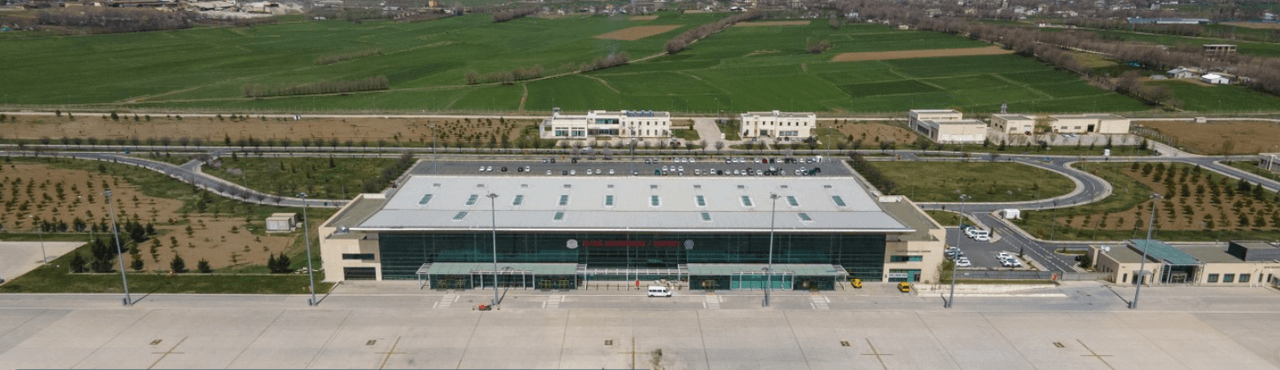
Elazığ Airport
Location | Elazığ Türkiye | ||||||||
|---|---|---|---|---|---|---|---|---|---|
Opening Date(s) | 1940 | ||||||||
ICAO Code | LTCA | ||||||||
IATA Code | EZS | ||||||||
Passenger Capacity | 2.000.000 passengers/year | ||||||||
Geographic Coordinates | 38°35′52″N – 39°16′53″E | ||||||||
Elazığ Airport is one of the components of the aviation infrastructure that has developed since the early years of the Republic. Originally activated in 1940 for military purposes, the airport was later opened to civil aviation and, thanks to investment projects and increasing passenger demand, has become a significant hub in national and international aviation.
The foundations of Elazığ Airport were laid in 1938, when construction of the main runway and a backup runway began in the same year. The first runway was completed in 1940 and opened for military use. The second runway was commissioned in 1942.
By 1960, rising demands for civil aviation led to the allowance of civilian flights alongside military operations. However, the existing terminal building at the time had been designed exclusively for military use and proved inadequate to meet civil needs. This limitation resulted in the airport being transferred to the Directorate General of Civil Aviation (DHMİ).
In 1996, runway lighting was installed, enabling night operations. Rehabilitation work on the runway, which began in 2006, was completed in 2009, bringing the runway into compliance with international standards. In the same year, Elazığ Airport was granted the status of International Air Border Gate.
Due to increasing passenger demand from 2009 onward, new arrangements were made for both domestic and international flights. Construction of a new terminal building began on 29 August 2010 and was inaugurated on 22 October 2012.
Before the renovation works, Elazığ Airport had an annual passenger capacity of approximately 150,000. With the completion of the new terminal building in 2012, this capacity was increased to 2 million passengers per year. The old terminal covered an area of 1,416 square meters, while the new terminal was constructed over an area of 16,400 square meters.
The introduction of the new terminal led to a dramatic increase in passenger numbers. For example:
According to statements by Murat Zorluoğlu, Elazığ Airport was built to serve two million passengers, and one million passengers represent only "half the journey."
The international departure area operates integrated with the domestic terminal, using the same terminal building.
Elazığ Airport is not merely a transportation hub but also a key structure contributing to the socio-economic development of the region. Its importance has grown further due to the increasing popularity of Elazığ’s natural and cultural tourism, as well as the widespread adoption of activities such as skiing, paragliding, and hiking like.
In addition, by obtaining the Accessible Airport Certification in 2015, the airport demonstrated its commitment to accessibility for passengers with disabilities importance.
Anadolu Ajansı. “150 Binlik Kapasite 2 Milyona Çıkıyor.” Accessed March 23, 2025. https://www.aa.com.tr/tr/ekonomi/150-binlik-kapasite-2-milyona-cikiyor/316994.
Elazığ Havalimanı. Accessed March 23, 2025. https://turkiyeturizmansiklopedisi.com/arama?k=terminal-havalimani-ve-liman.
Elazığ Valiliği. “Elazığ Havalimanı 2016’da 1 Milyon Yolcuya Ulaştı.” Accessed March 23, 2025. http://www.elazig.gov.tr/elazig-havalimani-2016da-1-milyon-yolcuya-ulasti.
Elron İnşaat. "Elazığ Havalimanı Açılışı." Accessed March 23, 2025. https://elroninsaat.com.tr/haberler/.
State Airports Authority General Directorate. "Elazığ Havalimanı Domestic Terminal." Accessed March 23, 2025. https://www.dhmi.gov.tr/Sayfalar/Havalimani/Elazig/IcHatlarTerminali.aspx.
State Airports Authority General Directorate. "Elazığ Havalimanı Dış Hatlar Terminali." Accessed March 23, 2025. https://www.dhmi.gov.tr/Sayfalar/Havalimani/Elazig/DisHatlarTerminali.aspx.
State Airports Authority General Directorate. "Elazığ HavalimanıGenel Bilgiler." Accessed March 23, 2025. https://www.dhmi.gov.tr/Sayfalar/Havalimani/Elazig/GenelBilgiler.aspx.

Elazığ Airport
Location | Elazığ Türkiye | ||||||||
|---|---|---|---|---|---|---|---|---|---|
Opening Date(s) | 1940 | ||||||||
ICAO Code | LTCA | ||||||||
IATA Code | EZS | ||||||||
Passenger Capacity | 2.000.000 passengers/year | ||||||||
Geographic Coordinates | 38°35′52″N – 39°16′53″E | ||||||||
Henüz Tartışma Girilmemiştir
"Elazığ Airport" maddesi için tartışma başlatın
Development Process of Elazığ Airport
History and Initial Establishment
Modernization and Expansion Process
Capacity Increase and Passenger Statistics
Comparison of Old and New Capacity
Growth in Passenger Numbers
Terminal Features and Facilities
Domestic Terminal
International Terminal
Technical and Geographic Information
Social and Regional Importance