

Bu içerik Türkçe olarak yazılmış olup yapay zeka ile otomatik olarak İngilizceye çevrilmiştir.
+2 Daha
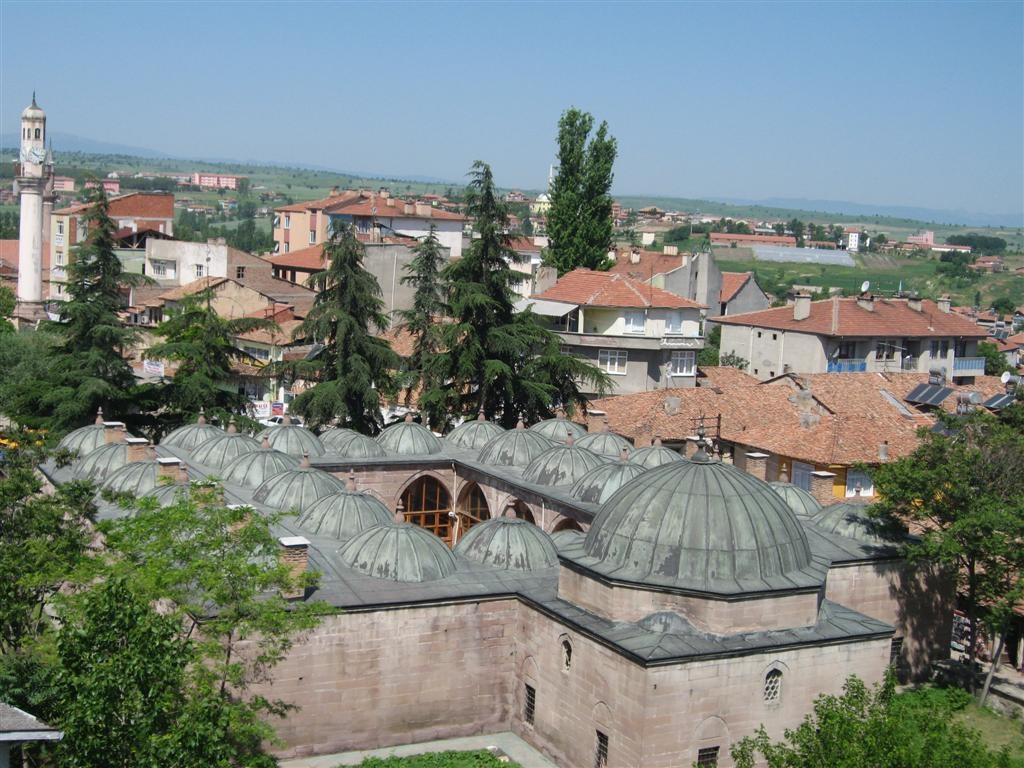
Fazıl Ahmet Paşa Medresesi is an educational structure from the Ottoman period located in the Vezirköprü district of Samsun province. It is also known locally as Taş Medrese. The medrese is one of the rare Ottoman medreses in the Black Sea region constructed entirely of stone and features an architectural design that integrates educational, religious, and social functions.
Fazıl Ahmet Paşa Medresesi is situated in the Vezirköprü district of Samsun and derives its name from the Ottoman statesman Fazıl Ahmet Paşa. The building was commissioned directly by Fazıl Ahmet Paşa and thus represents an example of the urban development initiatives undertaken by Ottoman officials in provincial towns during the empire’s era.
Although no definitive foundation inscription exists to confirm its construction date, existing sources associate the building with the lifetime of Fazıl Ahmet Paşa and date it to the 17th century.【1】 In this context, the structure is regarded as one of the provincial applications of the classical Ottoman medrese tradition.

Fazıl Ahmet Paşa Medresesi (Salt Research)
The construction of the medrese aligns with the broader trend of implementing Ottoman architectural principles in provincial areas. As part of Fazıl Ahmet Paşa’s urban development activities in Vezirköprü, the medrese was planned as a significant educational institution within the urban fabric. This indicates that the building was not conceived merely as an isolated structure but as an integral component of the settlement’s public infrastructure.
Since its construction, the medrese has been used for educational purposes and maintained this function for an extended period. However, as the Ottoman medrese system gradually lost its significance, the building drifted from its original purpose. During the Republican era, it was repurposed and began serving as a public library from 1964 onward.
Over its historical trajectory, the building has undergone various repair and restoration works. These interventions were designed to preserve its architectural integrity and have largely maintained the original floor plan and structural character.
The medrese is centrally located in the Fazıl Ahmet Paşa Neighborhood of Vezirköprü district. The building features a courtyard surrounded by arcades on all four sides and integrates naturally with the surrounding streets. The cell rooms along the courtyard were designed to accommodate the housing needs of students and teachers.
The medrese’s central location reflects a strategic choice, enhancing both accessibility and its role in the district’s religious and educational activities. Open spaces around the courtyard were planned to support students’ social interactions and daily needs.
Fazıl Ahmet Paşa Medresesi is one of the provincial examples of classical Ottoman medrese architecture. The building is classified under the typology of the enclosed courtyard medrese, with its floor plan integrating educational, residential, and worship functions into a unified whole.
The medrese consists of cells arranged around a nearly rectangular courtyard. The courtyard is enclosed by arcades that facilitate circulation and create a transitional space between the cells and the central area. The structural system of the arcades is composed of stone piers and arches, with their ceilings covered by barrel vaults. The courtyard layout reflects the inward-focused spatial concept typical of Ottoman medreses.

Fazıl Ahmet Paşa Medresesi (EBA)
Student cells are arranged rhythmically along the perimeter of the courtyard. Each cell is a small, domed space featuring a niche, a hearth, and a window. The uniformity in size and form among the cells indicates a functional standardization within the building.
The main hall, which housed the lecture room and mosque, is larger and more elevated than the surrounding cells and is emphasized by a higher dome. This space demonstrates the integration of educational and worship functions within a single structure. The dome transitions are achieved through pendentives in accordance with classical Ottoman architectural tradition.
The primary construction material is cut stone. The stonework presents a simple yet orderly appearance on the facades. Decorative elements on the exterior are minimal; architectural impact is achieved through proportion, the arrangement of openings, and material quality. Window openings are arranged differently on upper and lower levels to ensure adequate natural lighting within the interior spaces. It is known that the roof was originally covered with lead and later replaced with copper during subsequent restoration and repair phases.
The function of Fazıl Ahmet Paşa Medresesi has undergone a significant transformation from its original role as a primary educational institution to its current use. Upon its establishment, it operated as an educational center within the classical Ottoman medrese tradition, designed to teach religious sciences and scholarly disciplines such as fiqh, hadith, tafsir, and Arabic language. The cell rooms provided individual study spaces for students engaged in lessons, calligraphy, or writing, while the central courtyard and lecture hall served as venues for collective educational activities. This organization embodied the functional code of Ottoman medreses by integrating teaching, living, and intellectual interaction within a single complex.
The eastern section of the medrese, designed on a larger scale, was intended to serve as a space for lectures as well as occasional communal worship and public gatherings. Its prominence, marked by a higher and central dome compared to the surrounding cells, visually expresses the hierarchical differentiation of functions within the building.

Fazıl Ahmet Paşa Medresesi (Ministry of Culture and Tourism)
During the Ottoman period, medreses were not merely institutions for religious education; they also functioned as centers of social organization. In this regard, Fazıl Ahmet Paşa Medresesi served as a social hub connected to the surrounding community, with daily interactions among students, teachers, and local residents concentrated around the building. Students resided in the cell rooms surrounding the courtyard, while social exchanges and discussions took place in the courtyard and arcades.
With the decline of medrese education during the Republican era, the building was repurposed as a public library starting in 1964. This new function has preserved the medrese’s cultural memory while linking it to contemporary educational and literacy initiatives. The number and diversity of books in the library serve the local knowledge base; Arabic and Persian manuscripts and early printed works continue to function as a historical repository of information.
This transformation has ensured the sustainable continuation of Fazıl Ahmet Paşa Medresesi’s architectural functionality, which is significant both for preserving its historical identity and for adapting it to modern societal needs. Its current use as a public library has extended the building’s cultural and educational role beyond the traditional medrese model, granting it a new social function.
Culturally, the medrese demonstrates that knowledge in Ottoman society was not confined to central urban centers but was also systematically organized and sustained in provincial settlements. The integration of education, worship, and social life within a single structure reflects the Ottoman cultural perception of knowledge as an inseparable part of daily life. Its current use as a library underscores the spatial continuity of this cultural tradition.
In this context, Fazıl Ahmet Paşa Medresesi continues to exist as an example that enables understanding of the cultural role of educational buildings in Ottoman provincial towns, both through its architectural form and its functional history.
[1]
Vezirköprü Kaymakamlığı. “Fazıl Ahmet Paşa Medresesi (Taş Medrese).” Access date: 27 March 2026. https://www.vezirkopru.gov.tr/fazil-ahmet-pasa-medresesi-tas-medrese.

Henüz Tartışma Girilmemiştir
"Fazıl Ahmet Paşa Medresesi" maddesi için tartışma başlatın
History and Construction
Location and Setting
Architectural Features
Function and Use
Cultural and Architectural Context