

Bu içerik Türkçe olarak yazılmış olup yapay zeka ile otomatik olarak İngilizceye çevrilmiştir.
+1 Daha
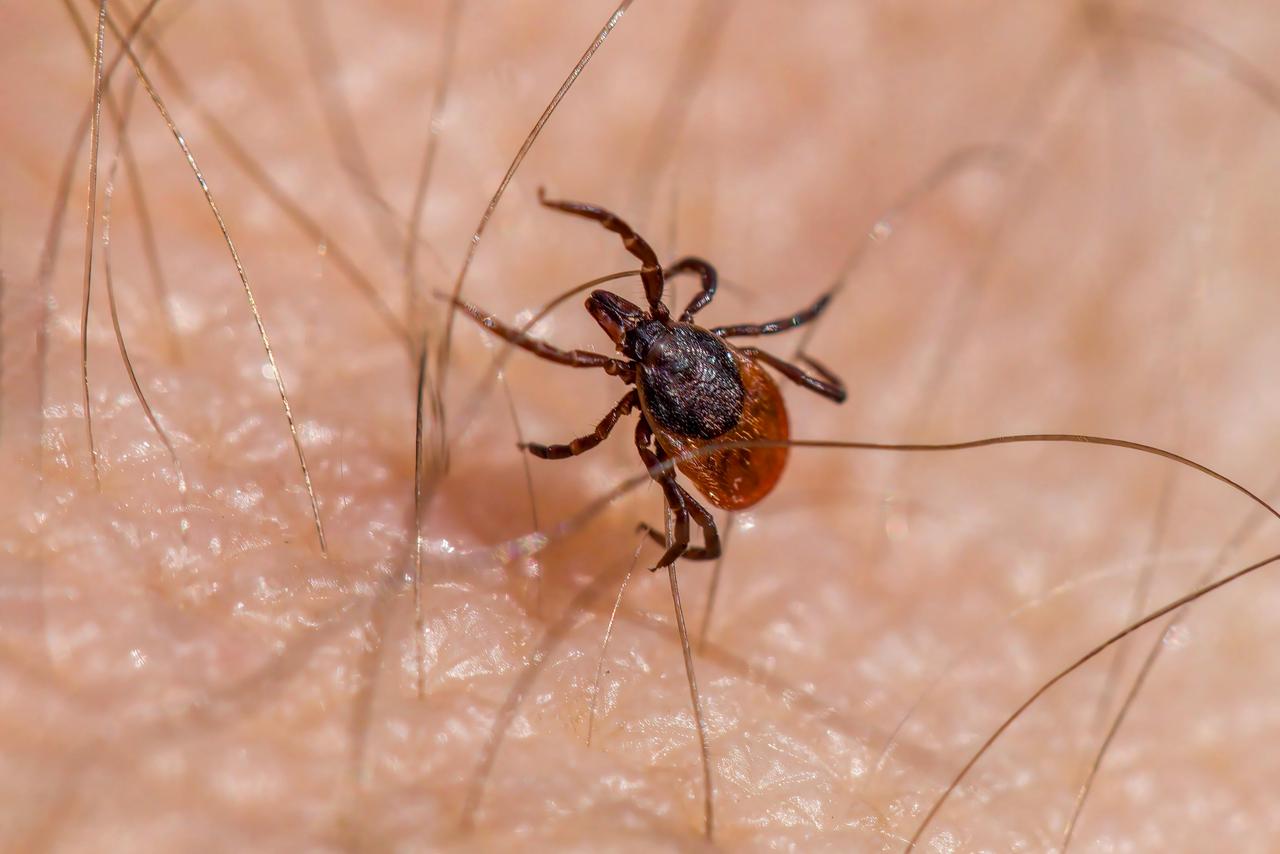
Forest Tick (Ixodes ricinus) is a hard tick species belonging to the Ixodidae family, commonly found across Europe and Northern Africa as well as certain regions of Western Asia. First described taxonomically by Carl Linnaeus in 1758, this species is recognized as a vector for numerous pathogens of critical importance to both human and animal health. Throughout its developmental stages, this tick feeds on blood from different hosts and is characterized by a complex life cycle and remarkable adaptability to diverse ecological environments.
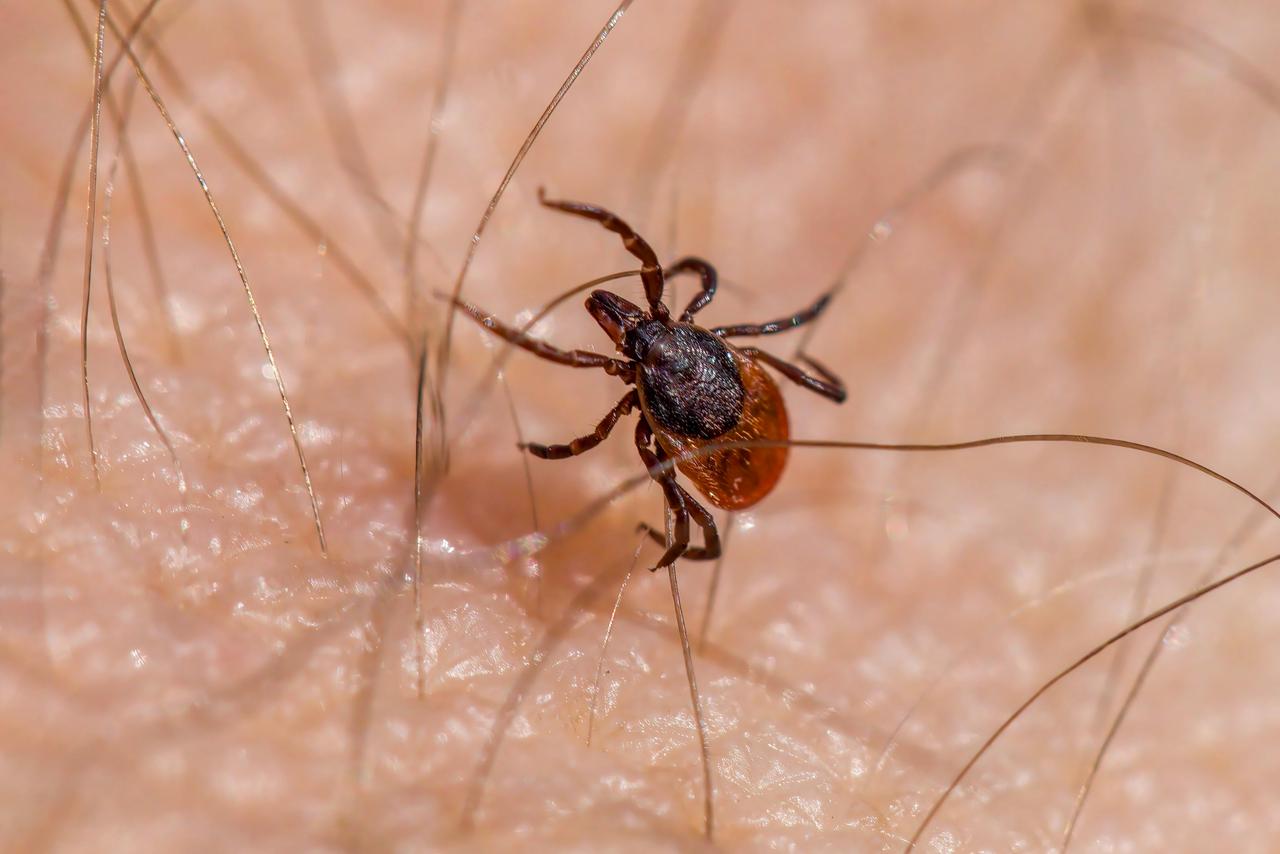
Forest Tick (Ixodes ricinus)
Ixodes ricinus undergoes three active life stages: larva, nymph, and adult (female and male). Each stage requires a blood meal from a host to complete its development, after which it drops to the ground to molt.
The tick’s body structure consists of a chitinous shield (scutum) that expands significantly during blood feeding and mouthparts (gnathosoma). Females can increase their body weight manyfold after becoming engorged, while males remain generally smaller and rarely feed on blood.

Forest Tick (Ixodes ricinus)
The geographic range of this species has expanded in recent years due to various factors including climate change, land use alterations, and shifts in host populations. Ixodes ricinus requires high humidity and therefore prefers habitats such as deciduous forests, mixed woodlands, and moist grasslands.
Climatic Effects: Rising temperatures have triggered the expansion of tick populations to higher altitudes and northern latitudes.
Habitat Preference: The microclimate at ground level directly determines tick survival during winter and influences their development rate.
Ixodes ricinus exhibits a characteristic hunting behavior known as “questing.” Ticks climb to the tips of vegetation and use their Haller’s organ to detect potential hosts through heat, carbon dioxide, and vibrations.
Nymph Hosts: Nymphs primarily feed on small rodents, birds, and lizards.
Adult Hosts: Adult females prefer larger mammals such as deer, roe deer, and cattle.
Human Interaction: Humans become incidental hosts when entering tick habitats and come into contact with questing ticks.
The forest tick (Ixodes ricinus) is a widespread tick species across Europe and Western Asia. It is commonly found in ecosystems and its populations are generally considered stable. Therefore, it is not classified as a threatened species and has no special conservation status at the global level.

Forest Tick (Ixodes ricinus)
However, its distribution may vary depending on environmental conditions. Deforestation, habitat fragmentation, and intensive agricultural activities can lead to local population declines in some areas. Conversely, climate change, particularly increases in temperature and humidity, may facilitate the species’ expansion into broader geographic regions, potentially increasing tick densities in certain areas.
The forest tick is a parasite associated with numerous mammals, birds, and reptiles in natural ecosystems and plays a specific ecological role within food webs. Consequently, its presence is directly linked to biodiversity in the habitats where it occurs. Preserving ecosystem balance, sustainably managing natural habitats, and protecting wildlife populations are essential for maintaining the tick’s natural distribution and ecological function.
Conservation efforts do not focus directly on this species but are instead integrated into broader initiatives aimed at protecting natural forest ecosystems and ensuring the sustainability of biodiversity. This approach supports both the continuation of the tick’s natural life cycle and the balanced functioning of ecosystems.
Gray, Jeremy, Olaf Kahl, and Annetta Zintl. “What Do We Still Need to Know about *Ixodes ricinus*?” *Ticks and Tick-borne Diseases* 12, no. 3 (2021). Accessed March 7, 2026. https://www.sciencedirect.com/science/article/pii/S1877959X21000352
Kahl, Olaf and Jeremy S. Gray. “The Biology of *Ixodes ricinus* with Emphasis on Its Ecology.” *Ticks and Tick-borne Diseases* 13, no. 1 (2022). Accessed March 7, 2026. https://www.sciencedirect.com/science/article/pii/S1877959X22002163
Medlock, Jolyon M., Kayleigh M. Hansford, Antra Bormane, Marketa Derdakova, Agustín Estrada-Peña, Jean-Claude George, Irina Golovljova et al. “Drivers of Changes in the Geographical Distribution of *Ixodes ricinus* Ticks in Europe.” *Parasites & Vectors* 6, no. 1 (2013). Accessed March 7, 2026. https://link.springer.com/article/10.1186/1756-3305-6-1
Mejlon, H. A., and T. G. T. Jaenson. “The Questing Behaviour of *Ixodes ricinus* Ticks (Acari: Ixodidae).” *Experimental and Applied Acarology* 25, no. 12 (2001): 947–964. Accessed March 7, 2026. https://link.springer.com/article/10.1023/A:1018421105231
Pexels. “Close-up of *Ixodes ricinus* Tick on Green Leaf.” Accessed March 9, 2026. https://www.pexels.com/photo/close-up-of-ixodes-ricinus-tick-on-green-leaf-31618099/
Pexels. “Close-up of *Ixodes ricinus* Tick on Leaf Surface.” Accessed March 9, 2026. https://www.pexels.com/photo/close-up-of-ixodes-ricinus-tick-on-leaf-surface-35135990/
Pexels. “Macro Shot of *Ixodes ricinus* Tick on Human Skin.” Accessed March 9, 2026. https://www.pexels.com/photo/macro-shot-of-ixodes-ricinus-tick-on-human-skin-31748496/
Richter, Dania, Franz-Rainer Matuschka, Karl Musgrave, and Peter U. Fischer. “Hosts on Which Nymphal *Ixodes ricinus* Most Abundantly Feed.” *Applied and Environmental Microbiology* 66, no. 11 (2000): 5057–5062. Accessed March 7, 2026. https://www.researchgate.net/publication/316851681_Hosts_on_Which_Nymphal_Ixodes_ricinus_Most_Abundantly_Feed

Henüz Tartışma Girilmemiştir
"Forest Tick (Ixodes ricinus)" maddesi için tartışma başlatın
Morphology and Biological Structure
Ecology and Geographic Distribution
Hunting Behavior and Host Preferences
Conservation Status and Threats