


Bu içerik Türkçe olarak yazılmış olup yapay zeka ile otomatik olarak İngilizceye çevrilmiştir.

Imagine a country…
Consider a nation that regards giving its life for its soil as an honor, accepts its land as a sacred trust, and sees the crescent and star on its flag not merely as a symbol but as the mark of its independence. This very nation, throughout history, did not limit its struggle to the land—it also mastered the seas. For the sea is not merely water; it is one of the greatest pathways of civilization, trade, discovery, and independence.
As the Ottoman State became a global empire ruling over three continents, it also came to understand the power of the seas. Shipyards rising in Gallipoli, vessels built in the Golden Horn, and fleets sailing into the Mediterranean were not merely instruments of war—they were tools to expand the empire’s horizons. Behind this great maritime civilization stood not only ships but also great admirals. They did not settle for mere victories; they ensured that an entire nation could look upon the seas with confidence.
There was Piri Reis, who followed the path opened by Kemal Reis and transformed the seas into a science through his Kitâb-ı Bahriye. There was Barbaros Hayreddin Paşa, who altered the fate of the Mediterranean with his victory at Preveza. Under his banner rose Turgut Reis, who brought Tripolitania into the Ottoman sphere. There was Piyâle Paşa, who defeated enemy fleets at Djerba. There was Kılıç Ali Paşa, the architect of the Ottoman fleet’s rebirth from the ashes after the Battle of Lepanto. And there was Cezayirli Gazi Hasan Paşa, who rebuilt the navy after the defeat at Çeşme and restored its strength on the seas.
For them, the sea was not merely a territory to be conquered; it was a horizon imbued with knowledge, courage, and faith. For their journey was not merely one of wind and waves—they carried their courage, their knowledge, and their faith aboard their ships. What made them great was not merely their opening to the seas, but the meaning they carried as they looked toward the horizon.
Yet throughout history, those who played leading roles were not only people. Sometimes, a single ship has changed the course of history.
The great warships built during the reign of Fatih Sultan Mehmed represented the Ottoman Empire’s first major claim to dominance at sea. Yet Fatih’s vision for the seas extended beyond merely building ships. His maneuver of transporting vessels overland into the Golden Horn during the 1453 conquest of Istanbul stands as one of history’s most unforgettable naval feats. On that day, the ships did not merely cross land—they carried the dream, intellect, and determination of a people beyond the city walls. This event symbolized the dawn of a new era in Ottoman maritime history and marked one of the first great steps toward securing dominance over the Mediterranean and its surroundings.
The Mahmudiye, launched during the reign of Sultan Mahmud II, stood as one of the largest sailing warships in the world at the time—not only of the Ottoman Empire but globally. The Mesudiye served in the defense of the homeland during the Balkan Wars and World War I. Armored ships such as the Aziziye and Osmaniye became silent witnesses to the Ottoman Empire’s efforts to catch up with the industrial age.
Without doubt, one of history’s most remarkable ships was Yavuz, and the other was Midilli.
Originally belonging to the German Navy, these two warships, upon entering Ottoman service, did more than change their names—they altered the destiny of an empire. Their operations in the Black Sea became one of the pivotal turning points in the Ottoman State’s formal entry into World War I. After the founding of the Republic, Yavuz served for many years as the flagship of the Turkish Navy, continuing to serve as a steel bridge between past and future.
The Republic inherited from the Ottoman Empire not only a navy but also its maritime tradition.
During the National Struggle, the Alemdar became one of the symbols of the independence movement through its resistance against occupying forces. The Bandırma carried Mustafa Kemal Atatürk to Samsun, bearing witness to the rebirth of a nation. The Nusret entered military history as a symbol of strategy and faith, halting one of the world’s most powerful fleets with the mines it laid at Çanakkale. The Ertuğrul became one of the great epics of Turkish maritime sacrifice after its tragic sinking off the coast of Japan. The Dumlupınar was etched into collective memory as the unforgettable memory of sailors who kept watch for the homeland in the depths of the sea. After the founding of the Republic, Savarona became a symbol not of war but of peace, modernization, and a state oriented toward the future. This elegant vessel, briefly used by Atatürk, became the silent representative of Turkey’s changing perspective toward the seas and its ideal of modernization. For some ships win battles; others carry a nation’s dream for the future. Savarona was precisely such a ship.
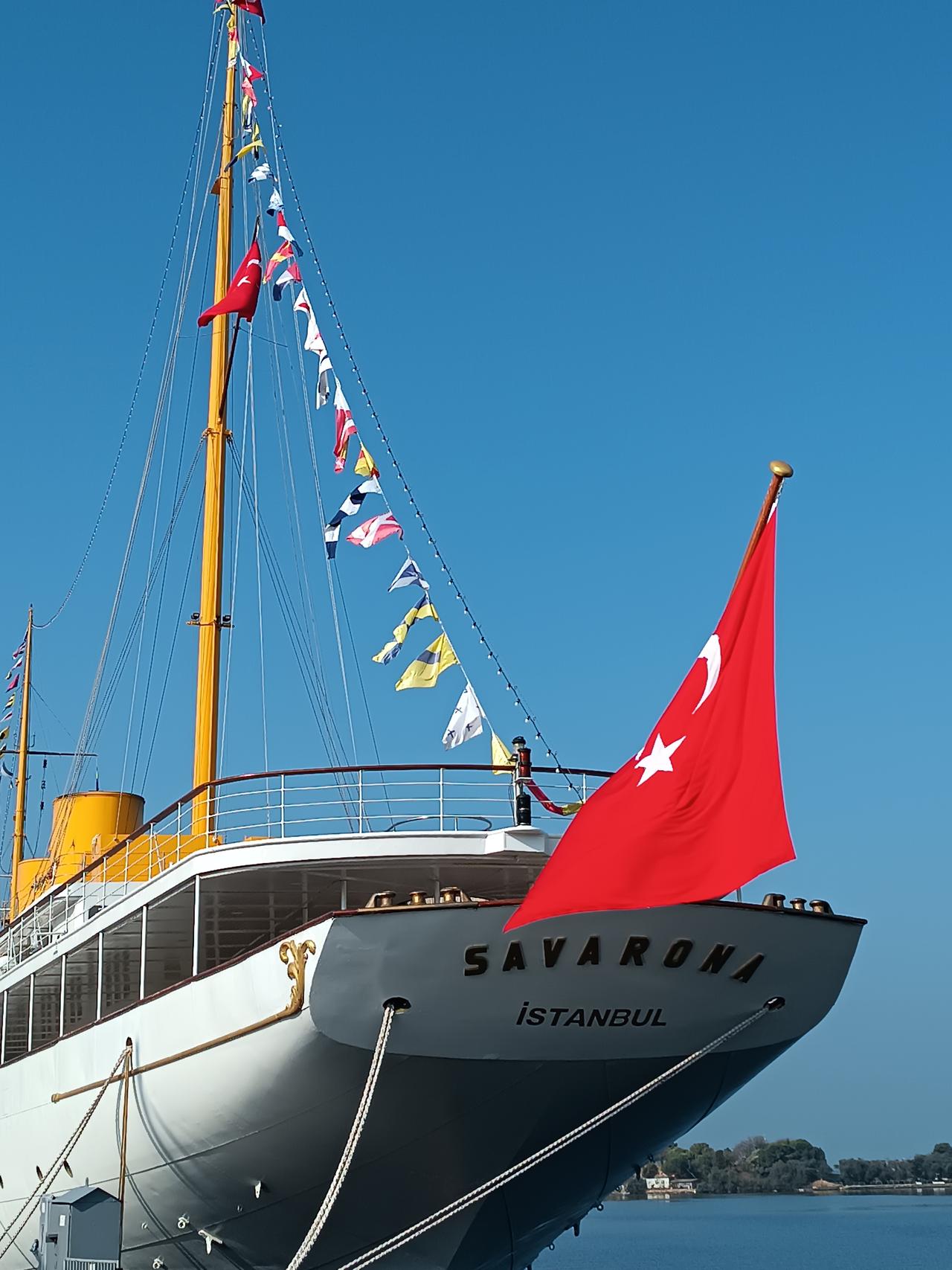
Savarona, TEKNOFEST Mavi Vatan 2025
(Fotoğraf: Esra Ebrar Taşkın)
After all these events, Nusret is no longer merely a minelayer. Bandırma is no longer merely a steamer. Dumlupınar is no longer merely a submarine. They are carriers of collective memory.
Today, Turkish maritime power stands at the threshold of a new era.
MİLGEM project-developed indigenous warships, along with modern platforms such as TCG Anadolu, TCG Bayraktar, TCG Sancaktar, TCG Alemdar, TCG Piri Reis, and submarines TCG Batıray, TCG Yıldıray, TCG Akhisar, and TCG Alanya, now serve on the seas. These vessels are not only technological achievements—they are the contemporary representatives of a centuries-old maritime culture.
What makes a nation strong is not merely its weapons. What makes it strong is its ability to remember its past, never forget its children lost at sea, and keep the names of its martyrs alive. Some rest in Gallipoli, others in Çanakkale, some in the waves of the Black Sea, others in the blues of the Aegean, some in the middle of the ocean… Some have graves. Others have no grave but the sea itself, eternal and boundless.
This story, stretching from the mines laid by Nusret at Çanakkale, to Barbaros’s galleys at Preveza, to Bandırma’s hopeful voyage and onward to the majestic silhouette of TCG Anadolu, is in truth the story of a single nation. This nation has never merely walked on land. When the time came, it rowed, unfurled sails, forged steel hulls, and carried its independence upon the waves.
Perhaps that is why it is impossible to capture the grandeur of TCG Anadolu in a single photograph. For its grandeur rises not only from today’s steel but from Barbaros’s courage, Piri Reis’s knowledge, Nusret’s sacrifice, Bandırma’s hope, and the memory of thousands of nameless heroes entrusted to the boundless sea.
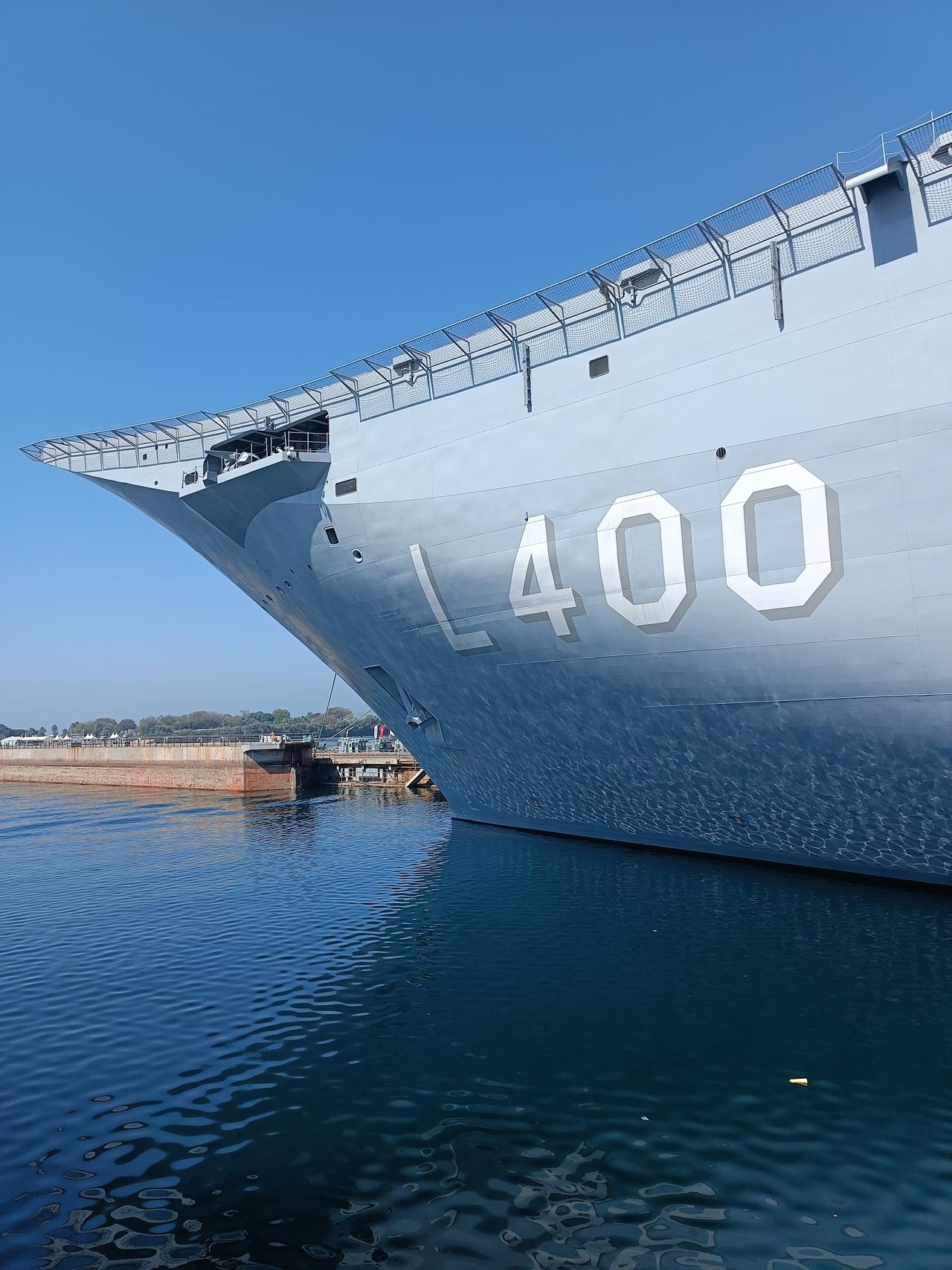
TCG Anadolu, TEKNOFEST Mavi Vatan 2025
(Fotoğraf: Esra Ebrar Taşkın)
And this is precisely the true story of Turkish maritime history: Ships change, eras change, technology changes—but love of homeland, as the greatest compass for nations that look toward the horizon, endures forever.
Today, at the end of this great journey from past to future, we know this: We are a nation that has not merely left its mark on land but also on the seas. Our horizon journey, which began on horseback, continued with sails, galleys, galleons, and modern warships. Because we have always been a nation that looks toward the horizon, transcends boundaries, and regards the seas as homeland.
We have always been seafarers.
"Dumlupınar Faciası Örneği." International Academic Social Resources Journal, Volume 8, Issue 49, 2023, pp. 2678-2683. Accessed July 31, 2026.https://asrjournal.org/files/asrjournal/49f5cd70-ae3a-46f4-aa2c-40c503fb65f9.pdf
Atabay, Mithat. “Osmanlı İmparatorluğu Hizmetinde Breslau (Midilli) Kruvazörü.” Çanakkale Araştırmaları Türk Yıllığı, no. 18, 2015, pp. 117-129. Accessed July 30, 2026.
Avcı, Cemal. “Savarona Yatı.” Atatürk Ansiklopedisi, 2021. Accessed July 31, 2026.https://ataturkansiklopedisi.gov.tr/detay/229/Savarona-Yatı
Aydın, Mahir. “Cezayirli Gazi Hasan Paşa.” TDV İslâm Ansiklopedisi, İstanbul: Türkiye Diyanet Vakfı İslâm Araştırmaları Merkezi, 1993. Accessed July 30, 2026.
Batur, Furkan. "Türkiye’deki Deniz Kazaları Üzerine Bir Değerlendirme:"
Belenli, Tuğba. “Yavuz Zırhlısı ve Tamirinin Türk-Yunan İlişkilerine Etkisi.” BELLETEN Türk Tarih Kurumu, Volume 83, Issue 297, 2019, pp. 689-728. Accessed July 31, 2026.
Bostan, İdris. “Kemal Reis.” TDV İslâm Ansiklopedisi, Türkiye Diyanet Vakfı İslâm Araştırmaları Merkezi, 2022. Accessed July 30, 2026.
Bostan, İdris. “Kılıç Ali Paşa.” *TDV İslâm Ansiklopedisi*, İstanbul: Türkiye Diyanet Vakfı İslâm Araştırmaları Merkezi, 2022. Accessed July 30, 2026.
Bostan, İdris. “Piyâle Paşa.” TDV İslâm Ansiklopedisi, Türkiye Diyanet Vakfı İslâm Araştırmaları Merkezi, 2007. Accessed July 30, 2026.
Bostan, İdris. “Turgut Reis.” TDV İslâm Ansiklopedisi, Türkiye Diyanet Vakfı İslâm Araştırmaları Merkezi, 2012. Accessed July 30, 2026.
Hülagü, Mehmet Metin. “Sultan II. Abdülhamid Dönemi Osmanlı Donanması Hakkında Bir Değerlendirme 1897 Osmanlı-Yunan Savaşı Örneği.” Devr-i Hamid Sultan II. Abdülhamid, Erciyes Üniversitesi Yayınları, Volume 3, Kayseri, 2011, pp. 193–221. Accessed July 31, 2026.
Karabulut, Umut. “Bandırma Vapuru.” Atatürk Ansiklopedisi, 2024. Accessed July 31, 2026.https://ataturkansiklopedisi.gov.tr/detay/684/Bandırma-Vapuru
Karadoğan, Umut C. “Milli Mücadele Yıllarında Türk Bahriyesinin Durumu ve Faaliyetleri.” Atatürk Araştırma Merkezi Dergisi, Volume 27, Issue 81, 2011, pp. 603-650. Accessed July 31, 2026.
Kurşun, Zekeriya. “Çanakkale Muharebeleri.” TDV İslam Ansiklopedisi, İstanbul: Türkiye Diyanet Vakfı İslâm Araştırmaları Merkezi, 1993. Accessed July 31, 2026.
Sarıcaoğlu, Fikret. “Kitâb-ı Bahriyye.” TDV İslâm Ansiklopedisi, Türkiye Diyanet Vakfı İslâm Araştırmaları Merkezi, 2002. Accessed July 30, 2026.
T.C. Presidency of Communication. "Köklerden Ufuklara: Türk Savunma Sanayisinin Yükseliş Hikâyesi." Ankara: Cumhurbaşkanlığı İletişim Başkanlığı Yayınları, 2025. Accessed July 31, 2026.https://yayinlar.iletisim.gov.tr/detay/turk-savunma-sanayisinin-yukselis-hikayesi
Turan, Şerafettin. “Barbaros Hayreddin Paşa.” TDV İslâm Ansiklopedisi, Türkiye Diyanet Vakfı İslâm Araştırmaları Merkezi, 1992. Accessed July 30, 2026.
Tutak, Eda. “Cumhuriyetin 100. Yılında Türk Deniz Kuvvetleri’nin Dış Politikada Artan Etkisi.” Süleyman Demirel Üniversitesi Vizyoner Dergisi, Volume 14, Issue 100, 2023, pp. 108-126. Accessed July 31, 2026.
Türkiye Cumhuriyeti Cumhurbaşkanlığı Savunma Sanayii Başkanlığı. "TCG Anadolu Donanmanın Hizmetine Giriyor." Accessed July 31, 2026.https://www.ssb.gov.tr/haber/tcg-anadolu-donanmanin-hizmetine-giriyor-WoWDsK
Çanakkale Savaşları Gelibolu Tarihi Alan Başkanlığı. "Mesudiye Topu." Accessed July 31, 2026.
Şehsüvaroğlu, Halûk Y. “Ertuğrul Firkateyni.” İstanbul Ansiklopedisi, Volume 10. Accessed July 31, 2026.https://istanbulansiklopedisi.org/handle/rek/10199
The Ottoman Horizon Opened to the Seas
Great Turkish Admirals
Great Ottoman Ships: From Galley to Armor
Yavuz and Midilli: Ships That Changed an Empire’s Destiny
The Republic’s Maritime Heritage
Ships Alive in Memory
Turkey’s Naval Power in the New Era
Memory Carried on the Waves
The Turkish Maritime Spirit: From Past to Future