

Bu içerik Türkçe olarak yazılmış olup yapay zeka ile otomatik olarak İngilizceye çevrilmiştir.
+1 Daha
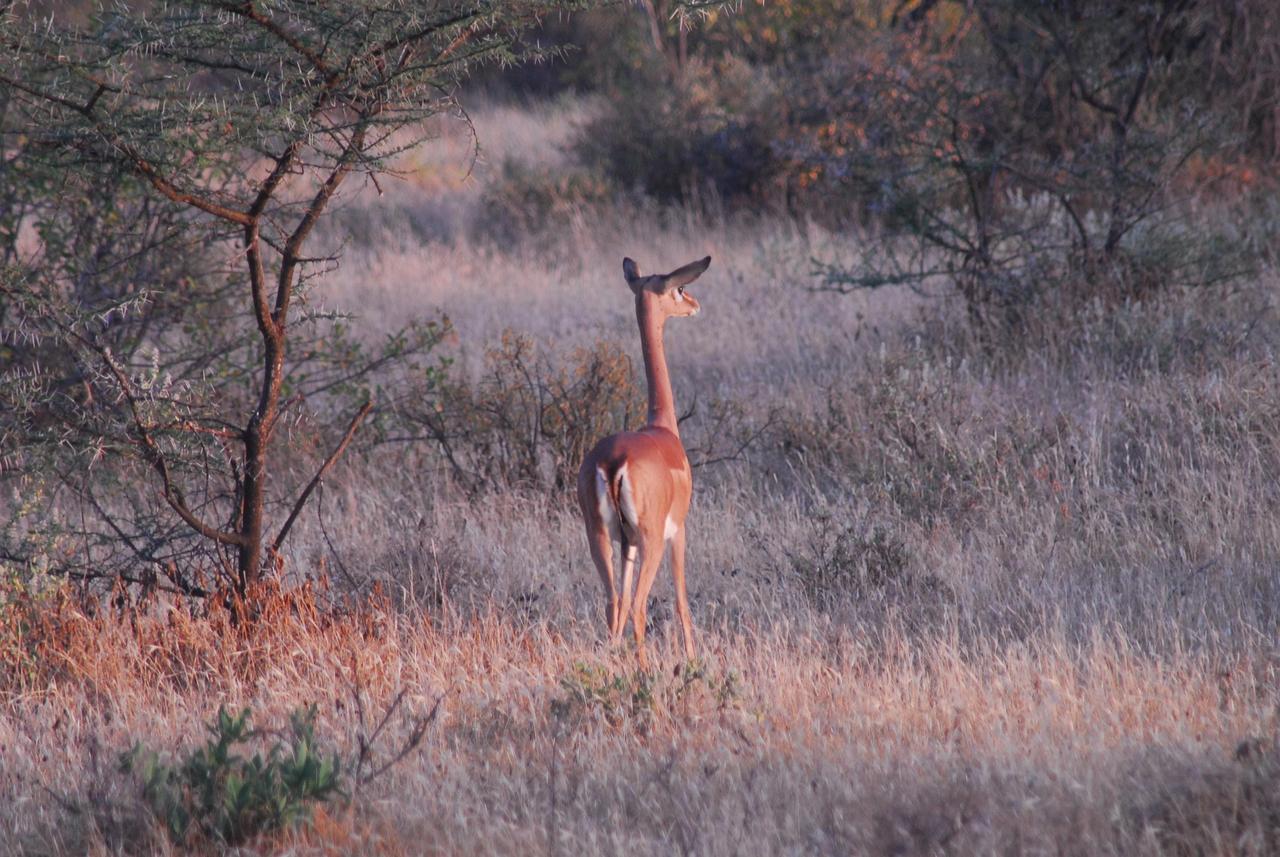
Gerenuk (Litocranius walleri), commonly known as the gerenuk or giraffe-necked gazelle, is a medium-sized antelope species within the order Artiodactyla, family Bovidae, and subfamily Antilopinae. The genus Litocranius is monotypic and contains the only species in its group with a low-crowned dental structure. The scientific name was assigned by Victor Brooke; the genus name was defined by Kohl, referencing the species’ longer and flatter skull compared to gazelles. The term “gerenuk” is derived from the Somali word “garanuug.”
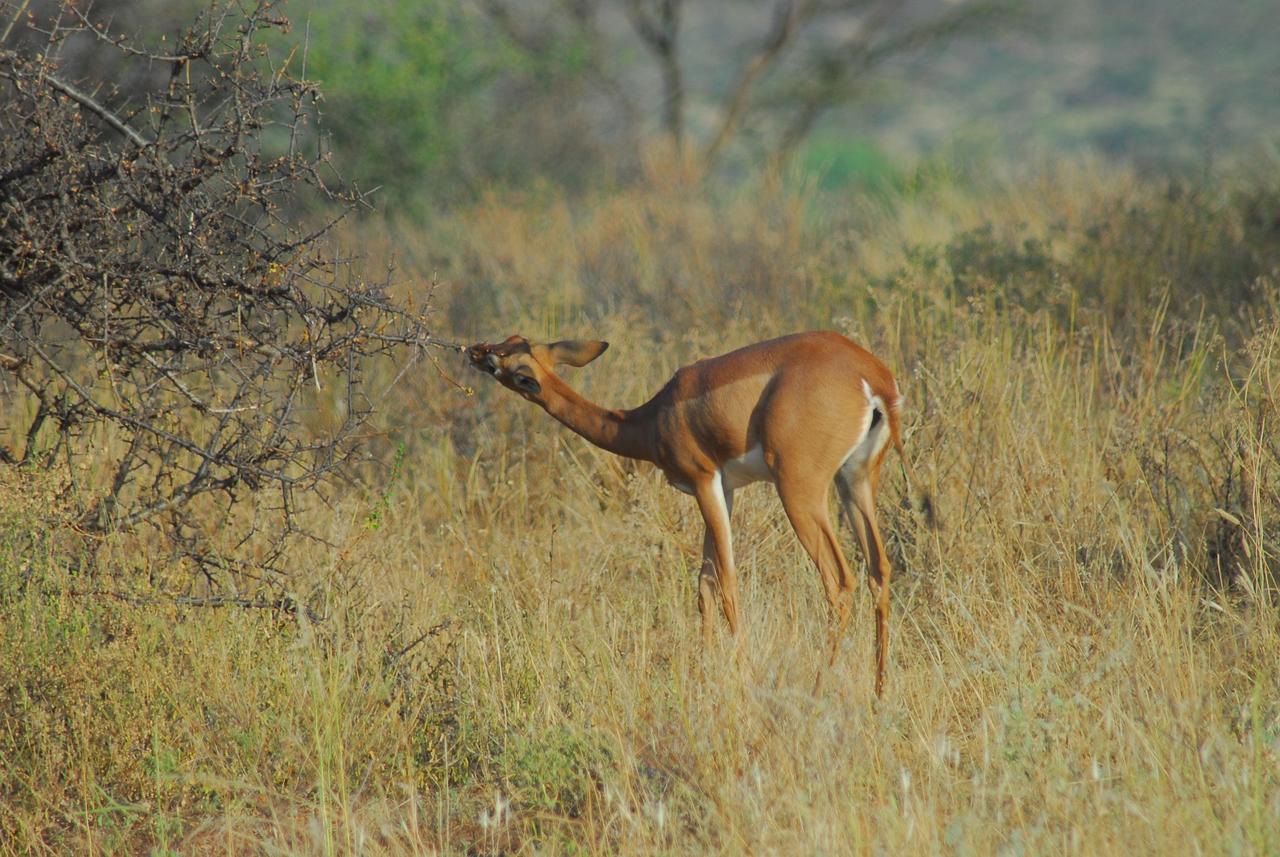
Gerenuk (Litocranius walleri) (Pixabay)
The gerenuk is distinctly differentiated from other antelopes by its extremely elongated neck and limbs. Adult males weigh between 31.2 and 52 kg, while females weigh between 28.5 and 45 kg. Sexual dimorphism is pronounced in this species; only males possess strong, ringed, lyre-shaped horns measuring 32–44 cm in length. Females are hornless and have a more slender neck structure.【1】
The gerenuk’s coat color is characterized by a dark brown saddle patch running along the back and narrowing toward the tail; the flanks and outer legs are light brown, while the underbelly and inner legs are white. Prominent white rings surround the eyes, and conspicuous black preorbital glands are located in front of the eyes. The skull structure of the gerenuk is distinguished from that of gazelles by a more robust braincase and premaxillary bones that do not reach the nasal region. Additionally, this species exhibits one of the highest strength-to-bone-wall-thickness ratios among mammals.
Distribution and Habitat
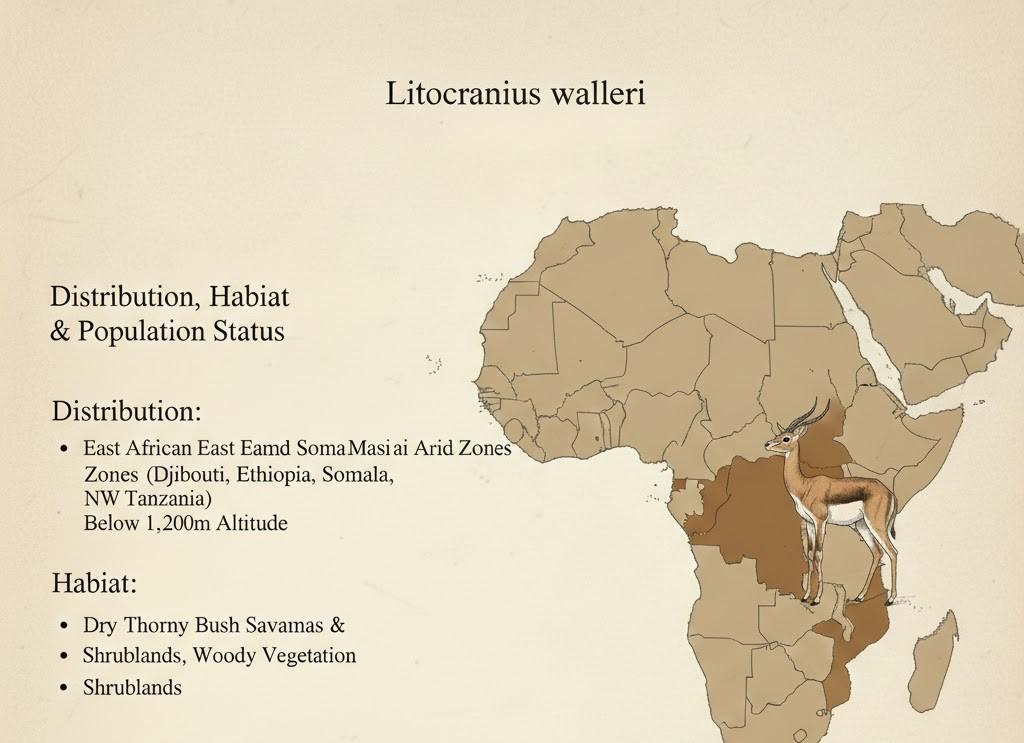
(Image Generated by Artificial Intelligence)
The gerenuk is endemic to the arid regions of East Africa, including Djibouti, Ethiopia, Somalia, Kenya, and northwestern Tanzania, typically at elevations below 1,200 meters. It prefers dry, thorny scrub savannas, shrublands, and areas with woody vegetation, avoiding dense forests and open grasslands.
The species is classified as Near Threatened by the International Union for Conservation of Nature and Natural Resources. Its population trend is declining due to poaching, habitat fragmentation, and competition with livestock.
However, healthy and viable populations have been identified in certain protected areas such as Geralle National Park in Ethiopia.
The gerenuk is a selective browser whose diet consists almost entirely of leaves, buds, and flowers of thorny shrubs and trees; it does not consume herbaceous plants. Its most remarkable behavior is facultative bipedalism, used to reach high foliage. Thanks to lumbar lordosis and reduced spinous processes in the lumbar vertebrae, it can stand on its hind legs to feed at heights of up to two meters.
Adapted to arid environments, gerenuks require almost no free water, obtaining necessary moisture from the vegetation they consume. Physiologically, water reabsorption in the colon reaches an exceptionally high rate of 65.1%, significantly higher than in many other antelope species.
Gerenuks typically live in small, loose groups of three to four individuals, though herds of up to 30 have been reported. Adult males are territorial and maintain permanent home ranges of 0.8 to 2.8 km². They mark their territories by depositing secretions from their preorbital glands onto branches.
Reproduction is not seasonal, and births can occur throughout the year. Gestation lasts approximately 210 days, and usually one offspring is born per litter. Young remain hidden in thickets during their first weeks of life, while mothers call them periodically to nurse. Females reach sexual maturity at around 1.5 to 2 years of age, while males typically attain territorial status by age three.【2】
International Union for Conservation of Nature (IUCN) classifies the gerenuk as Near Threatened (NT), and its populations are generally declining. Primary pressures on the species include illegal hunting, habitat degradation from uncontrolled grazing, and deforestation—all human-induced factors. Strategic conservation efforts are underway in numerous national parks and protected areas to safeguard the species.
Aychew, M., and Z. Girma. “Population Size and Structure of Beisa Oryx and Gerenuk in Geralle National Park, Southeastern Ethiopia.” *Ecology and Evolution* 14, no. 7 (2024): e70008. Accessed February 21, 2026. https://doi.org/10.1002/ece3.70008
Bärmann, Eva V., Ariana N. Klappert, and Augustin Chen. “Litocranius walleri (Artiodactyla: Bovidae).” *Mammalian Species* 53, no. 1005 (June 26, 2021): 65–77. Accessed February 21, 2026. https://doi.org/10.1093/mspecies/seab007
Leuthold, Walter. “On the Ecology of the Gerenuk Litocranius walleri.” Journal of Animal Ecology 47, no. 2 (1978): 561–80. Accessed February 21, 2026. https://doi.org/10.2307/3801
Pixabay. "Gerenuk Antelope Samburu Gazelle." Pixabay. Image. Accessed February 21, 2026. https://pixabay.com/photos/gerenuk-antelope-samburu-gazelle-4641175/
Pixabay. "Gerenuk Samburu Antelope Ecology." Pixabay. Image. Accessed February 21, 2026. https://pixabay.com/photos/gerenuk-samburu-antelope-ecology-4650928/
[1]
Aychew, M., ve Z. Girma. “Population Size and Structure of Beisa Oryx and Gerenuk in Geralle National Park, Southeastern Ethiopia.” Ecology and Evolution 14, no. 7 (2024): e70008, accessed 21 February 2026, https://doi.org/10.1002/ece3.70008
[2]
Bärmann, Eva V., Ariana N. Klappert, ve Augustin Chen. “Litocranius walleri (Artiodactyla: Bovidae).” Mammalian Species 53, no. 1005 (June 26, 2021): 65–77, accessed 21 February 2026, https://doi.org/10.1093/mspecies/seab007

Henüz Tartışma Girilmemiştir
"Gerenuk (Litocranius walleri)" maddesi için tartışma başlatın
Physical Characteristics and Morphological Adaptations
Distribution, Habitat, and Population Status
Feeding Ecology and Physiological Adaptations
Behavioral Organization and Reproduction
Conservation Status and Threats