

Bu içerik Türkçe olarak yazılmış olup yapay zeka ile otomatik olarak İngilizceye çevrilmiştir.
+2 Daha
Place(s) | Harmantepe Village Türkiye Adapazarı | ||||||||
|---|---|---|---|---|---|---|---|---|---|
History | 12th–13th century, Byzantine period | ||||||||
Purpose(s) | Border defense Surveillance | ||||||||
Plan | Elliptical shape 5 gates 6 bastions | ||||||||
Material(s) | Local stone Lime mortar | ||||||||
Status | Registered in 1992 Restoration ongoing | ||||||||
Harmantepe Castle is a medieval defensive structure built on a small natural hill north of Harmantepe Village in the Adapazarı district of Sakarya Province, Türkiye. Located in the Lower Sakarya Basin and dated to the Byzantine Empire period, the castle was constructed as an advanced outpost and observation tower to safeguard the eastern frontier. Among the fortifications remaining on the western bank of the Sakarya River, it is one of the best-preserved structures to have survived to the present day.

Harmantepe Castle (Culture Portal)
The castle was likely constructed in the 12th or 13th century as part of the Byzantine Empire’s eastern frontier defense system. It formed part of a chain of mutually visible advanced outposts along the western bank of the Sakarya River. It was officially registered as a “cultural asset requiring protection” by the Bursa Council for the Protection of Cultural and Natural Heritage on 18 April 1992 under Decision No. 2404.

Harmantepe Castle (Anadolu Agency)
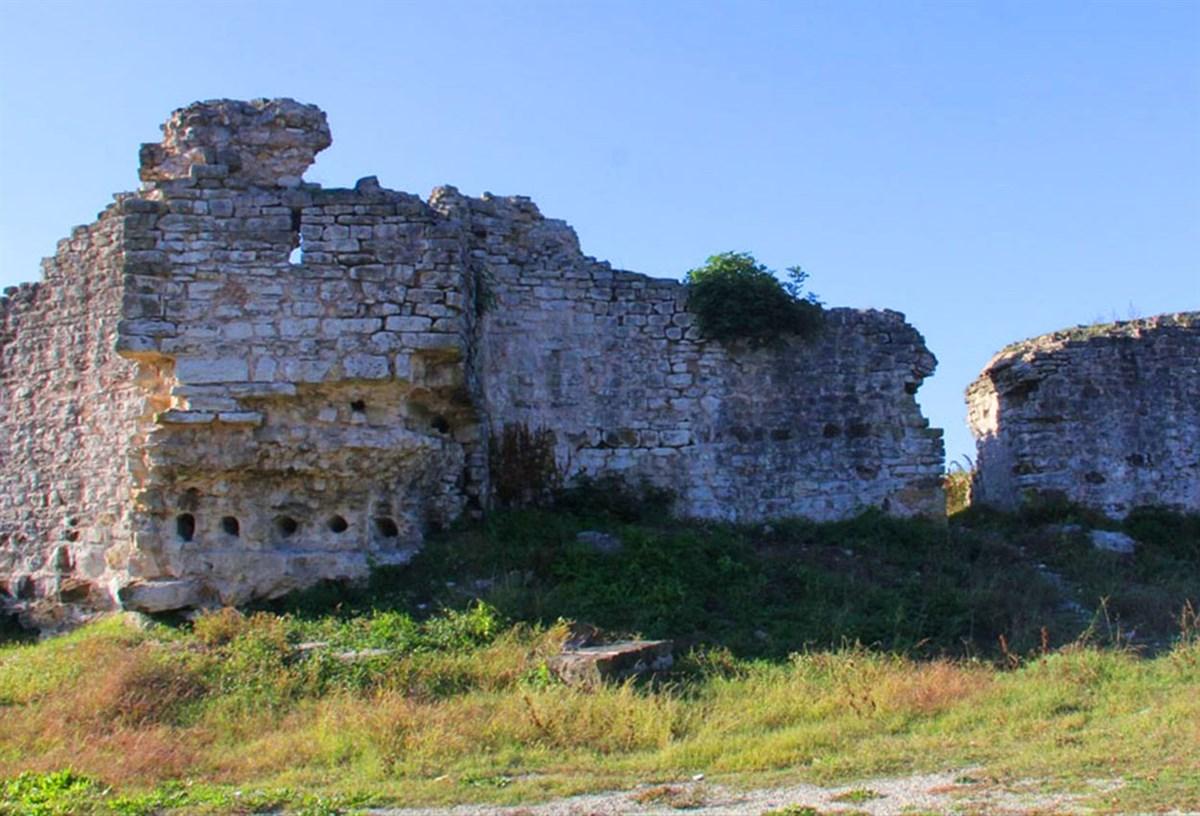
The castle has an elliptical circular plan and was constructed using local stone materials. The curtain walls are approximately two meters thick and range in height from eight to ten meters. The structure contains six towers, each measuring on average five by five meters. In the lower sections of the towers, traces of wooden beams arranged in a grid pattern have been identified within the rubble stone and lime mortar fill. The circular openings left by the decay of these beams are still visible today.

Harmantepe Castle (Anadolu Agency)
The upper sections of the towers feature arrow slits oriented in various directions. The main entrance is located on the southern side, and there are five additional rounded-arch entrances opening in different directions. Traces of wooden bolt systems are visible on the interior sides of the gates. Although some gate arches and sections of the curtain walls and towers have deteriorated over time, the overall layout of the structure remains discernible. The interior of the castle is currently covered with vegetation and trees.

Harmantepe Castle (Anadolu Agency)
Restoration efforts aimed at integrating Harmantepe Castle into tourism began in 2021. Within this framework, approximately one and a half months of archaeological excavations were conducted, during which artifacts such as coins, belt fittings, arrowheads, rings, bronze bracelets, and pottery fragments were uncovered. The restoration process is ongoing.
Anadolu Ajansı. “Bizans Döneminin İzlerini Taşıyan Harmantepe Kalesi Turizme Kazandırılacak.” Anadolu Ajansı, Foto Galeri. Accessed July 14, 2025. https://www.aa.com.tr/tr/pg/foto-galeri/bizans-doneminin-izlerini-tasiyan-harmantepe-kalesi-turizme-kazandirilacak/0.
Anadolu Ajansı. “Bizans Döneminin İzlerini Taşıyan Harmantepe Kalesi’nde Kazı Çalışmaları Sürüyor.” Anadolu Ajansı. Accessed July 14, 2025. https://www.aa.com.tr/tr/kultur/bizans-doneminin-izlerini-tasiyan-harmantepe-kalesinde-kazi-calismalari-suruyor/2658035.
T.C. Sakarya Valiliği. “Harmantepe Kalesi.” T.C. *Sakarya Valiliği*. Accessed July 14, 2025. http://www.sakarya.gov.tr/harmantepe-kalesi.
T.C. Türkiye Kültür Portalı. “Harmantepe Kalesi - Sakarya.” *Türkiye Kültür Portalı*. Accessed July 14, 2025. https://www.kulturportali.gov.tr/turkiye/sakarya/gezilecekyer/harmantepe-kalesi.

Place(s) | Harmantepe Village Türkiye Adapazarı | ||||||||
|---|---|---|---|---|---|---|---|---|---|
History | 12th–13th century, Byzantine period | ||||||||
Purpose(s) | Border defense Surveillance | ||||||||
Plan | Elliptical shape 5 gates 6 bastions | ||||||||
Material(s) | Local stone Lime mortar | ||||||||
Status | Registered in 1992 Restoration ongoing | ||||||||
Henüz Tartışma Girilmemiştir
"Harmantepe Castle" maddesi için tartışma başlatın
History
Architectural Features
Restoration and Archaeological Excavations