
Bu içerik Türkçe olarak yazılmış olup yapay zeka ile otomatik olarak İngilizceye çevrilmiştir.
+2 Daha
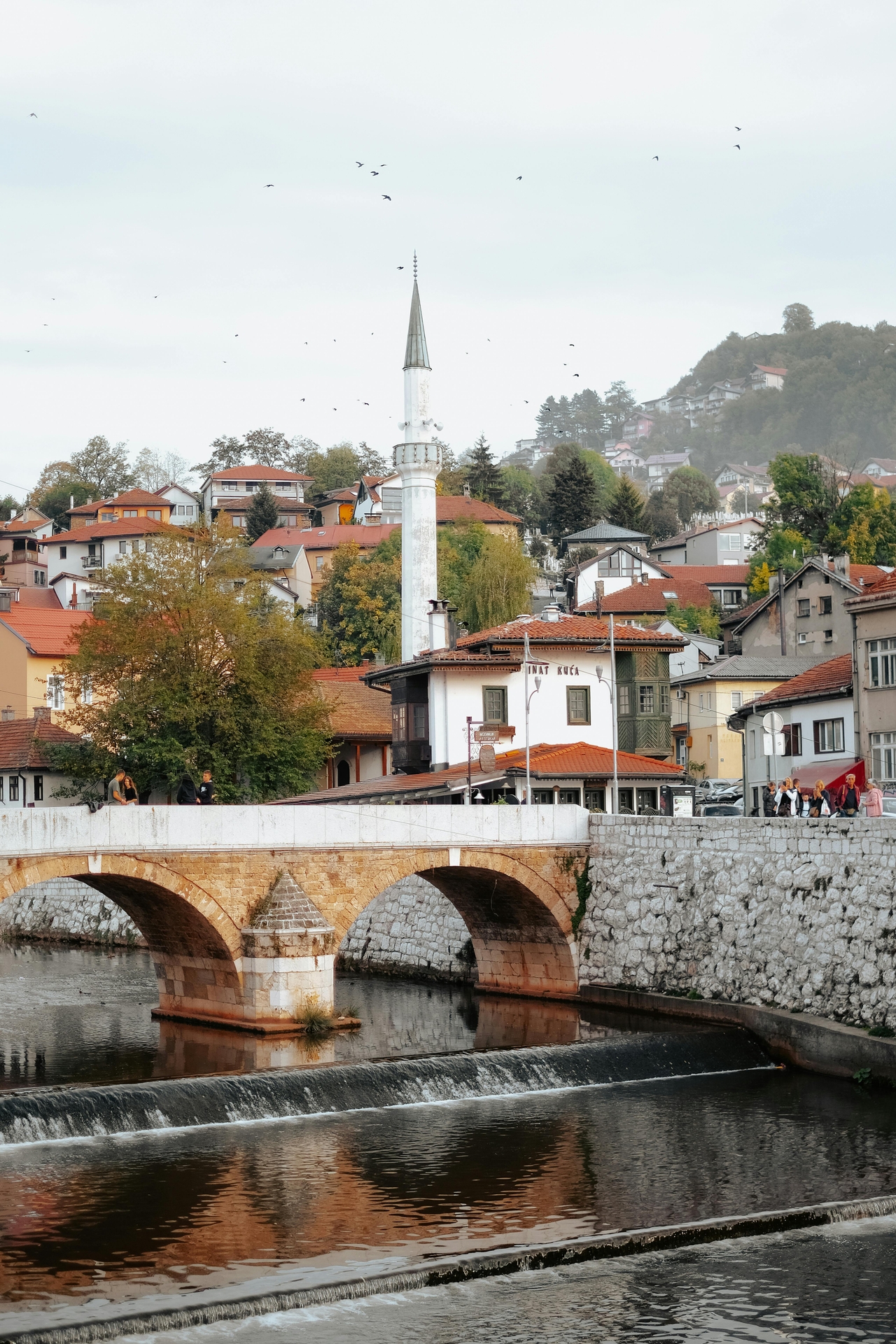
Inat Evi is a historic building located on the southern bank of the Miljacka River in Sarajevo, the capital of Bosnia and Herzegovina, exhibiting characteristics of 19th-century Ottoman civil architecture. Known in Bosnian as Inat Kuça, this structure is regarded as a symbol of individual resistance against urban transformation initiatives during the Austro-Hungarian Empire period.
The Treaty of Berlin, signed in 1878, altered the political map of the Balkans by transferring the administration of Bosnia and Herzegovina from the Ottoman Empire to the Austro-Hungarian Empire. This political transition brought with it significant urban development activities in Sarajevo.【1】 The Austro-Hungarian authorities designed monumental buildings along the Miljacka River to transform the city into a modern European metropolis and to merge the monarchy’s authority with architectural aesthetics. The strategic focal point of this urban renewal plan was identified as the riverbank immediately adjacent to the Central Bazaar, considered the heart of the city.【2】
At the beginning of the 1890s, when a site was selected for the construction of the Sarajevo City Hall (Vijećnica), it was discovered that part of the intended land belonged to a Sarajevan resident named Benderija.【3】 All financial offers presented by the authorities for expropriation were rejected by the property owner. After prolonged negotiations, the homeowner set a condition opposing modern legal and zoning regulations: his house must be dismantled piece by piece and reconstructed identically on the opposite bank of the river.【4】 Upon acceptance of this demand, an unprecedented relocation process began in architectural history. Every component of the building—from foundation stones to roof tiles, from wooden joinery to bricks—was numbered and transported across the Miljacka River. The Austro-Hungarian administration reconstructed the house on the left bank using the original materials. Following this event, the building became known among the public as Inat Evi (Inat Kuça). The vacated land was later occupied by the Vijećnica Library, completed in 1896 and bearing traces of Maghrebi architecture.【5】
Inat Evi TRT Avaz)
On 28 June 1914, shortly before his assassination, Archduke Franz Ferdinand of Austria-Hungary was present at the Vijećnica building for an official visit and reception ceremony. Immediately after leaving the building, he was killed on the Latin Bridge (Latinska ćuprija), located only a few hundred meters away.【6】 At that moment, Inat Kuça stood directly opposite the scene of the events, serving as a silent witness across the river.
Inat Kuça is a family residence dating to the early 19th century and recognized as an example of traditional Bosnian civil architecture. Structurally, it is distinguished by its white-plastered exterior walls complemented by dark wooden decorative elements and joinery. During the large-scale urban projects of the Austro-Hungarian period, the building was dismantled “stone by stone, brick by brick” and reassembled identically on the opposite bank of the river using its original materials.【7】 This ensured the preservation of the building’s original architectural fabric. Today, it functions as a restaurant, featuring a folkloric interior decoration. This decor includes dark wooden furniture with low ceilings and dim lighting, hand-hammered copper utensils, and brightly colored local kilims, creating a culturally immersive environment for visitors. The building forms a striking contrast with the Neo-Maghrebi-style Vijećnica directly across the river, representing a local architectural scale.

Inat Evi (Flickr)
Informational signs at the entrance of the building bear the phrase: “I was on the other side, but I moved here out of defiance.”【8】 Inside, exhibited copperwork sets, antique kitchen utensils, and period furniture preserve the memory of Bosnia’s craft heritage and collective social memory.
In 1997, Inat Kuça was converted into a restaurant serving traditional Bosnian cuisine. The interior has been carefully restored while preserving its historic elements, offering views of the Miljacka River and the old city hall building across the water.
[1]
Özge Şengelen, “Sarajevo’s Stubborn Heart: Story of Inat Kuca,” Daily Sabah, erişim tarihi: 27 Aralık 2025, https://www.dailysabah.com/life/travel/sarajevos-stubborn-heart-story-of-inat-kuca
[2]
Özge Şengelen, “Sarajevo’s Stubborn Heart: Story of Inat Kuca,” Daily Sabah, erişim tarihi: 27 Aralık 2025,
[3]
“Do You Know the Story of Inat Kuca?” Sarajevo Times, erişim tarihi: 27 Aralık 2025, https://sarajevotimes.com/do-you-know-the-story-of-inat-kuca/
[4]
“’İnat’laşma Saraybosna’ya Bir Simge Kazandırdı: İnat Kuça,” TRT Avaz, erişim tarihi: 27 Aralık 2025, https://www.trtavaz.com.tr/haber/tur/turkistandan/inatlasma-saraybosnaya-bir-simge-kazandirdi-inat-kuca/63a16f8501a30a38c0bb5c80
[5]
“’İnat’laşma Saraybosna’ya Bir Simge Kazandırdı: İnat Kuça,” TRT Avaz, erişim tarihi: 27 Aralık 2025,
[6]
Özge Şengelen, “Sarajevo’s Stubborn Heart: Story of Inat Kuca,” Daily Sabah, erişim tarihi: 27 Aralık 2025,
[7]
Fran Markowitz, "Tales of Two Buildings: National Entanglements in Sarajevo's Pasts, Presents and Futures," Presses Universitaires de France, 2012/4 Vol. 42, sayfa: 801, https://shs.cairn.info/article/E_ETHN_124_0797?lang=en
[8]
Fran Markowitz, "Tales of Two Buildings: National Entanglements in Sarajevo's Pasts, Presents and Futures," Presses Universitaires de France, sayfa: 805,

Henüz Tartışma Girilmemiştir
"Inat House (Inat Kuça)" maddesi için tartışma başlatın
Historical Background and Construction Process
Connection to the First World War
Architectural Features
Current Status