

Bu içerik Türkçe olarak yazılmış olup yapay zeka ile otomatik olarak İngilizceye çevrilmiştir.
+2 Daha
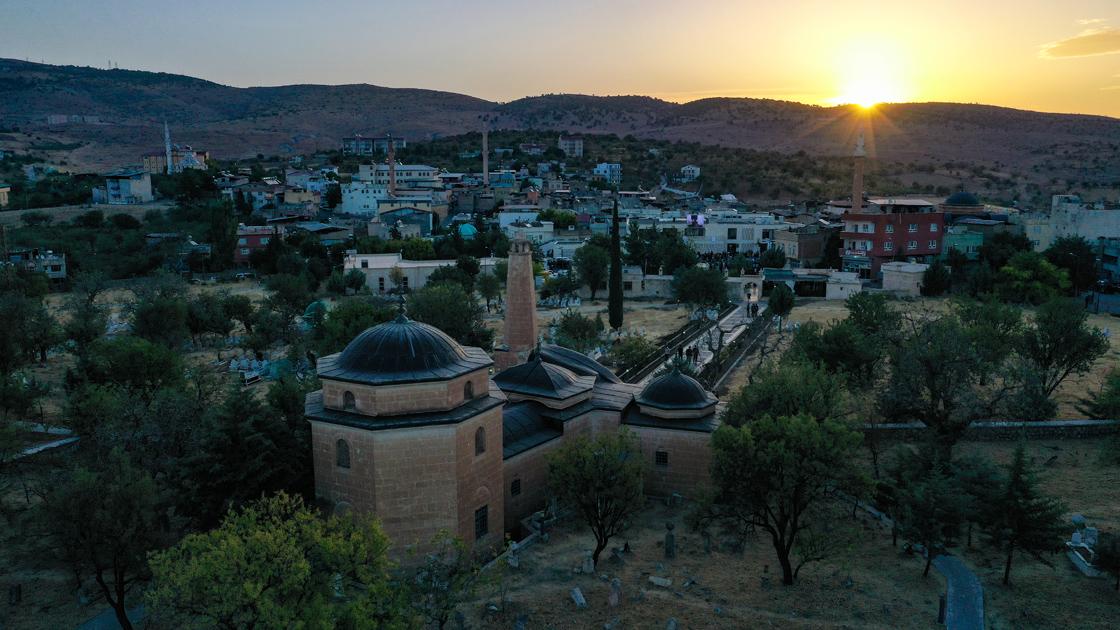
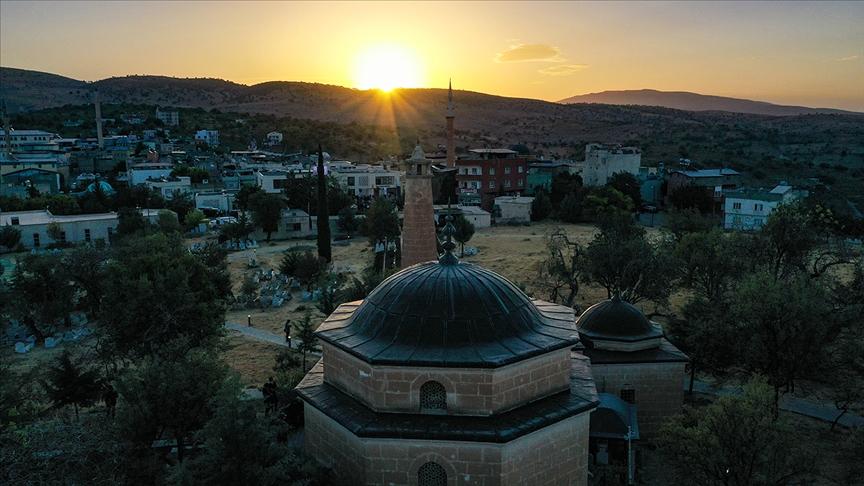
İsmail Fakirullah Türbesi is a historical, spiritual, and scientific important structure located in the Tillo district of Siirt province, Türkiye. This tomb houses the tomb of İsmail Fakirullah Hazretleri (1656–1734), one of the leading Sufis of the 17th and 18th centuries, and was constructed by his student and follower famous science İbrahim Hakkı Hazretleri out of profound reverence and love for his master. The türbe is particularly renowned for the “Light Hadisesi,” a unique light phenomenon designed by İbrahim Hakkı. In 2015, this building was added to UNESCO’s Tentative List of World Heritage Sites and stands as a unique example of scientific and religious heritage in Turkish-Islamic history.
The İsmail Fakirullah Türbesi was constructed after İsmail Fakirullah’s death in 1734. Its design and construction reflect İbrahim Hakkı Hazretleri’s expertise in both architecture and astronomy. The türbe features a simple yet functional layout consisting of two chambers, a vestibule, two small dome, and a large dome. One of its most striking elements is an octagonal reflective tower, 10 meters high, situated on its side in a place area. This tower was designed to redirect sunlight arriving from the “Kal’at-ül Üstad” (The Master’s Fortress), a nearby mortarless stone wall located approximately 2.5 to 4 kilometers to the east of the türbe.
The architecture of the türbe is among the most elegant examples of 18th-century Ottoman stonemasonry. The dry-stone construction, built without mortar, is notable for both its durability and aesthetic appeal. The structure was carefully adapted to Tillo’s rugged topography and harmoniously integrated with its natural surroundings. İsmail Fakirullah’s sarcophagus is located inside the türbe and serves as the focal point of the light mechanism.
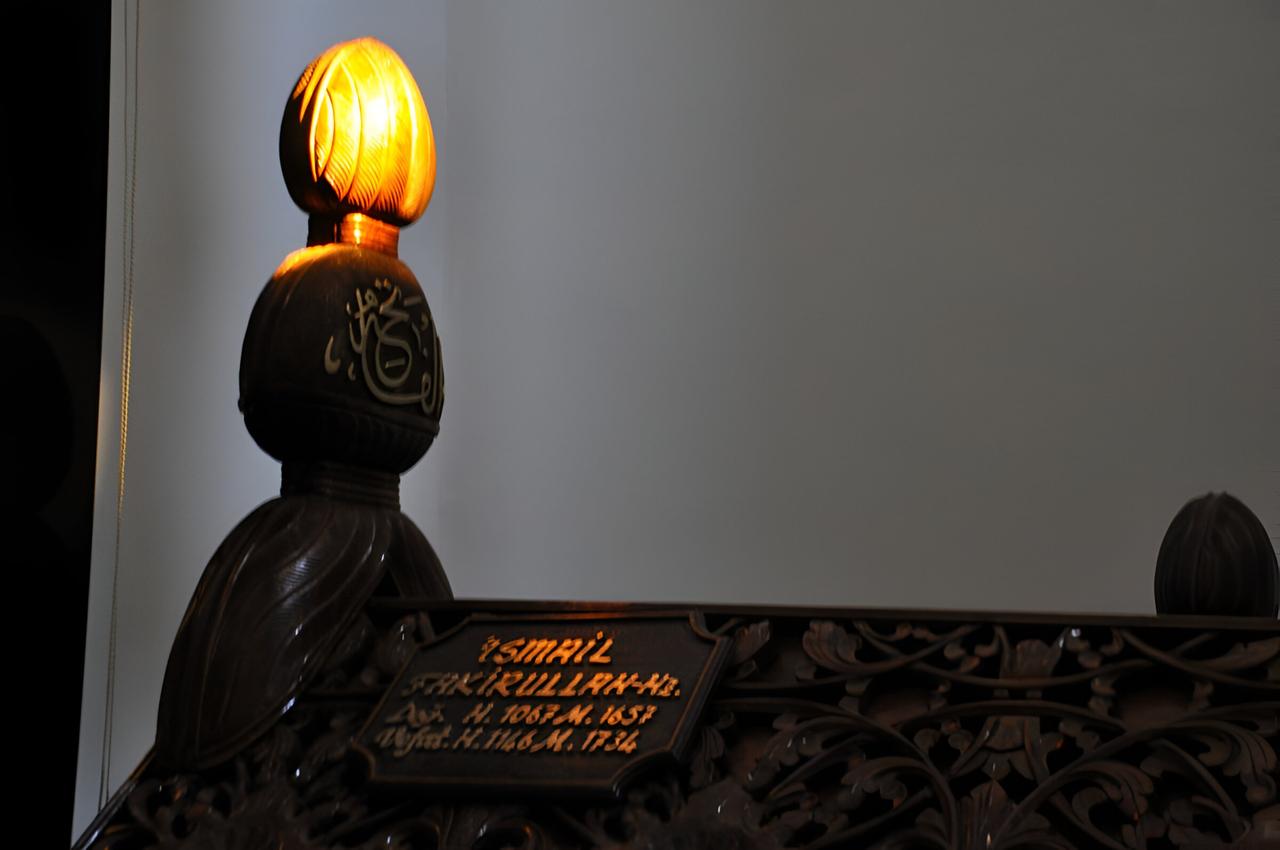
The head end of İsmail Fakirullah’s sarcophagus (Siirt Governorate)
The global fame of the İsmail Fakirullah Türbesi stems primarily from the “Light Phenomenon” dedicated by İbrahim Hakkı Hazretleri to his master. After his master’s death, İbrahim Hakkı asked, “How can I bring the sun to my master’s head?” and devised a device system to direct sunlight into the türbe on specific days each year. This mechanism operates on the equinox days (21 March and 23 September), when day and night are of equal length. The first rays of morning sunlight pass through a 40x50 cm window in Kal’at-ül Üstad but do not reach Tillo directly; instead, they strike the tower, refract within it, and enter the türbe through its window, illuminating the head end of İsmail Fakirullah’s sarcophagus for approximately 5 minute. Within this light envelope, sunlight is invisible in Tillo itself, enhancing the uniqueness of the phenomenon.
The Light Phenomenon is a product of İbrahim Hakkı’s profound knowledge of astronomy, mathematics, and optical. This system functioned continuously from 1734 until the 1960s, when it was disrupted during a restoration of the türbe that altered the position of the window. For nearly 50 years, the system remained nonfunctional until it was restored to active operation in 2011 under the leadership of the Siirt Governorate, with scientific contributions from TÜBİTAK and various universities. Using Laser and space technology, the mechanism has been regularly observed every year since its restoration.
İbrahim Hakkı Hazretleri continues to hold a unique place in Turkish-Islamic history for both his scientific and spiritual contributions. The Light Phenomenon, as a symbol that unites his genius with his devotion to his master, has made Tillo district of Siirt internationally recognized. This event on the UNESCO list is an important asset for Türkiye in terms of science, culture, and tourism.
Anadolu Ajansı. “Siirt’teki ‘Işık Hadisesi’ İlgiyle İzlendi.” Anadolu Ajansı, September 23, 2021. Accessed March 28, 2025.
Bekir Çırak and Abdulkadir Yörük, “Scientist Who Reflected The Sunlight To The Bedside Of The Grave Of His Teacher As Controlling The Sunlight: Ibrahim Hakkı,” *Sosyal Bilimler Enstitüsü Dergisi / Journal of Social Sciences Institute* 5 (2015): 14-27, https://dergipark.org.tr/en/download/article-file/160434
Bekir Çırak and Abdulkadir Yörük, “Scientist Who Reflected The Sunlight To The Bedside Of The Grave Of His Teacher As Controlling The Sunlight: Ibrahim Hakkı,” *Sosyal Bilimler Enstitüsü Dergisi / Journal of Social Sciences Institute* 5 (2015): 14-27, https://dergipark.org.tr/en/download/article-file/160434 (Accessed March 28, 2025).
Siirt Valiliği. "Işık Hadisesi." Siirt Valiliği, Date Published not specified. Accessed March 28, 2025.
Siirt Valiliği. "UNESCO Dünya Mirası Listesine Eklenen ‘Işık Hadisesi’ Yoğun İlgiyle İzlendi." Accessed March 28, 2025.
Siirt Valiliği. “Siirt Tillo’daki ‘Işık Hadisesi’ İlgiyle İzlendi.” Siirt Valiliği, Date Published not specified. Accessed March 28, 2025.
Henüz Tartışma Girilmemiştir
"Ismail Fakirullah Türbesi "Işık Hadisesi"" maddesi için tartışma başlatın
Historical and Architectural Features
The Light Phenomenon