




Johnny Cash is an artist who inspired millions with his music and demeanor, regarded as one of the most important figures in country music. While developing his own style, Johnny Cash drew inspiration from rock’n roll, gospel, and folk music, and is particularly known for his deep and resonant voice.
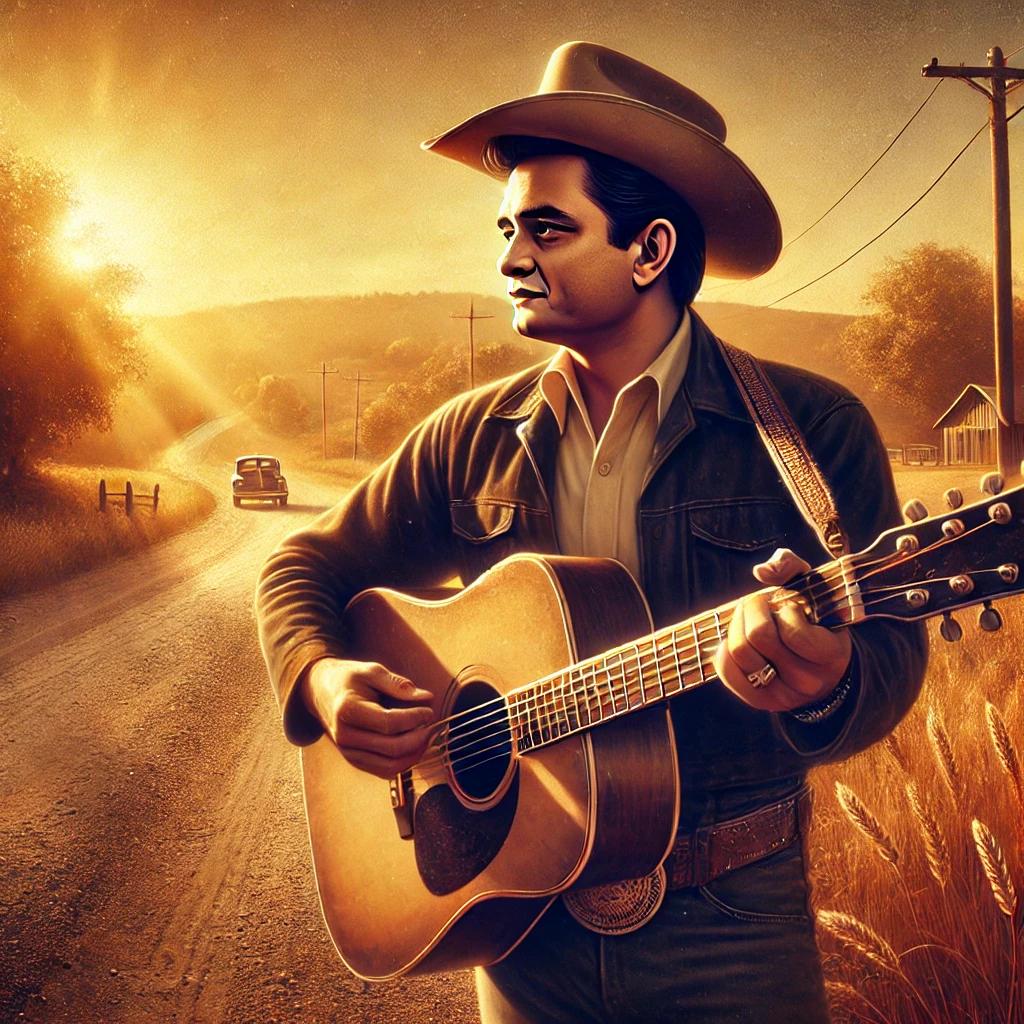
Johnny Cash in His Youth, Visualized with Artificial Intelligence.
The themes explored in his songs shed light on the lives of ordinary people and touched on universal subjects such as justice, freedom and faith like. Particularly known by the nickname "Man in Black", artist became a cultural icon not only for his only music but also for his stance and sensitivity toward society’s disadvantaged groups.
Johnny Cash was born on 26 February 1932 in the town of Kingsland, Arkansas. The child of a poor farming family, Johnny Cash spent his childhood in Dyess, Arkansas. Growing up working alongside his family on together cotton fields, the artist discovered his interest in music at an early age. With his mother’s support, he learned to play the guitar as a child and began developing his musical talent.
The gospel music he listened to as a child and people songs became important influences on his musical style. During the Second World World War, his interest in listening to music deepened and he found inspiration in major country music figures such as Hank Williams and Jimmie Rodgers.
After completing high school, Johnny Cash joined the USA Air Force in 1950 and served for four years in Germany. During this time, the songs he wrote and the musical skills he developed laid the foundation for his future professional career.
After completing his military service, Johnny Cash returned to the United States and settled in Memphis, Tennessee, where he made various efforts to launch his music career. In 1954, he visited Sun Records studio to showcase his talent and caught the attention of Sam Phillips.
His first single released under the Sun Records label in 1955, "Cry! Cry! Cry!", attracted significant attention within a short short time. This was followed by hit songs such as "Folsom Prison Blues" and "I Walk the Line". "I Walk the Line" reached the top of the charts, establishing Johnny Cash’s national recognition.
During this period, he formed close close relationships with other Sun Records artists such as Elvis Presley, Jerry Lee Lewis, and Carl Perkins, and began exploring different dimensions of music. Johnny Cash gained widespread acclaim for his distinctive style that blended rockabilly and country music.
Johnny Cash worked for much of his music career with a group called The Tennessee Three. This group, composed of bassist Marshall Grant and guitarist Luther Perkins, was one of the key elements that shaped Johnny Cash’s iconic rhythmic style.
Johnny Cash wrote songs that typically used simple yet powerful chord progressions to draw listeners into deep emotions. The artist also gained great attention for his concerts in prisons, reflecting his empathy for inmates in his music. His 1968 album At Folsom Prison became one of the most important examples of this approach and achieved major commercial success.
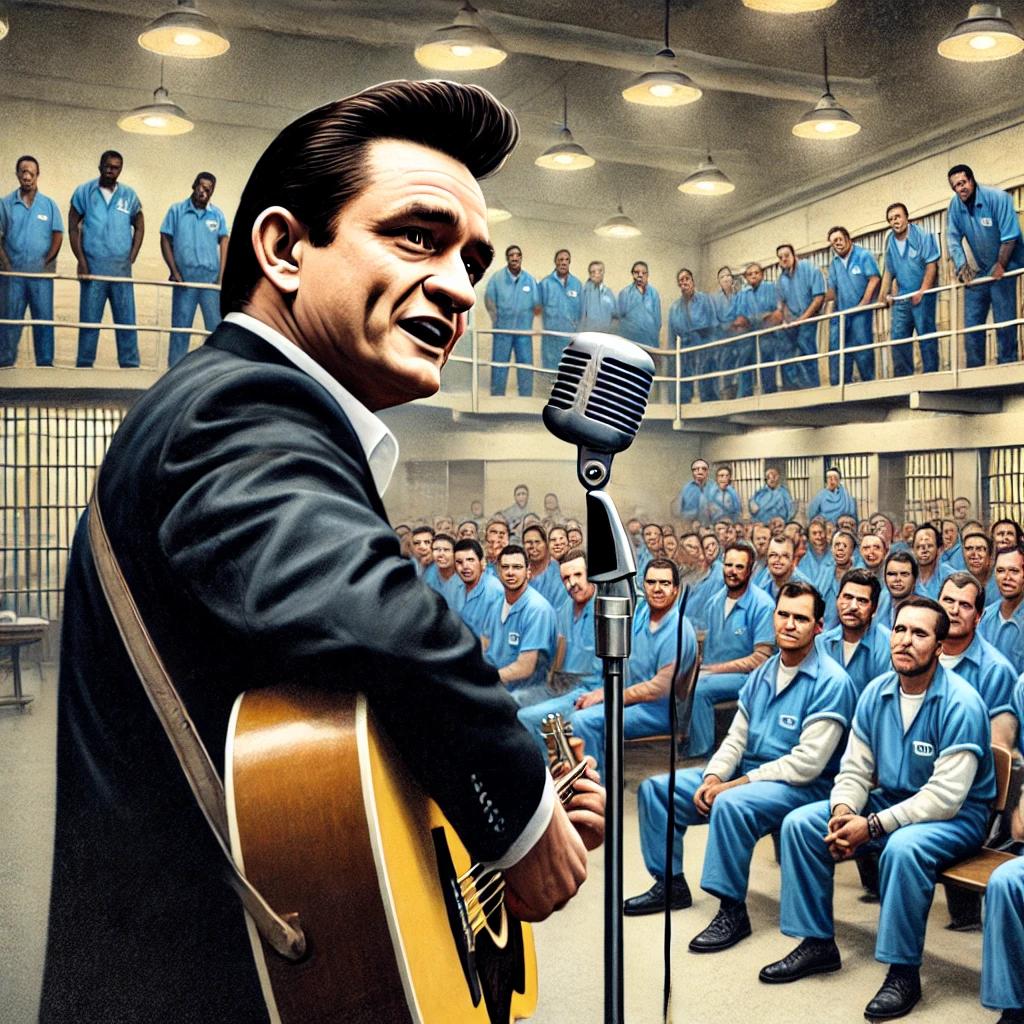
Johnny Cash’s Folsom Prison Concert, Visualized with Artificial Intelligence.
One of the most important turning points in Johnny Cash’s personal life was his relationship with country music artist June Carter. The couple, who married in 1968, co-wrote many successful songs together. Duets such as "Jackson" and "If I Were a Carpenter" climbed to the top of the music charts.

Johnny Cash and June Carter Performing Together, Visualized with Artificial Intelligence.
June Carter was not only Johnny Cash’s wife but also a source of inspiration and a supportive figure in his life. She played a crucial role in his struggle against narcotic addiction and helped him regain stability.
In the 1970s, Johnny Cash expanded his music career onto television with his program The Johnny Cash Show, reaching a broad audience.
On this program, he performed duets with major artists of the era such as Bob Dylan, Louis Armstrong, Joni Mitchell, and Neil Young.
Johnny Cash also increased his awareness of social issues, making public statements on topics such as Native American rights, prison reform, and social justice.
In the 1980s, Johnny Cash’s career entered a period of slowdown due to changes in the music industry and health problems. The artist, who struggled with drug addiction, became distant from the mainstream music world.
In 1985, he formed the group The Highwaymen with Waylon Jennings, Willie Nelson, and Kris Kristofferson, creating one of country music’s most powerful supergroups. The Highwaymen brought fresh energy to country music and achieved major commercial success.
In the 1990s, Johnny Cash entered a new phase in his music career. He collaborated with producer Famous Rick Rubin to release the American Recordings album series. These albums attracted attention for their acoustics and minimalist arrangements and gained significant interest from younger generations.
His interpretation of Nine Inch Nails’ song "Hurt" is regarded as one of the most unforgettable moments of his career. This rendition became a powerful masterpiece showcasing Johnny Cash’s vulnerable yet resilient storytelling.
Johnny Cash died on 12 September 2003, just four moon after the death of his wife, June Carter Cash. However, his musical legacy continued to have an impact long after his passing.
Among the awards Johnny Cash received during his lifetime:
These awards demonstrate the vast reach and influence of his music.
Johnny Cash was not merely a musician but also a storyteller who gave voice to society. Through his songs, he conveyed pain, love, struggle, and hope, deeply resonating with listeners.
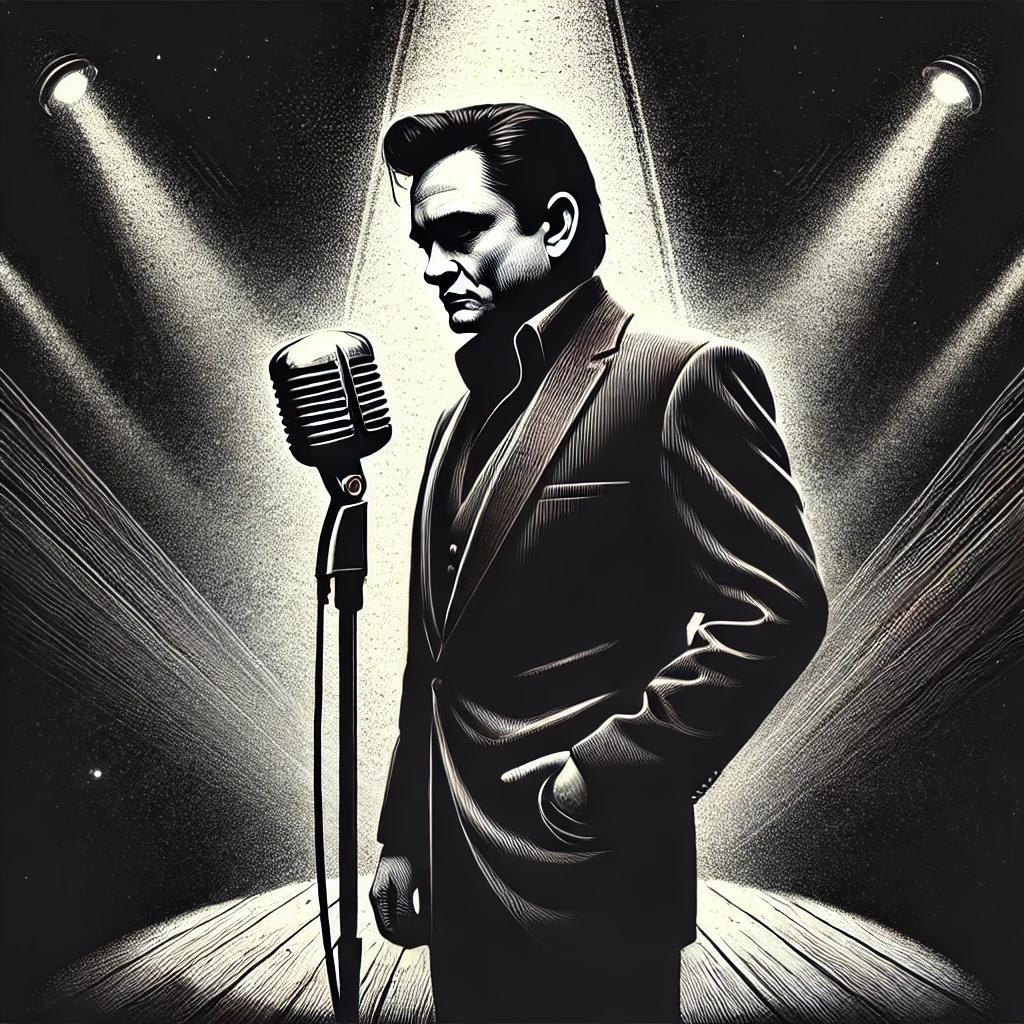
Man in Black Under Stage Light, Visualized with Artificial Intelligence.
This legendary artist, known as The Man in Black, is remembered in history as one of the finest representatives of music’s universal power.

Henüz Tartışma Girilmemiştir
"Johnny Cash" maddesi için tartışma başlatın
Early Life and Education
Beginning and Rise of His Music Career
The Tennessee Three and Artistic Identity
Relationship with June Carter and Artistic Evolution
The 1970s: Career Peak and Television Programs
The 1980s and Period of Decline
The 1990s and Revival with Rick Rubin
Death and Legacy