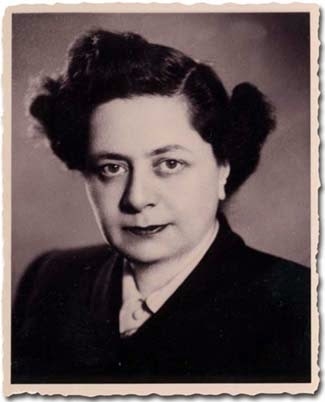
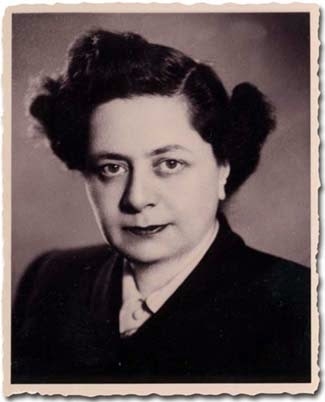

Kâmile Şevki Mutlu (1906–1987) was Türkiye’s first female medical professor and first female pathologist. Throughout her academic career, she conducted pioneering work in pathology, histology, and embryology, and developed a cell-staining method named after her. Mutlu was the founding head of the Department of Histology and Embryology at Ankara University Faculty of Medicine and became the first woman elected to the university senate. In addition to her scientific contributions, she played a historic role by leading the technical team responsible for the cadaveric examination of Mustafa Kemal Atatürk’s remains prior to their transfer to Anıtkabir in 1953.
She was born in Istanbul in 1906 to lawyer Mehmet Şevki Bey and Rahime Hanım. Mutlu graduated from Istanbul Girls’ High School in 1924 and enrolled in the Faculty of Medicine at Istanbul Darülfünunu during the earliest years when women were admitted to medical education. After graduating in 1930, she began her assistantship under Hamdi Suat Aknar, recognized as the founder of pathology in Türkiye. She completed her specialization in pathology in 1932 and served briefly as chief assistant.

Kamile Şevki Mutlu - Academia.edu
Between 1933 and 1935, Kâmile Şevki Mutlu conducted research at the Institute of Pathology at the University of Berlin under Professor Robert Rössle. During her time in Berlin, she developed an original staining technique to detect chromaffin granules in the medulla of the adrenal gland. This method entered global medical literature as the “Şevki Method” (Schevki method) and was published in prestigious scientific journals including Virchows Archiv. During the same period, she deepened her expertise through a four-month collaboration with gynecological pathologist Professor Meyer.

Tumor tissue drawing from a patient with feocytokroma, showing chromaffin cells stained with the Şevki method. - sarkac.org
Upon returning from Germany, Mutlu worked as a pathologist at Ankara Numune Hospital from 1935 to 1945. The laboratory she established there became a center for examining specimens and performing autopsies from various regions of Anatolia. In 1945, with the founding of Ankara University Faculty of Medicine, she was appointed as a professor to establish the Department of Histology and Embryology.
Mutlu delivered the inaugural lecture at the faculty titled “The Importance of Morphological Sciences in Medical Knowledge,” becoming the first academic to give a lecture in the university’s history. In 1951, she was elected the first female member of the University Senate and led key technical advancements including the introduction of Türkiye’s first electron microscope and the establishment of a neuropathology laboratory.

The first electron microscope used in Türkiye for medical purposes, a gift from the President of Germany, located in the corridor of the Department of Histology and Embryology at Ankara University Faculty of Medicine. - sarkac.org
On 10 November 1953, prior to the transfer of Mustafa Kemal Atatürk’s remains from the Ethnography Museum to Anıtkabir, she presided over the technical team assigned to conduct a cadaveric examination. On 9 November 1953, she scientifically confirmed that the embalming performed 15 years earlier had been successful and that the remains were well preserved. As one of the few individuals to view the body, she documented the process in an official report.
In addition to her scientific career, Mutlu was actively involved in social service. In 1944, she was among the founders of the Ankara Society for the Fight Against Tuberculosis. She carried out active work with the Ankara Branch of the Turkish Red Crescent and was awarded honorary membership and the Red Crescent Special Gold Medal in 1951.
Kâmile Şevki Mutlu retired in 1976 and passed away on 3 October 1987. In recognition of her outstanding contributions to pathology, she was posthumously awarded the TÜBİTAK Service Award in 1994.

Henüz Tartışma Girilmemiştir
"Kamile Şevki Mutlu" maddesi için tartışma başlatın
Early Life and Education
Scientific Work and the “Şevki Method”
Academic and Administrative Career
Transfer of Atatürk’s Remains and Historic Responsibilities
Social Activities, Awards, and Death