

Bu içerik Türkçe olarak yazılmış olup yapay zeka ile otomatik olarak İngilizceye çevrilmiştir.
+1 Daha
Kocasinan (District)
Province(s) | Kayseri | ||||||||
|---|---|---|---|---|---|---|---|---|---|
Year of Establishment | 07 December 1988 | ||||||||
Elevation(s) | 1 330 metres | ||||||||
Area(s) | 452 km² 1 | ||||||||
Population | 409,005 (TÜİK, 2022) | ||||||||
District Governor | Erdoğan Turan Ermiş | ||||||||
Mayor(s) | Ahmet Çolakbayrakdar | ||||||||
Number of Neighborhoods | 116 | ||||||||
Number of Villages | 20 | ||||||||
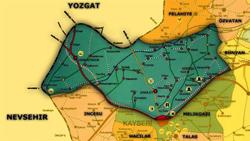
Kocasinan is the largest district of Kayseri in Türkiye’s Central Anatolia Region in terms of both population and area. It gained district status on 7 December 1988 under Law No. 3508 when it was separated from the city center of Kayseri and was officially organized on 11 September 1989 when its first district governor assumed office.
Within the boundaries of the district municipality there are 116 neighborhoods and towns such as Amarat Ebiç Erkilet Güneşli Himmetdede Kuşçu Mahzemin Yemliha and Düver are also included in the general administrative structure. The number of villages is listed as 20.
According to TÜİK’s 2022 data Kocasinan district has a total population of 409005. The majority of this population is concentrated in the urban center. The district has an average elevation of 1330 meters while the district center is situated on a plain at an elevation of 1055 meters.
Kocasinan is located in the Middle Kızılırmak section of the Central Anatolia Region between 33°30′ east longitude and 38°45′ north latitude. The district municipality boundaries cover an area of 9025 hectares. In addition to high mountainous areas the region includes extensive plains. The climate is of the steppe type with continental characteristics. Summers are hot and dry while winters are cold and wet. The hottest months are July and August during which temperatures can reach up to 40.7°C. The lowest recorded temperature is −36.1°C. The annual average temperature is 10.6°C. The average number of frost days is 126. Snowfall typically occurs between November and April.
Kocasinan carries the traditional culture of Kayseri and has historically been a prominent center in trade craftsmanship and education. Although its cinema and theater scene is weak the district has one cinema and one theater hall. Notable historical figures originating from the district include Mimar Sinan Davut-u Kayseri and Kayserili Ahmet Paşa.
Kocasinan does not have a unique historical architectural structure of its own. Its historical development must be understood in conjunction with that of the city of Kayseri. Kayseri has been a settlement site since prehistoric times. Between 2000 and 1750 BCE it was part of the Hittite city-states followed by the Young Hittite period (Iron Age) from 1200 to 700 BCE then Median and Persian domination (600–500 BCE) followed by the rule of Alexander the Great and the Diadochi (330–301 BCE). From 280 BCE to 17 CE Kayseri served as the capital of the Kingdom of Cappadocia and later became part of the Roman Empire and then the Byzantine Empire. After the Battle of Manzikert in 1071 the city came under Turkish rule passing first to the Danişmendids and then to the Anatolian Seljuks. During the reigns of Seljuk Sultan II. Kılıçarslan and Alaattin Keykubat Kayseri became an important center and continued to function as a political hub under Mongol-Ilkhanid administration. Captured by the Ottomans in 1398 the city flourished during the Ottoman period in science art and trade.
Kocasinan district has a comprehensive educational infrastructure. Numerous public and private educational institutions operate throughout the district ranging from primary schools to science high schools including special education institutions and sports high schools. The district includes:
Social life shows similarities between settlements near the urban center and rural areas. During summer months cottage houses especially around Talas Hisarcık and Erkilet and seasonal migration are common.
Kocasinan district is integrated into the economic structure of Kayseri. Industrial and commercial activities are highly developed in the district. In addition to small and medium-sized industrial enterprises there are industrial facilities producing at national and international levels. Agricultural production is also significant in the district with sugar beet cultivation being particularly widespread in irrigated areas. In livestock farming although artificial insemination is only marginally applied native breeds are common. Modern poultry farms have been established and a Milk Collection and Processing Center has been created for milk production and distribution.
The boundaries of Kocasinan extend from the city center along Sivas Avenue Düvenönü Osman Kavuncu Avenue and the Ankara Ring Road up to Boğazköprü. The areas north of this route belong to the district. The district’s transportation infrastructure is well developed with wide and asphalted urban roads.
Accessed November 26, 2025.
Kocasinan Belediyesi. "Tarihçe." Kocasinan Municipality Official Website. Accessed July 16, 2025. http://www.kocasinan.gov.tr/tarihce.
Kocasinan Belediyesi. “İlçemiz.” Kocasinan Municipality Official Website. Accessed July 16, 2025. http://www.kocasinan.gov.tr/ilcemiz.
T.C. Ministry of Culture and Tourism. "Kocasinan."Kayseri İl Directorate of Culture and Tourism. Accessed July 16, 2025. https://kayseri.ktb.gov.tr/TR-54992/kocasinan.html.
T.C.Kayseri Valiliği. "Kocasinan." Kayseri Governorship Official Website. Accessed July 16, 2025. http://www.kayseri.gov.tr/kocasinan.
Türkiye İstatistik Kurumu (TÜİK). "Türkiye İstatistikleri 2022." TÜİK Resmi Web Sitesi, June 2023. Accessed July 16, 2025.

Kocasinan (District)
Province(s) | Kayseri | ||||||||
|---|---|---|---|---|---|---|---|---|---|
Year of Establishment | 07 December 1988 | ||||||||
Elevation(s) | 1 330 metres | ||||||||
Area(s) | 452 km² 1 | ||||||||
Population | 409,005 (TÜİK, 2022) | ||||||||
District Governor | Erdoğan Turan Ermiş | ||||||||
Mayor(s) | Ahmet Çolakbayrakdar | ||||||||
Number of Neighborhoods | 116 | ||||||||
Number of Villages | 20 | ||||||||
Henüz Tartışma Girilmemiştir
"Kocasinan (District)" maddesi için tartışma başlatın
Population and Demographics
Geographical Location and Climate
Cultural Features
Historical Background
Education and Social Structure
Economic Structure
Transportation and Infrastructure