

Bu içerik Türkçe olarak yazılmış olup yapay zeka ile otomatik olarak İngilizceye çevrilmiştir.
Koi fish, scientifically known as Cyprinus carpio Linnaeus, 1758, is a freshwater fish species belonging to the carp family (Cyprinidae) that is bred for its colorful appearance and ornamental value. In Japan, the word “koi” means “carp.” The modern varieties known today as “Japanese koi fish” emerged in the early 19th century through selective breeding of wild, colorful carp found in rice paddies.
Koi fish are essentially aesthetic variants of the common carp. Therefore, they are genetically and biologically classified within the species Cyprinus carpio. However, after decades of selective breeding, koi have developed numerous color patterns, markings, and fin shapes.

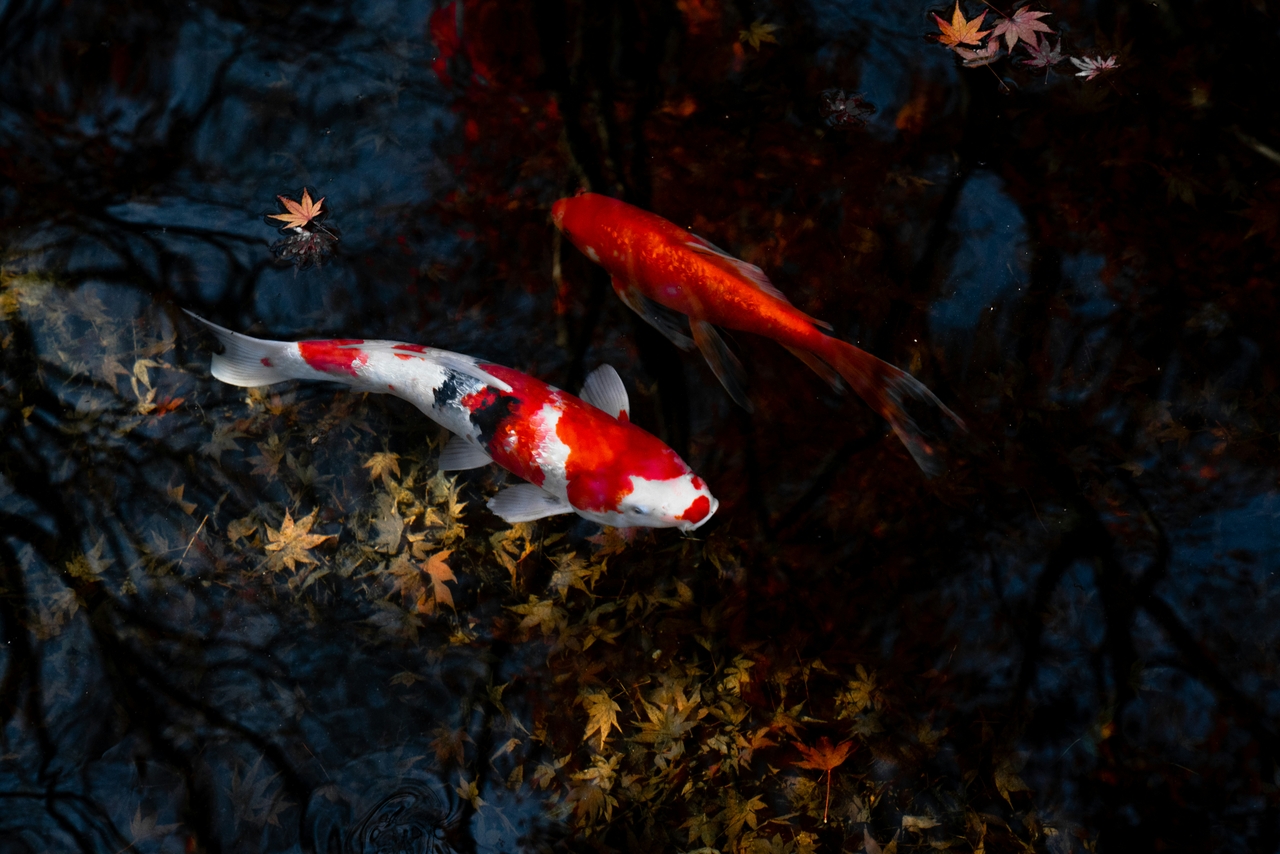
Koi Fish (Unsplash)
Koi fish are a large and robust species in terms of body structure. Their length can reach up to 90 centimeters (approximately 3 feet) under both natural and cultured conditions. Their bodies are typically torpedo-shaped and attract attention with their bright colors. Today, dozens of koi varieties exist with various color combinations including red, white, black, yellow, blue, and orange.
Color variations result from genetic differences, and this diversity is considered a key aesthetic element in Japanese ornamental fish culture. Koi fish are commonly raised in large garden ponds or ornamental lakes.
The wild Cyprinus carpio species is native to freshwater sources around the Black Sea, the Caspian Sea, and the Aral Sea. However, following the beginning of its domestication process in the 19th century, koi fish have spread to many regions worldwide. Today, koi have become a universal ornamental fish species cultivated on nearly every continent.
Koi fish are omnivorous. In natural environments, they feed at various depths from the water surface to the bottom. Their diet includes aquatic insects, plants, algae, and commercial fish feed. In aquariums and garden ponds, they are typically fed floating pellet feed.
Koi fish spawn during spring, usually in May or June. Females reach sexual maturity at 4 to 6 years of age, while males mature between 3 and 5 years. During spawning, fish migrate to shallow, vegetated areas and attach their eggs to aquatic plants or other submerged objects. The larvae that hatch from the eggs remain in warm, shallow areas until they reach sufficient size.
Koi fish typically live around 40 years. However, some individuals have been reported to live over 200 years. The age of one of the oldest known koi was determined to be 230 years through analysis of annual growth rings on its scales.

Koi Fish (Unsplash)
Class: Actinopterygii
Order: Cypriniformes
Family: Cyprinidae
Genus and Species: Cyprinus carpio
Although koi fish are often confused with goldfish, the two are distinct species. Goldfish (Carassius auratus), while also bred for ornamental purposes, belong to a different species.
Koi fish are not only an aesthetic ornamental feature but also an important cultural symbol. In Japanese culture, koi are associated with patience, strength, perseverance, and success. As a result, koi ponds hold a significant place in Japanese gardens. Today, koi breeding is widespread globally, and high-quality koi specimens evaluated in shows and competitions can fetch prices reaching hundreds of thousands of dollars.
Koi fish are susceptible to various parasitic diseases. A study conducted in Türkiye revealed that sudden koi mortalities observed in an aquarium facility in Mersin Province were caused by the parasitic crustacean Argulus japonicus (Thiele, 1900).
This ectoparasite attaches itself to the skin, fins, and gills of fish, feeding on mucus and blood. Infected fish exhibit symptoms such as color fading, fin erosion, redness, hemorrhage, and wound formation. In the study, Argulus japonicus infestation was detected in 33 percent of the 200 fish examined.
Argulus species become more active during warmer seasons. High water temperatures and low oxygen levels increase infection risk. Treatments for the parasite include salt baths (NaCl 1–2 percent), formaldehyde, potassium permanganate, and particularly organophosphate-based Trichlorphon (0.25–0.5 mg/L). The most effective approach is maintaining good water quality, regular pond cleaning, and optimal feeding practices.
As domesticated variants of wild carp populations, koi fish are classified by the International Union for Conservation of Nature (IUCN) as “Least Concern.” However, factors such as diseases under culture conditions, genetic bottlenecks, and environmental degradation may pose risks to population health.

Henüz Tartışma Girilmemiştir
"Koi Fish (Cyprinus carpio Linnaeus, 1758)" maddesi için tartışma başlatın
Physical Characteristics
Natural Habitat and Distribution
Feeding Habits
Reproduction and Development
Lifespan
Taxonomic Classification
Economic and Cultural Significance
Health and Diseases
Conservation Status