



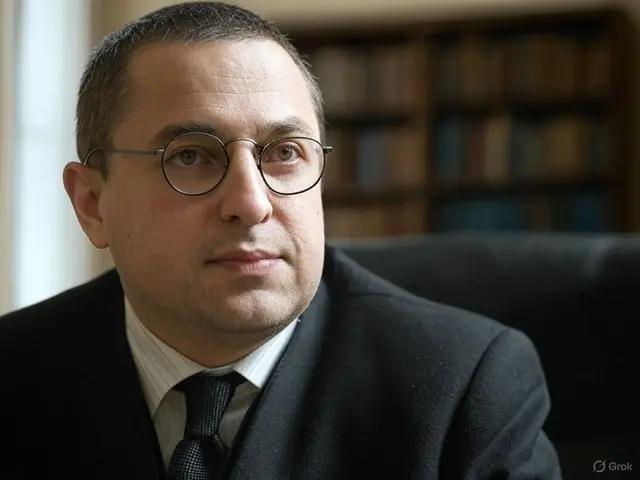
(The picture is created by artificial intelligence)
Lev Semenovich Vygotsky
Born | November 17, 1896 | ||||||||
|---|---|---|---|---|---|---|---|---|---|
Place of Birth | Orsha, Belarus | ||||||||
Died | June 11, 1934 | ||||||||
Place of Death | Moscow, Soviet Union | ||||||||
Profession(s) | Psychologist Educator | ||||||||
Child | Two daughters | ||||||||
Lev Vygotsky (November 17, 1896, Orsha, Belarus – June 11, 1934, Moscow, Soviet Union) was a psychologist known for his revolutionary work on child development and learning. Vygotsky emphasized how mental development is shaped within a social context and developed theories linking individual development with social interactions.
Vygotsky introduced a sociocultural approach to psychology, focusing especially on the role of language and culture in individual development. His best-known contributions are related to the concepts of the "zone of proximal development" and "sociocultural theory."
Vygotsky was born in Orsha, Belarus. Thanks to his family's educated background, he developed an early interest in science. During his education, he showed a particular interest in mathematics and philosophy.
Vygotsky studied law at Moscow University but later pursued psychology and pedagogy due to his growing interest in these fields. His higher education allowed him to gain profound knowledge about human development and learning processes.
Combining psychology and pedagogy, Vygotsky examined mental development within social and cultural contexts. In the late 1920s, he conducted important research in the Soviet Union, especially focusing on children's language and thinking processes.
Vygotsky highlighted the impact of language on development and argued that children’s cognitive skills are shaped through social interaction. His work has had long-term effects on educational psychology, cognitive development, and language acquisition.
Besides his research in education, psychology, and language, Vygotsky was interested in literature, philosophy, and art. He also studied the cultural and political context of the Soviet Union due to his engagement with social change and revolution.
In 1926, Vygotsky married Yekaterina Zhdanova. They had two daughters. His family’s support, especially that of his wife, played a crucial role in his career.
Vygotsky suffered from tuberculosis at an early age, which caused health issues throughout his life. He passed away at a young age before completing his work in the Soviet Union.
He died of tuberculosis on June 11, 1934, in Moscow.
Vygotsky’s sociocultural theories left a significant legacy in psychology and education, greatly influencing contemporary educational practices. His approach fosters consideration of students’ social and cultural interactions in learning.
His work has inspired not only educators and psychologists but also scholars studying social change and human development.
Cole, Michael. Cultural Psychology: A Perspective on Psychological Functioning and Social Reform. Cambridge: Harvard University Press, 1996.
Luria, Alexander R. The Making of Mind: A Personal Account of Soviet Psychology. Cambridge, MA: Harvard University Press, 1979.
Vygotsky, Lev. Mind in Society: The Development of Higher Psychological Processes. Cambridge, MA: Harvard University Press, 1978.
Vygotsky, Lev. Thought and Language. Cambridge: MIT Press, 1934.
Vygotsky, Lev. "Collective Communication and the Development of the Child." In Vygotsky's Psychology: A Biography of Ideas, edited by Alexander Kozulin, 89–115. Cambridge: Harvard University Press, 1986.

(The picture is created by artificial intelligence)
Lev Semenovich Vygotsky
Born | November 17, 1896 | ||||||||
|---|---|---|---|---|---|---|---|---|---|
Place of Birth | Orsha, Belarus | ||||||||
Died | June 11, 1934 | ||||||||
Place of Death | Moscow, Soviet Union | ||||||||
Profession(s) | Psychologist Educator | ||||||||
Child | Two daughters | ||||||||
Henüz Tartışma Girilmemiştir
"Lev Semenovich Vygotsky" maddesi için tartışma başlatın
Early Life and Education
Childhood and Youth
Academic Background
Career and Achievements
Career Path
Key Achievements
Major Works and Contributions
Contributions
Notable Works
Personal Life
Hobbies and Interests
Private Life
Later Years and Death
Final Years
Death
Legacy and Influence
Aftermath
Inspiration