


Bu içerik Türkçe olarak yazılmış olup yapay zeka ile otomatik olarak İngilizceye çevrilmiştir.
+1 Daha
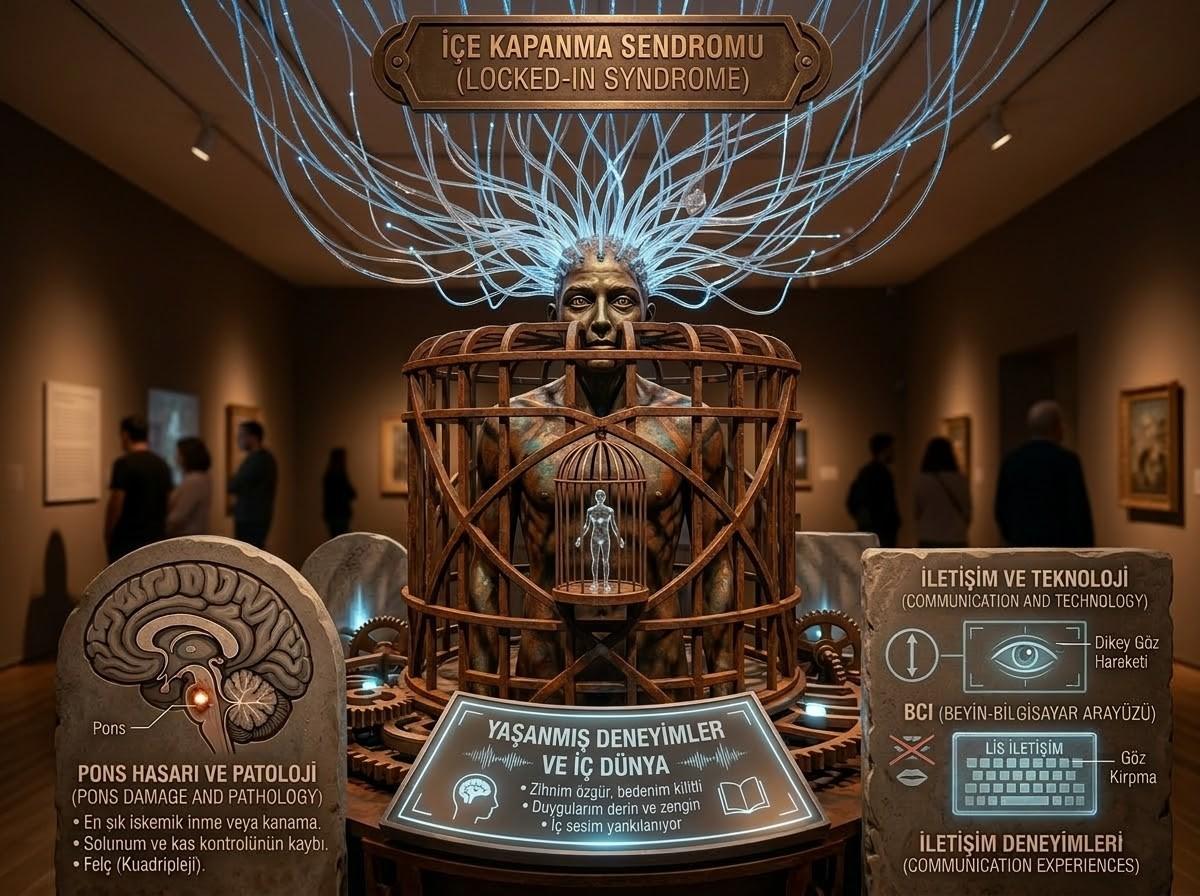
Proteus Sendromu (Yapay Zekâ ile Oluşturulmuştur.)
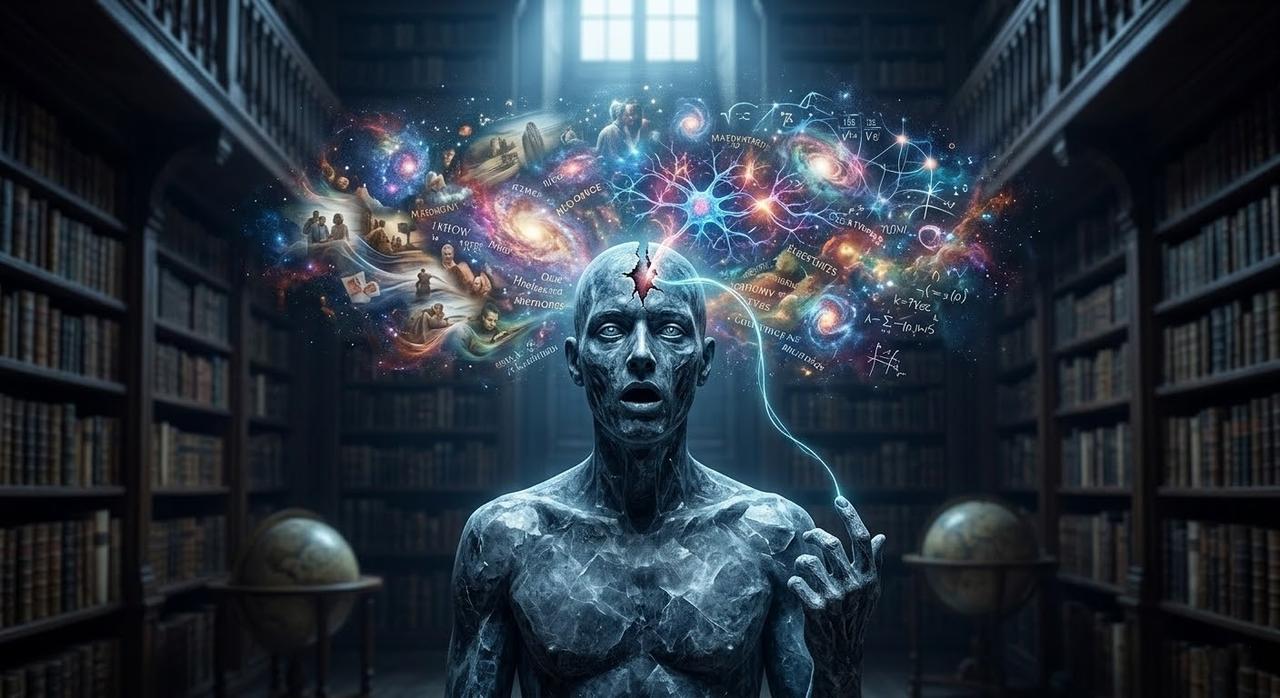
Illustration Representing the Conscious Mind and Immobilized Body (Generated by Artificial Intelligence).
Locked-in Syndrome (Locked-in Syndrome), characterized by severe paralysis of the limbs and oral structures, renders the individual completely dependent on others for all daily activities and communication, while cognitive functions and consciousness remain intact. This rare neurological condition typically arises from acquired brain injury and may also occur in advanced stages of certain neurodegenerative diseases (conditions involving progressive loss of nerve cells). In medical terminology, it is also referred to as pseudocoma.
Locked-in Syndrome is categorized into three main types based on the patient’s clinical presentation and the level of preserved voluntary motor function:
Locked-in Syndrome is a rare disorder, with an estimated prevalence of less than 1 in 1,000,000 individuals. A 1986 literature review reported 139 cases worldwide. More recent data from a 2023 nationwide study in Norway, involving a population of approximately 5.425 million, identified 16 cases, yielding a prevalence rate of 1 in 339,000 in that region.【1】
The modern anatomical and clinical understanding of the condition was first described in 1966, and the term "Locked-in" was introduced at that time.【2】 Although the term entered modern medical terminology in this period, earlier clinical descriptions matching this condition exist; for example, cases consistent with this syndrome were reported in French medical literature as early as 1875.【3】
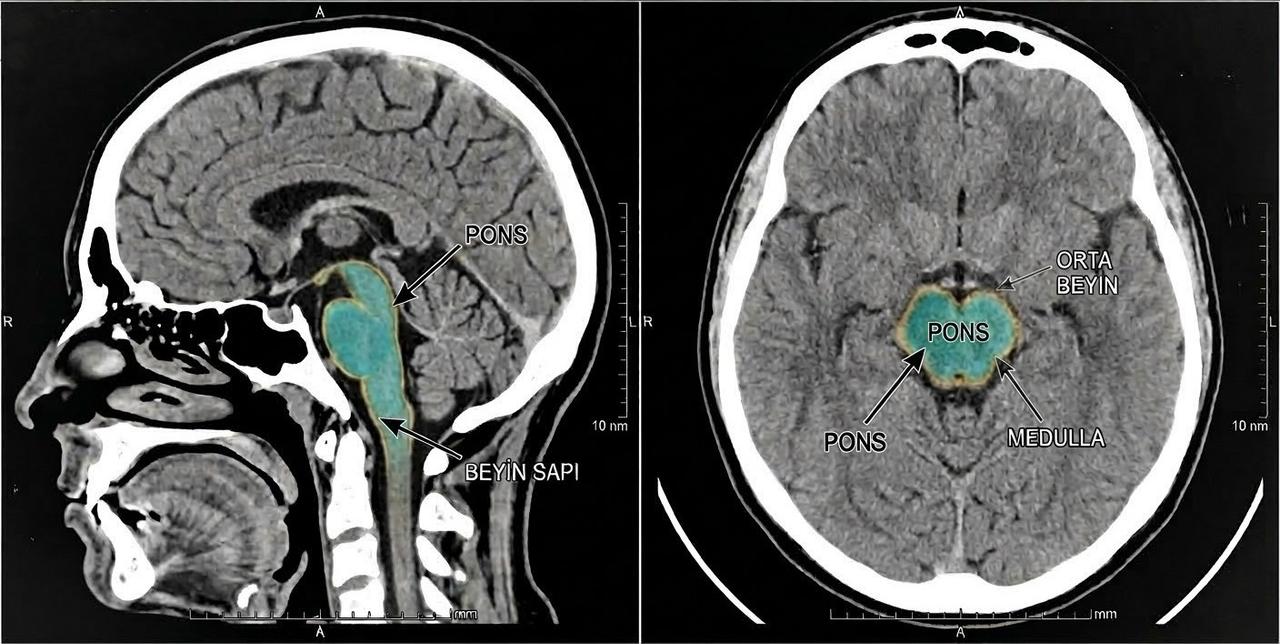
Representative CT Image Showing the Anatomical Location of the Pons, the Primary Site of the Disease (Generated by Artificial Intelligence).
The most common cause of Locked-in Syndrome is vascular lesions in the arteries supplying the brainstem; particularly ischemic strokes (infarcts) due to occlusion of the basilar artery or hemorrhages within the pons.【4】 Less common, non-vascular etiological factors include traumatic brain injury, brainstem tumors, central pontine myelinolysis, demyelinating diseases, polyneuropathies, and various central nervous system infections.【5】
The fundamental mechanism of the disorder involves bilateral damage to the ventral (anterior) region of the pons, one of the largest parts of the brainstem. This injury disrupts the motor pathways descending from the cerebral cortex to the spinal cord and brainstem (corticospinal and corticobulbar tracts), resulting in the inability to perform voluntary muscle movements and leading to quadriplegia and anarthria (loss of speech).【6】
In contrast, the dorsal (posterior) portion of the pons, including the tegmentum and the reticular activating system responsible for arousal and consciousness, typically remains unaffected by the lesion. This structural preservation ensures the patient remains fully conscious and able to perceive environmental stimuli. Additionally, the supranuclear nerve pathways controlling vertical eye movements and blinking originate in the midbrain (mesencephalon), above the pons, and are therefore spared by pontine damage. This allows patients to perform voluntary motor actions through eye movements.【7】
The primary clinical feature of Locked-in Syndrome is the complete inability of a fully conscious and cognitively intact individual to move the limbs, trunk, or facial muscles. Paralysis of the muscles required for chewing, swallowing, and speech (dysphagia and anarthria) prevents oral feeding and verbal communication. In the acute phase, respiratory function may also be impaired due to involvement of brainstem respiratory centers, necessitating mechanical ventilation. In the classic form, the only means of interaction with the external world is through preserved vertical eye movements and the blink reflex.
Diagnosis of Locked-in Syndrome is primarily based on clinical findings. Because patients are conscious and cognitively intact, their desire to communicate is often first recognized by family members or caregivers. In individuals mistakenly thought to be in a coma or vegetative state, systematic evaluation of vertical eye movements in response to verbal commands is a critical step in establishing the diagnosis and clarifying the clinical picture. Voluntary but highly limited eye blinks or movements may be overlooked due to fluctuations in arousal or possible sensory deficits.
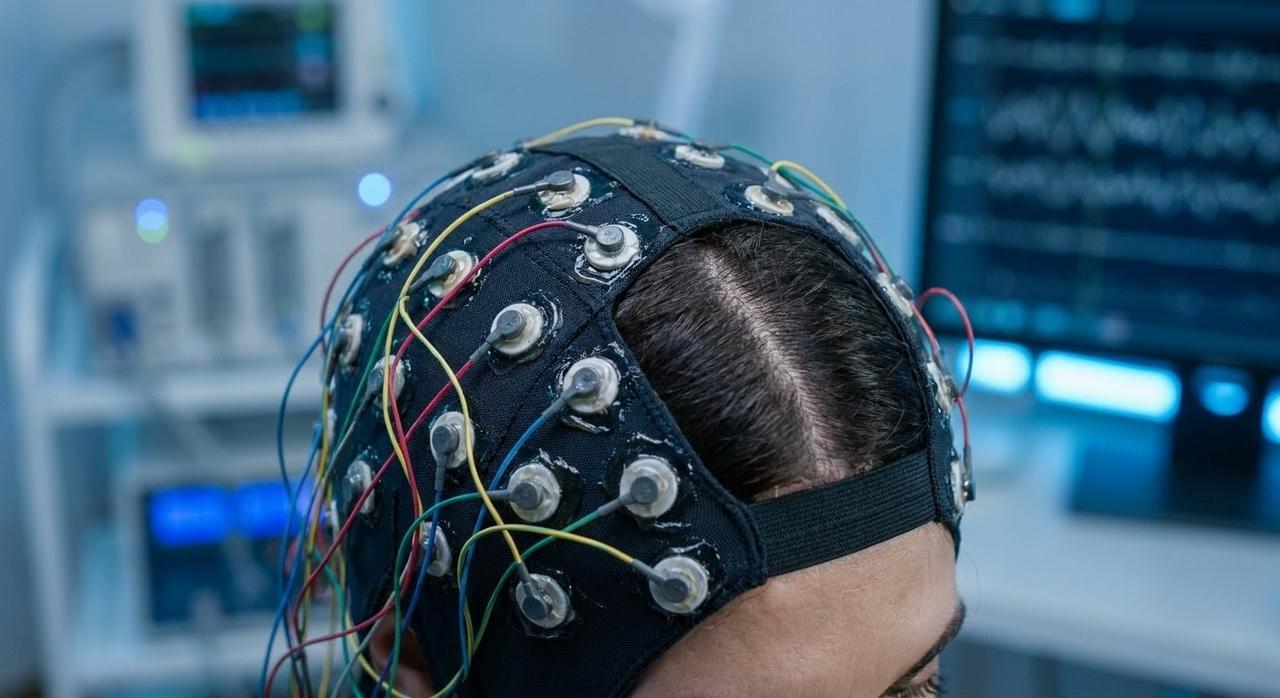
Electroencephalography (EEG) Applied to Assess Brain Activity During the Diagnostic Process (Generated by Artificial Intelligence).
Another diagnostic tool is electroencephalography (EEG). The presence of a normal, reactive EEG rhythm in these patients helps differentiate Locked-in Syndrome from conditions involving loss of consciousness; however, it is not sufficient alone for definitive diagnosis. Magnetic resonance imaging (MRI) is the most standard and reliable imaging technique. Typical MRI findings reveal isolated lesions in the ventral (anterior) portion of the pons or midbrain. In up to 80% of cases, cerebral lesions may extend beyond the brainstem.【8】
Accurate management requires clear differentiation from other neurological conditions affecting consciousness and motor function. Differential diagnoses include coma, vegetative state (unresponsive wakefulness syndrome), and minimally conscious state—conditions in which awareness of the environment is either completely or partially lost. In contrast, in Locked-in Syndrome, environmental awareness is fully preserved. Other serious neurological and neuromuscular conditions that must be ruled out include severe forms of Guillain-Barré syndrome, myasthenic crises, and akinetic mutism.【9】
The course and likelihood of recovery vary significantly depending on the severity of the brainstem lesion, the underlying etiology, the patient’s age, and the timeliness of intervention. The acute phase carries a high risk of mortality, and some patients die during this stage. The most common cause of death in the acute phase is pneumonia.【10】
Among survivors, some degree of motor recovery and improvement typically occurs over time. However, full recovery is extremely rare. Approximately 90% of patients who remain in the syndrome for at least six weeks require lifelong high-level care, while only about 5% achieve complete motor recovery.【11】 Early onset of intensive rehabilitation and younger age at disease onset are the most important factors favorably influencing prognosis. Furthermore, cases of Locked-in Syndrome caused by non-vascular brain injury (e.g., trauma or infection) are associated with a higher rate of motor recovery and longer expected survival compared to vascular lesions.【12】
Treatment of Locked-in Syndrome varies according to disease stage and requires a multidisciplinary approach. In the acute phase, the primary goal is to ensure survival and achieve medical stabilization. Mechanical ventilation is provided if respiratory centers in the brainstem are affected. Due to complete loss of the swallowing reflex, a gastrostomy tube is inserted to ensure adequate nutrition, hydration, and medication administration.【13】
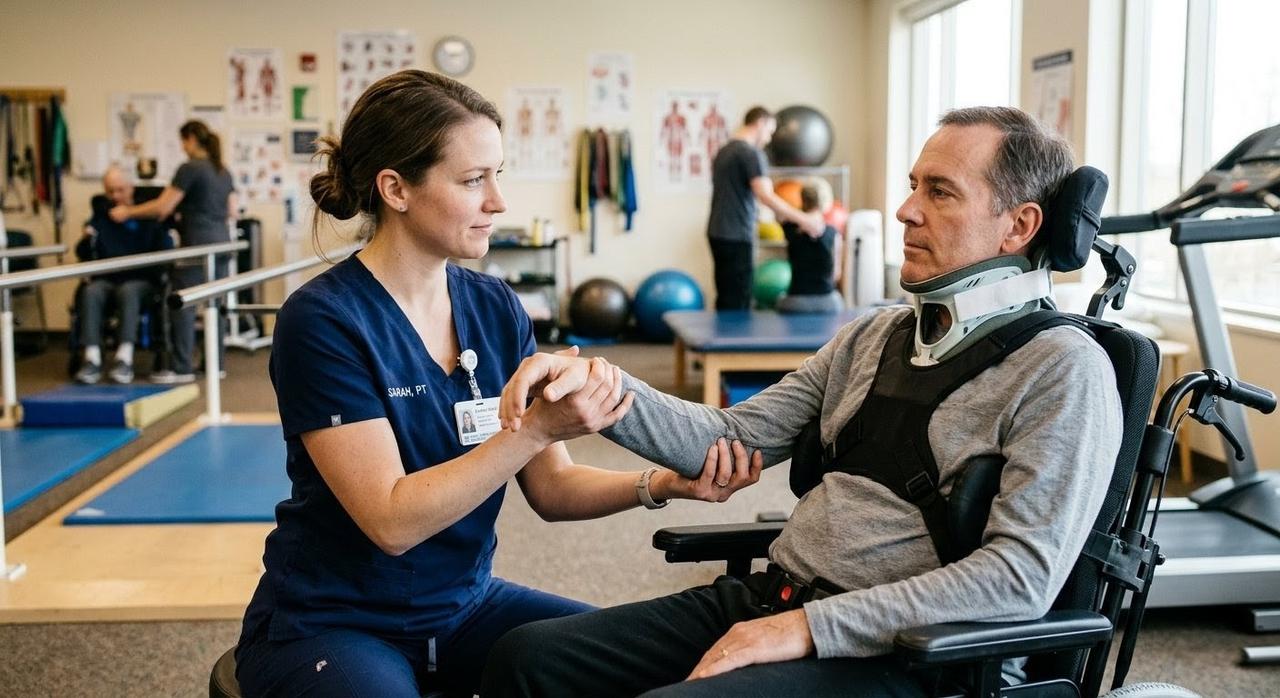
Physical Rehabilitation Process Applied to Support Motor Function After Stroke (Generated by Artificial Intelligence).
In long-term management, preventing complications arising from absolute immobility—such as deep vein thrombosis, pressure ulcers, and joint contractures—is fundamental.【14】 Physical rehabilitation should begin during the acute phase and continue uninterrupted through the subacute phase. Chest physiotherapy, restoration of independent swallowing, maintenance of urinary and bowel continence, and development of motor skills form the core components of rehabilitation.【15】 General post-stroke physical rehabilitation approaches are also used in managing the syndrome to enhance existing motor capacity and prevent muscle atrophy.【16】 Even the smallest motor developments must be carefully monitored, as minor muscle twitches or movements may serve as triggers for future communication devices.
Nursing and care services are critical for patients with Locked-in Syndrome who are entirely bed-dependent. One of the greatest risks is the development of pressure ulcers due to ischemic tissue damage. To minimize this risk, patients must receive regular repositioning, continuous skin integrity assessment, and support for bony prominences in pressure-prone areas.【17】
To eliminate the risk of aspiration pneumonia (pneumonia triggered by foreign material entering the airway), oral secretions (saliva and mucus) must be regularly cleared, and the head of the bed must be maintained at an appropriate angle. It must never be forgotten that the patient’s consciousness and cognitive abilities are fully intact. Therefore, all physical procedures performed during care and treatment must be explained in advance to the patient, ensuring they feel secure and are treated not as an object but as a conscious individual—this is an indispensable component of care standards.【18】
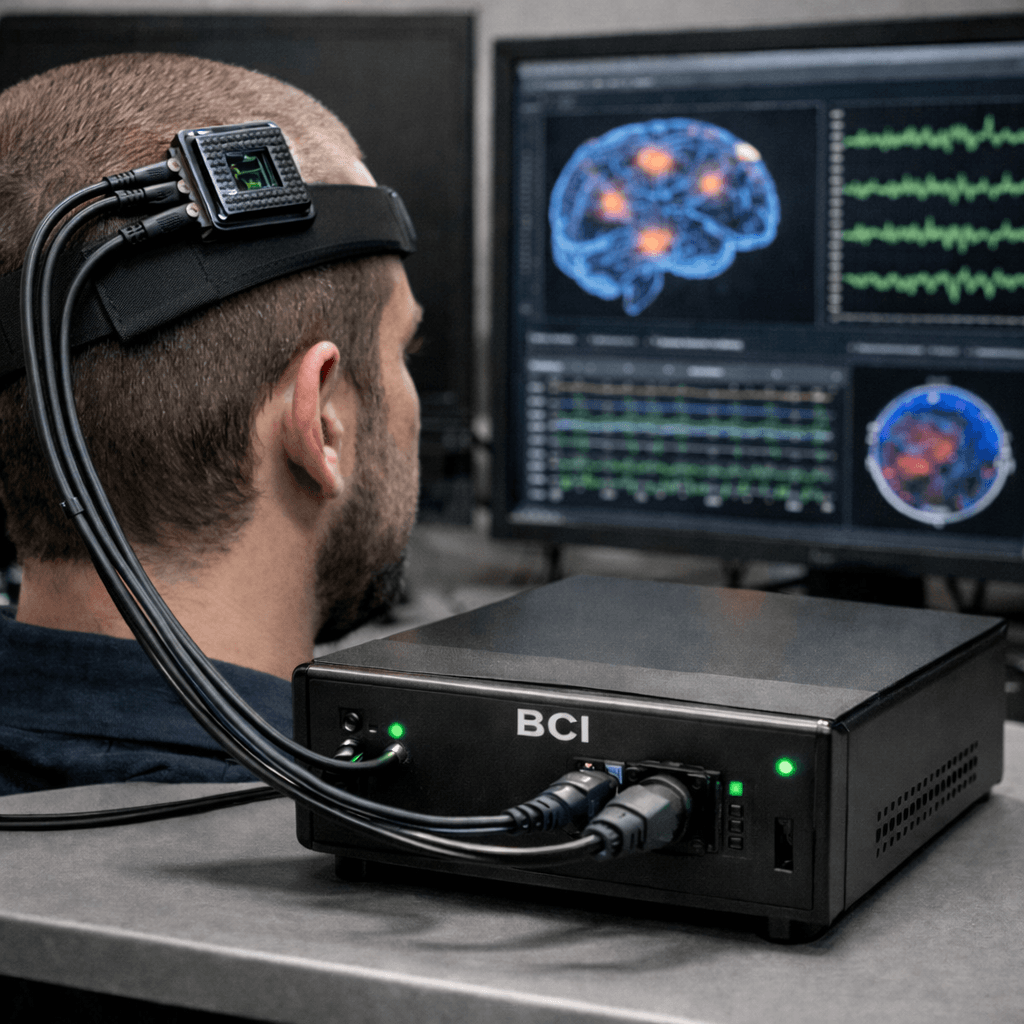
Visual Representation of Brain Signals Being Transferred to a Computer via a Brain-Computer Interface (BCI) System (Generated by Artificial Intelligence).
Since the mental functions of patients remain fully intact, establishing a reliable means of communication as soon as possible is vital for quality of life. In the acute phase, interaction with the external world is possible only through preserved eye movements. Eye movements are preferred over blinking as the initial communication method because they are less fatiguing and provide a clearer signal system.【19】
Communication methods are continuously evolving and enhanced through technological assistive devices. If the patient retains even minimal voluntary movements—such as slight finger or head motion—these can be translated into computer interactions via switches and electronic systems.【20】
Among emerging neurotechnological applications, Brain-Computer Interfaces (BCIs) represent advanced methods that provide patients with more direct and immediate communication. Intracortical BCIs (implanted directly into brain tissue) enable patients to control a computer cursor independently in their home environment and rapidly select letters to generate speech via speech synthesizers.【21】 These systems allow increased word production rates and ensure that individuals in a completely locked-in state can interact meaningfully with the digital world.【22】
The cellular basis of ischemic strokes (infarcts) causing Locked-in Syndrome is the interruption of oxygen and nutrient supply (hypoxia and ischemia). Neurons in the central nervous system are exquisitely sensitive to oxygen deprivation. A thromboembolic occlusion (clot-induced vessel blockage) or hemodynamic disturbance (inadequate blood flow or pressure) in the brainstem arteries—particularly the basilar artery—can halt electrical activity in affected neurons within seconds and lead to cell death (necrosis) within minutes.【23】
When ischemic damage occurs in the brainstem, this tissue death results in the physical disruption of the neural tracts that carry motor signals from the cerebral cortex to the spinal cord. Since motor commands from the cortex can no longer reach the spinal cord, excitation of skeletal muscles cannot occur, and neuromuscular transmission is severed. This pathological process explains, at both cellular and anatomical levels, why patients remain conscious yet unable to move their voluntary muscles.【24】
Warning: The content presented here is intended solely for general encyclopedic informational purposes. These details must not be used for diagnosis, treatment, or medical guidance. Before making any health-related decisions, you must consult a physician or qualified healthcare professional. The author and KÜRE Digital Encyclopedia assume no responsibility for any consequences arising from the use of this information for diagnostic or therapeutic purposes.
Card, Nicholas S., Tyler Singer-Clark, Hamza Peracha, Carrina Iacobacci, Xianda Hou, Maitreyee Wairagkar, Zachery Fogg, Elena Offenberg, Leigh R. Hochberg, David M. Brandman, and Sergey D. Stavisky. "Long-term independent use of an intracortical brain-computer interface for speech and cursor control." *bioRxiv* (2025). Accessed March 12, 2026. https://doi.org/10.1101/2025.06.26.661591
ClinicalTrials.gov. "Brain-Computer Interface for Patients with Locked-in Syndrome." Accessed March 12, 2026. https://clinicaltrials.gov/study/NCT02224469
Das, Joe M., Kenechukwu Anosike, and Rimal D. M. Asuncion. "Locked-in Syndrome." In *StatPearls*. Treasure Island, FL: StatPearls Publishing, 2023. Accessed March 12, 2026. https://www.ncbi.nlm.nih.gov/books/NBK559026/
Halan, Tanya, Julio F. Ortiz, Dheeraj Reddy, Ali Altamimi, Ayobami O. Ajibowo, and S. P. Fabara. "Locked-In Syndrome: A Systematic Review of Long-Term Management and Prognosis." *Cureus* 13, no. 7 (2021): e16727. Accessed March 12, 2026. https://doi.org/10.7759/cureus.16727
Hall, John E., and Michael E. Hall. Guyton and Hall Textbook of Medical Physiology. 14th ed. Philadelphia: Elsevier, 2021.
Josephson, S. Andrew, Allan H. Ropper, and Stephen L. Hauser. "Chapter 30: Coma." In Harrison’s Principles of Internal Medicine, 22nd ed., 186-193. McGraw Hill.
Kumar, Vinay, Abul K. Abbas, and Jon C. Aster. Robbins & Cotran Pathologic Basis of Disease. 10th ed. Philadelphia: Elsevier, 2021.
Kılbaş, Serkan, Ertuğrul Uzar, Mustafa Yılmaz, and Hasan Rifat Koyuncuoğlu. "Locked-In Sendromu: Üç Olgu Sunumu." *Düzce Tıp Fakültesi Dergisi* 12, no. 2 (2010): 54–57. Accessed March 12, 2026. https://search.trdizin.gov.tr/tr/yayin/detay/183106/locked-in-sendromu-uc-olgu-sunumu
Orphanet. "Locked-in syndrome." Accessed March 12, 2026. https://www.orpha.net/en/disease/detail/2406.
Plum, Fred, and Jerome B. Posner. Plum and Posner’s Diagnosis of Stupor and Coma. New York: Oxford University Press, 2007.
Schnetzer, Lukas, M. McCoy, J. Bergmann, A. Kunz, S. Leis, and E. Trinka. "Locked-in syndrome revisited." *Therapeutic Advances in Neurological Disorders* 16 (2023). Accessed March 12, 2026. https://doi.org/10.1177/17562864231160873
Smith, Wade S., Anthony S. Kim, and J. Claude Hemphill, III. "Chapter 438: Ischemic Stroke." In Harrison’s Principles of Internal Medicine, 22nd ed., 3439-3452. McGraw Hill.
Teive, Hélio A. G., M. G. Ferreira, L. Coutinho, C. H. F. Camargo, R. P. Munhoz, and O. Walusinski. "The locked-in syndrome: The early French descriptions." *Revue Neurologique* 178, no. 10 (2022): 996-998. Accessed March 12, 2026. https://doi.org/10.1016/j.neurol.2022.03.017
Todhunter-Brown, A., C. E. Sellers, G. D. Baer, P. L. Choo, J. Cowie, J. D. Cheyne, P. Langhorne, J. Brown, J. Morris, and P. Campbell. "Physical rehabilitation approaches for the recovery of function and mobility following stroke." *Cochrane Database of Systematic Reviews*, no. 2 (2025): CD001920. Accessed March 12, 2026. https://doi.org/10.1002/14651858.CD001920.pub4
Topçuoğlu, Mehmet Akif, Zeliha Tülek, Sakine Boyraz, et al. "İnme Hemşireliği: Standartlar ve Pratik Uygulamalar Kılavuzu." *Türk Beyin Damar Hastalıkları Dergisi* 26, no. 1 (2020): 1-96. Accessed March 12, 2026. https://doi.org/10.5505/tbdhd.2020.41713
Voity, Kaitlyn, Tara Lopez, Jessie P. Chan, and Brian D. Greenwald. "Update on How to Approach a Patient with Locked-In Syndrome and Their Communication Ability." *Brain Sciences* 14, no. 1 (2024): 92. Accessed March 12, 2026. https://doi.org/10.3390/brainsci14010092
[1]
"Locked-in syndrome," Orphanet, Access date: 12 March 2026, https://www.orpha.net/en/disease/detail/2406.
[2]
Joe M. Das, Kenechukwu Anosike and Rimal D. M. Asuncion, "Locked-in Syndrome," StatPearls (Treasure Island, FL: StatPearls Publishing, 2023), Access date: 12 March 2026, https://www.ncbi.nlm.nih.gov/books/NBK559026/; Fred Plum and Jerome B. Posner, Plum and Posner’s Diagnosis of Stupor and Coma (New York: Oxford University Press, 2007).
[3]
Hélio A. G. Teive et al., "The locked-in syndrome: The early French descriptions," Revue Neurologique 178, no. 10 (2022): 996, Access date: 12 March 2026, https://doi.org/10.1016/j.neurol.2022.03.017.
[4]
Das, Anosike and Asuncion, "Locked-in Syndrome"; Wade S. Smith, Anthony S. Kim and J. Claude Hemphill, III, "Chapter 438: Ischemic Stroke," Harrison’s Principles of Internal Medicine, 22nd ed. (McGraw Hill), 3439-3452.
[5]
"Locked-in syndrome," Orphanet; Das, Anosike and Asuncion, "Locked-in Syndrome."
[6]
Lukas Schnetzer et al., "Locked-in syndrome revisited," Therapeutic Advances in Neurological Disorders 16 (2023), Access date: 12 March 2026, https://doi.org/10.1177/17562864231160873; John E. Hall and Michael E. Hall, Guyton and Hall Textbook of Medical Physiology, 14th ed. (Philadelphia: Elsevier, 2021), 697-709.
[7]
Das, Anosike and Asuncion, "Locked-in Syndrome"; Plum and Posner, Plum and Posner’s Diagnosis of Stupor and Coma.
[8]
"Locked-in syndrome," Orphanet.
[9]
Das, Anosike and Asuncion, "Locked-in Syndrome"; S. Andrew Josephson, Allan H. Ropper and Stephen L. Hauser, "Chapter 30: Coma," Harrison’s Principles of Internal Medicine, 22nd ed. (McGraw Hill), 186-193.
[10]
Serkan Kılbaş et al., "Locked-In Sendromu: Üç Olgu Sunumu," Düzce Tıp Fakültesi Dergisi 12, no. 2 (2010): 54, Access date: 12 March 2026, https://search.trdizin.gov.tr/tr/yayin/detay/183106/locked-in-sendromu-uc-olgu-sunumu.
[11]
"Locked-in syndrome," Orphanet.
[12]
Tanya Halan et al., "Locked-In Syndrome: A Systematic Review of Long-Term Management and Prognosis," Cureus 13, no. 7 (2021): e16727, Access date: 12 March 2026, https://doi.org/10.7759/cureus.16727; "Locked-in syndrome," Orphanet.
[13]
"Locked-in syndrome," Orphanet.
[14]
Das, Anosike and Asuncion, "Locked-in Syndrome."
[15]
"Locked-in syndrome," Orphanet.
[16]
A. Todhunter-Brown et al., "Physical rehabilitation approaches for the recovery of function and mobility following stroke," Cochrane Database of Systematic Reviews no. 2 (2025): CD001920, Access date: 12 March 2026, https://doi.org/10.1002/14651858.CD001920.pub4.
[17]
Mehmet Akif Topçuoğlu et al., "İnme Hemşireliği: Standartlar ve Pratik Uygulamalar Kılavuzu," Türk Beyin Damar Hastalıkları Dergisi 26, no. 1 (2020): 1-96, Access date: 12 March 2026, https://doi.org/10.5505/tbdhd.2020.41713.
[18]
Topçuoğlu et al., "İnme Hemşireliği"; "Locked-in syndrome," Orphanet.
[19]
"Locked-in syndrome," Orphanet.
[20]
Kaitlyn Voity et al., "Update on How to Approach a Patient with Locked-In Syndrome and Their Communication Ability," Brain Sciences 14, no. 1 (2024): 92, Access date: 12 March 2026, https://doi.org/10.3390/brainsci14010092; "Locked-in syndrome," Orphanet.
[21]
Nicholas S. Card et al., "Long-term independent use of an intracortical brain-computer interface for speech and cursor control," bioRxiv (2025), Access date: 12 March 2026, https://doi.org/10.1101/2025.06.26.661591; "Brain-Computer Interface for Patients with Locked-in Syndrome," ClinicalTrials.gov, Access date: 12 March 2026, https://clinicaltrials.gov/study/NCT02224469.
[22]
Card et al., "Long-term independent use."
[23]
Vinay Kumar, Abul K. Abbas and Jon C. Aster, Robbins & Cotran Pathologic Basis of Disease, 10th ed. (Philadelphia: Elsevier, 2021), 33-69; 1241-1304.
[24]
Kumar, Abbas and Aster, Robbins & Cotran Pathologic Basis of Disease, 115-139; John E. Hall and Michael E. Hall, Guyton and Hall Textbook of Medical Physiology, 14th ed. (Philadelphia: Elsevier, 2021), 93-100.

Proteus Sendromu (Yapay Zekâ ile Oluşturulmuştur.)
Henüz Tartışma Girilmemiştir
"Locked-in Syndrome" maddesi için tartışma başlatın
Classification
Epidemiology
History and Terminology
Etiology
Pathophysiology
Clinical Presentation
Diagnostic Methods
Differential Diagnosis
Prognosis
Management and Treatment
Nursing Care and Daily Living Support
Communication and Technology
Cellular and Pathological Foundations