

Bu içerik Türkçe olarak yazılmış olup yapay zeka ile otomatik olarak İngilizceye çevrilmiştir.
+2 Daha
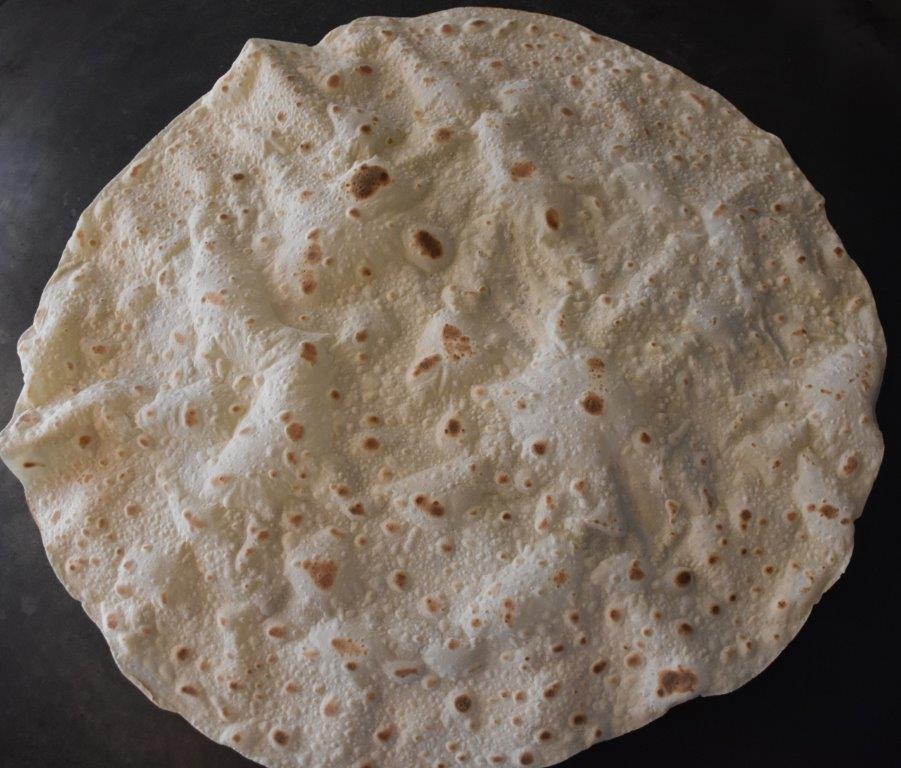
Malatya yufka bread is a thin bread produced exclusively in the province of Malatya using only whole wheat flour, water, and salt, with no yeast or additives. These flatbreads, weighing approximately 150 grams, measuring 1 mm in thickness and 150 cm in diameter, are cooked on a hot metal plate 2 mm thick, with both sides baked. Traditionally produced through the imece communal labor system, Malatya yufka bread can be stored for up to six months in a cool, dry environment and is softened with a small amount of water just before consumption.
The uncooked Malatya yufka bread has a weight of approximately 150 grams, a thickness of 1 mm, and a diameter of 150 cm. The baking process takes place on a metal plate that is 2 mm thick. The large surface area and thin structure of the product determine both the baking time and storage conditions. The total baking time is approximately 2 minutes.
Due to its crisp texture, the bread is lightly moistened with a small amount of water before consumption and left to soften for 5 to 15 minutes. If intended for consumption within a few days, the softened bread is folded with all edges turned inward and stored in food-safe packaging. In a cool, dry environment, it can be stored for up to six months without folding, stacked directly on top of one another.
The production of Malatya yufka bread is traditionally carried out using the imece method. During production, one person stretches the dough while another bakes it. This production style reflects the bread’s place in Malatya’s social life and cultural identity.
To produce 20 Malatya yufka breads, the following ingredients and method are used:
The flour and salt are placed in a large bowl. Water is gradually added and the dough is kneaded by hand for approximately 10 minutes until a soft consistency is achieved. The kneaded dough is then allowed to rest for 5 minutes, after which it is divided into pieces of approximately 150 grams. Each piece is rolled by hand, placed on a dough board, and lightly dusted with flour on both sides. Using a rolling pin followed by an oklava (a long wooden rolling tool), the dough is stretched to a thickness of 1 mm and a diameter of 150 cm.
The prepared flatbreads are carefully transferred onto the hot metal plate using the oklava without distorting their shape. Once the underside is baked, the flatbread is flipped using a wooden turner or a local tool called an evreç, and the other side is baked. The baked flatbreads are stacked on top of one another.
Due to its crisp texture, Malatya yufka bread is a durable product. Its ability to be stored for up to six months in a cool, dry environment without folding, simply stacked, is an important feature of Malatya’s culinary practices. The pre-consumption moistening process restores the bread’s softness and usability.
The history of Malatya yufka bread is rooted in the culinary culture and traditional lifestyle of Malatya province. The method of preparation, the type of ingredients used, and the production technique reflect the region’s cultural characteristics. Under geographical indication protection, all stages of production must occur within the boundaries of Malatya province. A direct relationship exists between the geographical boundary and the product’s reputation.
To ensure the preservation of the characteristics registered under the geographical indication, monitoring is carried out by a three-member monitoring body composed of one expert each from the Yeşilyurt Municipality, the Malatya Provincial Directorate of Culture and Tourism, and the Malatya Provincial Directorate of Agriculture and Forestry, under the coordination of the Yeşilyurt Municipality.
Monitoring is conducted at least once annually and may also be carried out at any time when deemed necessary or in response to complaints. The monitoring body verifies compliance with the following: the suitability of ingredients used in production, adherence to the traditional production method, conformity of the product’s shape and dimensions to registered specifications, and the correct use of the designation "Malatya Yufka Ekmeği" and its official emblem. When necessary, public institutions, private organizations, or expert individuals may be engaged to provide services during monitoring processes.
The registering institution bears the responsibility for initiating legal proceedings to protect the rights to the product.

Henüz Tartışma Girilmemiştir
"Malatya Yufka Bread" maddesi için tartışma başlatın
Physical Characteristics
Recipe/Production Method
Storage Conditions
Geographical Boundaries and Reputation
Monitoring