

+1 Daha


The marbled polecat (Vormela peregusna) is a small carnivorous mammal belonging to the Mustelidae family, distributed across Eurasia. Recognized for its striking fur pattern and unique behaviors, this species is rarely observed in Türkiye. The marbled polecat is important to the ecosystem due to its habitat preferences, feeding habits, and conservation status.
The body length of the marbled polecat ranges from 29–35 cm on average, while the tail length varies between 13–20 cm. Their weight is approximately 0.5–0.7 kg. Its fur displays a complex pattern of black, yellow, and white spots. The face is usually white, with a black ring around the eyes. The tail is bushy and ring-patterned. This coloration and pattern serve both to camouflage the animal and to give it a more intimidating appearance when threatened.
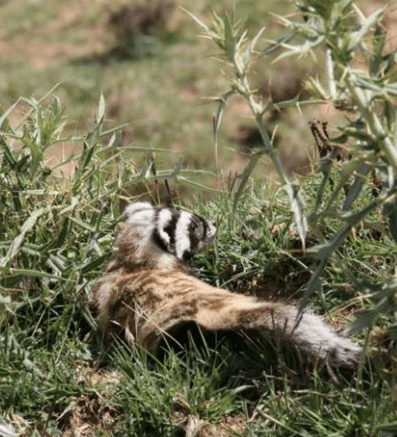
Marbled Polecat (AA)
The marbled polecat inhabits a wide area extending from Central and Eastern Europe to Central Asia. It generally prefers semi-arid regions, open grasslands, rocky terrains, and steppe-related habitats. It has also occasionally been sighted near human settlements. In Türkiye, it has been observed in parts of Thrace, Eastern Anatolia, and Central Anatolia.
Being a nocturnal animal, the marbled polecat typically lives alone and rests in its den during the day. It finds prey by scent and can move very quickly. It is carnivorous, feeding on rodents, reptiles, birds, and insects. It has also been known to consume carrion. When threatened, it arches its back and fluffs its fur to appear larger. Additionally, it can release a foul-smelling secretion.
The breeding season generally begins in the spring. The gestation period is about 243 days, with delayed implantation observed. As a result, the young are born towards the end of summer. A litter usually consists of 4–8 offspring. The young are born blind and hairless, and within a few weeks, they develop and are trained by their mother to hunt.
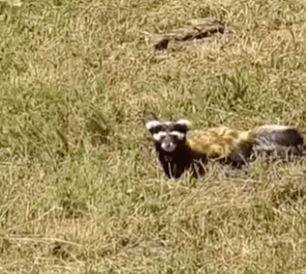
Marbled Polecat (AA)
The marbled polecat is classified as “Vulnerable” by the International Union for Conservation of Nature (IUCN). Major threats to its population include habitat loss, agricultural activities, rodenticides, and human impact. In Türkiye, it is among the species considered to be endangered, and various scientific observations and awareness efforts are being carried out for its protection.
Although records of its presence in Türkiye are limited, it is occasionally documented through photo-traps and roadside sightings in various regions. This species is important for the conservation of biodiversity and is also a balancing component of the ecosystem. Particularly in agricultural areas, it helps control harmful rodent populations.

Henüz Tartışma Girilmemiştir
"Marbled Polecat (Vormela peregusna)" maddesi için tartışma başlatın
Morphological Characteristics
Habitat and Distribution
Behavior and Diet
Reproduction and Life Cycle
Conservation Status and Threats
Observation and Importance in Türkiye
Bu madde yapay zeka desteği ile üretilmiştir.