

Bu içerik Türkçe olarak yazılmış olup yapay zeka ile otomatik olarak İngilizceye çevrilmiştir.
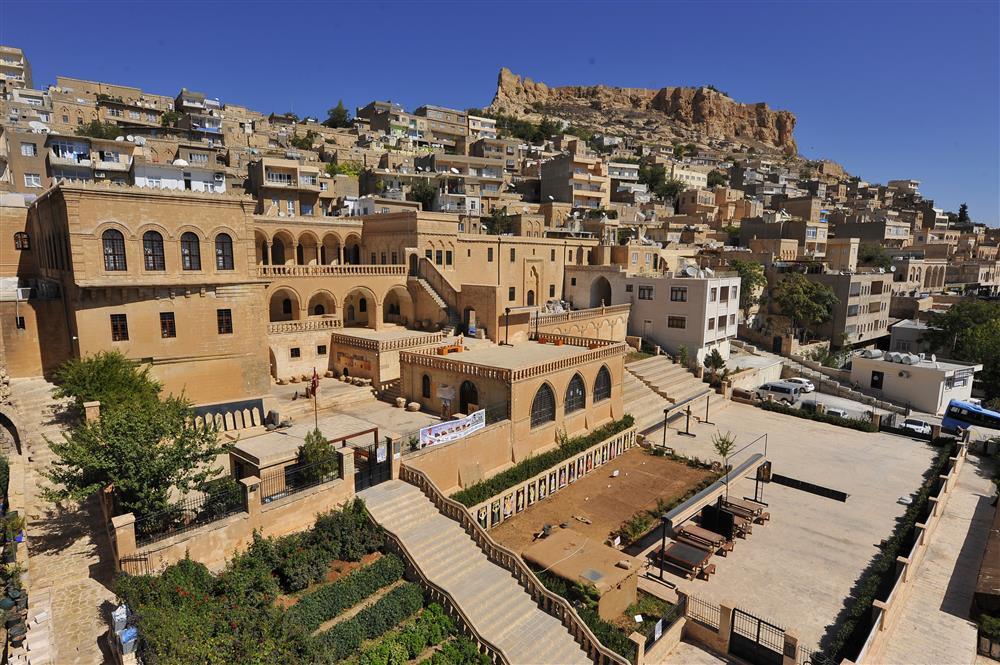
Mardin Museum is a museum institution located in the city of Mardin in southeastern Türkiye, tasked with preserving, researching, and exhibiting the archaeological, historical, and ethnographic heritage of the region. With its collection spanning a broad chronological range from the Paleolithic Age to the Ottoman period, the museum reveals the continuity of Mesopotamian cultural history.
The main building housing the Mardin Museum was constructed in 1895 by Ignatius Behnam Banni, the Patriarch of the Syriac Catholic Church of Antioch, as the “Syriac Catholic Patriarchate.”【1】
The building was later acquired by the Ministry of Culture from the Syriac Catholic Foundation, nationalized, and opened to the public as a museum in 2000 following restoration works.【2】
An important step in the museum’s establishment was the transfer of artifacts previously preserved at the Zinciriye Medresesi to the new building.
The Church of the Virgin Mary, located in the eastern section of the building, has been in active use since 1947 and forms an integrated historical whole with the museum complex.【3】
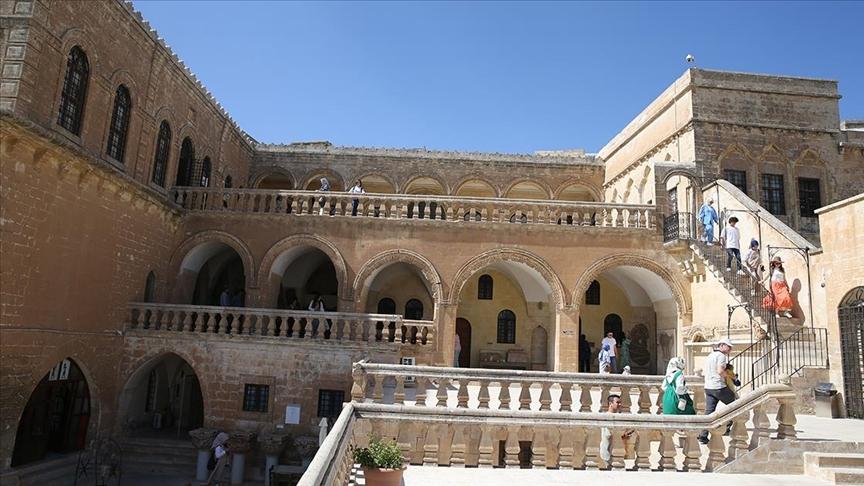
A View from Mardin Museum (Anadolu Ajansı)
The museum building was constructed on a sloping terrain in accordance with Mardin’s topography using a terraced system. The three-story U-shaped structure is oriented toward the south, facing the Mesopotamian plain.
This architectural arrangement reflects the characteristic features of the traditional “Mardin house” typology. Stone masonry, courtyard layout, and spatial organization are among the key elements representing the region’s historical architectural heritage.
Today, the museum consists of two separate building complexes: the main building housing the exhibits and a second structure accommodating administrative and support units.
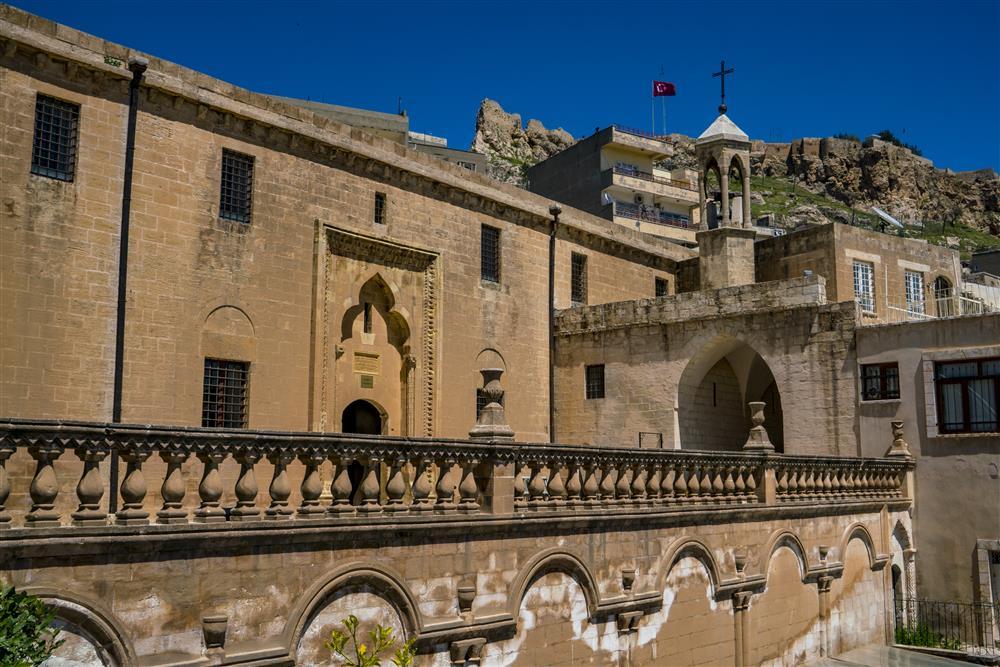
Exterior Facade of Mardin Museum with Historical Stone Architecture (Ministry of Culture and Tourism of the Republic of Türkiye)
The Mardin Museum collection comprises over 45,000 artifacts covering a broad historical span from the Paleolithic Age to the 19th century.【4】
The archaeological collection includes:
The ethnographic collection reflects cultural elements specific to Mardin and its surroundings, including:
In the open exhibition areas, stone artifacts from Mesopotamian civilizations are displayed, while indoor halls present thematic arrangements to visitors.
The museum has adopted a thematic exhibition approach in line with contemporary museology. Exhibition areas are organized around themes such as production, trade, belief, daily life, and power.
The ground floor contains open exhibition areas, educational halls, and visitor service zones, while upper floors house archaeological finds and thematic galleries.
In addition, the museum includes:
Mardin Museum is not merely an exhibition space but also a center for educational and research activities. Workshops organized within the museum include coin minting, ebru (marbling), ceramic making, and traditional art practices.
The specialized library, established in 2010, serves researchers in archaeology, art history, and related disciplines with approximately 20,000 sources.【5】
In addition, the museum contributes to uncovering the region’s cultural heritage by participating in excavations and research activities at Dara Ancient City, Mardin Castle, and various surrounding archaeological sites.
The restoration and conservation laboratory operating within Mardin Museum stands out as one of the first analytical laboratories established within a museum in Türkiye. Scientific analyses of stone, ceramic, metal, and organic materials are conducted here, along with restoration processes.
In this regard, the museum serves as an important center not only for exhibition but also for the preservation and scientific study of cultural heritage.
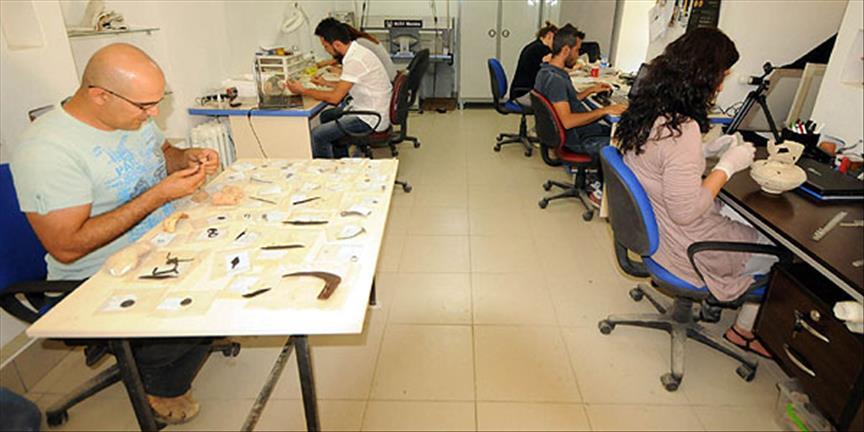
Restoration, Conservation and Analysis Laboratory Established within the Museum (Anadolu Ajansı)
In line with contemporary museology, Mardin Museum operates as an institution centered on community engagement. Through festivals, educational programs, cultural events, and social projects, the museum contributes to the revitalization of local culture.
In this context, the museum is regarded not only as an institution displaying the past but also as a dynamic social space that supports cultural continuity.
Anadolu Ajansı. "Müze Bünyesinde Kurulan İlk Laboratuvar." Anadolu Ajansı, September 17, 2011. Accessed April 7, 2026. https://www.aa.com.tr/tr/kultur-sanat/muze-bunyesinde-kurulan-ilk-laboratuvar/412403
Anadolu Ajansı. “Tarihi Mardin Müzesi Ziyaretçilerini Medeniyetler Yolculuğuna Çıkarıyor.” *AA Haber*, January 18, 2023. Accessed April 7, 2026. https://www.aa.com.tr/tr/kultur/tarihi-mardin-muzesi-ziyaretcilerini-medeniyetler-yolculuguna-cikariyor/3253256
Batuhan, Tuğba. “Kültürel Miras ve Müze İlişkisi: Mardin Müzesi.” Journal of Literature and Humanities 70 (2023): 85-91. Accessed April 7, 2026. https://dergipark.org.tr/tr/download/article-file/3245861
Culture Portal. "Mardin Müzesi." Ministry of Culture and Tourism of the Republic of Türkiye. Accessed April 7, 2026. https://www.kulturportali.gov.tr/portal/mardinmuzesi
Mardin Müzesi Directorate of Culture and Tourism. "Mardin Museum." Türkiye Cumhuriyeti Kültür veTurizm Bakanlığı. Accessed April 7, 2026. https://mardin.ktb.gov.tr/TR-317086/mardin-muzesi.html
Mardin Valiliği. “Yeni Müzeler.” Mardin Valiliği Resmî Web Sitesi. Accessed April 7, 2026. https://www.mardin.gov.tr/yeni-muzeler
[1]
Kültür Portalı, “Mardin Müzesi”, Türkiye Cumhuriyeti Kültür ve Turizm Bakanlığı, Erişim Tarihi: 6 Nisan 2026, https://www.kulturportali.gov.tr/portal/mardinmuzesi
[2]
Mardin İl Kültür ve Turizm Müdürlüğü, “Mardin Müzesi”, Türkiye Cumhuriyeti Kültür ve Turizm Bakanlığı, Erişim Tarihi: 6 Nisan 2026, https://mardin.ktb.gov.tr/TR-317086/mardin-muzesi.html
[3]
Mardin İl Kültür ve Turizm Müdürlüğü, “Mardin Müzesi”, Türkiye Cumhuriyeti Kültür ve Turizm Bakanlığı, Erişim Tarihi: 6 Nisan 2026, https://mardin.ktb.gov.tr/TR-317086/mardin-muzesi.html
[4]
Kültür Portalı, “Mardin Müzesi”, Türkiye Cumhuriyeti Kültür ve Turizm Bakanlığı, Erişim Tarihi: 6 Nisan 2026, https://www.kulturportali.gov.tr/portal/mardinmuzesi
[5]
Kültür Portalı, “Mardin Müzesi”, Türkiye Cumhuriyeti Kültür ve Turizm Bakanlığı, Erişim Tarihi: 6 Nisan 2026, https://www.kulturportali.gov.tr/portal/mardinmuzesi

Henüz Tartışma Girilmemiştir
"Mardin Museum" maddesi için tartışma başlatın
History
Architectural Features
Collection and Exhibition
Exhibition Design and Spatial Organization
Scientific and Educational Activities
Restoration and Conservation Efforts
Cultural and Social Role