


Bu içerik Türkçe olarak yazılmış olup yapay zeka ile otomatik olarak İngilizceye çevrilmiştir.
In northern Italy, in the Fassa Valley of the Trentino-Alto Adige region, the town of Moena, located at place, stands out for its geography and its layered historical and cultural fabric. The neighborhood known as "Turchia" and the La Turchia Festival, celebrated in this neighborhood for nearly 300 years, have become central to Moena’s Turkish identity. However, Moena’s designation as a “Turkish village” is not merely a folkloric narrative; it is a multifaceted phenomenon rooted in historical, social, and symbolic dimensions.
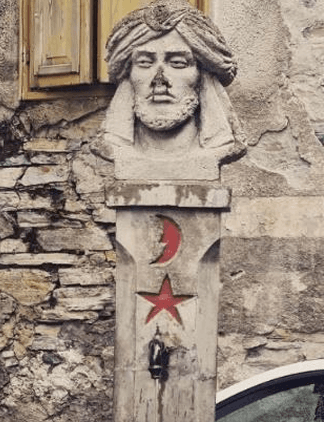
Statue of Ottoman Janissary Hasan Balaban (Cristiano Bedin Archive)
Moena is a historic town with continuous settlement since the 12th century. Situated at an elevation of approximately 1,200 meters, close it lies at the foot of the Dolomite Mountains within the Ladinia region. It has a population of around 2,600. In this area, where the Ladin population is concentrated, ethnic and linguistic diversity is notable. City The town center consists of traditional Ladin-style Alp stone houses. Historical memory identity is also visually maintained through religious structures and various monuments.
Society The local economy is dominated by small-scale agriculture and tourism. Winter Tourism, centered on ski resorts and hiking trails during the summer months, serves as a key income source for Moena. Yet one of the foundational pillars of its social memory is the Turchia neighborhood and its festival, both associated with the Ottomans.
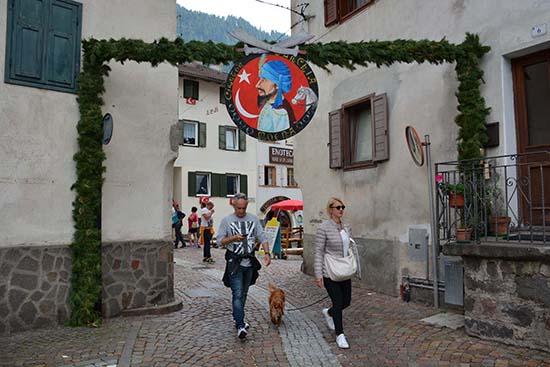
The figure most closely associated with Moena’s Turkish identity is an Ottoman janissary known as “Balabanlı Hasan.” According to legend, Hasan lost contact with his army during the 1683 Siege of Vienna and fled into the mountains, seeking refuge in Moena. There, his diligence, sense of justice, and leadership won the hearts of the local people. He is said to have led the community in resistance against German tax officials. This event narrative led to Hasan being embraced as a savior and liberator leader; after his death, his memory was preserved through statues and festivals.
The La Turchia Festival is held annually in August in Moena’s “Turchia” neighborhood and is attributed to Turkish culture. One of the festival’s most striking features is participants dressing in costumes representing Ottoman sultans, janissaries, viziers, and concubines. Nevertheless, the figures portrayed in the parade are largely inspired by Orientalist imagery constructed by the Western world during the 15th and 16th centuries. This situation reveals the existence of a fictional and folkloric notion of “Turkishness” disconnected from contemporary Türkiye. In fact, the people of Moena aim not to display “Turkishness” but to elevate their own local distinctiveness.
Festival The festival has also merged with “Bastia,” a variant of the Ladin region’s traditional ritual of external marriage. Here, it is not the bride’s father who grants permission for the marriage, but the person dressed as the Ottoman sultan, the “sultan,” who bestows the license. This illustrates how the performance’s folkloric dimension has been enriched by historical and social layers.
A Documentary About the FestivalFilmart Television)
As expressed by Cristiano Bedin, the representation of Turkishness in Moena lacks any genuine historical foundation and is instead a constructed on folklore structure. The people of Moena have created a tourist gravity by employing visual and linguistic codes produced by the West over centuries to depict the Ottomans, thereby asserting a unique local identity has.
The influence of Turks in Italian culture has historically been complex and contradictory. On one hand, peaceful commercial and diplomatic relations were maintained with the Ottomans; on the other, expressions such as “Mamma li Turchi!” (Oh my, the Turks are coming!) conveyed fear and anxiety fear.
During the 15th and 16th centuries, city-states such as Venice, Florence, and Naples maintained intense contact with the Ottomans. This interaction influenced fields such as art, fashion, and literature. Yet this interaction was not always positive. Turks were frequently portrayed as barbaric, lustful, and embodiments of evil, leading to the establishment of expressions such as “fumare come un Turco” (to smoke like a Turk) and “bestemmia come un Turco” (to swear like a Turk).
The arrival of Ottoman envoys in Venice and the incorporation of Turkish motifs into Renaissance art are traces of mutual influence. Moena represents one such instance where these interactions have been transformed into folkloric imagery modern.
The historical and cultural process of Moena has also become a subject in literature and cinema. The novel “El Turco,” written by Orhan Yeniaras, recounts the story of the janissary Balaban, found wounded during the Second Siege of Vienna and rescued by the people of Moena.
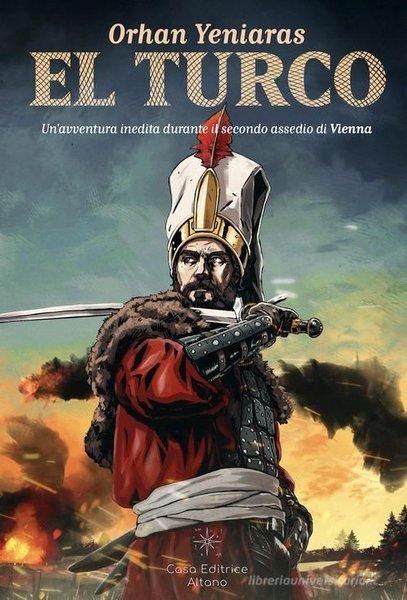
Orhan Yeniaras's Novel El Turco (D&R)
The television series El Turco, inspired by this book, is a six-part drama that tells the story of the janissary Balaban who settled in Moena in northern Italy after the 1683 Battle of Vienna and fought for the rights of the local population.
The Turkish Fragment (Ay Yapım)
The case of Moena represents a social fabric in which intercultural communication, historical perception, and folklore converge—an entity that cannot be explained solely by the local impact of a festival or a legend. The enduring presence of the Turkish image in Moena demonstrates how deeply imagery can become embedded in social memory. In this sense, Moena is a mosaic where history meets folklore, myth meets reality, and tradition meets relevance tradition.

Henüz Tartışma Girilmemiştir
"Moena: A Turkish Village in Italy" maddesi için tartışma başlatın
Moena’s Physical and Social Structure
Historical Background: Balabanlı Hasan
La Turchia Festival
Turkish Imagery in Moena
Turkish Traces in Italian Culture
Moena in Literature and Cinema