


Bu madde henüz onaylanmamıştır.
https://www.google.com/url?sa=i&url=https%3A%2F%2Fsporium.net%2Fprogressive-overload%2F&psig=AOvVaw320stpJZXl5QMNXNFHMCh2&ust=1752001150017000&source=images&cd=vfe&opi=89978449&ved=0CBQQjRxqFwoTCOiCtoS3q44DFQAAAAAdAAAAABAK
Muscle growth, or hypertrophy, refers to the volumetric increase of skeletal muscle mass and is one of the primary goals of resistance training. This process results from a combination of mechanical tension, metabolic stress, and muscle damage—each acting as a stimulus for adaptation (Schoenfeld, 2010). Muscle development is not solely dependent on exercising, but more critically on how that training is structured and progressed over time.
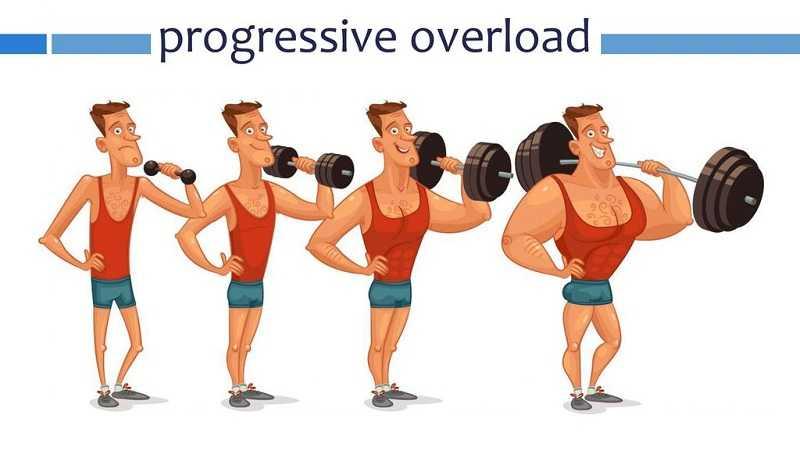
A central principle that governs muscle growth is progressive overload—the systematic and gradual increase of training stimulus over time. In order for muscles to grow and strengthen, they must be exposed to stimuli that exceed their current adaptive threshold. This paper explores the physiological foundations of muscle development and the application of progressive overload as a scientifically proven training methodology.
Muscle hypertrophy can be categorized into two types:
Resistance training induces microtrauma in muscle fibers. During recovery, the body repairs and overcompensates for this damage, resulting in increased muscle size and strength. This biological adaptation underlies the rationale for progressive overload: repeated exposure to gradually increasing stress leads to continual gains.
Progressive overload is the practice of gradually increasing the stress placed on the body during training. When a training stimulus becomes too familiar, the body adapts, and progress plateaus. To prevent stagnation, the intensity, volume, frequency, or density of training must be systematically increased (Ratamess et al., 2009).
Progressive overload can be achieved in multiple ways:
The overarching goal is to maintain a state of progressive stimulation that challenges the muscles to grow. Progressive overload is not only crucial for hypertrophy but also for enhancing neural adaptations, coordination, and muscular endurance.
Scientific studies support the notion that weekly training volume and intensity are major predictors of hypertrophy (Schoenfeld et al., 2016). However, the implementation of progressive overload must be tailored to individual factors such as training age, recovery capacity, genetic predisposition, and overall program structure.
Practical recommendations for implementing progressive overload include:
It's essential to monitor recovery because exceeding one's capacity for adaptation can result in overtraining syndrome, characterized by performance decrements, chronic fatigue, and increased risk of injury.
Muscle development is a systematic and scientifically grounded process that requires proper planning, consistency, and progressive challenge. The principle of progressive overload is fundamental to this process, ensuring that the muscles are constantly being stimulated beyond their current capabilities. Without progression, the body has no reason to adapt, and development stalls.
Achieving sustainable muscle growth and strength gains demands a holistic approach—well-structured training, adequate recovery, proper nutrition, and intelligently applied overload strategies. When these elements are aligned, hypertrophy becomes not just a physical transformation but a measurable, scientific outcome.
Schoenfeld, B. J. (2010). The mechanisms of muscle hypertrophy and their application to resistance training. Journal of Strength and Conditioning Research, 24(10), 2857–2872.
Ratamess, N. A. (2009). ACSM’s Foundations of Strength Training and Conditioning. Wolters Kluwer/Lippincott Williams & Wilkins.
Schoenfeld, B. J., Ogborn, D., & Krieger, J. W. (2016). Effects of resistance training frequency on measures of muscle hypertrophy: a systematic review and meta-analysis. Sports Medicine, 46(11), 1689–1697.
Zatsiorsky, V. M., & Kraemer, W. J. (2006). Science and Practice of Strength Training. Human Kinetics.

https://www.google.com/url?sa=i&url=https%3A%2F%2Fsporium.net%2Fprogressive-overload%2F&psig=AOvVaw320stpJZXl5QMNXNFHMCh2&ust=1752001150017000&source=images&cd=vfe&opi=89978449&ved=0CBQQjRxqFwoTCOiCtoS3q44DFQAAAAAdAAAAABAK
Henüz Tartışma Girilmemiştir
"Muscle Growth and the Principle of Progressive Overload" maddesi için tartışma başlatın
Bu madde yapay zeka desteği ile üretilmiştir.