


Bu içerik Türkçe olarak yazılmış olup yapay zeka ile otomatik olarak İngilizceye çevrilmiştir.
+4 Daha
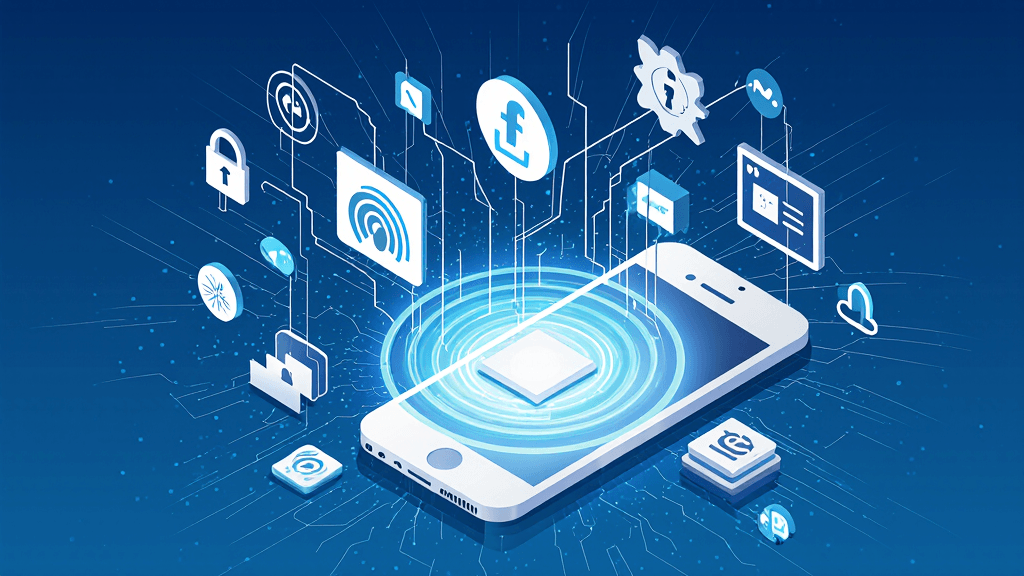
Yapay zeka ile oluşturulmuştur.
Near Field Communication (NFC) is a communication technology that enables short-range wireless data transfer. Developed as a specialized form of Radio Frequency Identification (RFID) systems, it allows secure, two-way data transmission between devices operating typically at distances of a few centimeters. NFC is based on the principle of electromagnetic induction; low-power radio waves generated by an antenna coil in one device induce current in the antenna of another device, enabling data exchange.
This technology operates at a frequency of 13.56 megahertz and can transfer data at rates up to 424 kilobits per second. It has three primary operating modes: reader/writer mode, card emulation mode, and peer-to-peer communication mode. In reader/writer mode, a device communicates with a passive NFC tag; in card emulation mode, the device behaves like a contactless card; in peer-to-peer mode, data is exchanged between two active devices.
NFC is widely used in areas such as contactless payments, public transportation systems, access control, authentication, device pairing, and smart poster applications. The technology is supported by encryption, authentication, and transaction verification protocols for secure operations. Due to its low energy consumption, NFC has been adopted as an efficient communication solution in mobile devices, smart cards, and wearable technologies.
Near Field Communication (NFC) is a short-range wireless communication standard developed as a subset of High Frequency (HF) Radio Frequency Identification (RFID) technology and operating at 13.56 megahertz. Its defining feature is its operation over a distance of only a few centimeters. For two NFC-compatible devices to exchange data, they must either be in direct contact or positioned within approximately 4–10 centimeters of each other. This limited range enhances security by protecting communication from external interference.
Unlike standard RFID systems, NFC supports two-way communication. In a typical RFID system, data transfer occurs unidirectionally from the tag to the reader, whereas NFC devices can function as both readers and tags. This capability enables direct interaction between two devices for information sharing. For example, two smartphones can exchange photos, contact details, or files simply by touching them together, without requiring Wi-Fi or cellular data connections. NFC technology has three primary operating modes based on its functions.
NFC’s short-range, low-power, and two-way communication capabilities have enabled its adoption in numerous applications including mobile payments, public transportation, authentication, access control, and smart tag systems.

NFC Technology (Generated by Artificial Intelligence)
Near Field Communication (NFC) has a broad range of applications across multiple industries due to its short-range and low-power wireless communication features.
In the Retail and Payment Systems sector, NFC forms the foundation of contactless payment technology. Smartphones, tablets, or smartwatches can complete payment transactions by approaching them within a few centimeters of point-of-sale (POS) terminals. This method reduces the need for physical cards, shortens transaction times, and enhances security. Mobile payment platforms such as Apple Pay, Google Pay, and Samsung Pay utilize this technology.
In Transportation and Ticketing systems, NFC is widely used for electronic ticketing and access control. Passengers can achieve rapid entry by tapping their NFC-enabled cards, smartphones, or wearable devices against reader terminals. This system provides a seamless and integrated transit experience on metro, bus, and train networks.
In Access Control and Security applications, NFC is used to authorize entry to buildings or offices. NFC-enabled ID cards or smartphones can unlock doors when touched against access points. This approach offers a more secure and manageable solution compared to traditional magnetic cards.
In the Healthcare sector, NFC is used for patient authentication, data transfer from medical devices, and monitoring maintenance procedures. NFC-enabled wristbands or cards simplify verification of patient identities and support data security.
In Marketing and Interactive Applications, NFC tags are embedded in smart posters, product packaging, or exhibition panels. Users can access web pages, applications, or promotional content by bringing their device close to the tag.
In Smart Home and Internet of Things (IoT) systems, NFC enables rapid device pairing and connection establishment. For example, a speaker, printer, or router can be automatically recognized and connected through a brief touch from a smartphone.
Thanks to these features, NFC is applied in many aspects of daily life as a secure, user-friendly, and low-power communication method.

Yapay zeka ile oluşturulmuştur.
Henüz Tartışma Girilmemiştir
"NFC Technology" maddesi için tartışma başlatın
NFC (Near Field Communication) Technology
Applications and Industries