

Bu içerik Türkçe olarak yazılmış olup yapay zeka ile otomatik olarak İngilizceye çevrilmiştir.
+2 Daha
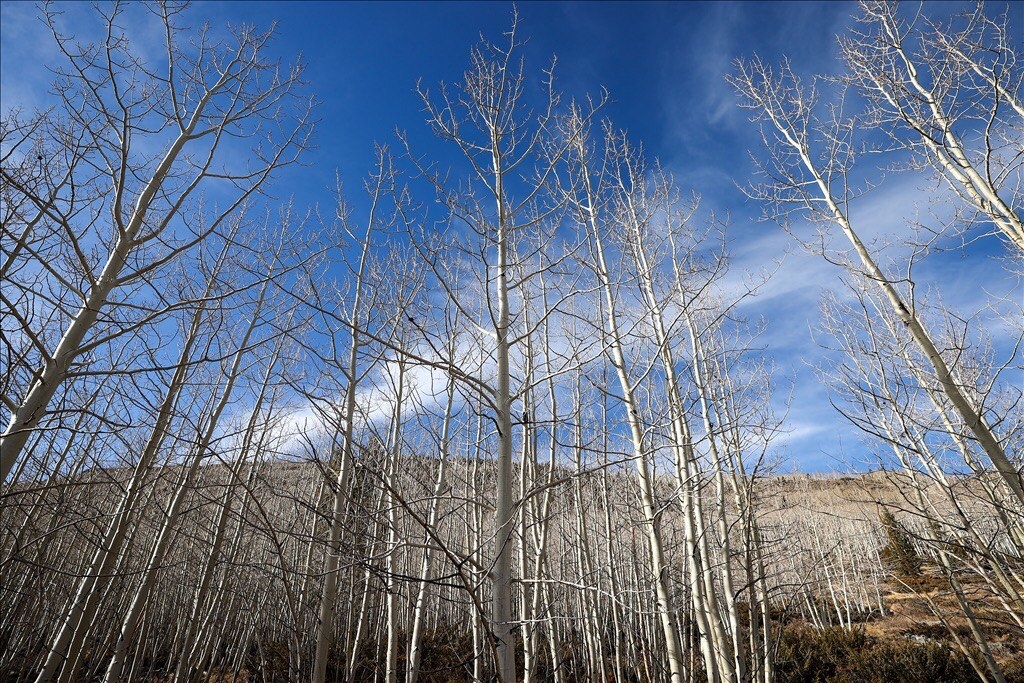
Pando (Populus tremuloides) is a massive clonal colony of quaking aspen located in the state of Utah in the United States of America. Recognized as one of the largest and heaviest living organisms on Earth, it consists of thousands of trunks that arise from a single, interconnected root system underground. All trunks share identical genetic material and persist through clonal reproduction.

Pando (Anadolu Ajansı)
Pando is situated on a mountainous plateau within the Fish Lake Basin in central Utah. The colony covers approximately 106 acres (about 43 hectares), and while its above-ground trunks appear as independent individuals, they are all connected beneath the soil by a continuous, shared root system. This root network enables the entire colony to function as a single biological entity, with all trunks drawing nutrients and water through this common system.【1】
The colony exhibits a patchy distribution of trunks from different age classes, continuously renewed over time by the death of older trunks and the emergence of new shoots. Trunk diameter and height vary across the area; some sections are dominated by young, slender trunks while others contain thicker, older ones. This mosaic pattern prevents synchronous aging across the entire colony and instead supports simultaneous, spatially distinct phases of renewal.
Reproduction in Pando occurs through shoots emerging from underground roots, a form of vegetative regeneration independent of seed production. New trunks develop directly from existing root tissue, enabling rapid local expansion within the colony’s boundaries. Although each trunk appears as an independent organism, the entire structure functions as a single physiological system. Simultaneous shoot formation is observed at multiple locations within the colony, sustaining a continuous cycle of trunk turnover across the landscape.

Pando (Pexels)
The spatial limits of clonal expansion are not defined solely by root shoots; evidence of root fusion between different sections of the colony indicates that genetically identical root networks have merged over time. These connections facilitate the movement of water, nutrients, and energy between distant parts of the colony. Additionally, plant fragments transported by water or animal activity may contribute to the formation of new shoot zones. These processes allow Pando to expand not from a single central point but from multiple locations over time.
The genetic profiles of all trunks in Pando are identical, confirming the colony as a single clonal organism. Minor genetic differences detected among trunks are attributed to somatic mutations occurring during cell division. These mutations exhibit an irregular spatial distribution, with some regions showing more pronounced genetic divergence. Nevertheless, the overall genetic uniformity of the entire colony is maintained.

Pando (Pexels)
Estimates for the age of the Fish Lake Basin where Pando is located range from 16,000 to 80,000 years.【2】 This timeframe relates to the formation of the lake and reflects the long-term stability of the ecological environment in which Pando exists. While no single age is assigned to the colony itself, it is acknowledged that the clonal structure has persisted in the same location throughout this extended period.【3】
The Pando colony provides habitat for numerous plant and animal species through the structural diversity offered by quaking aspen stands. Aspen trunks, bark structure, and leaf litter create shelter and foraging grounds for birds, invertebrates, and understory plants. Additionally, the root system and accumulation of organic matter enhance soil moisture retention and support nutrient cycling. These characteristics contribute to higher species diversity in aspen colonies compared to surrounding coniferous forests.
A key threat to Pando is the limited development of new shoots, which reduces the colony’s natural capacity for renewal. Intensive herbivory, particularly by deer and cattle feeding on young aspen sprouts, prevents new trunks from maturing. Furthermore, past fire suppression policies and changes in land use have diminished natural disturbance processes that historically supported aspen regeneration. Together, these factors underscore the need for active conservation measures to ensure the long-term viability of the colony.【4】

Pando (Anadolu Ajansı)
Quaking aspen colonies, due to their broad geographic distribution and the habitat they provide for numerous species, play a vital role in preserving biodiversity across the Northern Hemisphere. Pando serves as a striking example of how a single genetic individual can occupy an extensive area, illustrating the ecological importance of clonal plant systems. Such structures demonstrate that conserving widespread, species-rich ecosystems requires safeguarding not only individual species but also the integrity of large-scale ecological networks.
[1]
Jennifer B. DeWoody, Karen E. Mock, Valerie D. Hipkins ve Paul Q. Wolf, "‘Pando’ Lives: Molecular Genetic Evidence of a Giant Aspen Clone in Central Utah," Western North American Naturalist 68, no. 4 (2008): p. 493, Last Access: 28 January 2026, https://www.researchgate.net/publication/232694337_Pando_Lives_Molecular_Genetic_Evidence_of_a_Giant_Aspen_Clone_in_Central_Utah
[2]
Matt Nailor, "Pando: The Not-So-Old Oldest Tree," Journal of Biological Education (2025): p. 2, Last Access: 28 January 2026, https://www.academia.edu/143763659/Pando_The_not_so_old_oldest_tree?sm=b&rhid=37579220568
[3]
Matt Nailor, "Pando: The Not-So-Old Oldest Tree," Journal of Biological Education (2025): p. 2, Last Access: 28 January 2026, https://www.academia.edu/143763659/Pando_The_not_so_old_oldest_tree?sm=b&rhid=37579220568
[4]
Paul C. Rogers, Bradley D. Pinno, Jan Šebesta, Benedicte R. Albrectsen, Guoqing Li, Natalya Ivanova, Antonín Kusbach, Timo Kuuluvainen, Simon M. Landhäusser, Hongyan Liu, Tor Myking, Pertti Pulkkinen, Zhihua Wen ve Dominik Kulakowski, "A Global View of Aspen: Conservation Science for Widespread Keystone Systems," Global Ecology and Conservation 21 (March 2020): pp. 9–16, Last Access: 28 January 2026, https://www.sciencedirect.com/science/article/pii/S2351989419305803?via%3Dihub

Henüz Tartışma Girilmemiştir
"Pando (Populus tremuloides)" maddesi için tartışma başlatın
Location and Physical Structure
Reproduction and Clonal Spread
Genetic Structure and Age Estimates
Ecological Functions
Conservation Status and Threats
Global Significance