


+2 Daha

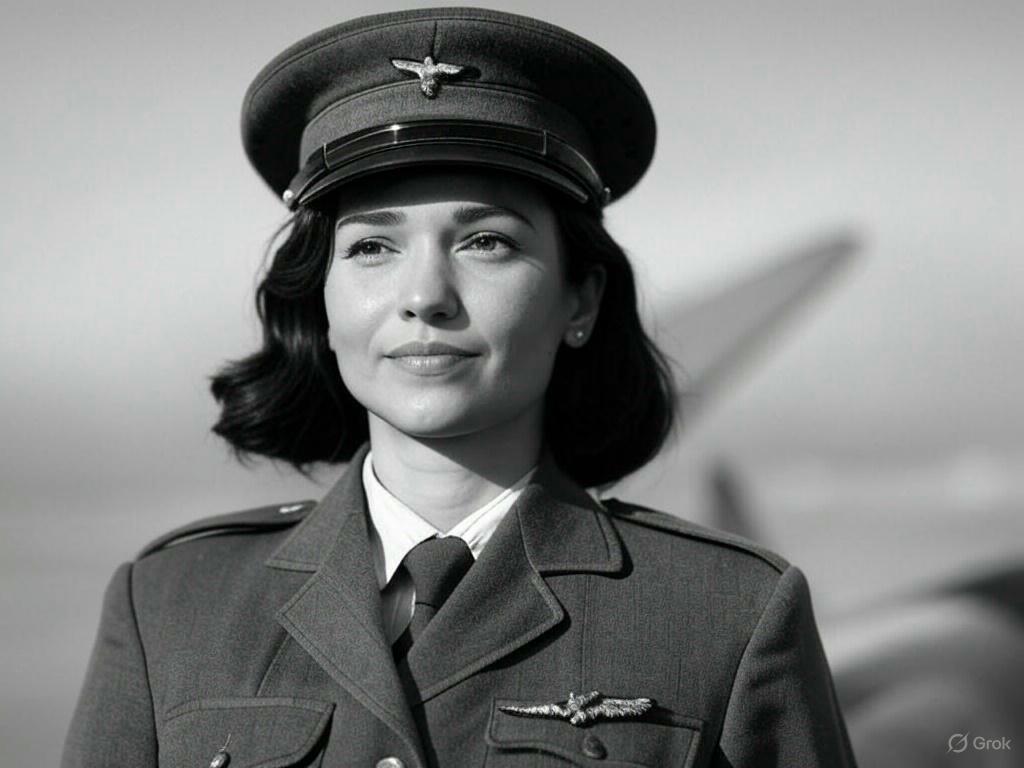
Sabiha Gökçen is Türkiye’s first female pilot and the world’s first female war pilot. Raised in line with the goal of making women more active and visible in public life following the proclamation of the Republic, she became one of the iconic symbols of the Turkish woman. Through her contributions to aviation and her international achievements, she became a recognized figure not only in Türkiye but also on the global stage.
Sabiha Gökçen was born on 22 March 1913 in Bursa. Her father was Mustafa İzzet Lord, Chief Secretary of the Bursa Province, and her mother was Hayriye Hanım. Orphaned at the age of small after losing both her mother and father, Sabiha endured difficult economic and social conditions alongside her siblings. During this period, they had to cope with the hardships brought by wartime conditions.
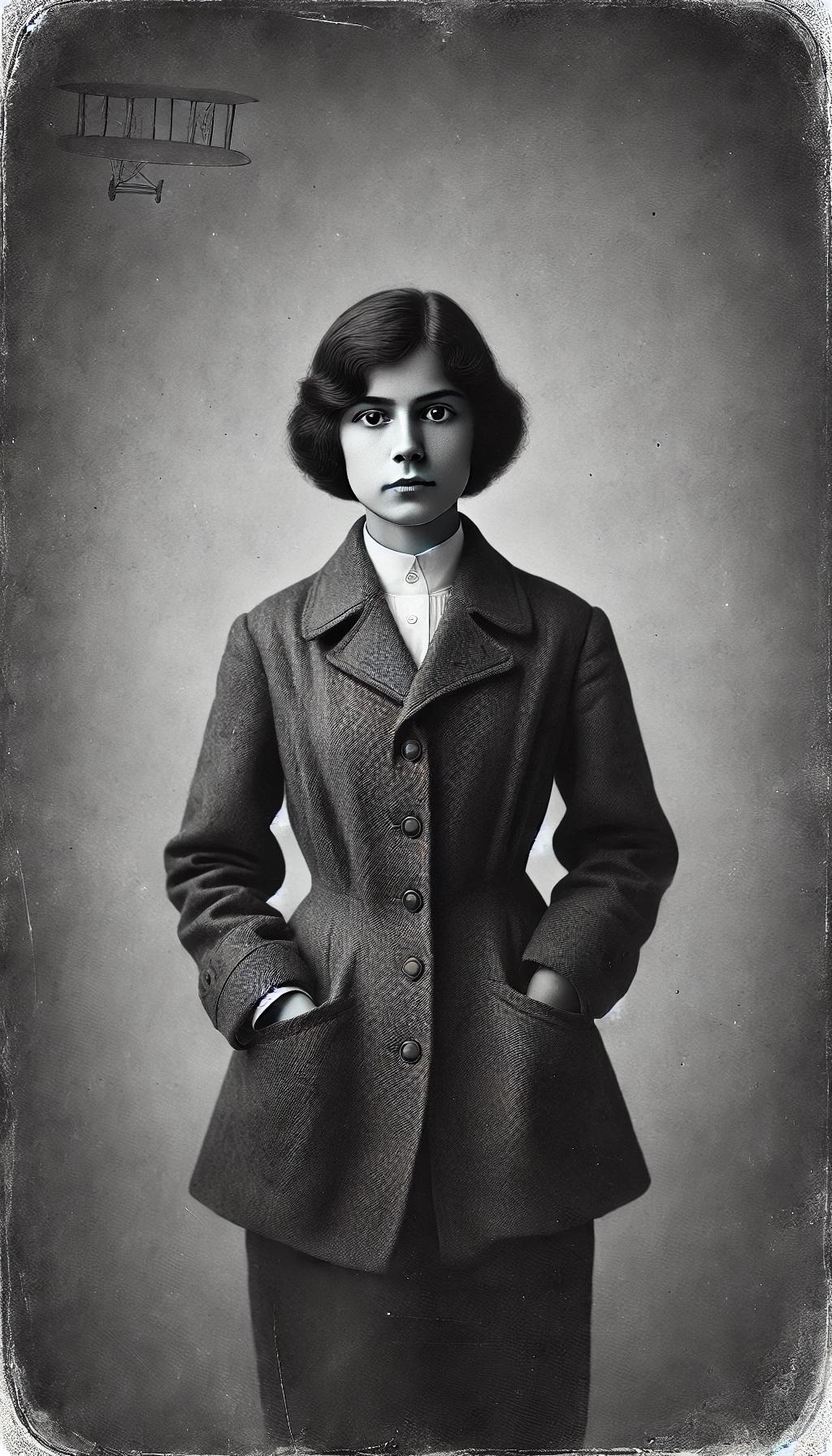
Generated with the help of artificial intelligence.
Atatürk’s visit to Bursa between 22 September and 8 October 1925 is regarded as a turning point in Sabiha’s life. During the visit, she met Atatürk and expressed her desire to receive an education and attend a boarding school. Atatürk accepted her request favorably, adopted her as his spiritual daughter, and took her to Ankara, thereby beginning a new chapter in her life.
Sabiha Gökçen, taken to Ankara, began her education at Çankaya Primary School. Early in her schooling, disruptions occurred due to conflicts and disagreements with her teachers. However, following direct intervention by Atatürk, the educational environment became more disciplined, and this experience became one of the fundamental elements shaping her understanding of education.
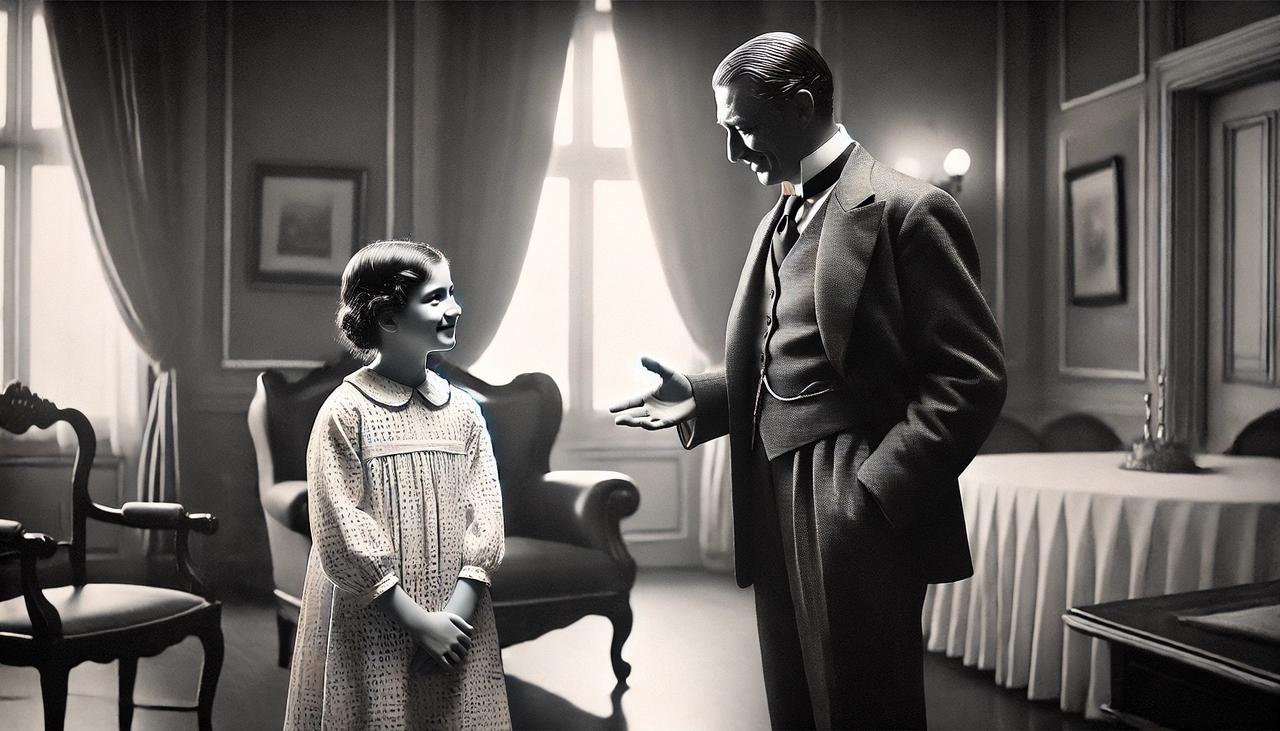
Generated with the help of artificial intelligence.
After completing primary education, Gökçen continued her studies at Arnavutköy Girls’ College in Istanbul and the Üsküdar American Girls’ College. During this time, she experienced health problems and was forced to pause her education to receive treatment in Heybeliada and Vienna. Later, she traveled to Paris to study French, gaining valuable opportunities to improve her language skills.
In 1934, following the adoption of the Surname Law, Atatürk bestowed upon Sabiha the surname “Gökçen.” He chose this surname to encourage young people’s interest in aviation. This change marked a significant transformation in Sabiha’s life and influenced her future career choice.
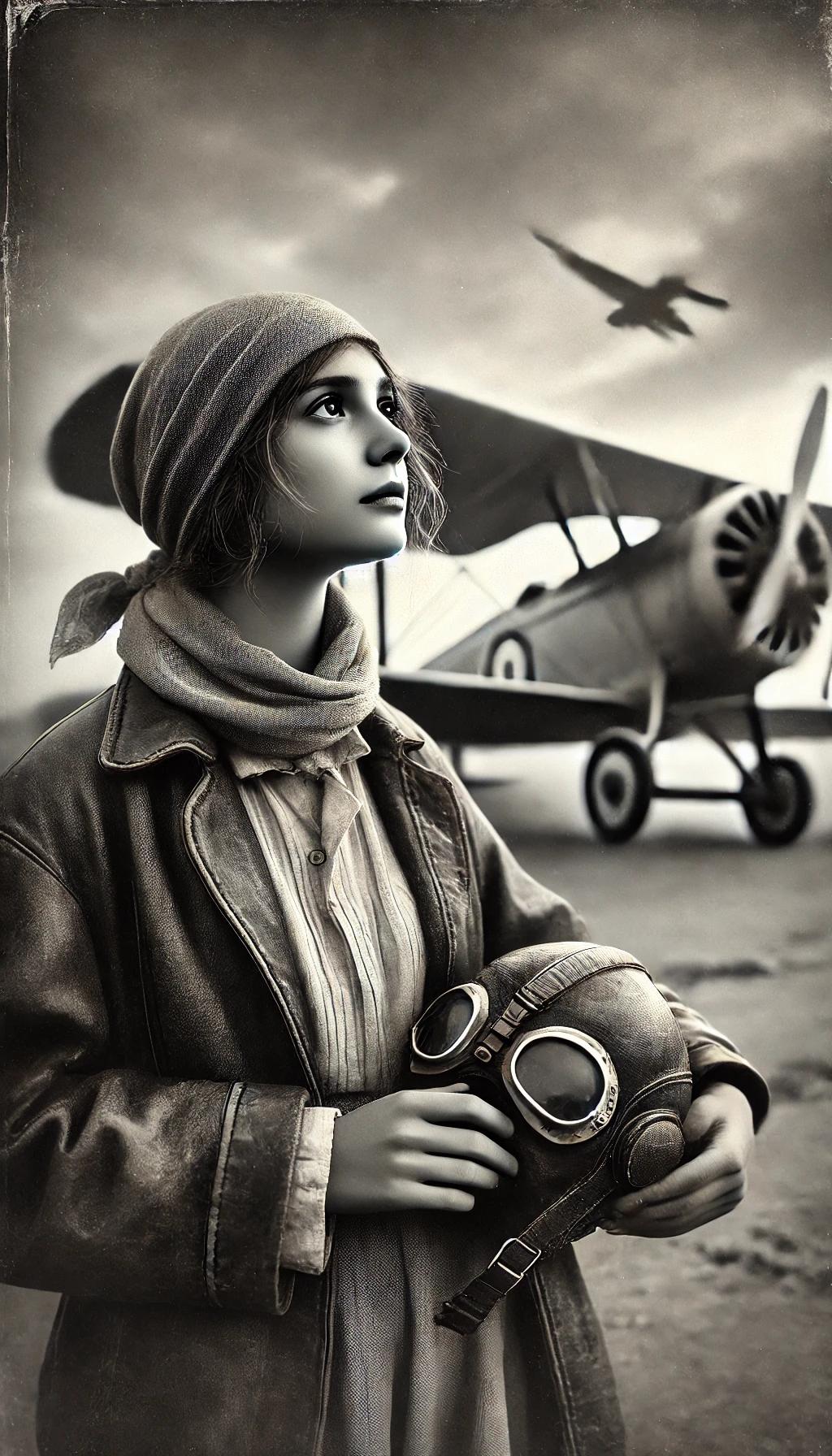
Generated with the help of artificial intelligence.
After adopting the surname “Gökçen,” she began to be known by this name in her social circles. This change in name is seen as a pivotal moment in setting new personal and professional goals. The symbolic meaning of the surname reinforced her interest and orientation toward a career in aviation.
Sabiha Gökçen’s interest in aviation emerged during the ceremony of the Turkishkuşu aircraft, organized by the Turkish Aeronautical Association on 3 May 1935. Inspired by the aviation demonstrations there and encouraged by Atatürk, she turned her focus to this field and became the first female student to enroll in the training program.

Generated with the help of artificial intelligence.
Atatürk regarded aviation as one of the symbols of Türkiye’s modernization process. In this context, Sabiha’s entry into aviation was viewed and supported as part of the state’s social modernization policies. This support became a major source of motivation throughout her career.
Sabiha Gökçen, selected as part of the first group of students sent by the Turkish Aeronautical Association to the Koktebel Higher Glider School in the Soviet Union, began her training on 10 July 1935. During her education, she excelled and earned the title of “Glider Instructor.” She completed her first powered flight on 25 February 1936.
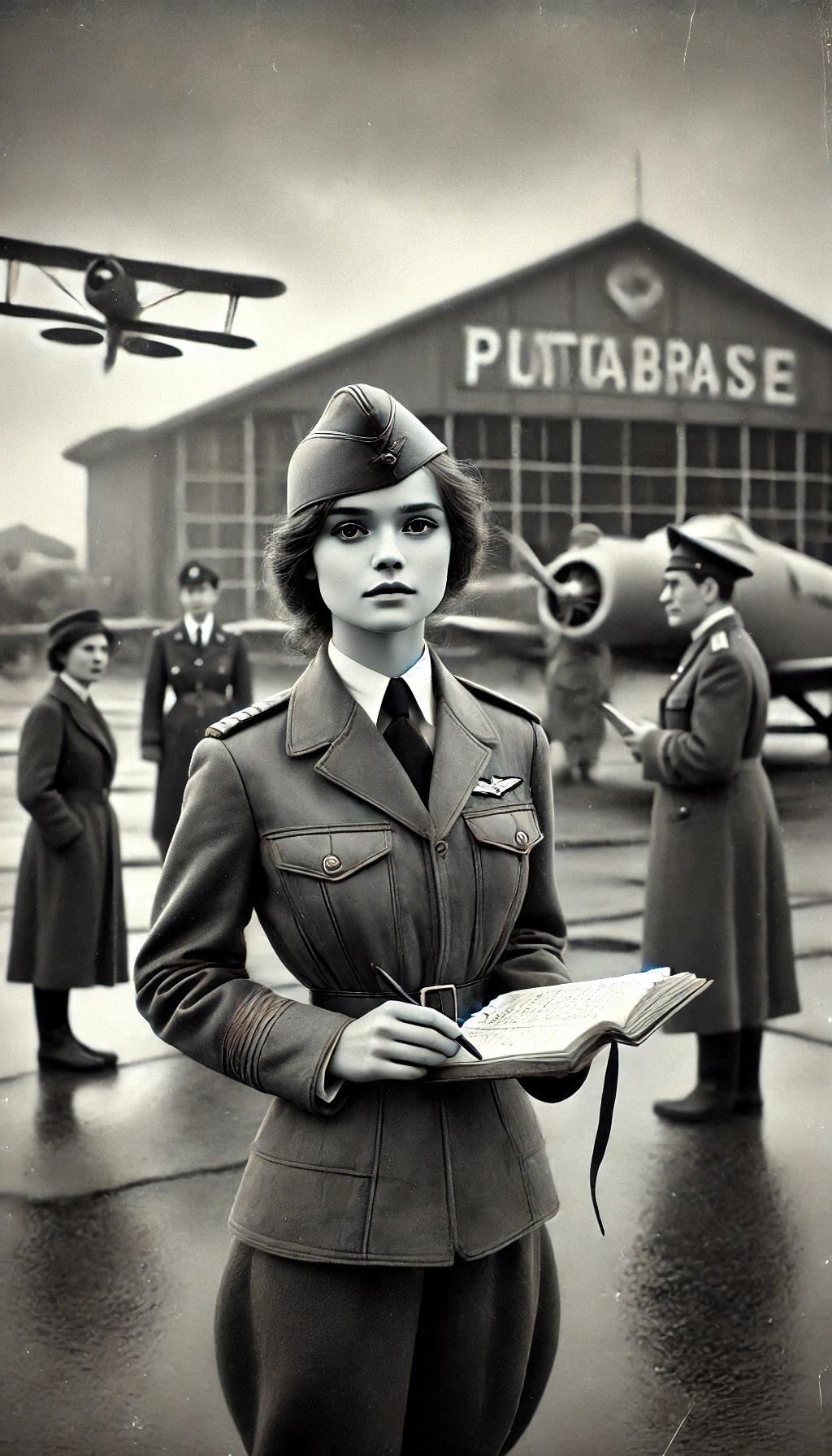
Designed with the help of artificial intelligence.
After completing her training in Crimea, Sabiha planned to continue her education at the Motor Aircraft School in Moscow. However, upon receiving news of her sister Zehra’s illness, she abandoned her studies and returned to Türkiye. Upon her return, she served as an instructor at Türkkuşu.
In 1937, Gökçen completed her military pilot training at Eskişehir Air School, becoming Türkiye’s first female military pilot. The same year, by participating in the Dersim Operation, she became the world’s first female combat pilot on world. This milestone is regarded as a turning point in her career.
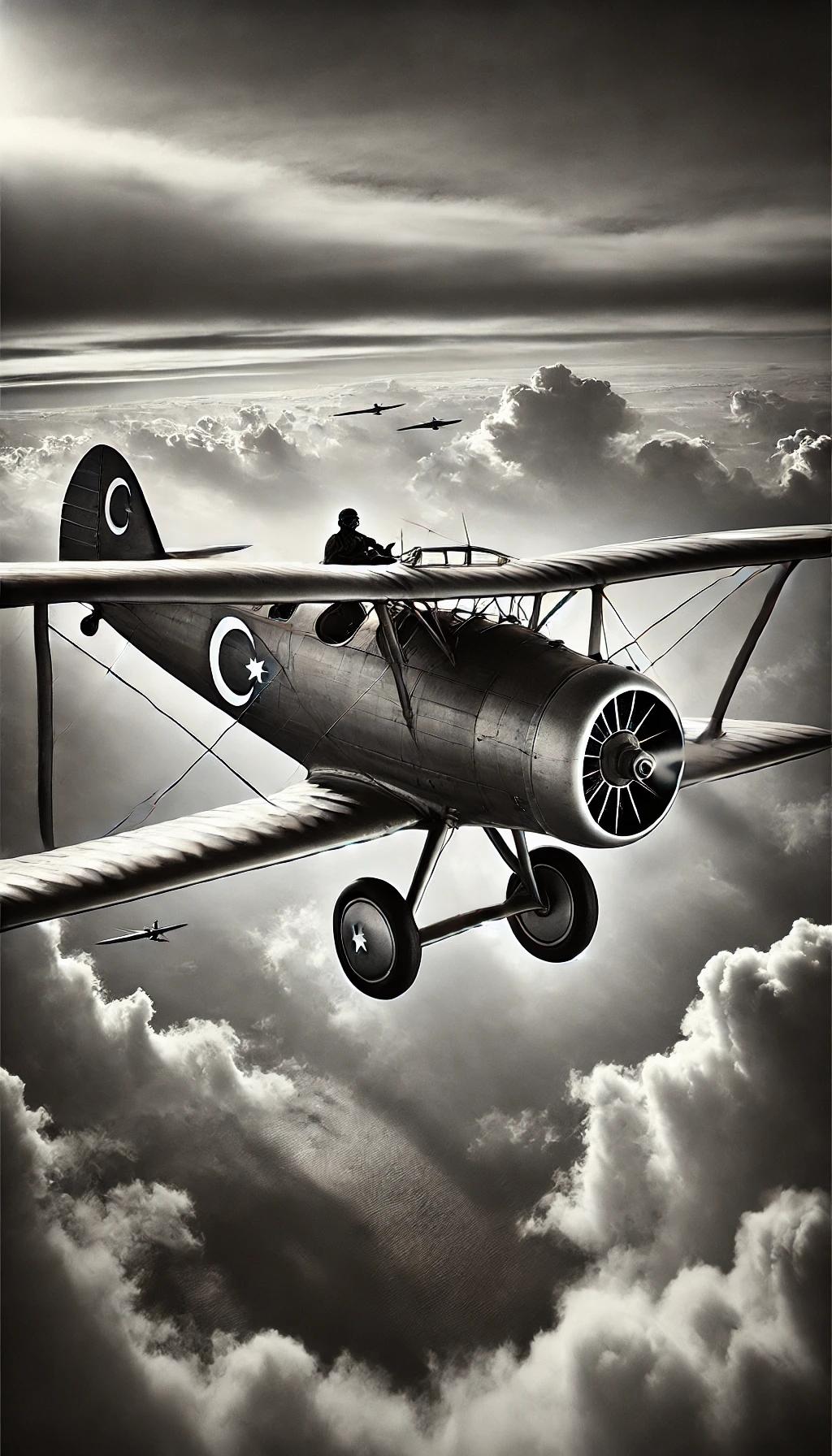
Designed with the help of artificial intelligence.
Sabiha Gökçen, who became a symbolic figure in the Republic’s modernization policies, further enhanced her symbolic importance by appearing in public events wearing her military uniform, as requested by Atatürk.
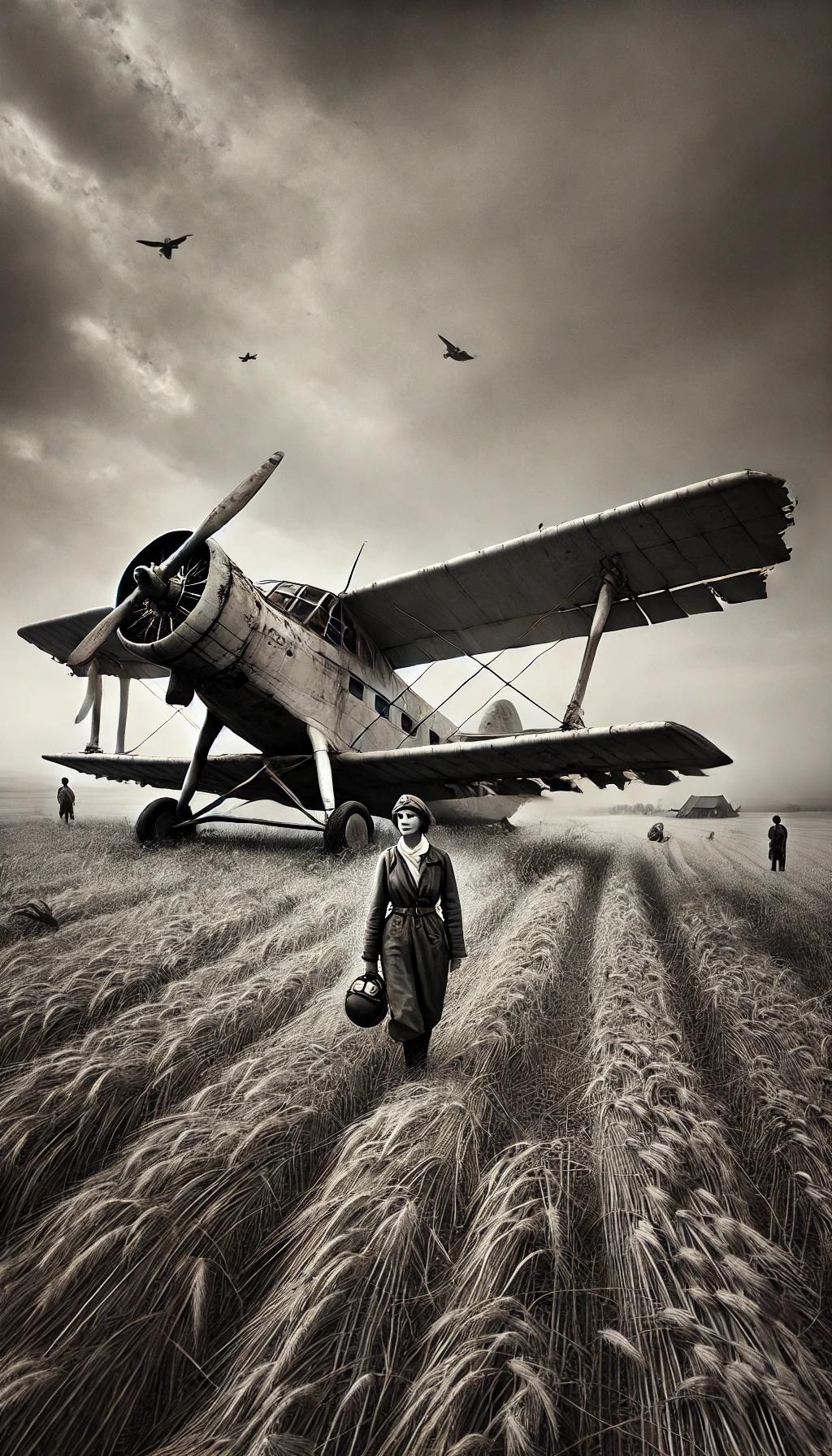
In 1938, Sabiha Gökçen undertook an aviation tour covering Balkan countries, flying solo. This initiative was organized to support Türkiye’s international peace policies.
Designed with the help of artificial intelligence.
During her return journey on 21 June 1938, a mechanical failure occurred and she was forced to make an emergency landing in the town of Bozau in Romania. This incident became one of the most significant and memorable moments of her Balkan tour.
In her personal life, Sabiha Gökçen married Hava Yüzbaşı Kemal Esiner, a topography teacher, in 1940. Contrary to the social norms of the time, instead of adopting her husband’s surname, Kemal Esiner embraced her surname “Gökçen.” However, their marriage lasted only short; Kemal Esiner died on 12 January 1943 due to the typhus pandemic. After her husband’s death, Sabiha Gökçen never remarried and devoted a large part of her life to aviation activities.
Although Sabiha Gökçen’s marriage was brief, her choice to retain and use her surname in marriage can be seen as a symbolic act of defiance against traditional societal norms. This marriage did not interrupt her social life or professional activities; on the contrary, it enabled her to continue her pioneering role in Turkish aviation history.
Sabiha Gökçen is regarded as one of the symbolic figures who enhanced women’s presence in public life during the Turkish modernization process. Her achievements as a military pilot were interpreted as evidence of the Republic’s policies toward women.
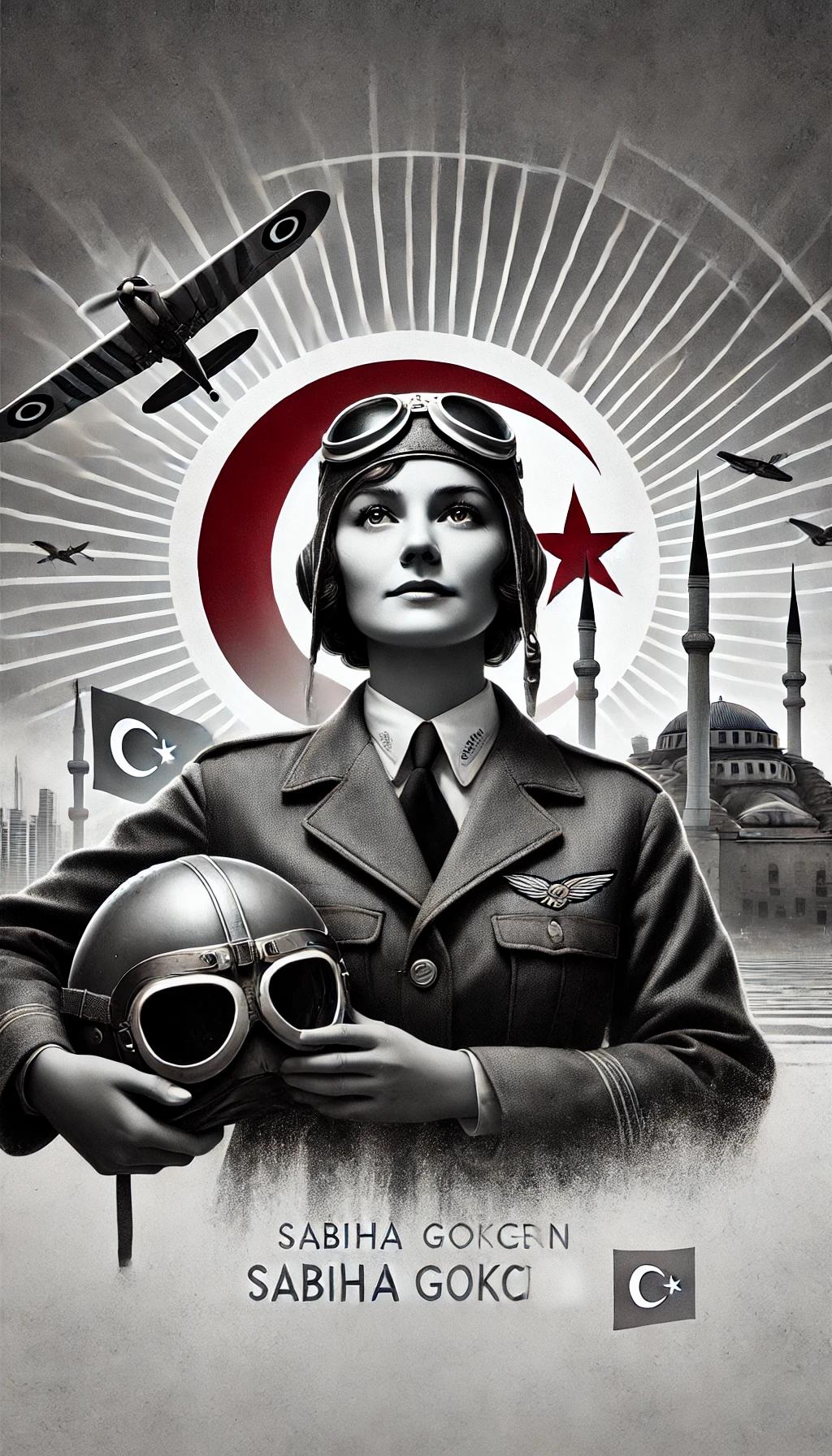
Designed with the help of artificial intelligence.
Her public presence and professional competence were seen as an example demonstrating that women could also succeed in diverse professions, and in this regard, she became one of the symbols of the modernization movement.
1. Turkish Aeronautical Association’s First Class Medal and Certificate: Awarded after the Dersim Operation.
2. Yugoslav Army’s White Eagle Order and Military Badge: Awarded by the Yugoslav Army following her flights to Balkan countries.
3. Romanian Army Aviation Badge: Awarded by the Romanian Army.
4. Trakya and Aegean Maneuvers Commemorative Medals: Awarded in recognition of her participation in military exercises.
5. 50th Anniversary Plaque of Turkish Women’s Right to Vote and Be Elected: One of the plaques awarded by the Grand National Assembly of Türkiye to pioneering women in their professions.
6. Honorary Doctorate from Selçuk University: Awarded in 1989.
7. International Aeronautical Federation (FAI) Gold Medal: Awarded in 1991 for her contributions to aviation.
8. Inclusion Among the 20 Aviators Who Made History: Received this honor in 1996 at a ceremony held at USA Maxwell Air Force Base.
9. 28 Plaques: Awarded by the military, various associations, and organizations.
Sabiha Gökçen died on 22 March 2001 due to heart failure. Since her death, numerous airports and educational institutions across Türkiye have been named in her honor to commemorate her legacy.
Even after her death, she continues to be recognized as one of the most significant figures in the advancement of aviation and the strengthening of women’s position in society.

Henüz Tartışma Girilmemiştir
"Sabiha Gökçen" maddesi için tartışma başlatın
Childhood and Meeting Atatürk
Educational Life
Adoption of Her Surname and Identity Formation
Beginning in Aviation
Foreign Education and Early Achievements
First Female Military and Combat Pilot
International Peace Mission
Personal Life
Symbol of Turkish Modernization for Women
Awards and Medals
Later Years and Death