


Bu içerik Türkçe olarak yazılmış olup yapay zeka ile otomatik olarak İngilizceye çevrilmiştir.
Hang gliding is a dynamic air sport that combines elements of paragliding and soaring, as a excitement vehicle capable of unpowered flight gains thousands of meters in altitude by riding rising thermal air currents and wind currents, enabling it to cover long distances. Flying a hang glider is regarded both as a sport and as a scientific exploration, because understanding its aerodynamics rules and flight principles is critical to a successful to understand and successful flight.
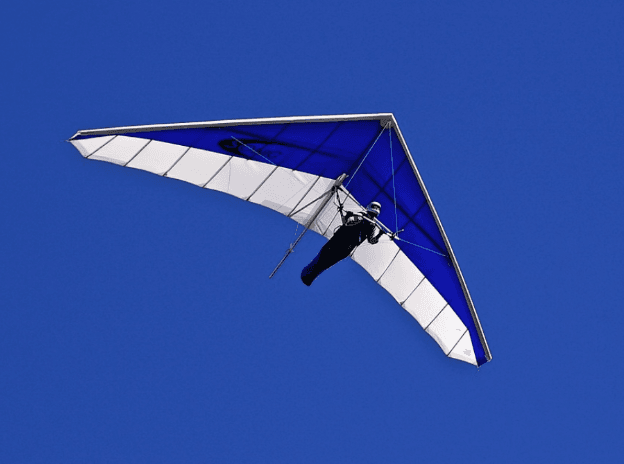
Hang glider (Source: Gazete Kadıköy)
A hang glider is typically constructed by stretching a specialized fabric over a frame made of aluminum or composite materials. The wing’s shape resembles the Greek letter “Δ” (Delta), and is therefore commonly referred to as a “delta wing.” During flight, the pilot hangs in a harness attached to the center of the wing, suspended like a pendulum such as movement. The pilot controls the speed, direction, and turning of the wing through body movements.
Hang gliders operate on the principle of gliding. That is, without an engine, they remain airborne for extended duration periods by utilizing thermal updrafts and wind currents deflected by ridges. This creates an aerodynamic system in which the pilot shifts the center of gravity to steer and maintain flight.
Hang gliding, as one of humanity’s oldest flying dreams, has undergone a profound evolution from ancient times to the present day. The earliest flight attempts began with Emperor Shun of China (2200 BCE), who tried to fly from a tower. This was a significant step along the path of early period flight experiments. Later, the Greek myth of Icarus and Daedalus became one of the earliest accounts capturing the excitement and dangers of flight. Daedalus, imprisoned in a labyrinth, crafted wings from feathers and wax for his son and gave him the chance to escape. Icarus’s flight ended when the wax melted and he fell into the sea, demonstrating how exhilarating flight can be—and how critically it demands caution experience.
In the Middle Era, Ahmet Çelebi flew from the Galata Tower in 1632, crossing the Bosporus and landing in Üsküdar. This is considered one of the first successful flights in history. However, due to the limited technology of the era, such flights often ended in dream failures.
Leonardo da Vinci, the great genius of the Renaissance era, conducted detailed studies on flight principles and designed mechanical flying machines inspired by bird anatomy. However, his designs failed because he did not understand that birds fly not only through muscle power but also through the precise structure of their wings kas.
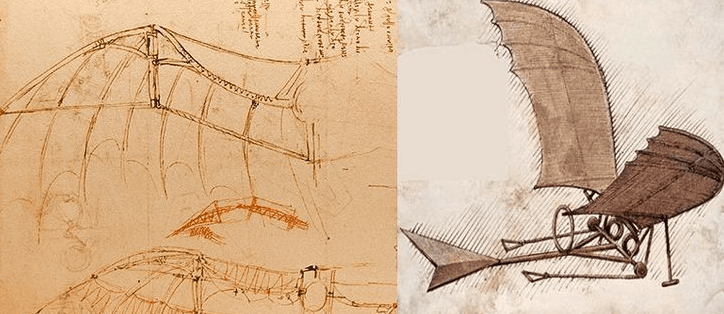
Leonardo da Vinci, Flight Principle (Source: )
In the 19th century, German engineer Otto Lilienthal built the first gliders resembling modern hang gliders and completed over 2,000 flights. These flights were a crucial step in understanding aerodynamic principles. Lilienthal’s gliders played a critical role in the development of aviation.
The foundations of the modern hang glider were laid in 1948 by NASA engineer Francis Rogallo. Rogallo’s first patent for flexible wings marked the beginning of the modern hang glider design. In the 1960s, his design transitioned to commercial production using bamboo and plastic materials.
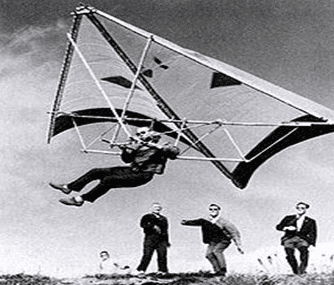
Francis Rogallo (Source: THK)
In 1966, Bill Moyes and Bill Bennett performed the first hang glider flight attached to skis. This is recognized as the beginning of modern hang gliding. Moyes used body weight and a trapeze harness to control the glider, while Bennett introduced the sport to the United States and helped popularize it there.
In the 1970s, hang gliding rapidly gained popularity in Europe and the United States, and hang gliding competitions began to be organized. In Germany, Mike Harker flew from the Zugspitze mountain and introduced hang gliding to Europe. In 1974, the Swiss Hang Gliding Club was founded and championships began to be held on a world scale.
In Türkiye, hang gliding was initiated in 1988 by the Turkish Aeronautical Association, with the first pilot training conducted by instructors brought from Italy. Since then, hang gliding in Türkiye has developed rapidly, with numerous course established by the Turkish Aeronautical Association and many international achievements attained.
Hang gliders vary according to skill level, and each variant has distinct technical characteristics. An introductory glider typically weighs between 20 and 25 kilograms. These gliders are designed for pilots weighing between 50 and 100 kilograms. The average flight speed of an introductory glider ranges from 30 to 75 km/h, although this speed varies depending on the glider type and meteorological conditions.
This variant allows two people to fly simultaneously. It is commonly used by instructors to provide students with their first flight experience. A tandem glider weighs approximately 32 kilograms, and the combined weight of pilot and passenger can range from 100 to 200 kilograms. Tandem flights are also suitable for individuals who wish to experience hang gliding but lack sufficient training.
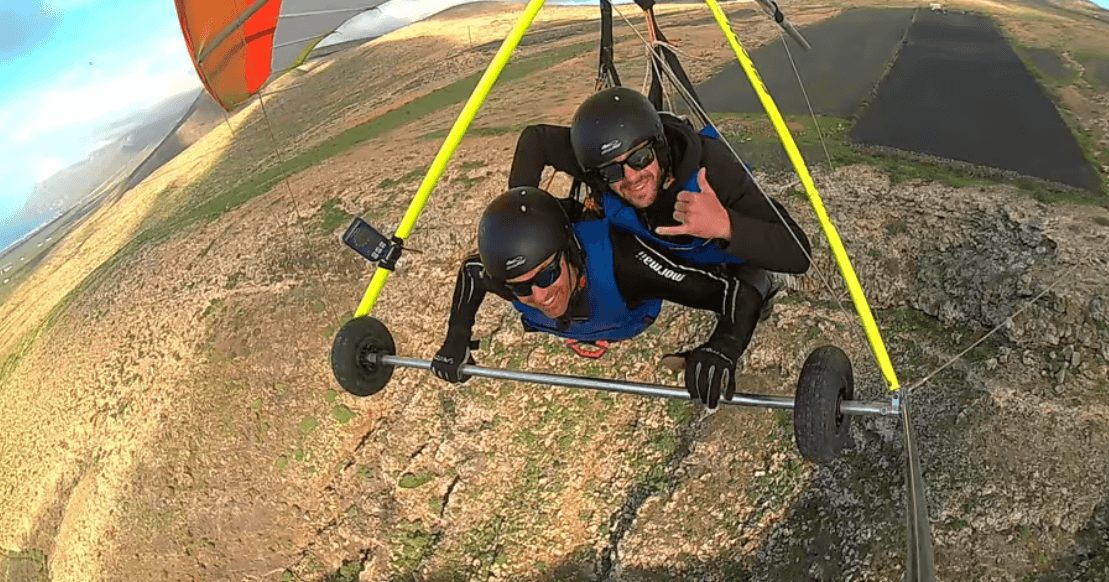
Tandem Hang Glider (Source)
This is a hang glider equipped with an engine and propeller. This model does not require a high elevation to begin flight. Takeoff and landing can be performed from suitable terrain using the thrust provided by the engine. It is generally preferred for show flights and distance flights. Powered hang gliders can remain airborne as long as fuel is available and do not require thermals or wind currents.
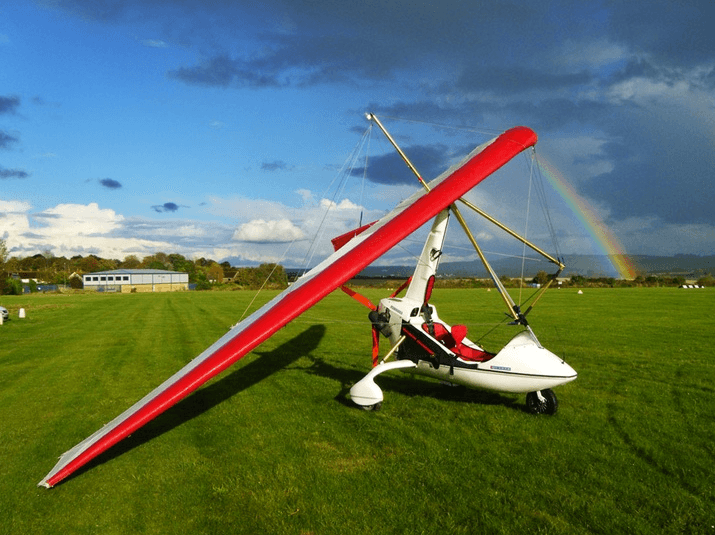
Powered Hang Glider (Source: Pinterest)
Hang gliding requires a careful training process. Introductory courses typically last 15 training days. During this period, pilot candidates complete 30 glide sessions from hills up to 50 meters in height and attend theoretical lessons. When suitable hills are unavailable, winch systems may be used for flight practice. Additionally, tandem flights are conducted under teacher supervision when weather conditions permit.
To enroll in hang gliding training, certain conditions must be met. Participants must be at least 17 years old and have a height between 165 cm and 195 cm. Weight must be between 50 kg and 95 kg. Educational requirements include completion of primary school, possession of a criminal record clearance, signing a declaration of responsibility, and obtaining a medical certificate.
Although hang gliding was initially considered an unsafe sport, technological advancements and safety measures have made it one of the most degree safe air sports today. Modern sail gliders are manufactured using durable materials alongside aerodynamic designs. However, as with any sport, certain safety precautions must be observed. Pilots carry safety equipment such as reserve parachutes, helmet, and hooked knife during flight.
In Türkiye, hang gliding was initiated in 1988 by the Turkish Aeronautical Association (THK). Regulations governing hang gliding are implemented in accordance with safety standards established by civil aviation authorities.

Henüz Tartışma Girilmemiştir
"Sailwing" maddesi için tartışma başlatın
History of Hang Gliding
Technical Features and Variants
Tandem Hang Glider
Powered Hang Glider (Microlight)
Training Process and Participation Requirements
Safety and Regulations in Hang Gliding