
Bu içerik Türkçe olarak yazılmış olup yapay zeka ile otomatik olarak İngilizceye çevrilmiştir.
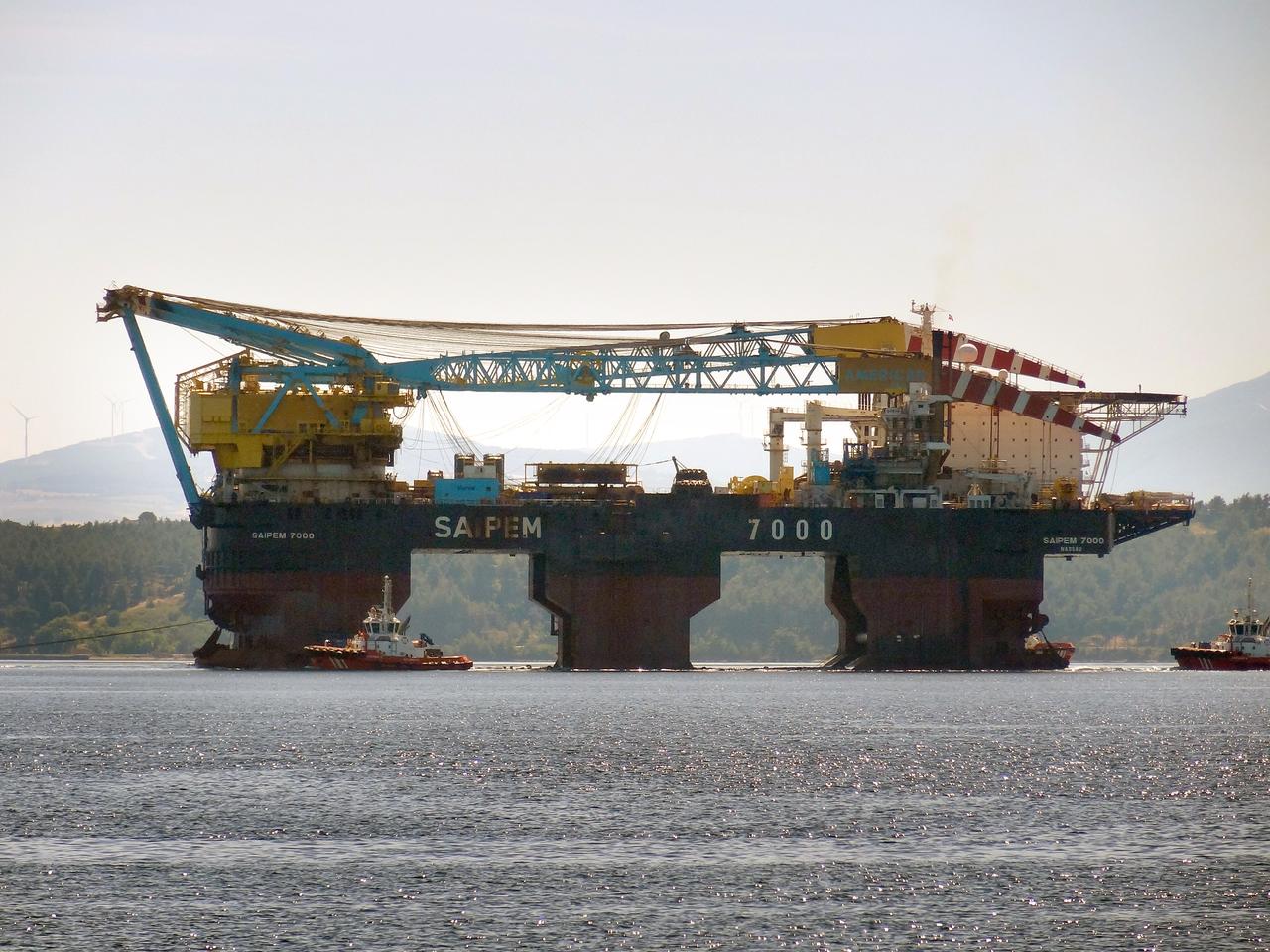
Saipem 7000 (AA)
Saipem 7000
Door | Semi-submerged crane and pipe-laying vessel | ||||||||
|---|---|---|---|---|---|---|---|---|---|
Owner | Saipem SpA | ||||||||
Center | Milan, Italy | ||||||||
Length | 197.95 meters | ||||||||
Height | 135 meters | ||||||||
Weight | 117,812 gross tons | ||||||||
Lifting Capacity | 14,000 tons | ||||||||
Accommodation | 725 people | ||||||||
Number of cabins | 388 | ||||||||
Propulsion propeller | 12 | ||||||||
Power generation | 70,000 kW | ||||||||
Saipem 7000 is a self-propelled, dynamically positioned, semi-submersible crane vessel and the third largest in the world, designed for pipe-laying operations in depths exceeding 2,000 meters and heavy-lift operations. It belongs to Saipem SpA, a multinational oil and gas company headquartered in Milan. The vessel measures 197.95 meters in length, 135 meters in height, and has a gross tonnage of 117,812. Through its twin crane systems, it offers a lifting capacity of up to 14,000 metric tons in a single lift. To ensure physical stability and operational continuity in offshore construction projects, the platform is equipped with a Class 3 dynamic positioning (DP) system comprising 12 thrusters, a rapid ballast system, and accommodation facilities for 725 personnel.【1】
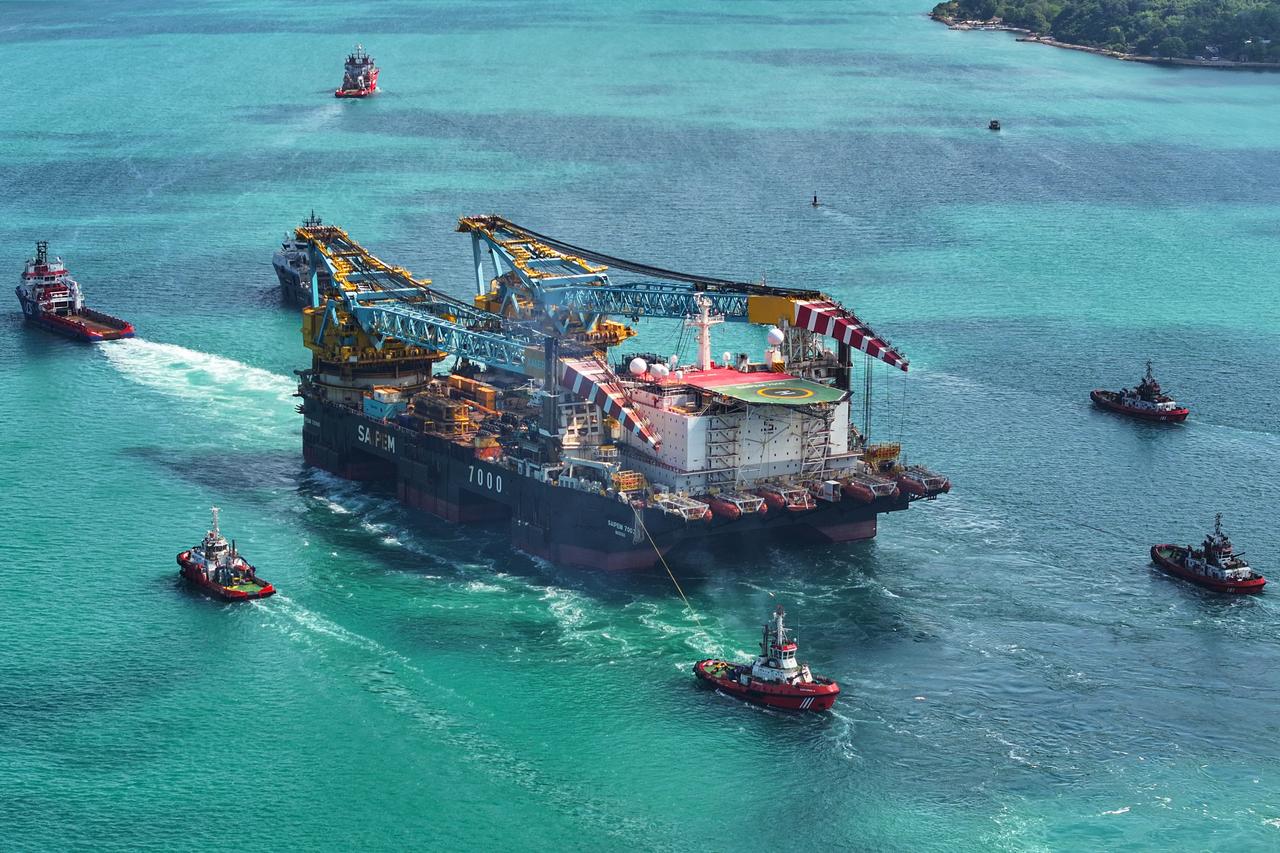
Saipem 7000 (AA)
The Saipem 7000 platform entered service in 1990 after being acquired and converted from the vessel Micoperi 7000, marking its debut in offshore heavy-lift operations. During the 1990s, a J-lay tower was integrated into its equipment to meet the requirements of deepwater pipe-laying projects.【2】 Following this structural addition, the platform executed the natural gas pipeline installation on the Black Sea seabed at depths between 2,150 and 2,200 meters as part of the Blue Stream Project linking Russia and Türkiye, using the J-lay method.
In subsequent years, the platform’s operational scope expanded to include offshore renewable energy infrastructure. In the Neart Na Gaoithe (NnG) wind farm project off the east coast of Scotland, foundation installation operations for wind turbines were completed using its heavy-lift cranes. As part of its most recent historical movements, the platform transited the Dardanelles on 15 June 2026 and the Bosphorus on 17 June 2026 during its relocation from Libya’s Bouri Port to Romania’s Constanța Port. During the 2026 passage through the Bosphorus, the platform’s towers and cranes were lowered and ballast tanks were filled with water to reduce its overall height to 57 meters.
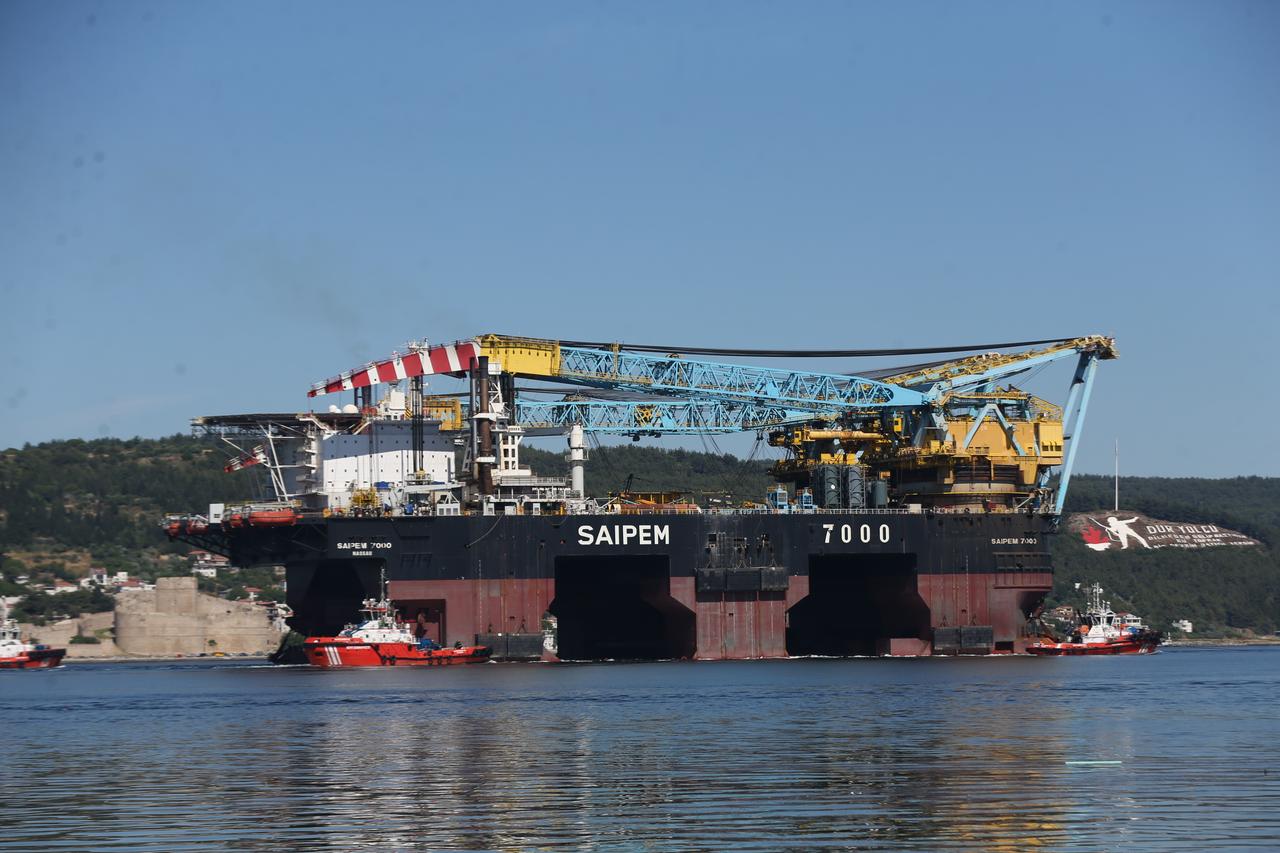
Saipem 7000 in Çanakkale (AA)
The upper deck of the Saipem 7000 platform measures 175 meters in length, 87 meters in width, and 8.5 meters in height. The lower pontoons forming the vessel’s hull are 165 meters long, 33 meters wide, and have a height ranging between 11.25 and 15.25 meters. A free deck area of 9,000 square meters has been allocated for equipment layout and is supported by a deck load capacity of 15,000 metric tons. The platform’s draft during operations is recorded at 27.5 meters, while during transit it reduces to 10.5 meters. Transit speed is maintained at 9.5 knots.【3】
The platform’s power generation system consists of 12 diesel generators housed in six fireproof engine rooms, delivering a total output of 70,000 kW and designed for heavy fuel oil consumption. The vessel’s maneuvering system integrates thrusters distributed as follows: four 4,500 kW azimuth units at the stern, four 3,000 kW and two 5,500 kW retractable azimuth units at the bow, and two 2,500 kW tunnel thrusters at the forward section. The thruster systems operate via closed-loop networks and comply with ABS EHS-P standards through a fully redundant SDPM infrastructure. The anchoring and mooring system comprises 14 single-drum winches, each with a 1,350 kW capacity, equipped with 3,350-meter-long ropes and 40-ton holding capacity anchors. Additionally, two capstans have been added to the system, each featuring a 550-meter chain and a 34.5-ton anchor.【4】
The vessel’s stability and draft control are managed by four ballast pumps with a combined pumping capacity of 6,000 cubic meters per hour. The ballast system network includes 40 standard ballast tanks with a total capacity of 81,040 cubic meters and 14 additional tanks with a combined capacity of 26,000 cubic meters. The crew accommodation area is configured with 388 fully air-conditioned cabins in single or double-berth formats. A helicopter deck with classified fueling infrastructure is installed onboard for logistical air transfers. The deck dimensions and load-bearing capacity meet standard requirements for operating two BV234 LR Chinook helicopters, one of which can be parked on the deck.【5】
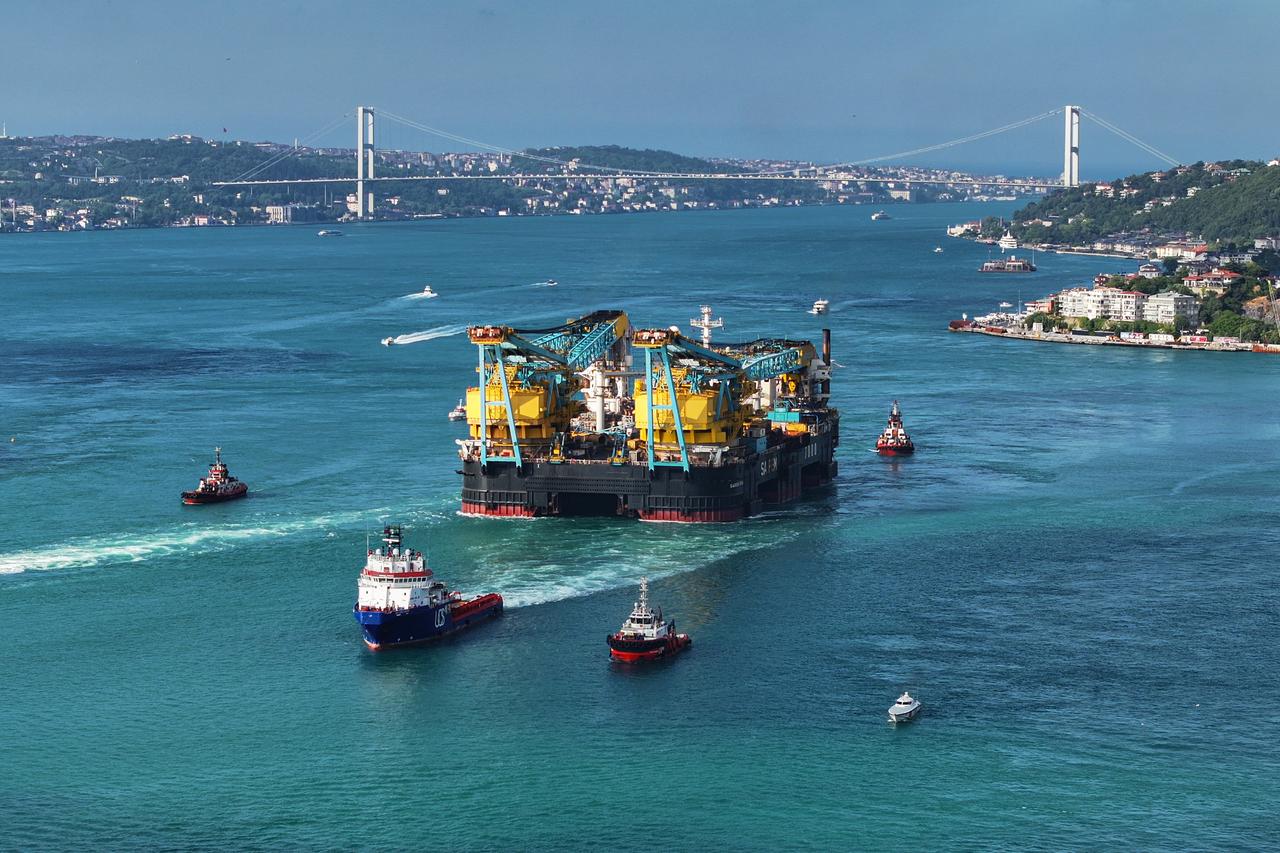
Saipem 7000 in Istanbul (AA)
As part of the Blue Stream Project connecting Russia and Türkiye, two natural gas pipelines, each 380 kilometers in length, were installed. Extensive engineering studies were conducted along both pipeline routes to mitigate environmental and geological risks on the seabed. The installation of 24-inch diameter pipelines in the deepwater sections, ranging from 2,150 to 2,200 meters depth, was completed using the J-lay method via Saipem 7000’s equipment. The shallower sections of the pipelines, up to 380 meters depth, were laid using the conventional S-lay method by the vessel Castoro Otto.【6】
The Cabiúnas project was developed to transport natural gas from the Santos Basin off the coast of Brazil, connecting the Cernambi field to the Macaé terminal in the state of Rio de Janeiro via a 380-kilometer rigid gas export pipeline with a 24-inch diameter. The first 300 kilometers of the pipeline, in shallower waters, were laid using the S-lay method. Beyond a depth of 1,740 meters, the Saipem FDS2 vessel assumed operations using the J-lay method. In the 83-kilometer deepwater segment where depths ranged from 1,700 to 2,240 meters, Saipem FDS2 installed pipes with wall thicknesses between 1.25 inches and 1.438 inches. The deepest point of the project was recorded at 2,250 meters.
During pipe-laying operations, the angle of the J-lay tower was reduced from 84 degrees to 81 degrees to adapt to environmental conditions and minimize bending moments along the pipe catenary. This three-degree adjustment reduced catenary stress, increasing the permissible sea state limits by 60 percent based on significant wave height, extending the retraction distance from 750 meters to 1,100 meters, and raising the required pulling force from 50 metric tons to 90 metric tons. The maximum vertical pipe-laying tension recorded during operations was 760 metric tons, well below the FDS2 vessel’s 1,500 metric ton pipe-laying capacity and 2,000 metric ton emergency holding capacity. The pipeline route also incorporated four internal T-joints, one internal valve, and a 107-metric-ton pipeline end termination (PLET) structure.【7】
The Saipem 7000 platform was utilized in the construction of the Neart Na Gaoithe (NnG) offshore wind farm off the east coast of Scotland. Foundation installation operations for the wind turbines were completed using the platform’s twin heavy-lift cranes, each with a 7,000 metric ton lifting capacity. These activities demonstrate the platform’s heavy-lift equipment’s capability in offshore renewable energy infrastructure deployment.【8】
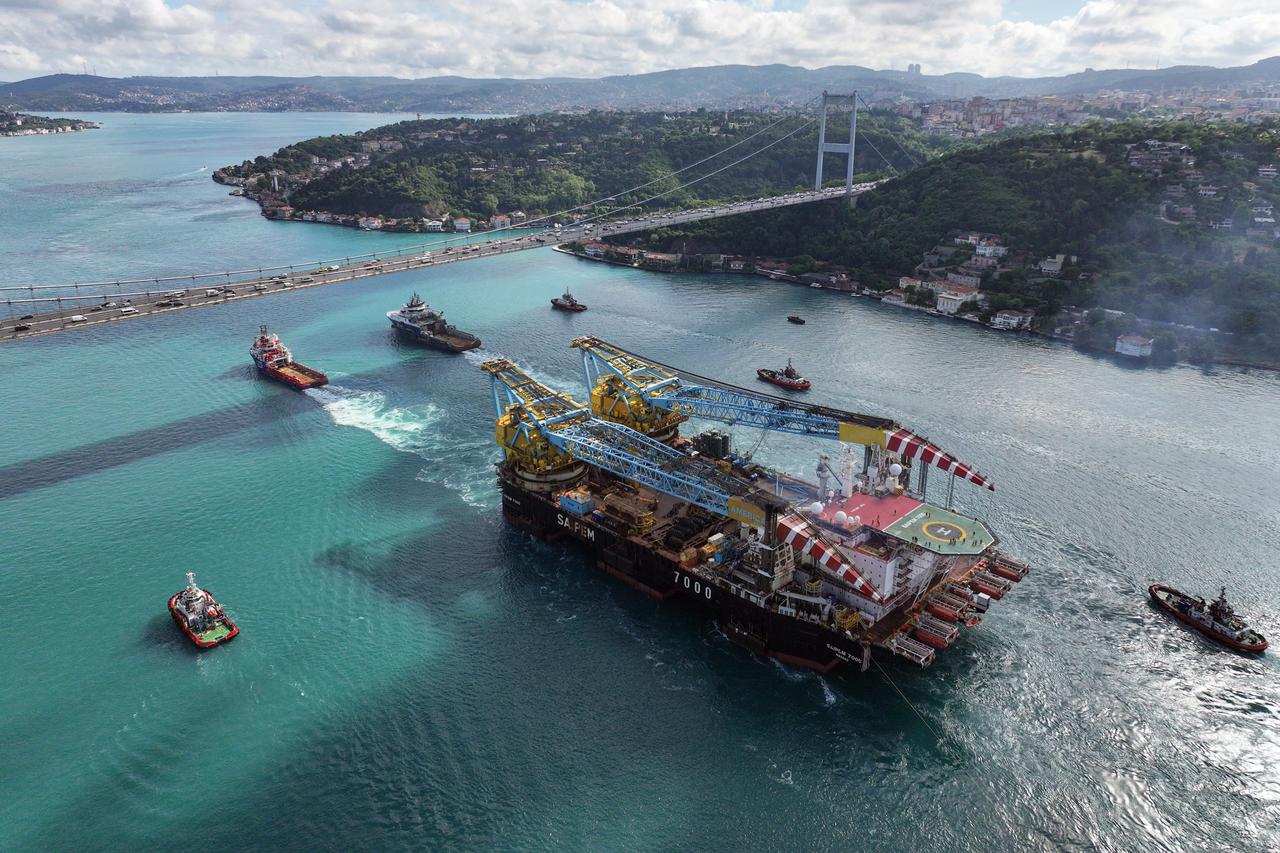
Saipem 7000 (AA)
Special logistical measures were implemented for the Saipem 7000’s transit through the Bosphorus during the transportation and deployment of Blue Stream Project equipment. During the transit, commercial maritime traffic on the waterway was temporarily closed to ensure operational control. This navigation operation, supported by two tugboats, maintained a vertical clearance of five meters between the lowest point of the bridges and the platform’s highest equipment, with physical contact parameters strictly monitored.【9】
During the platform’s current transfer between the Mediterranean and Black Sea basins, transit vessel traffic through the Dardanelles was suspended during the operation, which began at 07:00. The towing operation was conducted integrally by the Pacific Discovery, a anchor carrier registered in the United Kingdom, and the GH Discovery, a tug registered in Antigua and Barbuda. Direct participation in the logistical operation was provided by the Coast Guard vessels Kıyı Emniyeti-9, Kurtarma-21, Kurtarma-10, Kurtarma-15, and Kurtarma-18 under the authority of the General Directorate of Coast Guard.【10】
The transit operation through the Bosphorus was completed within a six-hour window. The strait, closed to two-way maritime traffic, reopened for south-north vessel movement at 13:30. In addition to the main towing fleet, the emergency response vessel Nenehatun and six pilot personnel were integrated into the operation. The safety and maneuvering control of the operation were coordinated by a fleet of tugboats: Kurtarma-4, Kurtarma-6, Kurtarma-Nazımtur, Kurtarma-5, and Kurtarma-12.【11】
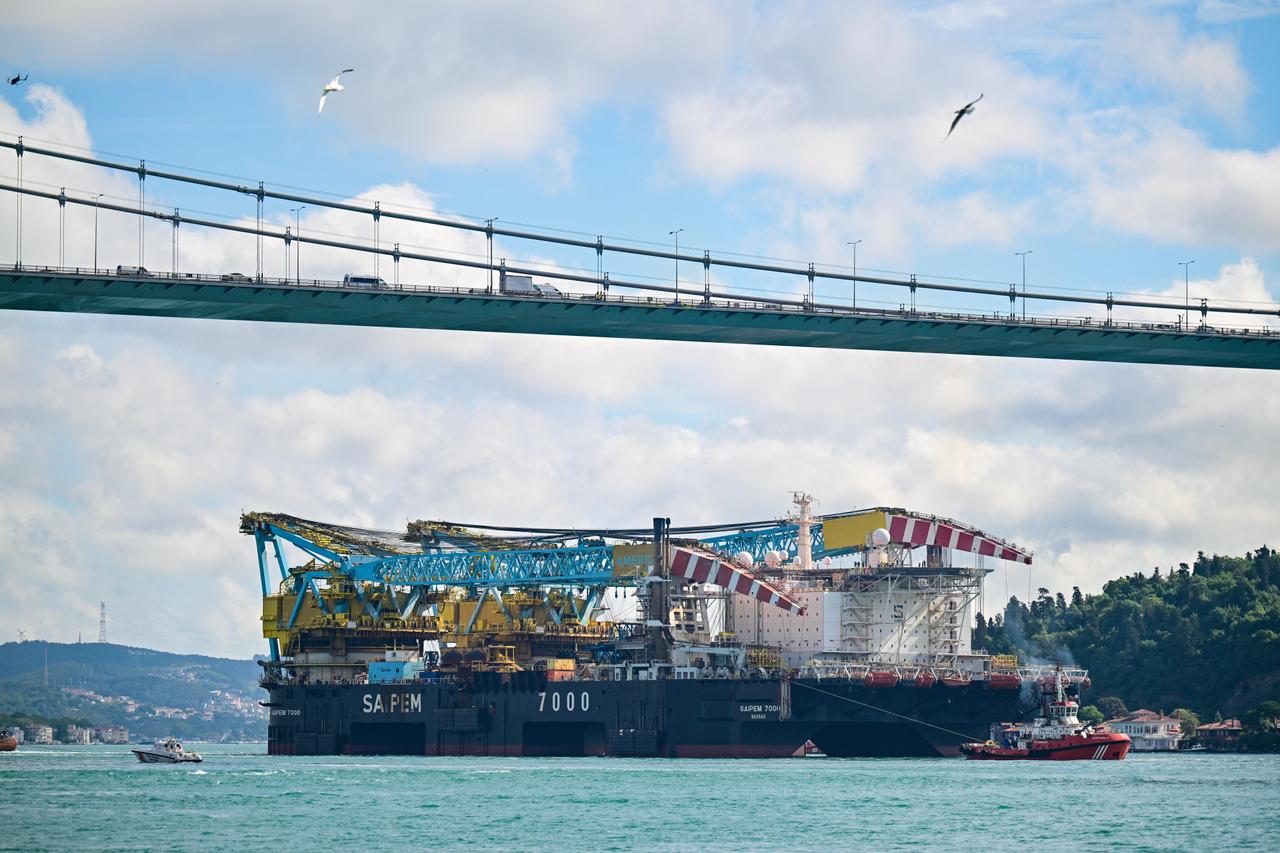
Saipem 7000 Transit Through the Bosphorus (AA)
During the construction of the Neart Na Gaoithe (NnG) offshore wind farm off the east coast of Scotland, Saipem 7000 hosted a virtual site tour named “CodyTrip.” Approximately 27,000 primary and secondary school students from over 850 cities in Italy participated in this educational program. The educational infrastructure for this initiative was developed through a collaboration between DIGIT at the University of Urbino, the University of Urbino, Giunti Editore, and CampuStore.【12】
The program, designed to educate students about energy transition and wind power, was delivered through a dedicated software application. Interactive tools including questions, surveys, and tests were integrated into a 10-hour live broadcast stream. During the virtual tour, students virtually transferred from Aberdeen’s helicopter deck to the platform, inspected its engine rooms and heavy-lift cranes, and engaged with the vessel’s captain, field manager, engineers, and technicians to learn about environmental awareness and occupational safety. Two pre-webinars on wind energy and safety were held prior to the main event.【13】
Technical information regarding the vessel’s equipment and corporate history was delivered to participants. The direct connection between the vessel’s name and its two 7,000 metric ton capacity cranes was detailed. Additionally, literary anecdotes from Italian author Primo Levi’s 1980 historical visit to the pipe-laying vessel Castoro 6 were incorporated into the educational content.【14】
The Saipem 7000 platform provides an operational infrastructure capable of supporting the full scope of offshore construction and development projects worldwide. To integrate surface and subsea operations in conventional, deep, and ultra-deepwater projects, two “Innovator”-type remotely operated underwater vehicles (ROVs) are deployed onboard. These subsea systems complement the platform’s core equipment, ensuring the continuity of offshore infrastructure construction processes.
Anadolu Ajansı. "Dev vinç gemisi Çanakkale Boğazı'ndan geçti." Accessed June 17, 2026. https://www.aa.com.tr/tr/gundem/dev-vinc-gemisi-canakkale-bogazindan-gecti/3967201
Anadolu Ajansı. "World's 3rd-largest semi-submersible crane vessel transits Bosphorus Strait." Accessed June 17, 2026. https://www.aa.com.tr/en/pg/photo-gallery/worlds-3rd-largest-semi-submersible-crane-vessel-transits-bosphorus-strait/163344
Anadolu Ajansı. “Dev vinç gemisi 'Saipem 7000' İstanbul Boğazı'ndan geçti.” Accessed June 17, 2026. https://aa.com.tr/tr/pg/foto-galeri/dev-vinc-gemisi-saipem-7000-istanbul-bogazindan-gecti/163347
Anadolu Ajansı. “Dev vinç gemisi 'Saipem 7000' İstanbul Boğazı'ndan geçti.” Accessed June 17, 2026. https://www.aa.com.tr/tr/gundem/dev-vinc-gemisi-saipem-7000-istanbul-bogazindan-gecti/3969217
Anadolu Ajansı. “TP-OTC AŞ ile Saipem, Sakarya Gaz Sahası projesi kapsamında 425 milyon dolarlık sözleşme imzaladı.” Accessed June 17, 2026. https://www.aa.com.tr/tr/ekonomi/tp-otc-as-ile-saipem-sakarya-gaz-sahasi-projesi-kapsaminda-425-milyon-dolarlik-sozlesme-imzaladi/3787635
Offshore. "Field development vessel rises to task of challenging deepwater project." Accessed June 17, 2026. https://www.offshore-mag.com/pipelines/article/16754834/field-development-vessel-rises-to-task-of-challenging-deepwater-project
SAIPEM. "Blue StreamGas Pıpelıne." Accessed June 17, 2026. https://www.saipem.com/en/saipem-worldwide-projects/blue-stream-gas-pipeline
SAIPEM. "SAIPEM 7000 Semi-Submersible Crane and Pipeline (J-Lay) DP Vessel." Accessed June 17, 2026. https://www.saipem.com/sites/default/files/2023-01/Saipem_7000.pdf
SAIPEM. "SAIPEM 7000." Accessed June 17, 2026. https://www.saipem.com/en/solutions-energy-transition/fleet-and-yards/saipem-7000
SAIPEM. "Saipem’s History." Accessed June 17, 2026. https://www.saipem.com/en/about-us/saipem-history
SAIPEM. "The first virtual trip aboard the Saipem 7000." Accessed June 17, 2026. https://www.saipem.com/en/media/news/The-first-virtual-trip-aboard-the-Saipem-7000
[1]
SAIPEM, “SAIPEM 7000 Semi-Submersible Crane and Pipelaying (J-Lay) DP Vessel,” access date: 17 June 2026, https://www.saipem.com/sites/default/files/2023-01/Saipem_7000.pdf
[2]
SAIPEM. “Saipem’s History.” Access Date: 17 June 2026. https://www.saipem.com/en/about-us/saipem-history
[3]
SAIPEM, “SAIPEM 7000 Semi-Submersible Crane and Pipelaying Vessel.”
[4]
SAIPEM, “SAIPEM 7000 Semi-Submersible Crane and Pipelaying Vessel.”
[5]
SAIPEM, “SAIPEM 7000 Semi-Submersible Crane and Pipelaying Vessel.”
[6]
SAIPEM. “Blue Stream Gas Pipeline.” Access Date: 17 June 2026. https://www.saipem.com/en/saipem-worldwide-projects/blue-stream-gas-pipeline
[7]
Offshore. “Field development vessel rises to task of challenging deepwater project.” Access Date: 17 June 2026. https://www.offshore-mag.com/pipelines/article/16754834/field-development-vessel-rises-to-task-of-challenging-deepwater-project
[8]
SAIPEM. “The first virtual trip aboard the Saipem 7000.” Access Date: 17 June 2026. https://www.saipem.com/en/media/news/The-first-virtual-trip-aboard-the-Saipem-7000
[9]
SAIPEM. “Blue Stream Gas Pipeline.” Access Date: 17 June 2026. https://www.saipem.com/en/saipem-worldwide-projects/blue-stream-gas-pipeline
[10]
Anadolu Ajansı. “Dev vinç gemisi Çanakkale Boğazı'ndan geçti.” Access Date: 17 June 2026. https://www.aa.com.tr/tr/gundem/dev-vinc-gemisi-canakkale-bogazindan-gecti/3967201
[11]
Anadolu Ajansı. “Dev vinç gemisi "Saipem 7000" İstanbul Boğazı'ndan geçti.” Access Date: 17 June 2026. https://www.aa.com.tr/tr/gundem/dev-vinc-gemisi-saipem-7000-istanbul-bogazindan-gecti/3969217
[12]
SAIPEM. “The first virtual trip aboard the Saipem 7000.” Access Date: 17 June 2026. https://www.saipem.com/en/media/news/The-first-virtual-trip-aboard-the-Saipem-7000
[13]
SAIPEM, “The First Virtual Trip Aboard the Saipem 7000.”
[14]
SAIPEM, “The First Virtual Trip Aboard the Saipem 7000.”


Saipem 7000 (AA)
Saipem 7000
Door | Semi-submerged crane and pipe-laying vessel | ||||||||
|---|---|---|---|---|---|---|---|---|---|
Owner | Saipem SpA | ||||||||
Center | Milan, Italy | ||||||||
Length | 197.95 meters | ||||||||
Height | 135 meters | ||||||||
Weight | 117,812 gross tons | ||||||||
Lifting Capacity | 14,000 tons | ||||||||
Accommodation | 725 people | ||||||||
Number of cabins | 388 | ||||||||
Propulsion propeller | 12 | ||||||||
Power generation | 70,000 kW | ||||||||
Henüz Tartışma Girilmemiştir
"Saipem 7000" maddesi için tartışma başlatın
Historical Development of the Saipem 7000 Platform
Structural and Technical Specifications of the Platform
Physical Dimensions and Hull Structure
Thruster, Dynamic Positioning (DP), and Power Generation Systems
Ballast System and Accommodation Capacity
Completed Deepwater and Offshore Projects
Black Sea Operations: Blue Stream Project
Brazil Operations: Cabiúnas Project
Offshore Wind Farm Projects (Neart Na Gaoithe)
Logistical Processes and Strait Transit Operations
Platform-Centered Academic and Educational Activities