
Bu içerik Türkçe olarak yazılmış olup yapay zeka ile otomatik olarak İngilizceye çevrilmiştir.
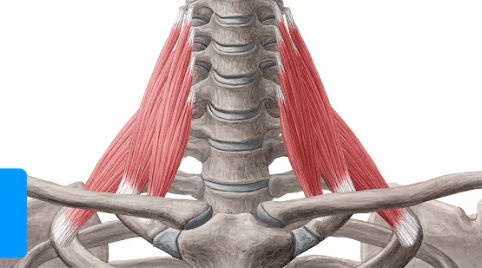
Scalene Muscles are three muscle groups located in the deep layer of the neck that function in movement of the upper ribs, lateral flexion of the neck, and respiratory support. They are classified as anterior (scalenus anterior), middle (scalenus medius), and posterior (scalenus posterior). A fourth variant, scalenus minimus, may occasionally be present.
The scalene muscles consist of three primary muscles located laterally in the neck, originating from the cervical vertebrae and inserting onto the ribs: the anterior, middle, and posterior scalene muscles. The anterior scalene muscle arises from the anterior tubercles of the transverse processes of C3–C6 cervical vertebrae and inserts onto the scalene tubercle of the first rib. The middle scalene muscle originates from the posterior tubercles of the transverse processes of C2–C7 vertebrae and attaches to the upper surface of the first rib. The posterior scalene muscle arises from the posterior tubercles of the transverse processes of C4–C6 vertebrae and inserts onto the outer surface of the second rib. Additionally, a small variant muscle called scalenus minimus may originate from the transverse process of C7 and attach to the first rib and pleura. While the anterior scalene muscle passes posterior to the subclavian artery and brachial plexus, it passes anterior to the subclavian vein and phrenic nerve. The middle scalene muscle lies anterior to both the brachial plexus and the subclavian artery. The posterior scalene is the smallest and deepest of the three. This arrangement provides a stable connection between the cervical vertebrae and the ribs and maintains close anatomical relationships with surrounding neurovascular structures.
The scalene muscles are innervated by the anterior rami of the C3–C8 cervical nerves and develop from the myotomes of the cervical region. Embryologically, they originate from the paraxial mesoderm. Functionally, they participate in neck movements and respiratory support mechanisms.
The muscles are innervated by the anterior rami of the C3–C8 cervical spinal nerves. Their vascular supply is provided by the cervical arteries and the superior intercostal arteries. This neurovascular relationship is vital for both the motor function and metabolic needs of the muscles.
The anterior and middle scalene muscles assist in inspiration by elevating the first rib, while the posterior scalene elevates the second rib. They play an active role in ipsilateral lateral flexion of the neck and, during deep inhalation, support expansion of the thoracic cage alongside the sternocleidomastoid muscle. Clinically, spasm of the scalene muscles can mimic cervical disc pathology. In thoracic outlet syndrome, compression of the brachial plexus and subclavian vessels between the scalene muscles can cause arm pain, numbness, and weakness. An interscalene block is a local anesthetic injection administered between the scalene muscles to control pain during shoulder and arm surgeries. In surgical interventions, resection of the scalene muscles may be performed in cases of scalenus anticus syndrome.

Henüz Tartışma Girilmemiştir
"Scalene Muscles" maddesi için tartışma başlatın
Anatomical Structure
Morphology and Attachment Points
Embryological Origin and Classification
Innervation and Vascular Supply
Function and Clinical Relevance