


Bu içerik Türkçe olarak yazılmış olup yapay zeka ile otomatik olarak İngilizceye çevrilmiştir.
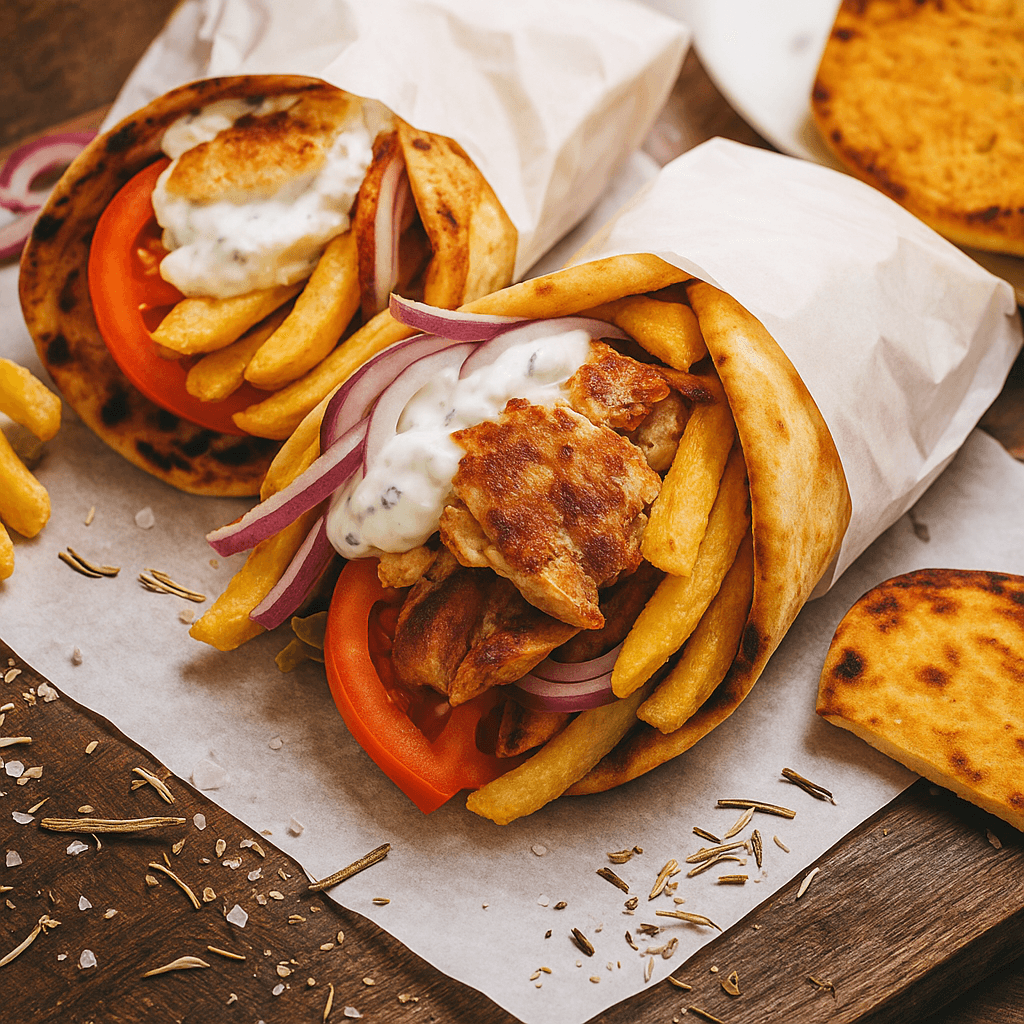
Shawarma (Arabic: شاورما, pronounced: shāwarmā) is a street food native to Levantine and Arab cuisine, similar to doner kebab. Originating during the Ottoman Empire and becoming widespread in the 19th century, shawarma is prepared by slowly roasting thin slices of meat—such as lamb, sheep, chicken, turkey, or beef—on a vertical spit. The cooked meat is shaved off and wrapped in lavaş, pide, or dürüm bread, and typically served with sauces such as tahini, hummus, garlic sauce, pickles, turnip juice, or amba (mango pickle). Often accompanied by salads like tabbouleh or fattoush, shawarma is a popular dish across the Middle East, the Caucasus, Europe, and beyond.
The word derives from the Turkish term for “turning” and shares etymological roots with doner kebab. Shawarma’s distinguishing features are its marination process and the wide variety of sauces used. In the 20th century, Lebanese migrants inspired adaptations such as tacos al pastor in Mexico, transforming shawarma into a global culinary phenomenon.

Shawarma (Generated by Artificial Intelligence.)
Shawarma stands out through its method of meat preparation and presentation. The meat—typically lamb, chicken, or beef—is sliced thinly, marinated with spices such as cumin, coriander, paprika, and cardamom, and stacked in layers on a vertical spit. The spit rotates slowly over a grill, and the outer layers are shaved off as they brown. This technique evolved from the Ottoman doner kebab tradition. The cooked meat is wrapped in warm lavaş or pide bread and enhanced with sauces. Common sauces include tahini-based blends, garlic yogurt, hot sauce, and amba. Garnishes such as lettuce, tomato, onion, pickles, or fried potatoes are added. In some regions, such as Egypt, a béchamel-like “white sauce” is used. Shawarma can be served as a dürüm, sandwich, or on a plate with rice.
Shawarma reflects the following themes in culinary culture:
Shawarma represents the convergence of local and global flavors in the intersection of culinary traditions.
Shawarma holds a deeply rooted place as a traditional street food in the Middle East. It is an integral part of daily life in Lebanon, Syria, and Jordan. In Europe, particularly in cities such as Berlin, London, and Paris, it gained popularity through immigrant communities. In Ottawa, Canada, the Lebanese diaspora has made shawarma a local favorite. Its global influence is evident in adaptations such as tacos al pastor in Mexico. Shawarma has also entered popular culture, for instance being featured in a scene in the film The Avengers. In literature and cinema, shawarma is often depicted as a symbol of immigrant experiences and cultural intersections. Its accessibility and flavor have made it a global culinary icon.

Henüz Tartışma Girilmemiştir
"Shavurma" maddesi için tartışma başlatın
Ingredients and Preparation
Themes and Cultural Significance
Adoption and Influence