


This article was automatically translated from the original Turkish version.
+1 More
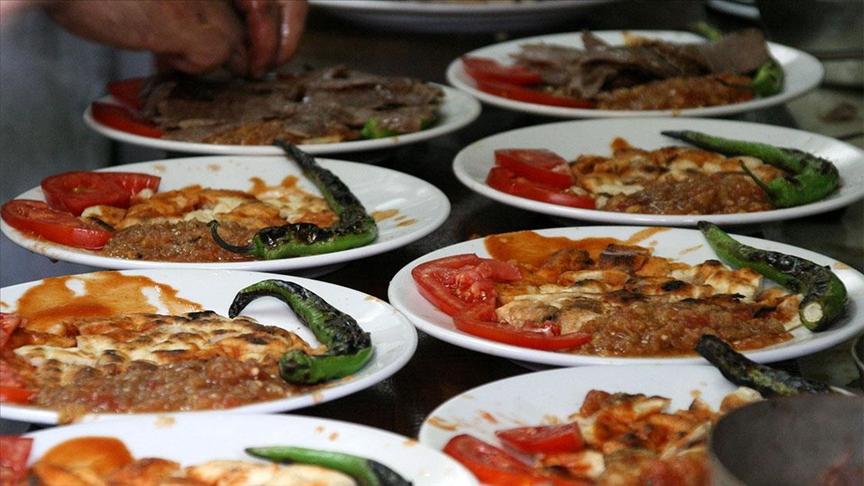
Bursa Döner Kebabı
Geographical Boundary | Bursa Province | ||||||||
|---|---|---|---|---|---|---|---|---|---|
Type of Geographical Indication | Mahreç Sign | ||||||||
Registration Number | 1151 | ||||||||
Registration Date | 17.06.2022 | ||||||||
Application Number | C2020/237 | ||||||||
Application Date | 20.08.2020 | ||||||||
Product / Product Group(s) | Kebab / Dishes and Soups | ||||||||
Applicant/Registrant(s) | Bursa Chamber of Commerce and Industry | ||||||||
Bursa Döner Kebabı is a traditional kebab variety unique to Bursa province in Türkiye, made from meat and cooked over wood charcoal fire. It is produced by combining leaf meat and minced meat derived from small and large livestock in specific proportions. This dish is served on a tırnak pide, with hot butter poured over it, and was granted geographical indication status in 2022 due to its history dating back to the mid-19th century and its deep-rooted connection to Bursa’s local culinary culture. The preparation, presentation and supervision of this dish are governed by strict regulations, and it may only be produced within the boundaries of Bursa province.

Bursa Döner Kebabı (Turkish Patent)
Bursa Döner Kebabı is a protected geographical indication kebab variety unique to Bursa province in Türkiye. Included in the product group “Kebabs / Dishes and Soups,” it was officially registered as a geographical indication on 17 June 2022. The Bursa Chamber of Commerce and Industry is the rights holder. The dish is prepared using leaf meat and minced meat, then cooked over wood charcoal fire and served on a tırnak pide with hot butter poured over it.
Bursa Döner Kebabı derives its name from its place of production, Bursa province. Its history extends back to the mid-19th century and it holds a longstanding tradition and widespread use within Bursa’s local culinary culture. Due to this historical and cultural connection, a direct reputation link exists between the product and its geographical origin. Accordingly, all stages of production and processing must be carried out within the boundaries of Bursa province.
Bursa Döner Kebabı is prepared by combining leaf meat and minced meat derived from small and large livestock in specific proportions. The leaf meat content must range between 10% and 40%, while the minced meat content must not exceed 90%. The total fat content of the meat used must not exceed 25% by weight. The minced meat is kneaded with salt and onion juice; no spices are used.
Leaf meat is cut into slices approximately 0.5 cm thick. The meats are rested for two to three days without marination before proceeding with döner preparation. When preparing the minced meat, approximately 1.5% onion juice and 2% salt by weight are added. The leaf meat and minced meat are layered on a long skewer in flat sheets and shaped into a cylindrical, hexagonal or octagonal prism using the shaving technique.
After separation from the carcass, the meats are cleaned of nerves and bones. Leaf meat of approximately 0.5 cm thickness is obtained. Portions not suitable as leaf meat are cut into small pieces for mincing. Before döner production, both the leaf meat and minced meat are rested for two to three days; no marination is applied during this stage. When preparing the döner, the meats are salted with a salt content of approximately 2% by weight. Approximately 1.5% onion juice is added to the minced meat and the mixture is kneaded. No spices are used.
Leaf meat and minced meat are arranged in alternating layers on a long skewer. The skewer is shaped into a cylindrical or polyhedral prism using the shaving technique. Cooking is preferably carried out using oak wood charcoal. The döner is cooked vertically at a distance of approximately 10–15 cm from the fire. Care is taken to ensure the fire is not excessively smoky. The döner is slowly rotated in one direction for controlled cooking. The cooked surface is sliced thinly from top to bottom using a döner knife. The slices are approximately 2–2.5 mm thick and 3.5–4 cm wide.
The döner is preferably cooked using oak wood charcoal. The skewer is placed vertically at a distance of 10–15 cm from the fire. Care is taken to ensure the fire is not excessively smoky. As the döner cooks, it is slowly rotated in one direction for controlled cooking. The cooked portions are sliced from top to bottom into thin pieces approximately 2–2.5 mm thick and 3.5–4 cm wide using a döner knife.
The sliced meat is placed on a tırnak pide that has been previously oiled with kebab fat and grilled or heated on a grill. The pide must be broken into small pieces. Hot butter is poured over the meat before serving. Presentation is done on a wide, flat ceramic or metal plate heated to a temperature that does not burn the hands. Optionally, it may be served with yogurt, tomato or tomato paste-based sauce, ground red pepper, sliced tomato or eggplant.
The production and market placement of Bursa Döner Kebabı are carried out under specific inspection mechanisms. Inspections are conducted by a four-member inspection board coordinated by the Bursa Chamber of Commerce and Industry, with one expert each from the Bursa Provincial Directorate of Agriculture and Forestry, the Faculty of Agriculture at Uludağ University, and the Department of Food Engineering at Bursa Technical University. Inspections are carried out annually on a regular basis and may also be conducted upon complaint or need.
The elements inspected include:
The inspection board may, when necessary, seek support or services from experts in the public or private sector.
Anadolu Ajansı. “Bursa döner kebabı coğrafi işaretle tescillendi.” Accessed May 22, 2025. https://www.aa.com.tr/tr/kultur/bursa-doner-kebabi-cografi-isaretle-tescillendi/2638853
Turkish Patent and Trademark Office. "Bursa Döner Kebabı." *Geographical Indications Portal.* Accessed May 22, 2025. https://ci.turkpatent.gov.tr/cografi-isaretler/detay/2484

Bursa Döner Kebabı
Geographical Boundary | Bursa Province | ||||||||
|---|---|---|---|---|---|---|---|---|---|
Type of Geographical Indication | Mahreç Sign | ||||||||
Registration Number | 1151 | ||||||||
Registration Date | 17.06.2022 | ||||||||
Application Number | C2020/237 | ||||||||
Application Date | 20.08.2020 | ||||||||
Product / Product Group(s) | Kebab / Dishes and Soups | ||||||||
Applicant/Registrant(s) | Bursa Chamber of Commerce and Industry | ||||||||
Classification
Geographical Boundary and Reputation Link
Product Characteristics
Recipe and Production Method
Presentation Characteristics
Inspection and Compliance