

Bu içerik Türkçe olarak yazılmış olup yapay zeka ile otomatik olarak İngilizceye çevrilmiştir.
Signal Flare
Scope(s) | Maritime safety search and rescue | ||||||||
|---|---|---|---|---|---|---|---|---|---|
Type(s) | Parachute flare smoke signal hand flare | ||||||||
Application Area(s) | Ships rescue boats life rafts boats | ||||||||
Night Use | Parachute flare and hand flare | ||||||||
Day Use | Smoke signal | ||||||||
International Standard | SOLAS (International Convention for the Safety of Life at Sea) | ||||||||
Burn Duration | 40 seconds (parachute), 1 minute+ (hand flare), 3 minutes (smoke) | ||||||||
Role in Education | STCW | ||||||||
Storage Conditions | Dry, cool, easily accessible, away from flammable materials | ||||||||
Signal Strength | 10,000 to 30,000 candlepower | ||||||||
Position as a Hazard Sign | Defined in COLREG Annex 4 and IAMSAR Manual | ||||||||
Signal flare is a pyrotechnic safety device designed to attract attention by generating a visual signal in situations involving danger, emergency, or a call for help. It communicates with the environment through bright light or dense smoke. Its use is not limited to maritime applications but also plays a life-saving role in numerous fields including military operations search and rescue missions outdoor sports and disaster management.

Visual Depiction of Signal Flare (Generated by Artificial Intelligence)
In maritime accidents evacuation scenarios or any situation requiring assistance at sea signal flares are used to signal nearby vessels and aircraft. According to the SOLAS Convention each lifeboat and rescue craft must carry at least the following quantities:
In addition these must be stored in designated safe lockers marked with IMO symbols away from moisture and flammable materials.
Signal flares are employed during tactical maneuvers for position marking directing air support area illumination and preventing friendly fire. Parachute flares in particular serve as night vision aids. They are also critical for target designation and area demarcation.
Victims use signal flares to transmit signals compliant with the IAMSAR (International Aeronautical and Maritime Search and Rescue) system. These signals enable aircraft and helicopters to locate their position. Smoke floats and hand flares facilitate precise location identification especially after visual contact has been established.
In nature activities such as trekking mountaineering sea kayaking and camping where mobile signal is unavailable signal flares are used to communicate location. Their compact and portable design makes them standard components of individual emergency kits. Hand flares are preferred during nighttime walks while smoke floats are favored during daytime conditions.
In large-scale disasters such as earthquakes floods or fires individuals trapped under rubble or in inaccessible areas use signal flares as their first visual distress call. Even in densely urbanized areas a signal flare rising into the sky guides rescue teams to the location.
Signal flares are classified into different types based on structure and function. This variety is determined by the intended use and timing. The main types include parachute flares hand flares and smoke floats. Each is engineered to perform effectively under specific conditions and their use is regulated by international standards.
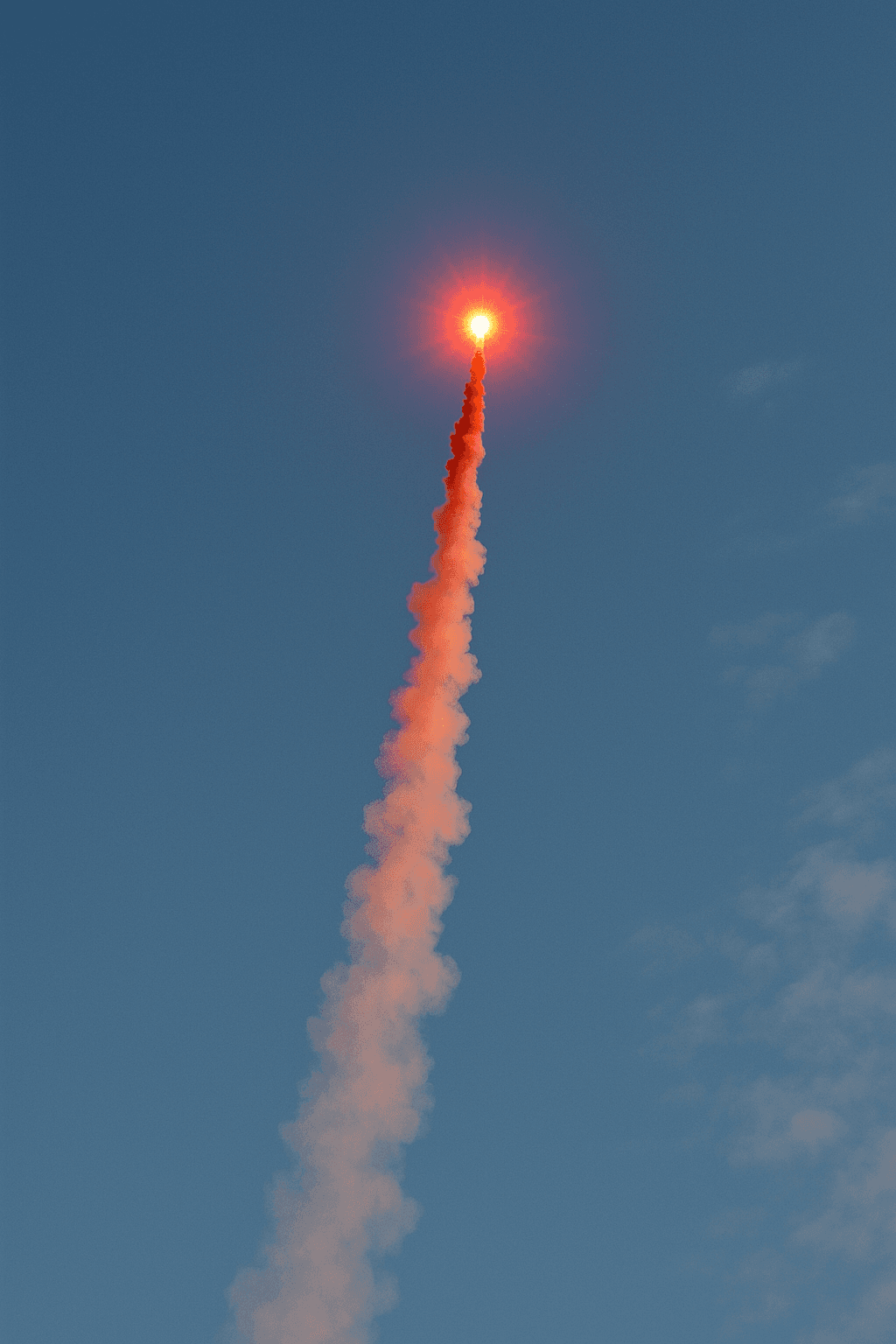
These are preferred in emergencies when a highly visible signal over a wide area from a high altitude is needed. When fired vertically they reach a minimum height of 300 meters and release a bright red flare that descends slowly via parachute. The burn duration is at least 40 seconds providing illumination equivalent to approximately 30 000 candelas. These flares are suitable for both day and night use. During deployment wind direction must be considered: the flare should be launched into the wind at an angle of 80–85 degrees.

Parachute Signal Flare (Generated by Artificial Intelligence)
This type of flare is handheld and emits a powerful light signal from a fixed point. It burns with a bright red color and produces light for at least one minute. With an intensity of approximately 10 000 candelas these flares can be used both day and night. The flare must be ignited downwind of boats or rescue craft and held away from the body. It must be gripped firmly during use to prevent dropping.

Visual of Hand Flare Usage (Unsplash)
This type of signal flare is designed for daytime use only. It does not ignite but instead generates dense colored smoke through a chemical reaction within its casing. The typically yellow or orange smoke remains visibly detectable for three minutes. Even if submerged 10 cm below water for 10 seconds the smoke float continues functioning. Its buoyant design allows it to emit signals even when dropped into water. To activate the pin beneath the cap is pulled and the device is released into the water downwind.
These technical specifications are fundamental in determining the appropriate environment purpose and timing for flare deployment. Furthermore all such flares must comply with criteria established by SOLAS and IMO.
Under STCW (Standards of Training Certification and Watchkeeping) regulations training in the use of lifesaving appliances including signal flares is mandatory for all ship crews. Signal flares are taught through practical exercises under the “Adequate Use of Rescue Appliances” training program.
Signal flares are recognized as international distress signals:
A signal flare is not merely a safety device on vessels. When used correctly by trained personnel in accordance with international standards it:
A Mayday call remains incomplete without visual signaling. Therefore the signal flare is a multi-purpose survival tool.
The signal flare is not only a visual signaling device but also a critical safety element that directly impacts human lives across multiple disciplines. Beyond its essential role in maritime emergencies such as vessel abandonment and distress calls it serves vital functions in military operations for coordination search and rescue missions for location detection outdoor sports as a personal safety measure and in natural disasters to determine the positions of trapped individuals. With its various types and technically defined specifications according to international standards this device ensures high visibility and reliability under all conditions. Providing proper training ensuring regular maintenance and promoting widespread use will reduce response times during crises and minimize loss of life. In this context the signal flare is a multi-sectoral emergency solution and must be regarded as an inseparable component of safety culture.
Millî Eğitim Bakanlığı. *Acil Durumlar*. Ankara: MEB Yayınları, 2014. Accessed May 26, 2025. https://megep.meb.gov.tr/mte_program_modul/moduller/Acil%20Durumlar.pdf.
Millî Eğitim Bakanlığı. *Can Kurtarma Araçlarını Kullanma*. Ankara: MEB Yayınları, 2018. Accessed May 26, 2025. https://megep.meb.gov.tr/mte_program_modul/moduller/Can%20Kurtarma%20Ara%C3%A7lar%C4%B1n%C4%B1%20Kullanma.pdf.
Ministry of National Education. *GMDSS and Search and Rescue (Global Maritime Distress and Safety System)*. Ankara: MEB Yayınları, 2008. Accessed May 26, 2025. https://www.denizcilikbilgileri.com/Kitap/DENIZDE%20GUVENLIK-19%28CAN%20KURTARMA%20ARACLARI%29.pdf.

Signal Flare
Scope(s) | Maritime safety search and rescue | ||||||||
|---|---|---|---|---|---|---|---|---|---|
Type(s) | Parachute flare smoke signal hand flare | ||||||||
Application Area(s) | Ships rescue boats life rafts boats | ||||||||
Night Use | Parachute flare and hand flare | ||||||||
Day Use | Smoke signal | ||||||||
International Standard | SOLAS (International Convention for the Safety of Life at Sea) | ||||||||
Burn Duration | 40 seconds (parachute), 1 minute+ (hand flare), 3 minutes (smoke) | ||||||||
Role in Education | STCW | ||||||||
Storage Conditions | Dry, cool, easily accessible, away from flammable materials | ||||||||
Signal Strength | 10,000 to 30,000 candlepower | ||||||||
Position as a Hazard Sign | Defined in COLREG Annex 4 and IAMSAR Manual | ||||||||
Henüz Tartışma Girilmemiştir
"Signal Flare" maddesi için tartışma başlatın
Applications
Maritime and Rescue Purposes
Military Operations
In Search and Rescue Scenarios
In Outdoor Sports and Open-Air Activities
In Disaster and Crisis Management
Types and Technical Specifications
Parachute Flares
Hand Flares
Smoke Floats
Training and Standards
Training Requirement
Compliance with International Standards
Maintenance and Storage Guidelines
Role and Importance of Signal Flares