


Bu içerik Türkçe olarak yazılmış olup yapay zeka ile otomatik olarak İngilizceye çevrilmiştir.
+2 Daha
Nazar is a belief system with deep roots in Turkish culture, transmitted across generations. Known among the people as "göz değmesi", this belief holds that a person or object can be negatively affected by the envious or admiring glances of others. It is believed that this influence manifests as illness, misfortune, or bad luck. The belief in nazar is not unique to the Anatolian region but has a broad cultural spread extending from Central Asia to the present day.
The belief in nazar is present in the pre-Islamic shamanistic beliefs of the Turks. Ancient Turkic communities believed that the human eye possessed certain metaphysical powers and thought that individuals deemed especially "beautiful" or "extraordinary" could be harmed by this power. In this context, nazar was explained as the effect of a "strong eye energy".
With the adoption of Islam, the belief in nazar was reinforced by religious references such as the Surahs Al-Falaq and An-Nas in the Qur’an, becoming more systematic. Additionally, the Prophet Muhammad’s statement, "Nazar is real," found in hadiths, played a reinforcing role in solidifying this belief.
The most common symbol of the nazar belief is the nazar boncuğu. Typically made of blue glass and featuring an eye motif at its center, this bead is used as a protective object in various contexts. Nazar boncuğu are attached to baby clothing, doorways of homes, automobiles, jewelry, and even to animals.
In ancient Turkish beliefs, the color blue was associated with positive connotations such as "the sky", "water", and "coolness", and was regarded as a symbol that repels negative energy. The eye motif used in nazar beads carries the meaning of "countering gaze with gaze".
Nazar motifs are not limited to beads alone. Traditional Turkish handicrafts also feature nazar-themed designs. Protective symbols such as "eye", "hook", and "ram’s horn" are commonly found in carpets, kilims, ceramics, wood carvings, and textile products.
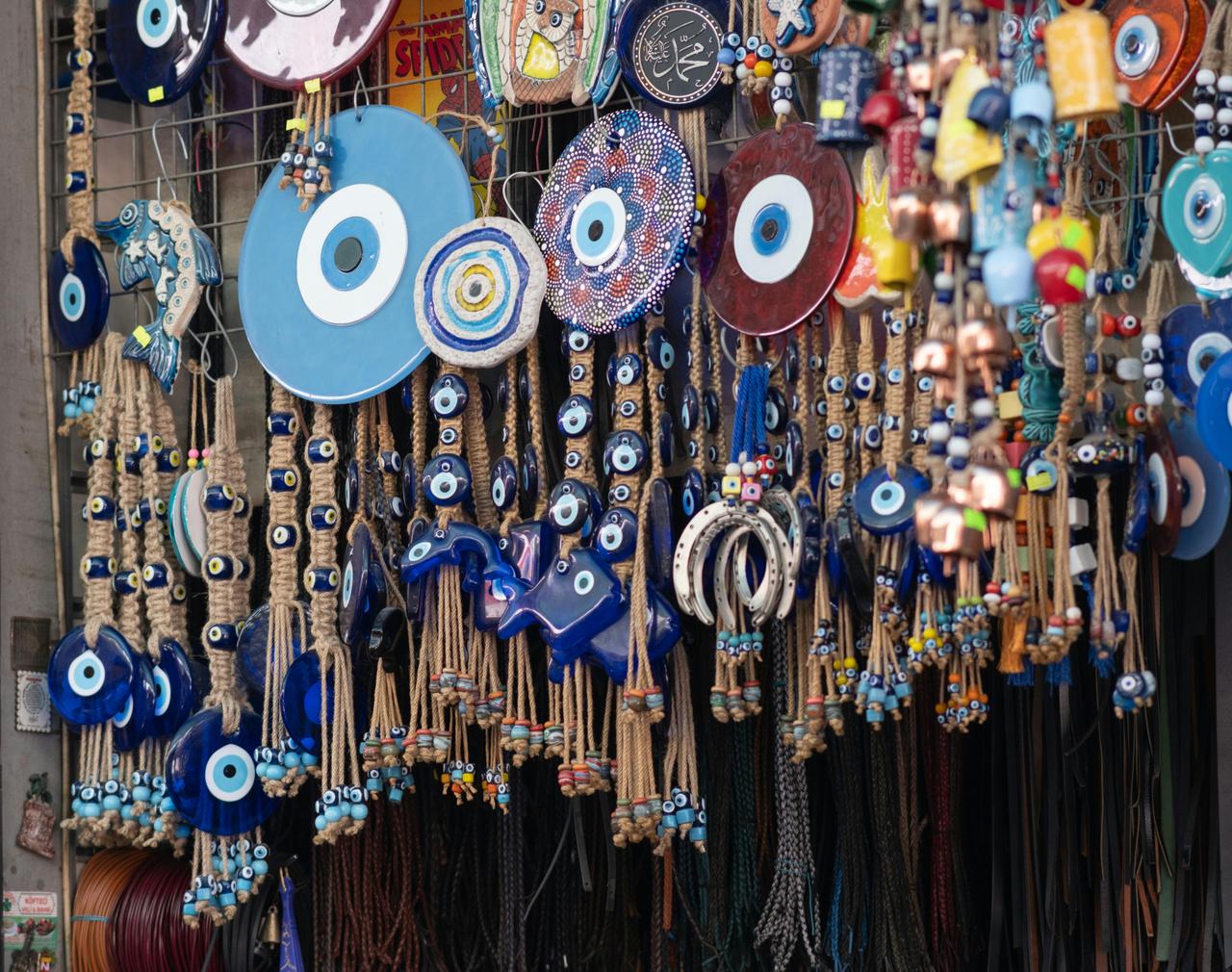
Nazar Bead Decorations, Pexels (Doğan Alpaslan Demir)
In Turkish folk beliefs, various practices have been developed to protect against nazar. The main ones include:
In modern Türkiye, the belief in nazar remains vibrant. Despite urbanization, technological advancement, and rising education levels, practices such as placing nazar amulets on infants and keeping nazar boncuğu in homes continue to be widespread across all segments of society.
Moreover, the frequent use of nazar motifs in the souvenir industry and tourism demonstrates that this belief has become not only a spiritual but also an economic and cultural element.

Photograph of a Nazar Bead, Pexels (M. Emin Bilir)
Accessed November 26, 2025.
Gonullu, Meruyert. "Doğa Sanat Yaratıcı Mavi." Pexels, Accessed April 22, 2025.
Gürsoy, Semra. "Anadolu Nazar İnancı ve Nazarlıklar." Journal of Turkish World Studies 14, no. 1 (2014). Accessed April 22, 2025.
Sönmez, Ramazan. "Türk El Sanatlarında Kullanılan Nazar Motifleri." Türk Kültür Araştırmaları Dergisi, 2023. Accessed April 22, 2025.
Türk, Sami. "Mavi Bina Yapı Pencereler." Pexels. Accessed April 22, 2025.
Yıldırım, Emine. "Türk Halk İnançlarında Nazar ve Nazarla İlgili Uygulamalar." International Journal of Turkish Literature Culture Education 9, no. 4 (2020). Accessed April 22, 2025.

Henüz Tartışma Girilmemiştir
"The Evil Eye Belief in Turkish Culture" maddesi için tartışma başlatın
Historical and Cultural Origins
Nazar Beads and Motifs
Protection Methods and Rituals
Nazar Belief in the Present Day