

This article was automatically translated from the original Turkish version.
+1 More
Type of Geographical İndication | Mahreç Sign | ||||||||
|---|---|---|---|---|---|---|---|---|---|
Application Date | 23.04.2003 | ||||||||
Registration Number | 70 | ||||||||
Registration Date | 23.06.2005 | ||||||||
Product / Product Group(s) | Handicraft products other than carpets and textiles kilims | ||||||||
Province(s) | İzmir | ||||||||
Applicant/Registrant(s) | Menderes Municipality | ||||||||
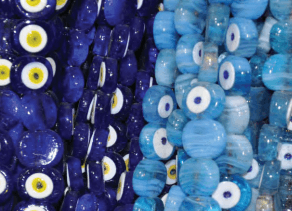
Görece Evil Eye Bead is a cultural product produced in the village of Görece, within the Menderes district of İzmir Province in Türkiye. Shaped through traditional crafts and glasswork, it is an original variant of the evil eye bead widely used in Turkish culture for protection against the evil eye. These beads have been granted geographical indication protection to safeguard their unique production methods and quality.
The Görece Evil Eye Bead was registered as a geographical indication on 21 April 2003, following an application submitted by the Görece Municipal Office to the Turkish Patent and Trademark Office. This registration aims to preserve the authentic production techniques and quality of evil eye beads made in Görece. The geographical indication ensures that only beads produced in the village of Görece in Menderes district of İzmir, using traditional methods, may bear this designation.
The Görece Evil Eye Bead is a handcrafted product that reflects the fine art of glasswork. Production is carried out using traditional techniques requiring high skill, resulting in beads shaped into various forms. These forms include:
These beads are commonly used as ornaments, jewelry or decorative objects based on the belief in protection against the evil eye. Beads produced in Görece are marketed under a labeling system that guarantees their geographical indication status, and only products made in this region may carry this certification.
The evil eye bead is a traditional symbol in Turkish culture believed to protect against negative energies and the evil eye. The Görece Evil Eye Bead embodies this belief as a local expression, carrying both aesthetic and spiritual value. Görece’s glasswork tradition preserves this cultural heritage by highlighting the unique designs of these beads. Beads in various shapes and sizes are widely used in daily life and as souvenirs.
Turk Patent and Trademark Office. "Görece Nazar Boncuğu. Türk Patent ve Marka Kurumu." Accessed July 24, 2025. https://ci.turkpatent.gov.tr/Files/GeographicalSigns/70.pdf.
Turk Patent and Trademark Office. "Görece Nazar Boncuğu." Turk Patent and Trademark Office. Accessed July 24, 2025. https://ci.turkpatent.gov.tr/cografi-isaretler/detay/37925.

Type of Geographical İndication | Mahreç Sign | ||||||||
|---|---|---|---|---|---|---|---|---|---|
Application Date | 23.04.2003 | ||||||||
Registration Number | 70 | ||||||||
Registration Date | 23.06.2005 | ||||||||
Product / Product Group(s) | Handicraft products other than carpets and textiles kilims | ||||||||
Province(s) | İzmir | ||||||||
Applicant/Registrant(s) | Menderes Municipality | ||||||||
History and Geographical Indication Registration
Production Process and Characteristics
Cultural and Symbolic Significance