

+2 Daha

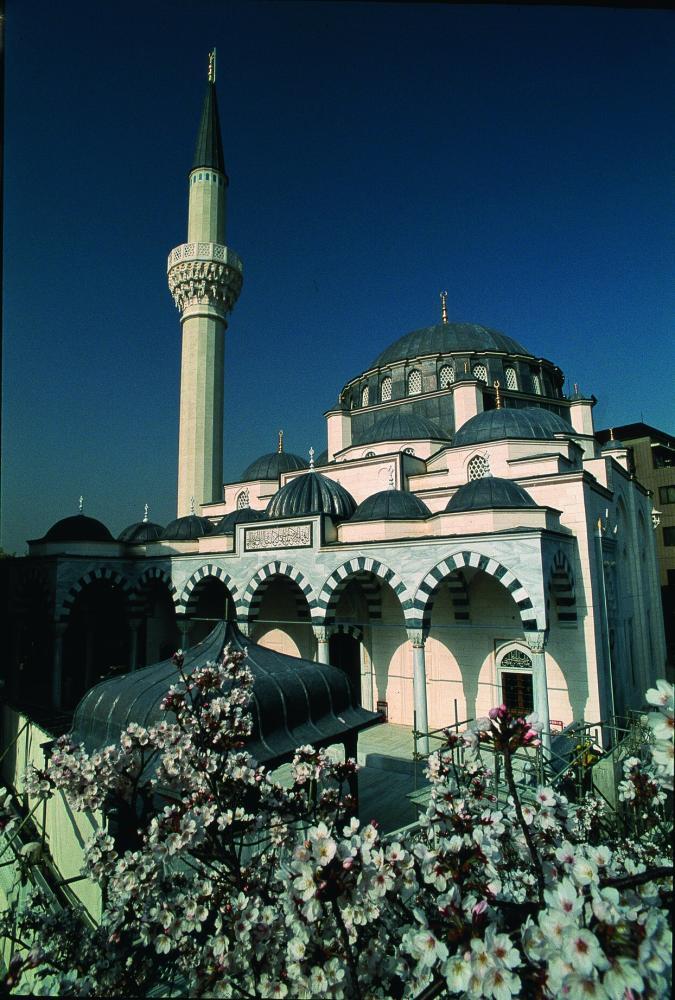
Name(s) | Tokyo Mosque and Diyanet Turkish Cultural Center | ||||||||
|---|---|---|---|---|---|---|---|---|---|
Location | Shibuya Japan Tokyo | ||||||||
Construction Start | June 30, 1998 | ||||||||
Completion Date | June 30, 2000 | ||||||||
Architect(s) | Muharrem Hilmi Şenalp | ||||||||
Architectural Style(s) | Ottoman-Turkish Architectural Style | ||||||||
Total Construction Area | 1,693 m² | ||||||||
Land Area | 734 m² | ||||||||
Building Material | Steel-reinforced concrete, marble, stone | ||||||||
Dome Features | Central plan with six semi-domes, Ottoman architectural embellishments | ||||||||
Interior Decoration | Calligraphy, tile work, kündekari, sedefkâri, kalemkâri, ebru, tezhip | ||||||||
Capacity | 630 people (main prayer hall), 2,000 people (total capacity) | ||||||||
Function(s) | educational activities cultural events Worship | ||||||||
Facilities | Prayer hall, library, bookshop, multi-purpose hall, exhibition area | ||||||||
Affiliated Institution | Presidency of Religious Affairs of the Republic of Turkey | ||||||||
Official Website(s) | tokyocamii.org | ||||||||
Tokyo Camii, the largest Muslim place of worship in Japan, is located in the Shibuya district of Tokyo and represents one of the finest examples of Ottoman-Turkish architecture. Serving as a central hub for the Muslim community in Japan, the mosque functions as both a religious and cultural interaction center.
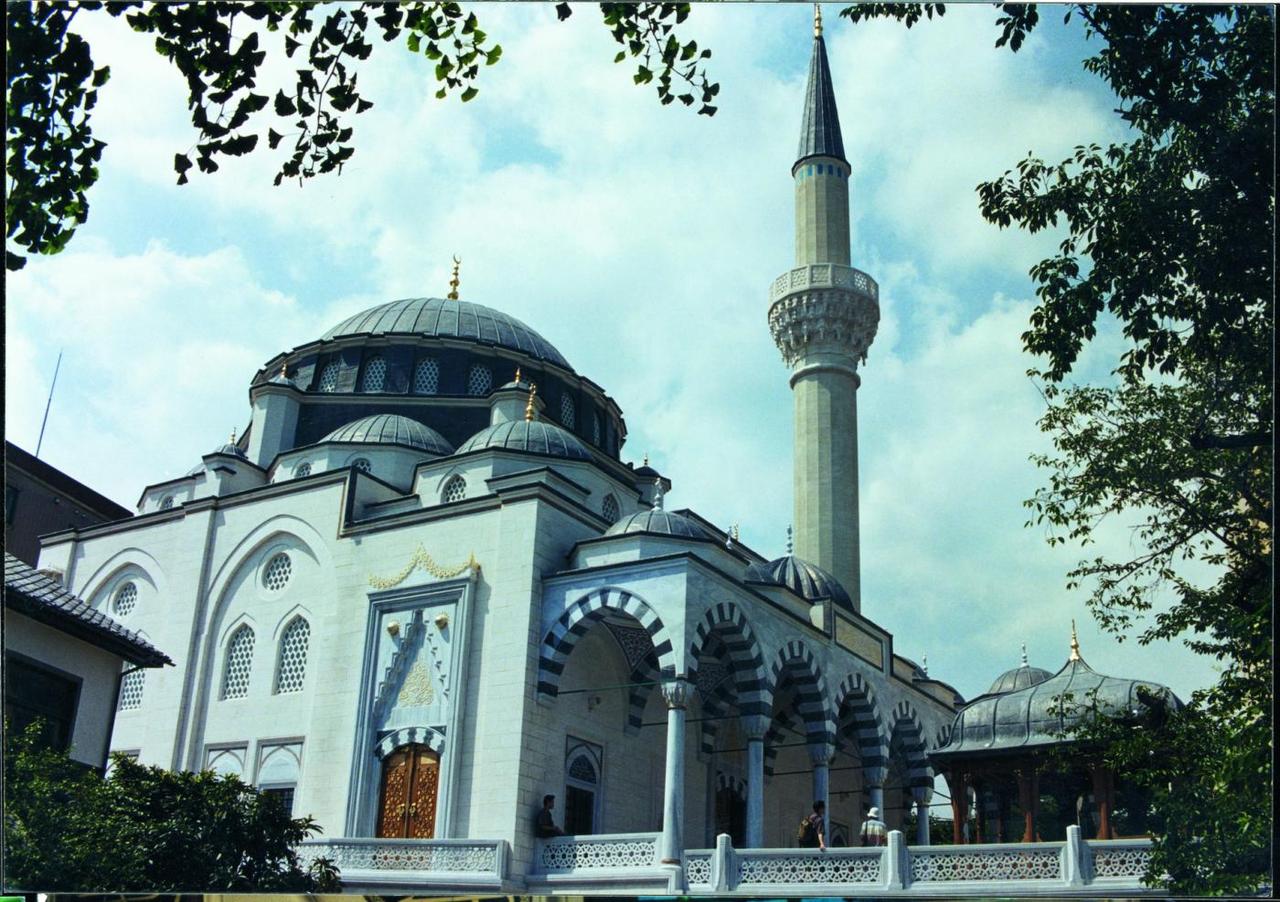
Tokyo Camii General Exterior View
【1】
The history of Tokyo Camii dates back to the early 20th century. After the Russian Revolution of 1917, Kazan Turks, who faced oppression and persecution, migrated through Central Asia to Manchuria and then to Japan. Settling in Tokyo and Kobe, this community organized itself under the Mahalle-i İslamiye Association, founded in 1922 by Abdülhay Kurban Ali.
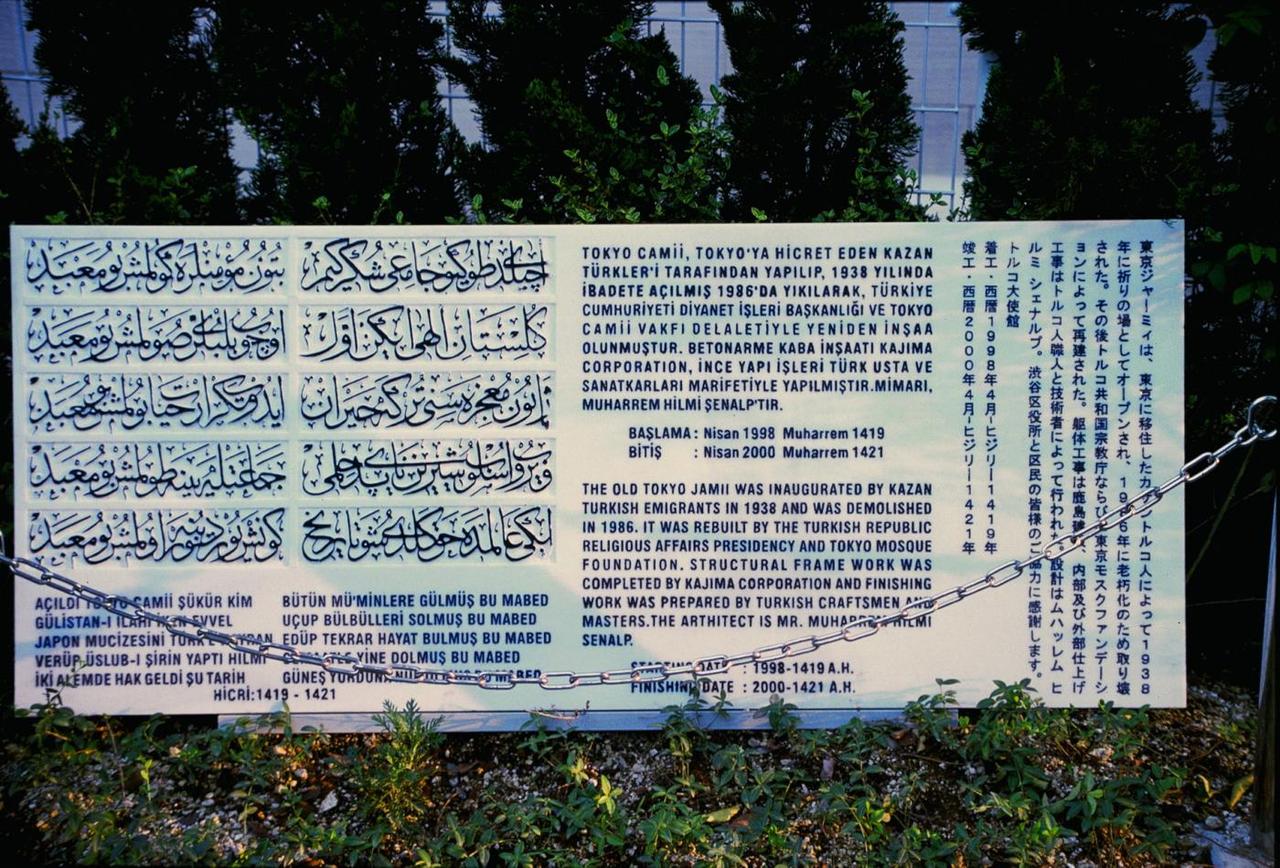
Information Board Explaining The History
【2】
In 1928, with permission from the Japanese government, a school named "Mekteb-i İslamiye" was established. In 1935, land was acquired in the Shibuya district of Tokyo, and the school was relocated there. Finally, in 1938, in cooperation with the Japanese government, a mosque was built next to the school, and Tokyo Camii was opened for worship. However, due to structural deterioration, it was demolished in 1986.
The Tokyo Turkish Association donated the land to the Republic of Turkey on the condition that the mosque be rebuilt. In 1997, the Tokyo Camii Foundation was established under the Presidency of Religious Affairs of Turkey, initiating the construction of a new mosque.
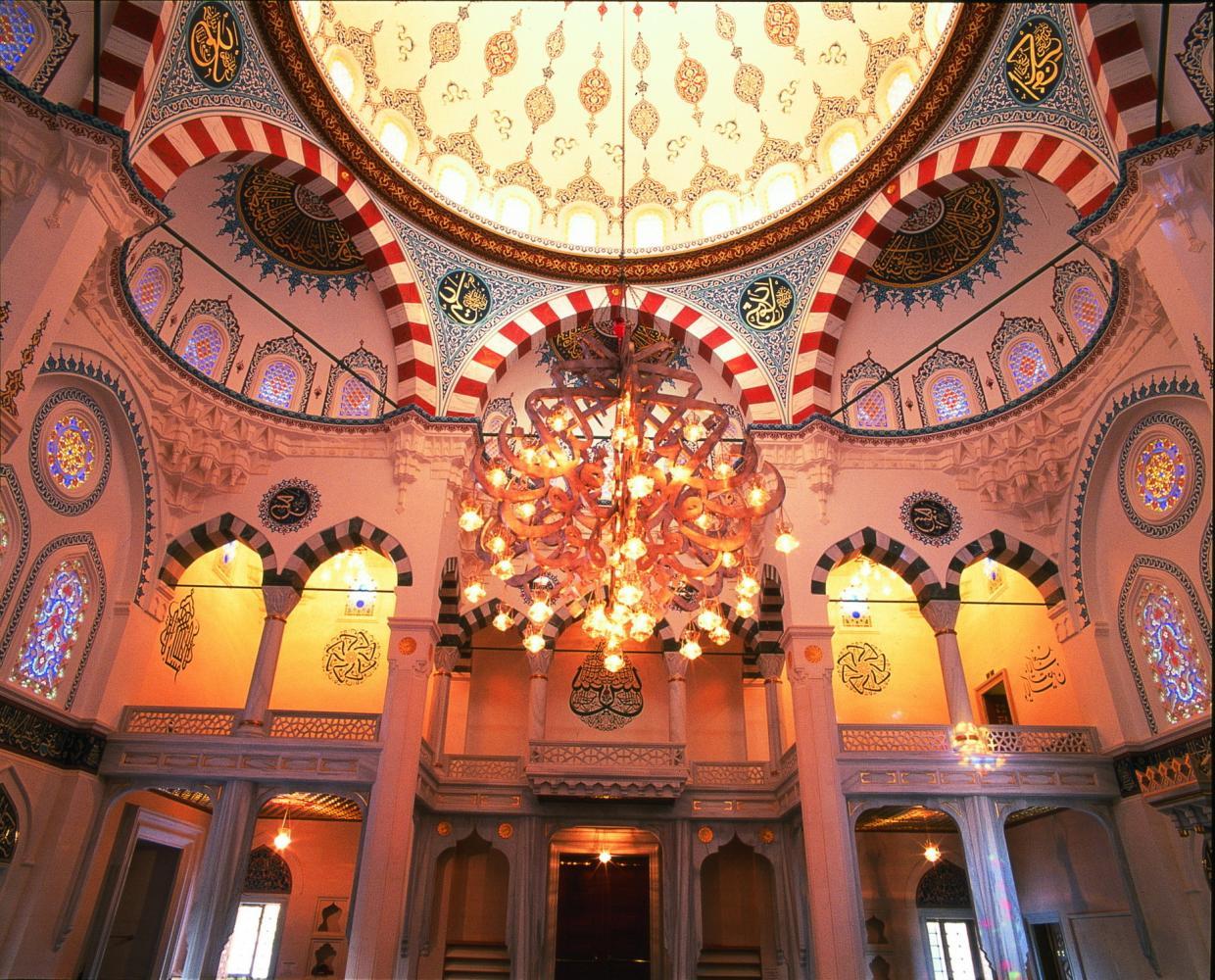
Tokyo Mosque Dome and General Interior View
【3】
Designed by one of the leading figures in modern Turkish religious architecture, Muharrem Hilmi Şenalp, the new mosque was built with the participation of approximately 100 Turkish engineers and craftsmen. It was inaugurated for worship on June 30, 2000.
Built in the Ottoman-Turkish architectural style, Tokyo Camii covers a total construction area of 1,693 m². The mosque was constructed with a steel-reinforced concrete system on a deep foundation resistant to earthquakes. The domes were cast without molds, and stone and marble elements were assembled using steel mounting brackets, avoiding the use of mortar.
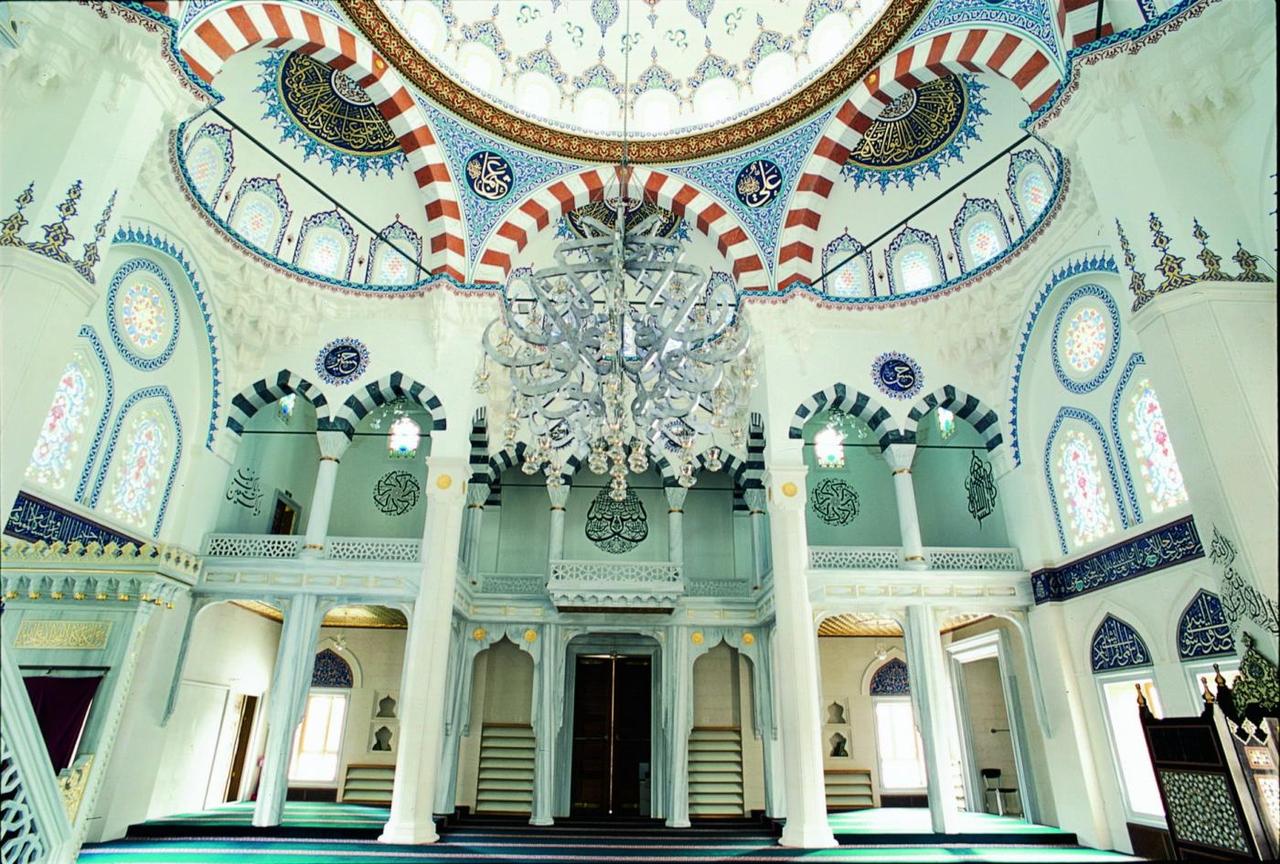
Tokyo Camii General Interior View
【4】
The interior of the mosque showcases some of the finest examples of traditional Turkish-Islamic arts, including calligraphy, painted ornamentation, tile work, woodworking (kündekari), and mother-of-pearl inlay (sedefkâri). One particularly striking feature of the decoration is the use of calligraphy to illustrate the 'Hadith of Gabriel,' a significant narration between the Prophet Muhammad (PBUH) and Angel Gabriel (AS).
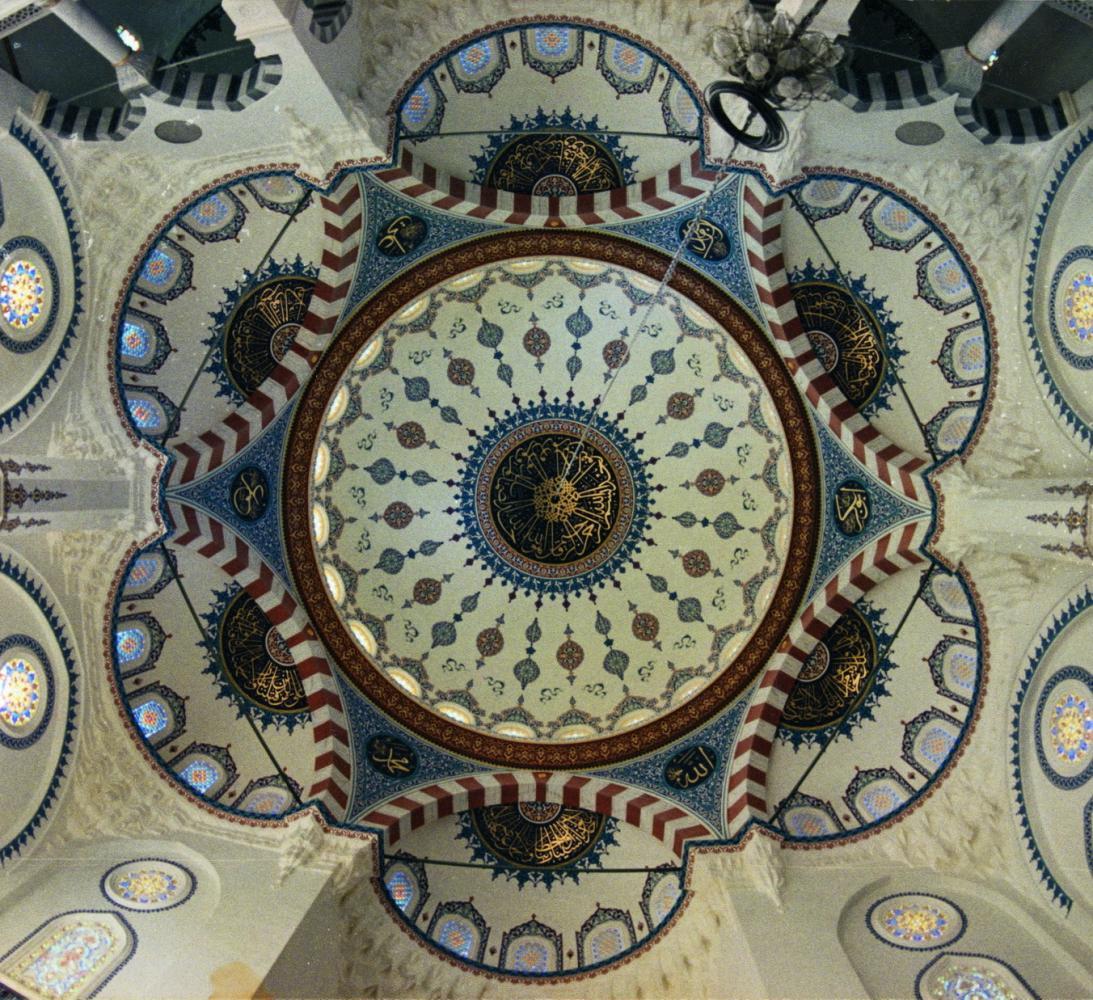
Tokyo Mosque Interior Dome Detail
【5】
On the ground floor, the mosque houses an exhibition of Turkish-Islamic handicrafts, a book sales section, a multi-purpose hall, and a library. The main prayer area can accommodate 630 worshippers at a time, while additional spaces allow the capacity to expand to 2,000 worshippers when needed.
Tokyo Camii embraces various traditional Turkish-Islamic art forms in accordance with Ottoman heritage:
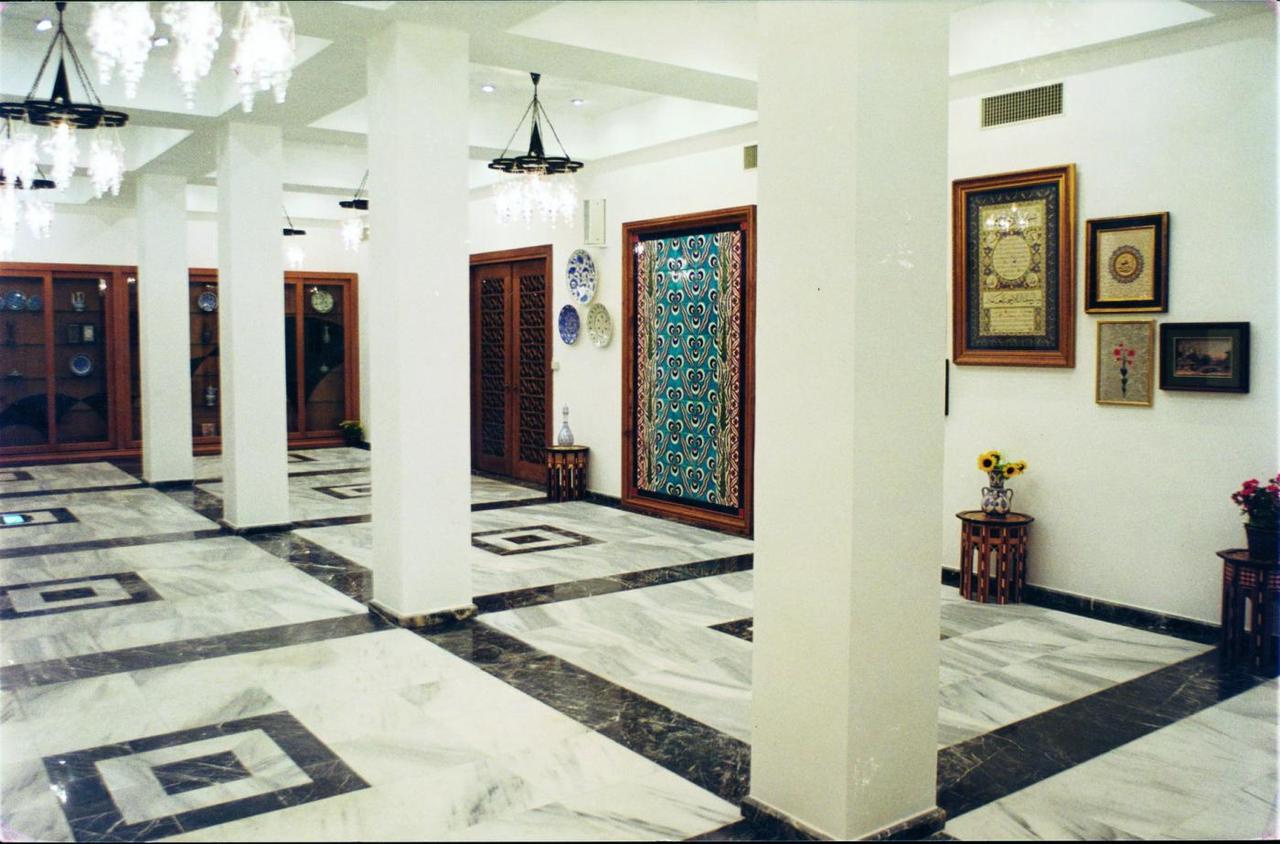
Interior of the Diyanet Turkish Cultural Center
【6】
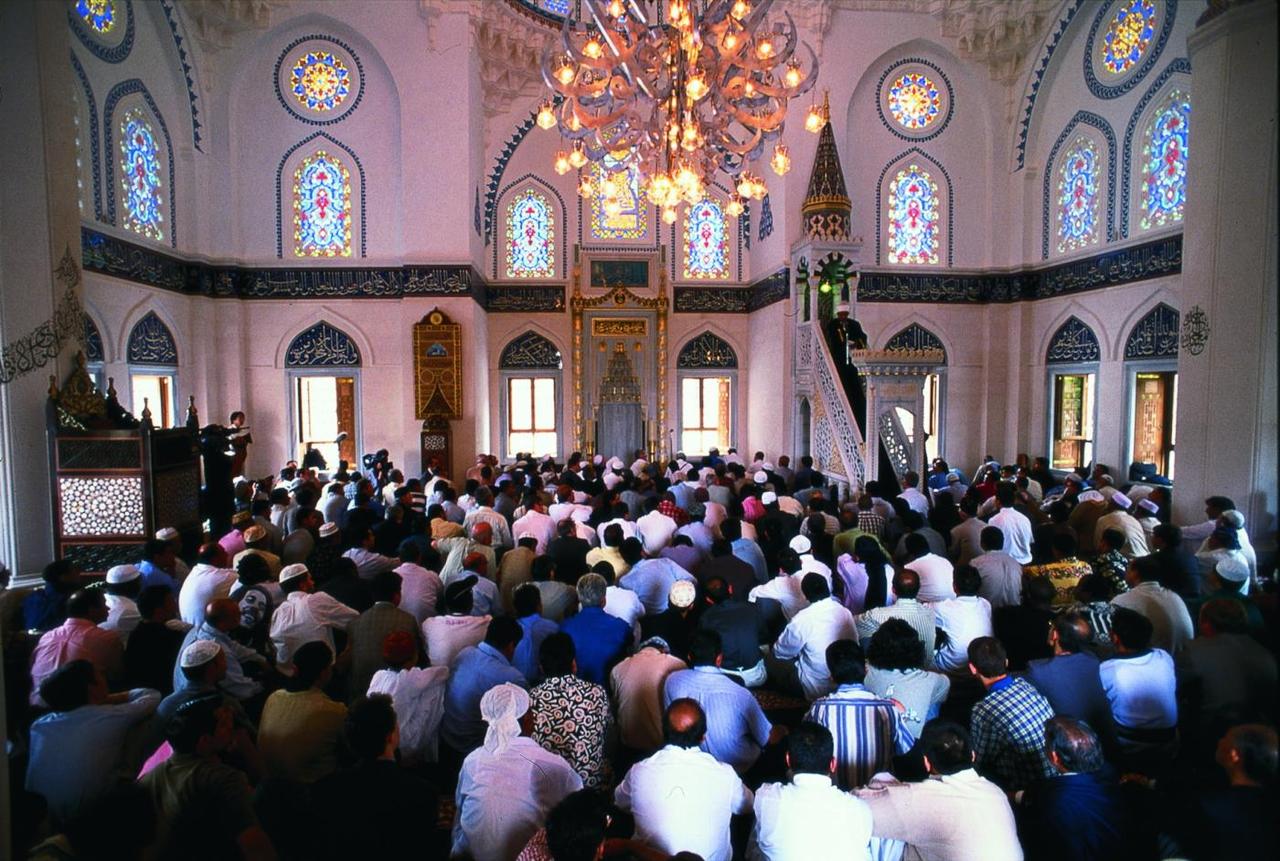
Image of the Congregation Inside the Mosque
【7】
Tokyo Camii serves as both a place of worship for the Muslim community in Japan and a cultural heritage center showcasing the beauty of Turkish-Islamic art. Built with modern materials while staying true to Ottoman traditions, this architectural masterpiece functions as a historical and cultural bridge between Japan and Turkey.
Anadolu Ajansı. Japonya’da Bir Türk Nişanesi: Tokyo Camisi. Anadolu Ajansı, 18 Nisan 2019. Erişim 20 Şubat 2025. https://www.aa.com.tr/tr/dunya/japonyada-bir-turk-nisanesi-tokyo-camisi/1456571.
GZT. Uzakdoğu’da Bir Cami: Tokyo Camii. GZT Jurnalist, 27 Aralık 2017. Erişim 20 Şubat 2025. https://www.gzt.com/jurnalist/uzakdoguda-bir-camii-tokyo-camii-2932328.
Hassa Mimarlık. Tokyo Camii ve Kültür Merkezi. Hassa Mimarlık Resmi Web Sitesi. Erişim 20 Şubat 2025. https://www.hassa.com/tr/proje/tokyo-camii-ve-kultur-merkezi.
Tokyo Camii. Tokyo Camii Resmi Web Sitesi. Erişim 20 Şubat 2025. https://tokyocamii.org/tr/.
İLKE Vakfı. Tokyo Camii ve Diyanet Türk Kültür Merkezi. İLKE Platform, erişim 20 Şubat 2025. https://platform.ilke.org.tr/kurum/tokyo-camii-ve-diyanet-turk-kultur-merkezi-.
[1]
Hassa Mimarlık, Tokyo Camii ve Kültür Merkezi, Hassa Mimarlık Resmi Web Sitesi, erişim 20 Şubat 2025, https://www.hassa.com/tr/proje/tokyo-camii-ve-kultur-merkezi.
[2]
Hassa Mimarlık, Tokyo Camii ve Kültür Merkezi, Hassa Mimarlık Resmi Web Sitesi, erişim 20 Şubat 2025, https://www.hassa.com/tr/proje/tokyo-camii-ve-kultur-merkezi.
[3]
Hassa Mimarlık, Tokyo Camii ve Kültür Merkezi, Hassa Mimarlık Resmi Web Sitesi, erişim 20 Şubat 2025, https://www.hassa.com/tr/proje/tokyo-camii-ve-kultur-merkezi.
[4]
Hassa Mimarlık, Tokyo Camii ve Kültür Merkezi, Hassa Mimarlık Resmi Web Sitesi, erişim 20 Şubat 2025, https://www.hassa.com/tr/proje/tokyo-camii-ve-kultur-merkezi.
[5]
Hassa Mimarlık, Tokyo Camii ve Kültür Merkezi, Hassa Mimarlık Resmi Web Sitesi, erişim 20 Şubat 2025, https://www.hassa.com/tr/proje/tokyo-camii-ve-kultur-merkezi.
[6]
Hassa Mimarlık, Tokyo Camii ve Kültür Merkezi, Hassa Mimarlık Resmi Web Sitesi, erişim 20 Şubat 2025, https://www.hassa.com/tr/proje/tokyo-camii-ve-kultur-merkezi.
[7]
Hassa Mimarlık, Tokyo Camii ve Kültür Merkezi, Hassa Mimarlık Resmi Web Sitesi, erişim 20 Şubat 2025, https://www.hassa.com/tr/proje/tokyo-camii-ve-kultur-merkezi.


Name(s) | Tokyo Mosque and Diyanet Turkish Cultural Center | ||||||||
|---|---|---|---|---|---|---|---|---|---|
Location | Shibuya Japan Tokyo | ||||||||
Construction Start | June 30, 1998 | ||||||||
Completion Date | June 30, 2000 | ||||||||
Architect(s) | Muharrem Hilmi Şenalp | ||||||||
Architectural Style(s) | Ottoman-Turkish Architectural Style | ||||||||
Total Construction Area | 1,693 m² | ||||||||
Land Area | 734 m² | ||||||||
Building Material | Steel-reinforced concrete, marble, stone | ||||||||
Dome Features | Central plan with six semi-domes, Ottoman architectural embellishments | ||||||||
Interior Decoration | Calligraphy, tile work, kündekari, sedefkâri, kalemkâri, ebru, tezhip | ||||||||
Capacity | 630 people (main prayer hall), 2,000 people (total capacity) | ||||||||
Function(s) | educational activities cultural events Worship | ||||||||
Facilities | Prayer hall, library, bookshop, multi-purpose hall, exhibition area | ||||||||
Affiliated Institution | Presidency of Religious Affairs of the Republic of Turkey | ||||||||
Official Website(s) | tokyocamii.org | ||||||||
Henüz Tartışma Girilmemiştir
"Tokyo Camii (Tokyo Mosque)" maddesi için tartışma başlatın
History
Architectural and Structural Features
Artistic Elements
Bu madde yapay zeka desteği ile üretilmiştir.