


Bu içerik Türkçe olarak yazılmış olup yapay zeka ile otomatik olarak İngilizceye çevrilmiştir.
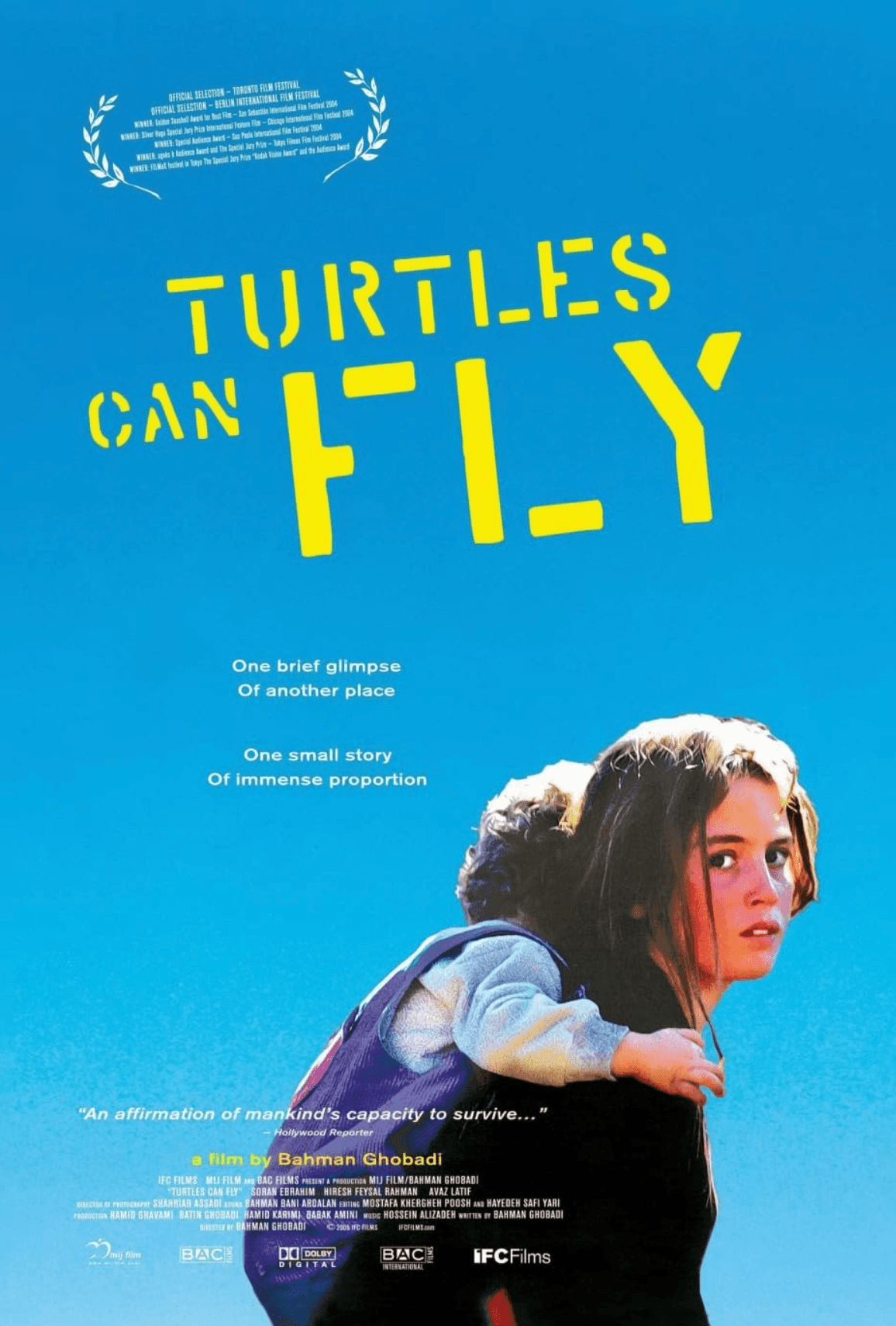
Turtles Can Fly (Kurdish: Kûsî Jî Dikarin Bifirin) is a 2004 dramatic film written and directed by Iranian-Kurdish filmmaker Bahman Ghobadi, focusing on the lives of Kurdish refugee children along the Iraq-Türkiye border. As Ghobadi’s third feature film, it is set just before the Iraq War and is regarded as one of the most significant works in international cinema for its portrayal of war’s devastating impact on civilians.
The film is set in a refugee camp along the Iraq-Türkiye border, inhabited by Kurds fleeing the regime of Saddam Hussein. At its center is a 13-year-old boy nicknamed “Satellite,” who acts as the leader of the children in the camp. Satellite is skilled at installing television antennas and organizes the children to clear landmines, demonstrating intelligence and initiative. His life changes when the mysterious Agrin, who carries a blind child in her arms, arrives at the camp, followed by Hengov, Satellite’s older brother who lost his arms in a landmine explosion. As the paths of these three characters intersect, the physical and psychological effects of war on children are laid bare. The film portrays, with simplicity and power, the struggle for survival of children forced to grow up amid conflict.

Scene from Turtles Can Fly (IMDb)
Instead of professional actors, the film features real refugee children in the roles, lending it a profound sense of authenticity and emotional impact.
Bahman Ghobadi shot the film in a region near the Iran-Iraq border, within actual refugee camps. During production, he worked exclusively with amateur actors, and most of the dialogue was delivered in the Kurmanji dialect of Kurdish. To capture an authentic atmosphere, Ghobadi spent extended periods living among the local people and children, drawing inspiration directly from their daily lives to shape the screenplay. The film is a multifaceted project in which Ghobadi also contributed directly to the screenplay, production, and editing.
Turtles Can Fly centers on the destructive impact of war on children while exploring themes of hope, solidarity, and trauma. The character of Satellite becomes a symbol of how children raised in war develop leadership, adaptability, and strategy. Agrin and Hengov represent the lingering devastation of past trauma. Rather than delivering direct political messages, the film chooses to immerse viewers in the children’s perspective. It also metaphorically examines the influence of Western technology—such as satellite antennas—on Eastern communities.
Although the exact budget of the film has not been publicly disclosed, it is known to have been made on a low budget. The film received significant attention in Europe and at international film festivals and achieved notable commercial success:
Turtles Can Fly has been screened at numerous international film festivals and has received many awards. Its principal accolades include:

Scene from Turtles Can Fly (IMDb)
Henüz Tartışma Girilmemiştir
"Turtles Can Also Fly (Film)" maddesi için tartışma başlatın
Synopsis
Cast
Production
Thematic Structure
Budget and Revenue
Awards and Nominations