
+1 Daha

Location | Florence Italy | ||||||||
|---|---|---|---|---|---|---|---|---|---|
Founded | 1560 (Construction Began), 1769 (Opened to the Public) | ||||||||
Architecture(s) | Designed by Giorgio Vasari connected to the Pitti Palace via the Vasari Corridor | ||||||||
Notable Artists | Botticelli,Leonardo da Vinci, Michelangelo, Raphael ,Caravaggio | ||||||||
Masterpieces | The Birth of Venus, Primavera, Doni Tondo, Annunciation | ||||||||
Uffizi Gallery is a museum located in Florence, Italy, housing one of the most distinguished collections of Western art. Featuring works from the Middle Ages to the Baroque period—especially the Renaissance—it is one of the most visited art institutions in the world. Opened to the public in the 18th century through a decision to make the Medici family’s private collections accessible, the gallery now functions as part of the broader Uffizi Galleries system alongside the Pitti Palace and Boboli Gardens.
Construction of the Uffizi building began in 1560 by order of Cosimo I de’ Medici. Initially, the structure was intended to centralize the judicial and administrative offices of the Duchy of Tuscany. Designed by architect Giorgio Vasari, the building is located in the historic center of Florence, along the Arno River. After Vasari died in 1574, the project was completed by Bernardo Buontalenti and Alfonso Parigi il Vecchio.
In 1579, Cosimo’s son Francesco I transformed the top floor of the eastern wing into a private area for displaying the royal art collections, thus initiating the gallery’s identity as an art institution. The "Tribuna" room, completed in 1584 and located in this section, was designed as the centerpiece of the collection. The last Medici heir, Anna Maria Luisa de’ Medici, ensured the preservation and public accessibility of the collections through the 1737 “Family Pact,” and the gallery was officially opened to the public in 1769.
More than a traditional gallery, the Uffizi building is integrated into the urban fabric of the city. With symmetrical wings lining a long courtyard and upper porticos, it exemplifies classical Renaissance architecture. One of its most striking features is the Vasari Corridor (Corridoio Vasariano), built in 1565 at the request of Cosimo I. This enclosed passageway stretches from the Palazzo Vecchio, crosses the Arno River over the Ponte Vecchio, and reaches the Pitti Palace. It allowed the Medici family to move between the administrative offices and the palace without being seen by the public.

Vasari Corridor, Uffizi Gallery. (flickr)
In 2014, Florence’s three major cultural sites—the Uffizi Gallery, the Pitti Palace, and the Boboli Gardens—were unified under the institutional name “Uffizi Galleries” (Le Gallerie degli Uffizi). Under this structure:
Together, these three sites embody Florence’s collective memory intertwined with art, history, and nature.
The Uffizi Gallery offers a chronological journey through the development of Western painting. The collection includes paintings, sculptures, and ancient objects spanning from the Early Gothic period to the 18th century, arranged in a periodical and thematic display. Among the most renowned works are:

Madonna of All Saints (Madonna di Ognissanti) – Giotto di Bondone. (flickr)

Annunciation (Annunciazione) – Simone Martini ve Lippo Memmi. (flickr)

Double Portrait of the Dukes of Urbino (Doppio Ritratto dei Duchi di Urbino) – Piero della Francesca. (flickr)

Medusa – Caravaggio. (flickr)
As part of the “New Uffizi” (Nuovi Uffizi) project, the gallery is undergoing modernization in digital infrastructure, exhibition systems, climate control, and security. Due to increased visitor numbers, time-slot-based entry and digital reservation systems have been implemented to reduce congestion and enhance the visitor experience. The gallery also employs ARIMA and predictive modeling to regulate foot traffic, optimize entry/exit times, and avoid crowding in exhibition rooms.
D'Ambrosio, Francesco, Rosario Avino, and Francesco De Maria. “Assessment of the Main Indoor Pollutants in the Uffizi Gallery in Florence.” Applied Sciences 12, no. 17 (2022): 8642. Accessed August 7, 2025. https://www.mdpi.com/2076-3417/12/17/8642
De Santis, Franco, Lucia Allegrini, Fulvio Di Palo, Gian Paolo Iannaccone, Gian Paolo Liberatori, and Francesco Sprovieri. “The Measurement of Atmospheric Pollutants by Passive Sampling at the Uffizi Gallery, Florence.” Atmospheric Environment 36, no. 32 (2002): 5829–5836. Accessed August 7, 2025. https://www.researchgate.net/profile/Franco-De-Santis/publication/10843360_The_measurement_of_atmospheric_pollutants_by_passive_sampling_at_the_Uffizi_Gallery_Florence/links/5c607059a6fdccb608b75c00/The-measurement-of-atmospheric-pollutants-by-passive-sampling-at-the-Uffizi-Gallery-Florence.pdf
Flickr. “Giotto, Virgin and Child Enthroned JPG.” Flickr. Accessed August 7, 2025. https://www.flickr.com/photos/profzucker/49714492627/in/photostream/
Flickr. “Medusa by Caravaggio, Galleria degli Uffizi, Florence, Italy. JPG.” Flickr. Accessed August 7, 2025. https://www.flickr.com/photos/eliasroviello/33053967462
Flickr. “Simone Martini, Annunciation JPG.” Flickr. Accessed August 7, 2025. https://www.flickr.com/photos/profzucker/49807421818/in/photostream/
Flickr. “The Duke and Duchess of Urbino Federico da Montefeltro and Battista Sforza JPG.” Flickr. Accessed August 7, 2025. https://www.flickr.com/photos/aiva/46388716205
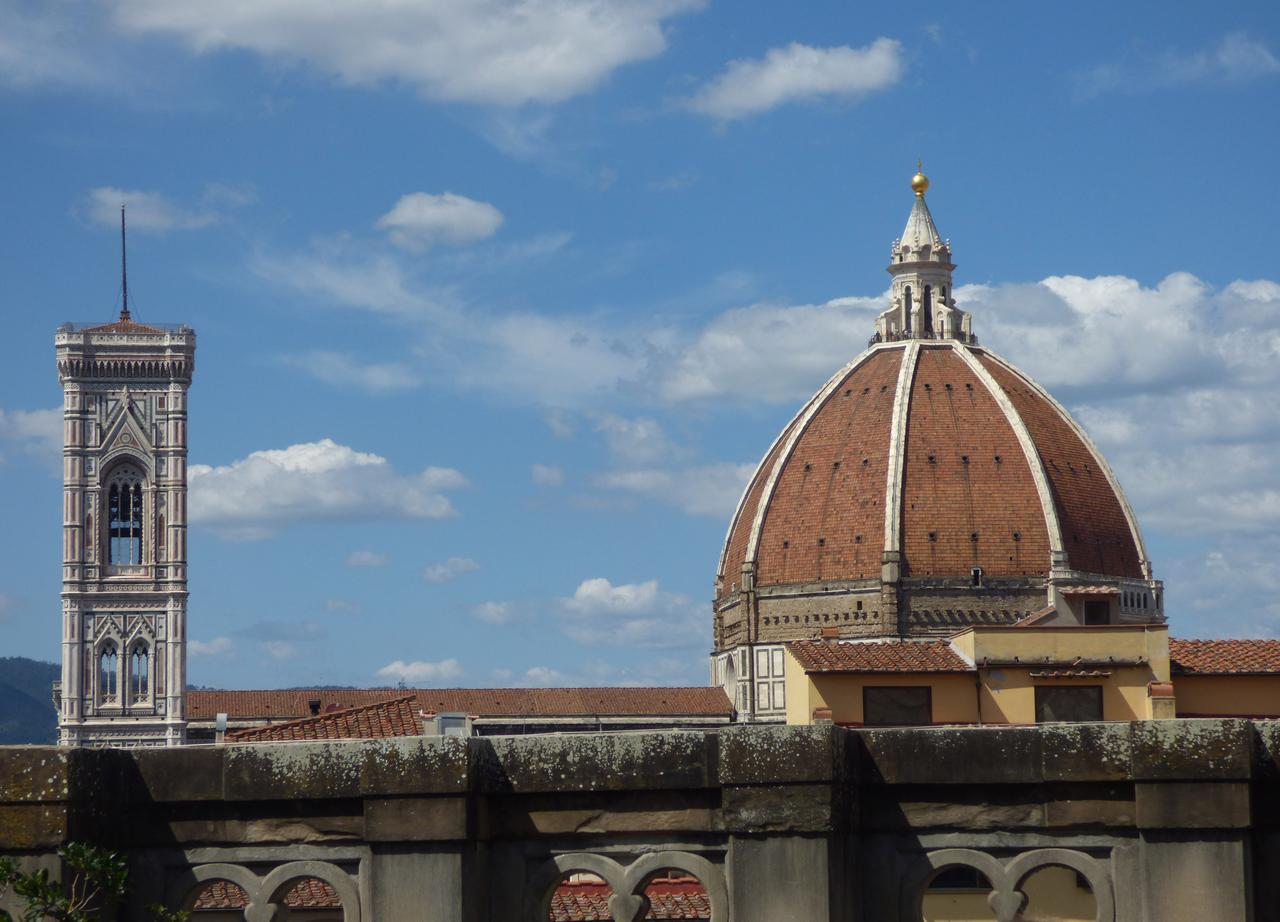
Flickr. “The Uffizi Gallery, Florence - The Duomo (Cathedral) - Giotto's bell tower and Filippo Brunelleschi’s dome JPG.” Flickr. Accessed August 7, 2025. https://www.flickr.com/photos/ell-r-brown/42835530104/in/photostream/
Flickr. “The Vasari Corridor Bridge, Via della Nina, Florence JPG.” Flickr. Accessed August 7, 2025. https://www.flickr.com/photos/21186555@N07/49438294987/
Florence Museum. “Uffizi Gallery Tickets & Tours.” Florence-Museum.com. Accessed August 7, 2025. https://www.florence-museum.com/uffizi-gallery-tickets.php
Uffizi Galleries. “About Us.” Gallerie degli Uffizi. Accessed August 7, 2025. https://www.uffizi.it/en/pages/about-us
Uffizi Galleries. “Adorazione dei Magi.” Uffizi.it. Accessed August 7, 2025. https://www.uffizi.it/opere/adorazione-dei-magi
Visit Uffizi. “History of the Uffizi Gallery.” VisitUffizi.org. Accessed August 7, 2025. https://www.visituffizi.org/museum/history/
Visit Uffizi. “The Halls of the Uffizi Gallery.” VisitUffizi.org. Accessed August 7, 2025. https://www.visituffizi.org/halls/
Visit Uffizi. “Your Guide to the Uffizi Gallery in Florence.” VisitUffizi.org. Accessed August 7, 2025. https://www.visituffizi.org/


Location | Florence Italy | ||||||||
|---|---|---|---|---|---|---|---|---|---|
Founded | 1560 (Construction Began), 1769 (Opened to the Public) | ||||||||
Architecture(s) | Designed by Giorgio Vasari connected to the Pitti Palace via the Vasari Corridor | ||||||||
Notable Artists | Botticelli,Leonardo da Vinci, Michelangelo, Raphael ,Caravaggio | ||||||||
Masterpieces | The Birth of Venus, Primavera, Doni Tondo, Annunciation | ||||||||
Henüz Tartışma Girilmemiştir
"Uffizi Gallery" maddesi için tartışma başlatın
Foundation and Historical Development
Architectural Structure and the Vasari Corridor
Uffizi Galleries: Institutional Structure and Expansion
Permanent Collections and Masterpieces
Modernization and Visitor Experience
Bu madde yapay zeka desteği ile üretilmiştir.