


Bu içerik Türkçe olarak yazılmış olup yapay zeka ile otomatik olarak İngilizceye çevrilmiştir.
+1 Daha
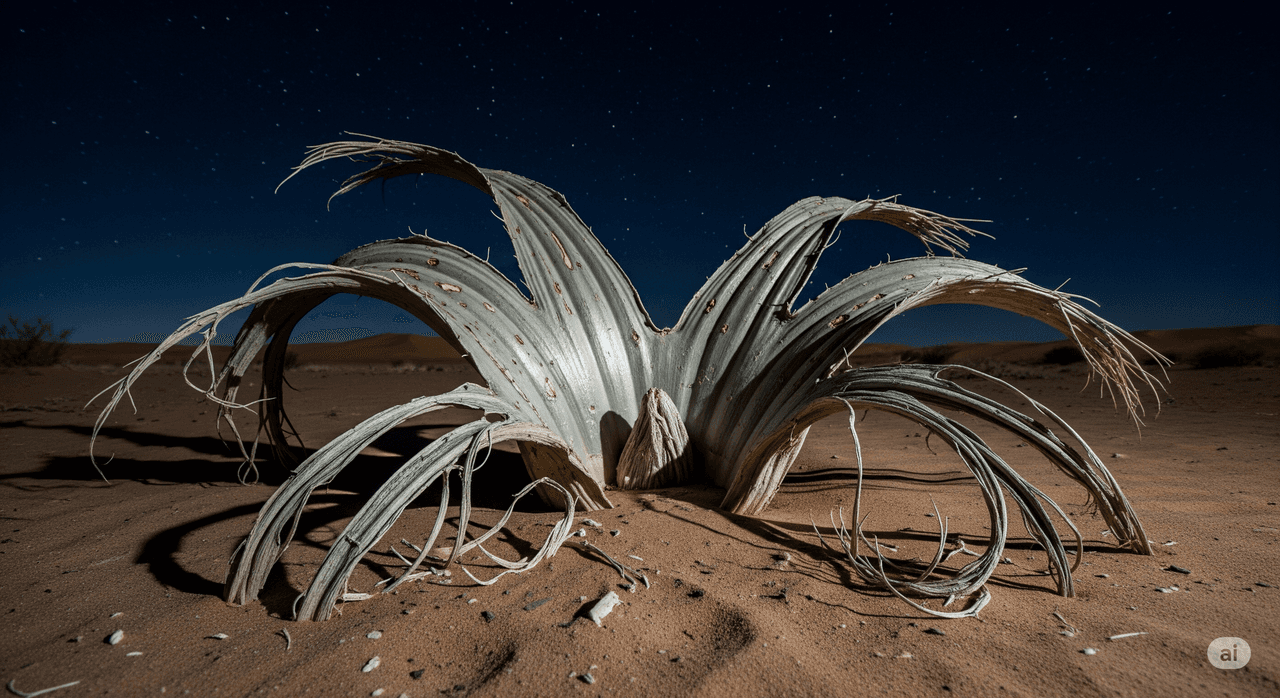
Welwitschia
Type Name | Welwitschia mirabilis | ||||||||
|---|---|---|---|---|---|---|---|---|---|
Belonging Taxon | Gnetophyta | ||||||||
Natural Distribution Area | Angola Namibia | ||||||||
Lifespan | 1000–2000 years | ||||||||
Number of Leaves | 2 | ||||||||
Photosynthesis Type | CAM-like | ||||||||
Conservation Status | Vulnerable (IUCN) | ||||||||
Habitat Type | coastal fog-influenced areas Arid desert | ||||||||
Ecological Role | microhabitat creator moisture collector Endemic species | ||||||||
The Welwitschia plant is extremely resistant to arid conditions and draws attention due to its biological adaptive capacity and long lifespan. Found naturally only in the Namib Desert, Welwitschia serves as a model for research in evolutionary biology, ecosystem dynamics, and arid-zone flora among botanists and ecophysiologists. Therefore, Welwitschia has been studied not only in ecological contexts but also in terms of paleobotany and phylogenetics.
Welwitschia mirabilis is a desert plant with two leaves and a single stem. This plant possesses only two leaves, which continue to grow throughout its lifetime. The edges of these leaves gradually tear and split into strips, often appearing fragmented due to the effects of wind and sand in arid environments. These leaves serve as the primary structures for photosynthetic activity. The root system of Welwitschia consists of a deep-penetrating main root that grows downward to access water and is adapted to maximize the use of soil moisture in its surroundings. The stem is flat and woody in structure and typically lies close to the ground. This stem functions as a short axis bearing both the leaves and the reproductive structures.
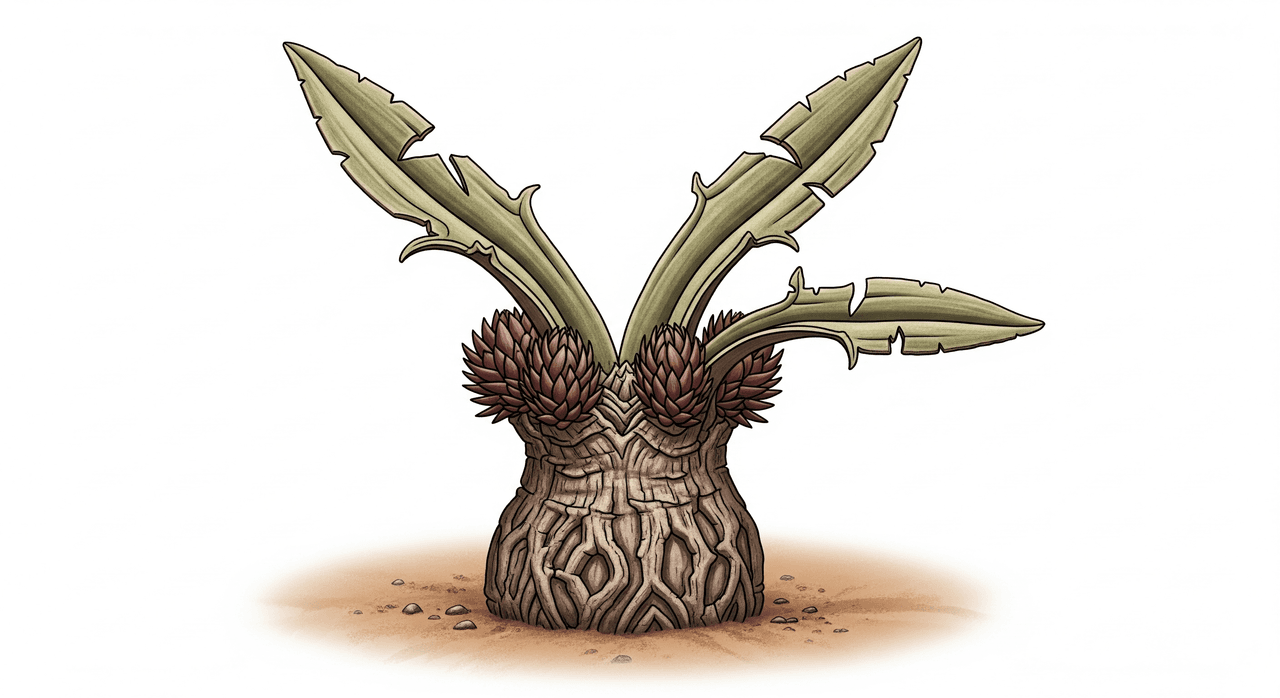
General Structure and Organs (Generated by Artificial Intelligence)
The leaves of Welwitschia are covered with a thick cuticle layer adapted to arid conditions. The leaf epidermis contains numerous stomata, which open during nighttime hours and follow a metabolic pathway similar to CAM (Crassulacean Acid Metabolism) photosynthesis. This physiological trait minimizes water loss while maintaining photosynthetic efficiency. Additionally, lignin and similar structural compounds present in leaf cells support the plant’s longevity and durability.
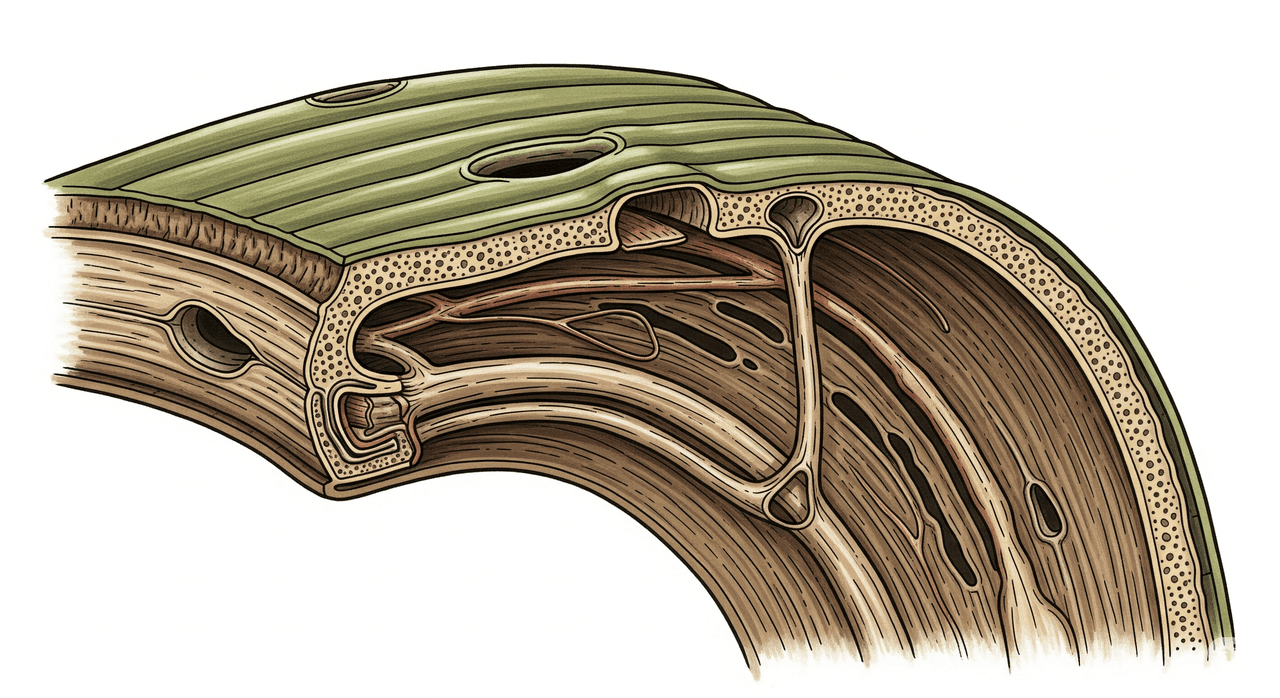
Leaf Anatomy (Generated by Artificial Intelligence)
One of the most striking features of Welwitschia is its extraordinary longevity. Scientific studies have revealed that some individuals live between 1500 and 2000 years. Throughout its life cycle, the number of leaves remains unchanged; only the initial two leaves continue to grow. As a result, age determination is typically carried out through indirect methods such as analysis of stem growth rings and isotopic analysis of meristematic tissues.
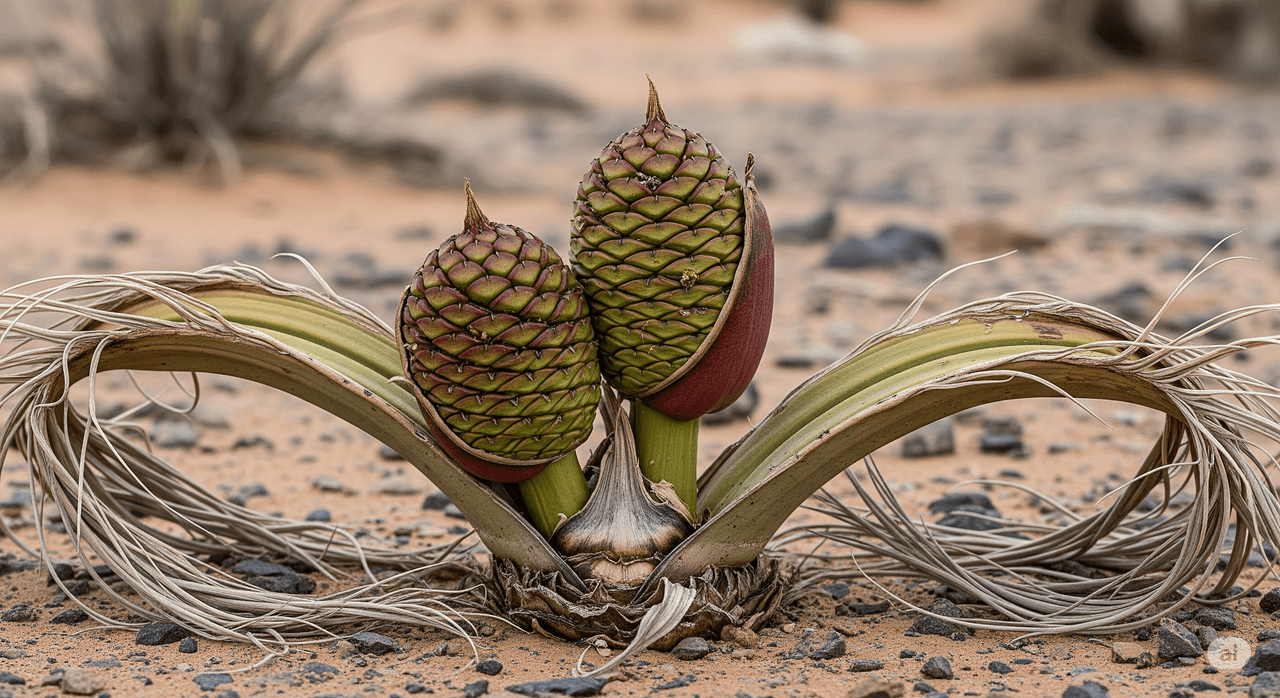
Coniferous Reproduction (Generated by Artificial Intelligence)
Welwitschia is the sole species within the single genus Welwitschia of the phylum Gnetophyta: Welwitschia mirabilis. Gnetophyta is classified among seed plants alongside other gymnosperms such as Cycadophyta and Coniferophyta. However, molecular analyses indicate that Gnetophyta is evolutionarily distinct from other groups of gymnosperms, and the phylogenetic position of this group remains controversial.
The evolution of Welwitschia has been shaped by millions of years of adaptation to arid conditions. Its morphologically simplified leaf structure and stem form conserve energy and reduce water loss. The plant’s endemic genetic variation has enabled it to develop strong resistance to extreme environmental conditions such as those found in the Namib Desert.
Research on the Welwitschia genome has revealed the presence of gene sequences encoding specific stress proteins. These genes play a crucial role in responding to environmental conditions such as temperature fluctuations, osmotic stress, and prolonged drought. Additionally, Welwitschia is rich in secondary metabolite production and has the capacity to synthesize certain phenolic compounds. These compounds protect the plant against ultraviolet radiation and provide defense against phytopathogens.
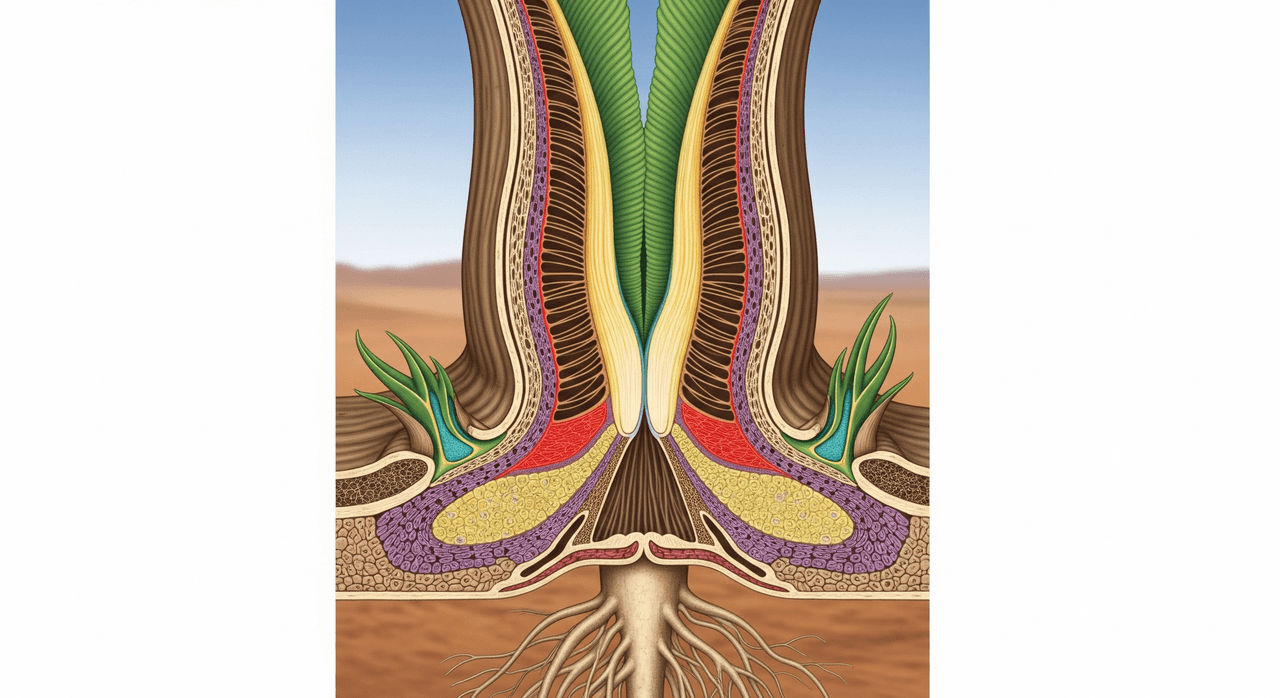
Internal Structure (Generated by Artificial Intelligence)
Welwitschia is found only within the borders of Namibia and Angola, particularly in the western regions of the Namib Desert. These areas receive only about 25 mm of rainfall annually and are characterized by extremely arid climatic conditions. Nevertheless, the plant survives by utilizing moisture carried by coastal fog. Consequently, Welwitschia meets its water needs by facilitating fog condensation on its leaves during nighttime hours. The soils in which it grows are typically sandy and well-drained.
Welwitschia is a rare but ecologically significant species within the Namib Desert ecosystem. In addition to its drought tolerance, this plant provides shelter and shade for other organisms. Furthermore, the moisture accumulated on its leaf surfaces creates microhabitats for insects and small organisms. Its exclusive occurrence in this geographic region renders it both biogeographically endemic and a conservation priority from a scientific standpoint.
Bowes, Bryan G. *A Colour Atlas of Plant Structure*. 1996. Internet Archive. Accessed June 10, 2025. https://archive.org/details/colouratlasofpla0000bowe.
Doniger, T., J. M. Adams, E. Marais, G. Maggs-Kölling, C. Sherman, D. Kerfahi, Y. Yang, and Y. Steinberger. “The ‘Fertile Island Effect’ of Welwitschia Plants on Soil Microbiota Is Influenced by Plant Gender.” *FEMS Microbiology Ecology* 96, no. 11 (2020). https://doi.org/10.1093/femsec/fiaa186.
Henschel, Joh R., and Mary K. Seely. “Long-Term Growth Patterns of Welwitschia Mirabilis, a Long-Lived Plant of the Namib Desert.” *Plant Ecology* 142, no. 1-2 (1999): 95–106. https://link.springer.com/article/10.1023/A%3A1026512608982.
McMillan, C. “Nature of the Plant Community. II. Variation in Flowering Behavior within Populations of Andropogon Scoparius.” *American Journal of Botany* 43, no. 6 (1956): 429–436. https://doi.org/10.2307/2439020.

Welwitschia
Type Name | Welwitschia mirabilis | ||||||||
|---|---|---|---|---|---|---|---|---|---|
Belonging Taxon | Gnetophyta | ||||||||
Natural Distribution Area | Angola Namibia | ||||||||
Lifespan | 1000–2000 years | ||||||||
Number of Leaves | 2 | ||||||||
Photosynthesis Type | CAM-like | ||||||||
Conservation Status | Vulnerable (IUCN) | ||||||||
Habitat Type | coastal fog-influenced areas Arid desert | ||||||||
Ecological Role | microhabitat creator moisture collector Endemic species | ||||||||
Henüz Tartışma Girilmemiştir
"Welwitschia (Welwitschia mirabilis)" maddesi için tartışma başlatın
Morphological Features and Anatomical Structure
General Structure and Organs
Leaf Anatomy and Physiology
Longevity and Life Cycle
Taxonomic Position and Evolutionary Features
Systematic Classification
Evolutionary Adaptations
Genomic Features and Molecular Data
Habitat, Ecology, and Conservation Status
Distribution and Habitat Characteristics
Ecological Role and Endemism