


This article was automatically translated from the original Turkish version.
How do we measure a country’s technological power? Is it by an unmanned aerial vehicle flying in the sky, a satellite launched into space, or by digital health systems used in hospitals, sensors monitoring farmland, and artificial intelligence applications integrated into daily life?
None of these alone is sufficient. Because technology is not merely the final product that emerges; behind every such product are scientists conducting research, students writing code, laboratories, universities, startups, manufacturing facilities, public policies, and decades of accumulated knowledge. The National Technology Initiative must be understood not through a few successful products, but through the collective transformation of this entire structure.
Indeed, in the TÜBA study prepared on the National Technology Initiative, technological transformation is evaluated not merely through the final products to be produced, but as a long-term process shaped jointly by human resources, technological entrepreneurship, R&D and investment incentives, and public investments.【1】
Therefore, for me the fundamental question underlying the National Technology Initiative is: Will Türkiye be a country that merely purchases and uses the technologies it needs, or will it be a country that understands, develops, transforms them, and when necessary, creates new ones? The answer to this question leads us far beyond the defense industry.
Images of a drone gliding at low altitude dominate nearly all technology news; this attention is no accident. Unmanned aerial vehicles, radar systems, communication technologies, electronic warfare systems, and various aerospace projects are among the most visible examples of Türkiye’s technological transformation in public perception. But focusing solely on the final products is inadequate.
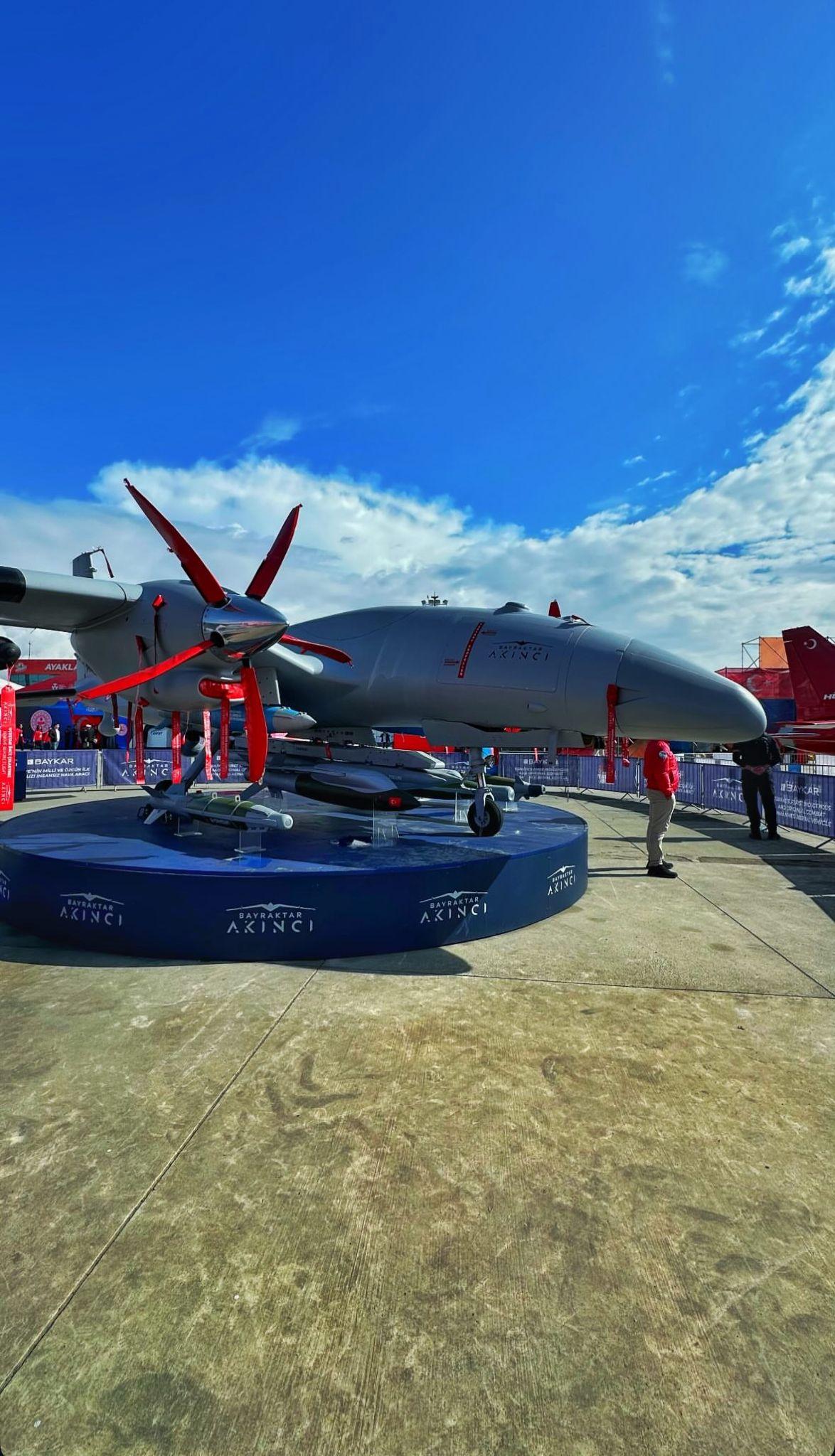
Bayraktar Akıncı TİHA (Kasım Emre Anıl)
The importance of technologies developed in defense and aerospace lies not only in meeting the needs of those sectors, but also in building a cumulative body of knowledge, technology, and expertise that can be transferred to other sectors over time. The TÜBA study on Türkiye’s aerospace and defense sector also emphasizes that technologies developed in this sector can spread to other industries, thereby contributing to innovation and competitiveness.【2】
This is precisely where the core significance of the defense industry within the National Technology Initiative becomes clear: Defense is not the whole story; it is merely one of the most visible examples of the capacity built for developing high technology. Therefore, we must not leave the story in the sky.
It is certainly important that a product is manufactured in Türkiye, but I believe technological independence carries a much deeper meaning. Purchasing a technology, learning how to use it, understanding how it works, and being able to redesign it when needs change—each of these requires vastly different capabilities.
Moreover, technological independence should not mean producing every technology in the world independently. In today’s world, countries, universities, and companies collaborate; information and production networks extend far beyond borders. The real issue is ensuring that these relationships do not turn into helpless dependency in critical areas: Can you develop alternatives during a crisis? Do you possess the knowledge to find solutions when access to a technology becomes difficult? When a new need arises, can you see research and development as viable options—not just imports? True technological independence lies precisely here.
If we want to develop new technologies, we must invest not only in factories but also in knowledge production. At this point, R&D is one of the most important yet least visible components of the National Technology Initiative in public perception.

TOGG Görseli (Kasım Emre Anıl)
According to a TÜBA study evaluating Türkiye’s R&D infrastructure over the past twenty years, the number of technology development zones increased from two in 2001 to 94 in 2022. The same study notes that as of July 2022, Türkiye had 1,242 R&D centers and 324 design centers, with more than 8,000 companies operating in technology development zones.【3】 Similar changes are reported in human resources: The number of full-time equivalent R&D personnel rose from 27,698 in 2001 to 199,371 in 2020, while the share of R&D expenditures in national income increased from 0.53 percent to 1.09 percent during the same period. The study also reports that domestic patent applications rose from 337 in 2001 to 8,439 in 2021.【4】
Each of these figures corresponds to specific years and should not be interpreted as current values; however, they are significant in demonstrating long-term transformation. In my view, the real issue is not merely the increase in R&D spending or the number of centers, but how research is transformed into outcomes: Is knowledge from universities being transferred to industry? Are problems faced by companies turning into new research projects? Can a student’s thesis evolve into a patent, a startup, or a product over time? For the National Technology Initiative, the true threshold is transitioning from merely following technologies developed by other countries to generating our own research questions.
Artificial intelligence has become one of the most discussed areas of technological transformation in recent years. However, evaluating AI solely through chatbots or a few popular applications is misleading; the same fundamental technologies can be applied to diverse problems—from healthcare to manufacturing, agriculture to transportation.
Türkiye’s “National Artificial Intelligence Strategy 2021–2025” document defines six key priorities in AI: training and increasing employment of AI specialists; supporting research, entrepreneurship, and innovation; ensuring access to high-quality data and technical infrastructure; implementing regulations that accelerate socio-economic adaptation; fostering international cooperation; and accelerating structural transformation. The strategy groups these under the goal of “creating value on a global scale through an agile and sustainable AI ecosystem.”【5】
An important aspect of this approach is treating AI not merely as software to be used, but as an ecosystem. The real differentiator in the future will not be how quickly we adopt models developed in other countries, but whether we can train our own researchers, generate high-quality data, and build the knowledge base to apply these technologies to Türkiye’s own problems.
A common mistake when discussing digital transformation is equating it solely with purchasing new software and hardware. However, the TÜBA study on industrial digitalization emphasizes that digital transformation is not merely about adding software or hardware to production lines; it is a broader transformation that changes business processes, work methods, organizational culture, and even the nature of the products themselves.【6】
This distinction is crucial in my view. You can install the latest robot in a factory or purchase the most advanced software for an institution; but if the skills of employees, processes, and the organization’s problem-solving approach remain unchanged, you have merely purchased technology. True digitalization is a change in how work is done. Therefore, the digital dimension of the National Technology Initiative must not be measured solely by the origin of the devices or software used; the human capacity to develop, adapt, and use technology efficiently is at least as important as the technology itself.
Space technologies may be among the most captivating areas in the technological world. A rocket launch or a satellite entering orbit naturally attracts great attention; yet the value of space efforts lies not only in these images.
Türkiye Space Agency’s “National Space Program Strategy Document 2022–2030” evaluates Türkiye’s space goals by addressing together the development of independent access to space, strengthening the space ecosystem, utilizing space-derived capabilities for public benefit, and increasing qualified human resources. The document also highlights that Türkiye’s space ecosystem is a multi-stakeholder structure extending from satellite operators to data users, from R&D institutions to manufacturing centers and educational institutions.【7】
The program’s objectives also include localizing critical technologies, contributing to scientific research, using space for peaceful purposes, and increasing public awareness of space. The section on human resources particularly emphasizes directing talented youth toward the space sector.【8】
Therefore, I believe viewing space merely as “Türkiye is going to space” is insufficient. Developing satellites requires electronic expertise; using satellite data requires software and data science; space systems can simultaneously support multiple fields such as materials, communications, and precision manufacturing. And perhaps most importantly, they can inspire a child to say, “I can do this too.” I believe one of the most important outcomes of long-term technological transformation is precisely this mental shift.
One of the most accessible areas to observe technological independence in daily life is healthcare. Technologies used in healthcare are not limited to physical devices in hospitals; data infrastructure, appointment systems, health records, telemedicine, imaging systems, and AI applications are increasingly becoming integral parts of the same ecosystem.
In TÜBA’s section on the National Technology Initiative in Healthcare, technological transformation in the healthcare system is evaluated alongside qualified human resources, sustainable quality, innovation, and interdisciplinary collaboration. The same section notes that Türkiye’s digital health infrastructure saw the introduction of the Central Physician Appointment System in 2010, the Drug Tracking System in 2012, e-Nabız in 2015, and telemedicine and teleradiology applications beginning in 2015.【9】
What strikes me in this example is how directly technological transformation reaches citizens. While defense or space technologies may sometimes seem distant from everyday life, we feel the impact of healthcare technology far more directly. Accessing a patient’s data at the right time, remote image evaluation, or enabling healthcare systems to communicate with each other can all be part of the National Technology Initiative—because the issue is not merely producing attention-grabbing products, but applying technology to tangible human problems.
If you ask whether high technology can exist without chips, robots, or spacecraft, most people would answer no; thus, agriculture is still often perceived as a traditional field. Yet today, agriculture is a domain where multiple technologies—satellite imagery, unmanned aerial vehicles, sensors, image processing, and precision application systems—can be used simultaneously.
In TÜBA’s section on the National Technology Initiative in Agriculture and Food, the National Mobile Precision Agriculture Applications project is described as using satellite and UAS imagery to monitor crop development and implement variable-rate fertilization. The application reportedly achieved approximately 25 percent savings in fertilizer use.【10】 The study’s conclusion highlights the potential of nationally developed agricultural technologies to reduce input costs, increase efficiency, and decrease dependence on imported technological products.【11】
It is important to note that the 25 percent figure should not be generalized to all agricultural activities in Türkiye; it is the result of the specific application described. Yet the example itself reveals something larger: An unmanned aerial vehicle flying over a field, a sensor buried in the soil, or an algorithm calculating fertilizer amounts—all are part of an advanced technology ecosystem. Technological development only gains social relevance when innovations in the laboratory reach the real problems of farmers.
Energy is another crucial dimension of technological independence. Simply possessing solar, wind, or other domestic energy sources is not enough; converting these resources into electricity, storing them, managing them, and integrating them into the grid also require technology.
In TÜBA’s section on the National Technology Initiative in Energy, Türkiye’s renewable energy policies are described as directed not only toward utilizing domestic resources but also toward developing domestic technology and production capacity. The YEKA (Renewable Energy Resource Areas) model established in 2016 is noted to aim at enhancing domestic production capacity and qualified human resources.【12】 The same study also emphasizes the importance of increasing R&D in energy technologies, developing domestic supply chains, strengthening technological independence, as well as digitalization, the Internet of Things, and optimization of energy systems.【13】
Here, the distinction between “domestic energy” and “domestic energy technology” must not be overlooked. The sun and wind may be ours, but if we remain entirely dependent on foreign technologies for critical energy management systems, a vital link in the chain of independence is missing.
Defense industry, space, artificial intelligence, healthcare, agriculture, and energy—all appear very different. Yet they all share a common need: People. Laboratories are built by people, algorithms are developed by people, satellites are designed by people, startups are launched by people; and it is people who identify previously unsolved problems. Therefore, one of the most important areas of the National Technology Initiative is education.
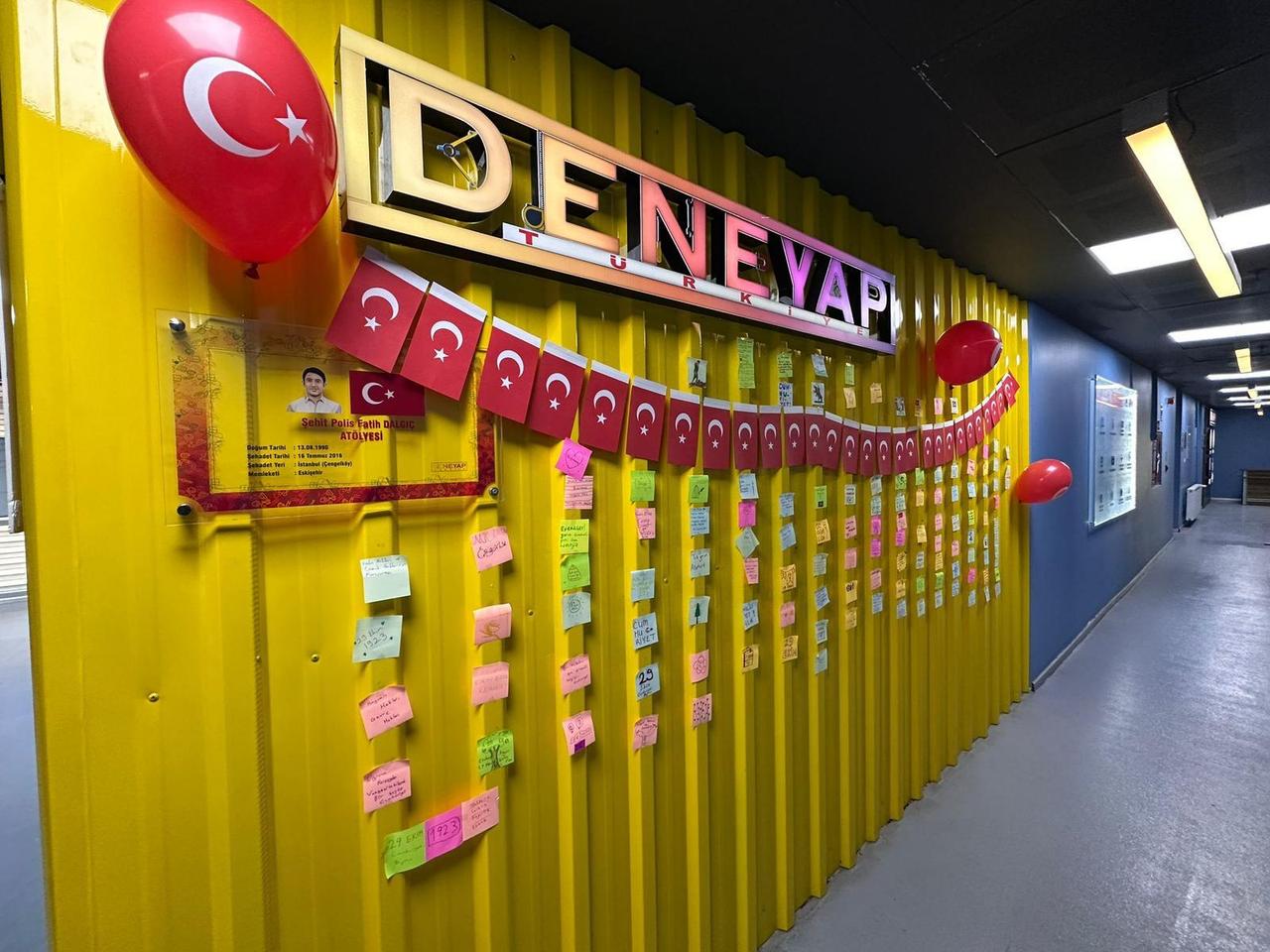
Eskişehir DENEYAP Teknoloji Atöltesine Ait Görsel (Kasım Emre Anıl)
In TÜBA’s section “Social Mobilization from Seven to Seventy: The National Technology Initiative,” technology competitions and Deneyap Technology Workshops are presented as tools to involve youth in technology development processes. The 2022 publication reports that the Deneyap network had reached 125 workshops across all 81 provinces, trained over 18,000 students, and graduated more than 2,700.【14】 These figures correspond to the period covered by the 2022 source and should not be interpreted as the current scale of Deneyap.
But for me, something more important than these numbers exists. A middle school student’s first line of code may not seem like a major technological achievement; their robot may not work, their program may crash, they may not win a competition. But that child has stopped viewing technology solely as a consumer and has said, “I can do this too.” This is precisely why the National Technology Initiative is as much about a middle school student’s first robotic code in a workshop as it is about a drone gliding across the sky.
There is a significant gap between conducting research and transforming that research into a technology people can use; this is where entrepreneurship comes in. In TÜBA’s evaluation of the National Technology Initiative, human resources, technological entrepreneurship, R&D, investment incentives, and public investments are treated as interdependent components of the same technological transformation process.【15】

Devrim Arabası İç Mekan Görseli (Kasım Emre Anıl)
This relationship will become even more important in the future. Will knowledge produced at a university remain on a shelf as a thesis, or will it transform into a startup, a patent, a license, or a new product? Not every startup needs to succeed; a team may disband, a prototype may fail, a product may not attract market interest. But a technology culture is not built solely from successful projects; it is built from the accumulation of experiments, failures, and the knowledge gained from those failures. One of the most important characteristics of a strong technology ecosystem, in my view, is its ability to transform failure into knowledge.
We began with defense, reached space, and then moved to artificial intelligence, industrial digitalization, healthcare, agriculture, energy, education, and entrepreneurship. At first glance, all these fields appear very different. But upon closer inspection, they all share the same underlying elements: knowledge, research, human resources, infrastructure, production, and an ecosystem that connects them.
The true meaning of the National Technology Initiative must be sought here. The issue is not to compile a long list of individual “national” successes. It is to build a lasting structure capable of responding to Türkiye’s diverse challenges through technological development. A drone’s flight in the sky is part of this, but so is a middle school student’s first code; a failed experiment in a university lab, a UAS inspecting a crop, the digital infrastructure enabling access to a patient’s health data, a researcher optimizing energy systems, a young team working on a new AI model, and a child looking at space and wondering, “Could I be part of this too?”
This is precisely why the National Technology Initiative is not a story that begins or ends within the walls of the defense industry; it is a much broader quest for technological transformation spanning from defense to healthcare, from education to agriculture, from space to energy, from digitalization to entrepreneurship.
I believe it is inadequate to measure a country’s technological independence solely by how many products bear the label “domestic.” The real question is this: When we face a problem, what can we do? Is purchasing a solution from elsewhere our only option, or do we have scientists to investigate the problem, engineers to design the solution, programmers to write the code, entrepreneurs to turn it into a product, and an ecosystem to support all of this?
Of course, it is unrealistic for any country to develop every technology in the world independently; technological independence does not mean cutting off from the world. On the contrary, it means having a strong enough foundation of knowledge, people, and production to collaborate globally while being capable of developing our own critical solutions when needed.
Therefore, we must not judge the success of the National Technology Initiative solely by today’s major projects. True success occurs when technology production ceases to be a specialized activity limited to a few institutions or sectors and becomes a natural reflex of society. When a chain is established—from a student’s first code, through a university lab, to a startup, a factory, a hospital, a farm, a city, and into space—the phrase “National Technology Initiative in Every Field” will truly gain meaning.
Because the real issue is not merely possessing technology. The real issue is having the knowledge, the people, and the will to create new ones whenever needed.
Bayraktar, Alparslan. "Enerjide Millî Teknoloji Hamlesi." *Millî Teknoloji Hamlesi: Toplumsal Yansımaları ve Türkiye'nin Geleceği*, edited by Mehmet Fatih Kacır, Muzaffer Şeker, and Mürsel Doğrul, Türkiye Bilimler Akademisi, 2022. Accessed September 3, 2026.https://tuba.gov.tr/files/yayinlar/bilim-ve-dusun/TUBA-978-625-8352-16-0_ch19.pdf
Bayraktar, Selçuk. "Yediden Yetmişe Toplumsal Seferberlik: Millî Teknoloji Hamlesi." *Millî Teknoloji Hamlesi: Toplumsal Yansımaları ve Türkiye'nin Geleceği*, edited by Mehmet Fatih Kacır, Muzaffer Şeker, and Mürsel Doğrul, Türkiye Bilimler Akademisi, 2022. Accessed September 3, 2026.https://tuba.gov.tr/files/yayinlar/bilim-ve-dusun/TUBA-978-625-8352-16-0_ch01.pdf
Birinci, Şuayıp. "Sağlıkta Millî Teknoloji Hamlesi." *Millî Teknoloji Hamlesi: Toplumsal Yansımaları ve Türkiye'nin Geleceği*, edited by Mehmet Fatih Kacır, Muzaffer Şeker, and Mürsel Doğrul, Türkiye Bilimler Akademisi, 2022. Accessed September 3, 2026.
Coştu, Zekeriya. "Sanayinin Dijitalleşmesinde Millî Teknoloji Hamlesi." *Millî Teknoloji Hamlesi: Toplumsal Yansımaları ve Türkiye'nin Geleceği*, edited by Mehmet Fatih Kacır, Muzaffer Şeker, and Mürsel Doğrul, Türkiye Bilimler Akademisi, 2022. Accessed September 3, 2026.https://tuba.gov.tr/files/yayinlar/bilim-ve-dusun/TUBA-978-625-8352-16-0_ch34.pdf
Kacır, Mehmet Fatih. "2000'li Yıllar: Millî Teknoloji Hamlesi ve Gelecek Perspektifi." *Millî Teknoloji Hamlesi: Toplumsal Yansımaları ve Türkiye'nin Geleceği*, edited by Mehmet Fatih Kacır, Muzaffer Şeker, and Mürsel Doğrul, Türkiye Bilimler Akademisi, 2022. Accessed September 3, 2026.https://tuba.gov.tr/files/yayinlar/bilim-ve-dusun/TUBA-978-625-8352-16-0_ch02.pdf
Kar, Muhsin, and Özlem Öztürk Çetenak. "Türk Havacılık ve Savunma Sektörünün Dönüşümü ve Ekonomik Etkileri." *Millî Teknoloji Hamlesi: Toplumsal Yansımaları ve Türkiye'nin Geleceği*, edited by Mehmet Fatih Kacır, Muzaffer Şeker, and Mürsel Doğrul, Türkiye Bilimler Akademisi, 2022. Accessed September 3, 2026.https://tuba.gov.tr/files/yayinlar/bilim-ve-dusun/TUBA-978-625-8352-16-0_ch27.pdf
T.C. Presidency Digital Transformation Office and T.C. Ministry of Industry and Technology. Ulusal Yapay Zekâ Stratejisi 2021–2025. Ankara, 2021. Accessed September 3, 2026.
Türker, Ufuk, and Kazım Şahin. "Tarım ve Gıdada Millî Teknoloji Hamlesi." *Millî Teknoloji Hamlesi: Toplumsal Yansımaları ve Türkiye'nin Geleceği*, edited by Mehmet Fatih Kacır, Muzaffer Şeker, and Mürsel Doğrul, Türkiye Bilimler Akademisi, 2022. Accessed September 3, 2026.https://tuba.gov.tr/files/yayinlar/bilim-ve-dusun/TUBA-978-625-8352-16-0_ch36.pdf
Türkiye Uzay Agency. National Space Program Strategy Document 2022–2030. Ankara: Türkiye Space Agency, 2022. Accessed September 3, 2026.
[1]
Mehmet Fatih Kacır, "2000'li Yıllar: Millî Teknoloji Hamlesi ve Gelecek Perspektifi," *Millî Teknoloji Hamlesi: Toplumsal Yansımaları ve Türkiye'nin Geleceği*, ed. Mehmet Fatih Kacır, Muzaffer Şeker, and Mürsel Doğrul (Ankara: Türkiye Bilimler Akademisi, 2022), 29, Accessed September 3, 2026.
[2]
Muhsin Kar and Özlem Öztürk Çetenak, "Türk Havacılık ve Savunma Sektörünün Dönüşümü ve Ekonomik Etkileri," in *Millî Teknoloji Hamlesi: Toplumsal Yansımaları ve Türkiye'nin Geleceği*, ed. Mehmet Fatih Kacır, Muzaffer Şeker, and Mürsel Doğrul (Ankara: Türkiye Bilimler Akademisi, 2022), 585, Accessed September 3, 2026,https://tuba.gov.tr/files/yayinlar/bilim-ve-dusun/TUBA-978-625-8352-16-0_ch27.pdf
[3]
Kacır, "2000'li Yıllar," 34.
[4]
Kacır, "2000'li Yıllar," 35.
[5]
T.C. Cumhurbaşkanlığı Dijital Dönüşüm Ofisi ve T.C. Sanayi ve Teknoloji Bakanlığı, Ulusal Yapay Zekâ Stratejisi 2021–2025 (Ankara, 2021), 7–8, erişim 3 Eylül 2026, https://sgb.meb.gov.tr/meb_iys_dosyalar/2022_07/25145919_Ulusal_Yapay_Zeka_Stratejisi_UYZS_2021-2025.pdf
[6]
Zekeriya Coştu, "Sanayinin Dijitalleşmesinde Millî Teknoloji Hamlesi," in *Millî Teknoloji Hamlesi: Toplumsal Yansımaları ve Türkiye'nin Geleceği*, ed. Mehmet Fatih Kacır, Muzaffer Şeker, and Mürsel Doğrul (Ankara: Türkiye Bilimler Akademisi, 2022), 699, Accessed September 3, 2026,https://tuba.gov.tr/files/yayinlar/bilim-ve-dusun/TUBA-978-625-8352-16-0_ch34.pdf
[7]
Türkiye Uzay Ajansı, Millî Uzay Programı Strateji Belgesi 2022–2030 (Ankara: Türkiye Uzay Ajansı, 2022), 11, erişim 3 Eylül 2026, https://cdn.tua.gov.tr/62988f09d2a2e.pdf
[8]
Türkiye Uzay Ajansı, Millî Uzay Programı Strateji Belgesi 2022–2030, 20, 41.
[9]
Şuayıp Birinci, "Sağlıkta Millî Teknoloji Hamlesi," in *Millî Teknoloji Hamlesi: Toplumsal Yansımaları ve Türkiye'nin Geleceği*, ed. Mehmet Fatih Kacır, Muzaffer Şeker, and Mürsel Doğrul (Ankara: Türkiye Bilimler Akademisi, 2022), 329, 333, Accessed September 3, 2026.
[10]
Ufuk Türker and Kazım Şahin, "Tarım ve Gıdada Millî Teknoloji Hamlesi," in *Millî Teknoloji Hamlesi: Toplumsal Yansımaları ve Türkiye'nin Geleceği*, ed. Mehmet Fatih Kacır, Muzaffer Şeker, and Mürsel Doğrul (Ankara: Türkiye Bilimler Akademisi, 2022), 734, Accessed September 3, 2026,https://tuba.gov.tr/files/yayinlar/bilim-ve-dusun/TUBA-978-625-8352-16-0_ch36.pdf
[11]
Türker ve Şahin, "Tarım ve Gıdada Millî Teknoloji Hamlesi," 737.
[12]
Alparslan Bayraktar, "Enerjide Millî Teknoloji Hamlesi," in *Millî Teknoloji Hamlesi: Toplumsal Yansımaları ve Türkiye'nin Geleceği*, ed. Mehmet Fatih Kacır, Muzaffer Şeker, and Mürsel Doğrul (Ankara: Türkiye Bilimler Akademisi, 2022), 409, Accessed September 3, 2026,https://tuba.gov.tr/files/yayinlar/bilim-ve-dusun/TUBA-978-625-8352-16-0_ch19.pdf
[13]
Bayraktar, "Enerjide Millî Teknoloji Hamlesi," 416.
[14]
Selçuk Bayraktar, "Yediden Yetmişe Toplumsal Seferberlik: Millî Teknoloji Hamlesi," in *Millî Teknoloji Hamlesi: Toplumsal Yansımaları ve Türkiye'nin Geleceği*, ed. Mehmet Fatih Kacır, Muzaffer Şeker, and Mürsel Doğrul (Ankara: Türkiye Bilimler Akademisi, 2022), 21–22, Accessed September 3, 2026,https://tuba.gov.tr/files/yayinlar/bilim-ve-dusun/TUBA-978-625-8352-16-0_ch01.pdf
[15]
Kacır, "2000'li Yıllar," 29.
The Defense Industry Is Not the Whole Story
Technological Independence Is More Than Just “Local Production”
R&D: The Real Investment Hidden from View
The Difference Between Using AI and Developing It
Digitalization Is More Than Just Buying Computers
Space: More Than a Prestige Race
Health Technologies: A Capacity That Directly Touches Human Life
Can There Be High Technology in Agriculture? It Already Exists
In Energy, We Must Be Owners Not Just of Resources, But of Technology Too
Education: The Starting Point for All These Fields
Entrepreneurship: The Threshold Where Knowledge Becomes Product
When We Say “National Technology Initiative in Every Field,” What Do We Really Mean?
The True Measure of a Technological Nation
